The French and What They Eat

Published by Friday, August 28, 2015 Permalink 0

From Southern biscuits to French baguette. You might wonder how a country girl from Kentucky who grew up on fried chicken, creamed corn, biscuits, cornbread, and church supper fruit pies could be qualified to tell others about boeuf bourguignon, cassouletchoucroute or coq au vin. Yes, I’m writing a book we’ll call The French and What They Eat, since the title hasn’t yet been finalized. I’ll tell you the story in the book — from a general store/cream station/feedstore in a spot in the road in Kentucky, where the loafers discussed whether it was better to put a bag of peanuts into a Coke or an RC, to the City of Light and the Cordon Bleu Cooking School, eventually cooking, eating and drinking my way around France.

“What to Eat in France,” a series of regional French recipes with a story and a bit of history, is laying the groundwork for this book. If you’d like to follow the series on a regular basis, sign up for the newsletter in the right-hand column.

Never miss a post
Name: 
Your email address:*
Please enter all required fields
Correct invalid entries

What to Eat in France: Mouclade de l’île de Ré

Published by Friday, August 28, 2015 Permalink 0

What to Eat in France: Mouclade de l’île de Ré, Curry and Cream Mussels from the Island of Ré

Moules de Bouchot, or Farmed Mussels

Humans have been eating mussels forever. Even the South American Indians left behind piles of millions of shells, and there is evidence that some prehistoric people used the shells as spoons.

Moules de bouchot are a specialty of this region, the Poitou-Charentes, where they are farmed. They are smaller than mussels brought in from the sea.

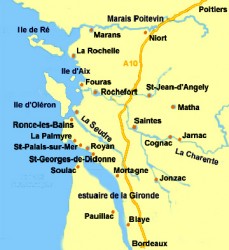
poitou-charentes map

Poitou-Charentes region showing Ile de Ré.

The story has it that this method of farming mussels was started by a shipwrecked Scotsman (or Irishman?), Patrick Walton, in 1235. Although the locals took him in, he was stranded and without money, so he decided to take up his usual occupation of hunting sea birds. He strung his nets along the coast, holding them in place with wooden posts stuck into the ground. To his great surprise he discovered that his posts were “invaded” by tiny mussels that multiplied at a phenomenal rate. He soon changed professions, and started trapping mussels and fattening them — they were a lot faster to fatten than birds — and in so doing invented the first mussel farms using young tree trunks (bouchot means young tree trunk). It is now common practice on the Atlantic Coast of France.

Continue Reading…

Never miss a post
Name: 
Your email address:*
Please enter all required fields
Correct invalid entries

What to Eat in France: Poulet Vallée d’Auge

Published by Tuesday, August 25, 2015 Permalink 0

What to Eat in France: Poulet Vallée d’Auge, Normandy Chicken in the Style of the Auge Valley

by Jonell Galloway

Apples and cream are a quintessentially Norman flavor combination. This is a festive dish made on Sundays and holidays.

In Normandy, they would traditionally drink it with dry cider or Pommeau, but a fruity white wine such as a Riesling goes well, or even dry white Burgundies. If you prefer red, try a light one, such as Saint-Nicolas-de-Bourgueil or another Loire red.

Continue Reading…

Never miss a post
Name: 
Your email address:*
Please enter all required fields
Correct invalid entries

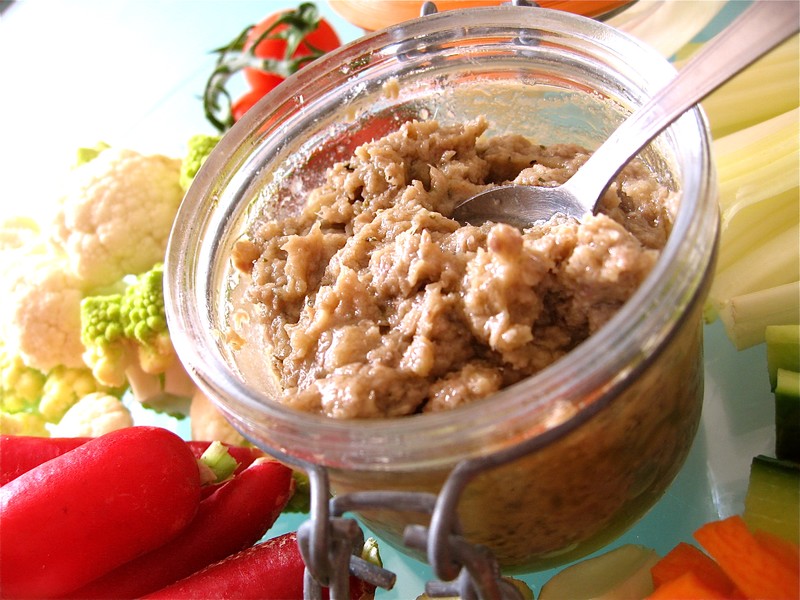
What to Eat in France: Anchoyade Languedocienne

Published by Friday, August 21, 2015 Permalink 0

What to Eat in France: Anchoyade Languedocienne or Anchovies from the Ancient Province of Languedoc

by Jonell Galloway

Quand se garnis uno ensalado,
Fau qu’aquéu que met la sau fugue un sage;
Aquéu que met lou vinaigre, un avare;
Aquéu que met l’òli, un proudigue.–Popular minstrel rhyme

“When dressing a salad, the person who adds the salt has to be careful; the person who adds the vinegar wise, and the person who adds the oil generous,” said the wandering minstrels in Langue d’Oc.

Anchoyade is the langue d’oc spelling. In French (and in the Provençal dialect), it is written anchoïade. In English, anchoiade.

The former province of Languedoc bordered Provence, where anchoïde is king, but in Languedoc, anchovies are mashed into a paste. Anchoïade is to Provence what fondue is to the Savoy. When the anchovy mixture is pounded in a mortar, as it is in Provence, it is actually anchovy paste. Anchoyade Languedocienne differs in that the anchovies are fried and served whole.

Technically, anchoïade is considered a sauce in France, although it is eaten as we would eat dip, called bagna cauda, or banha cauda in Provençal, with fresh raw vegetables into which it is dipped, or as a spread on toast. It is also used to make Fougasse aux Anchois and on salads.

In the region, anchoïade is most often accompanied by a dry white Cassis wine.

This is a traditional recipe and is perfect for topping a salad. Today, it is almost always ground into a paste like in Provence before serving as a dip. If you wish to do this, see the instructions following the traditional recipe.

Continue Reading…

Never miss a post
Name: 
Your email address:*
Please enter all required fields
Correct invalid entries

What to Eat in France: Bourride à la Sétoise

Published by Thursday, August 13, 2015 Permalink 0

What to Eat in France: Bourride, or Provençal Fish Soup with Aioli in the Style of Sète

by Jonell Galloway

Bourride is the specialty of Sète, a town on the coast of the Languedoc in Provence. Sète is one of the largest fishing ports in the region. Native poet Paul Valéry called it l’île singulaire, the singular island, because it is nestled in between two salt water lakes and the sea.

Bourride is said to date back to the Phocaeans, the ancient inhabitants of Marseilles, then called Massilia.

In Provençal, it is called boulido, meaning “boiled.” It is not unlike bouillabaisse, a specialty of nearby Marseilles, the difference being that bourride is made with only white fish — monkfish tails in particular, and that it is accompanied by aioli instead of the traditional rouille served with bouillabaisse. Shellfish are never added.

My recipe is very traditional. There are many variants, but the aim of this series of articles “What to Eat in France” is to seek original or traditional recipes for traditional, regional dishes.

This dish is a sure pleaser for parties and is easy enough to cook ahead, doing everything but poaching the fish, which should be done before serving.

In the region, many locals drink rosé wine such as Coteaux-d’Aix-en-Provence with bourride, but one might just as easily pair it with a perfumed Languedoc white. There are a world of them to be discovered, but since they are not, for the most part. A.O.C., it’s difficult to recommend one in particular. It’s a matter of producer as much as place.

Continue Reading…

Never miss a post
Name: 
Your email address:*
Please enter all required fields
Correct invalid entries

What to Eat in France: Pâte de Coings

Published by Tuesday, August 11, 2015 Permalink 0

What to Eat in France: Cotignac ou Pâte de Coings, or Quince Cheese or Paste

by Jonell Galloway

Before having the best Cotignac sent from Orléans, because you were yearning for the tastes of  your childhood…Avant de faire venir d’Orléans le meilleur cotignac, puisque vous vouliez redevenir enfant et goûter au cotignac…—Balzac, Lettres à l’Étrangère

Quince is my husband’s favorite word. Annoying situations or people are quinces in his lexicon. But quinces can be most agreeable, as in the case of quince paste, a cherished confection in France. Although the fruit must be cooked to be digestible, rather like annoying situations have to be cogitated over to be digested, it is worth the effort. They are, after all, a member of the Rosaceae family, like apples and pears.

Quince paste, often called quince cheese or in Spanish membrillo, is not specific to France. In fact, it dates as far back as the Ancient Greeks, who made a similar preparation using honey instead of sugar.

Cotignac d’Orléans, quince cheese from the region of Orléans, has a special place in the history of France. In the Middle Ages, a pastry chef from the village of Cotignac in the region of Var in the southeast set up shop in Orléans. He made quince cheese, which came to be known as Cotignac, and which became a favorite of King François I. French kings continued the tradition, and Louis XIV and XV offered Cotignac to ambassadors and other important guests.

There are also historical references to a Cotignac from Mâcon.

How is Cotignac different from other quince cheese? It’s not, really. The name just stuck because of its place in history.

Continue Reading…

Never miss a post
Name: 
Your email address:*
Please enter all required fields
Correct invalid entries

What to Eat in France: Buckwheat Crêpes

Published by Sunday, August 2, 2015 Permalink 0

What to Eat in France: Galettes de Blé Noir, or Breton-style Buckwheat Pancakes

The buckwheat crêpes of Brittany are unique in the context of French cuisine. They go by many names: galettes de sarrasin, crêpe bretonne, galette de blé noir.

Crusaders brought back buckwheat from Asia in the twelfth century, but it proved to be hard to grow until they took it to Brittany, where there is always plenty of rain, yet the climate is not harsh and the soil is acidic: all the right conditions for growing blé noir, meaning literally “black wheat,” even though it’s not technically of the wheat family.

It was Anne of Brittany who had it planted it all over Brittany and made it part of the Breton diet at the beginning of the fifteenth century. It grows fast and is ready to eat in 100 days, so it helped feed Bretons for centuries, and is often referred to as “poor people’s wheat,” since wheat was only affordable for the rich in those days. It was probably used for gruel or very thick griddle cakes at the beginning.

It still took centuries before the buckwheat pancake as we know it to became popular. The original recipe, which dates from some one thousand years ago, contained only buckwheat, salt and water and was much thicker than the crêpes we know today, which also contain milk, eggs and regular wheat flour, giving a thinner crêpe.

On February 2, Catholics celebrate Candlemas by eating buckwheat crêpes together. For farmers, this date concurs with the end of winter and the beginning of the new farming year, so superstitious farmers keep the candles from this celebration lit to protect their future harvests.

Traditionally, buckwheat galettes are reserved for savory dishes, and are not used for dessert. The Bretons drink apple cider with them.

Continue Reading…

Never miss a post
Name: 
Your email address:*
Please enter all required fields
Correct invalid entries

What to Eat in France: Saffron Mussel Soup

Published by Wednesday, July 29, 2015 Permalink 0

What to Eat in France: Soupe de moules safranée, or Saffron Mussel Soup

by Jonell Galloway

Saffron mussel soup is from the Loire region. The particularity of the Loire version of this soup is that it has leeks, which are not commonly used with mussels. The Loire Valley produces more than 24% of all leeks in France, more than any other region.

The proportions of the ingredients can vary, although the fumet needs a bit more precision than the mussels and soup. The general rule is to make as much fumet as you need for the amount of mussels you’ve cooked.

Continue Reading…

Never miss a post
Name: 
Your email address:*
Please enter all required fields
Correct invalid entries

What to Eat In France: Agneau au Sel, Rack of Lamb in Salt Crust

Published by Tuesday, July 28, 2015 Permalink 0

What to Eat In France: Agneau au Sel, Rack of Lamb in Salt Crust

by Jonell Galloway

Agneau au sel, or rack of lamb cooked in a coarse salt crust, is a specialty of the Loire region.

Ingredients

1 1/2 lbs rack of lamb
3 lbs. coarse salt
2 sprigs thyme

Instructions

  1. Preheat oven to 464° F.
  2. Pour 1 1/2 lbs. of coarse salt into a baking dish large enough to hold the rack of lamb.
  3. Place the rack of lamb on this salt.
  4. Cover with another 1 1/2 lbs. and with thyme.
  5. Bake for 25-30 minutes.
  6. Break the salt crust and carefully lift out before cutting.

Continue Reading…

Never miss a post
Name: 
Your email address:*
Please enter all required fields
Correct invalid entries

3-DAY TASTE AWAKENING COURSE IN CHARTRES

Published by Tuesday, June 30, 2015 Permalink 0

SEPTEMBER 17-20, 2015, DURING AUTUMN EQUINOX AND LIGHT FESTIVAL IN CHARTRES, FRANCE

Award-winning wine writer James Flewellen and Cordon Bleu-educated cook and food journalist Jonell Galloway present food and wine tasting masterclasses in the historic French city of Chartres. Comprising dedicated wine tastings, sumptuous meals made from local ingredients paired with regional Loire Valley wines and a unique, “sense-awakening” taste experience, our food and wine holiday courses will help unlock your taste buds and introduce the richness of aromas, flavours and textures present in food and wine. A music festival, with live music in the streets, restaurants, theatres, churches and bars, is held to celebrate the Autumn Equinox and to mark the end of the Festival of Lights. To sign up, please click here or fill in the contact form below.

Continue Reading…

Never miss a post
Name: 
Your email address:*
Please enter all required fields
Correct invalid entries

UA-21892701-1