La Vendange: The Grape Harvest on a Small Country Estate in France

Published by Monday, September 24, 2012 Permalink 0

by Vendange

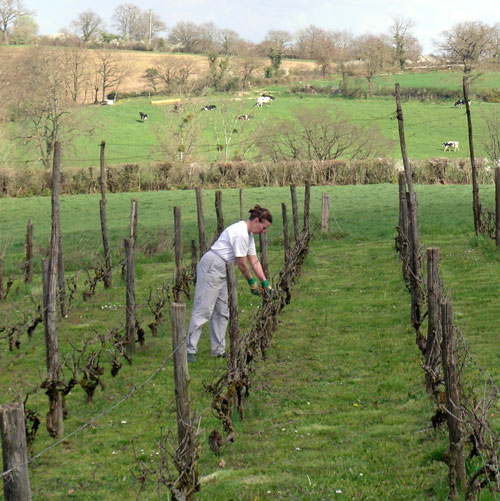
When we lived in the white wine we had vines. We were outrageously excited about the prospect of making our own wine. Of course, we were sure it would be wonderful. I mean, we had been drinking it for years, we should know how to do it, right?

Continue Reading…

Never miss a post
Name: 
Your email address:*
Please enter all required fields
Correct invalid entries

What we’re reading today: GMO labeling, Nancy Hachisu – Japanese Farm Food, Chocolate is Healthy

Published by Monday, September 24, 2012 Permalink 0

by Jonell Galloway

Click here to read our roundup of today’s international food news.


Never miss a post
Name: 
Your email address:*
Please enter all required fields
Correct invalid entries

Switzerland: Tasting Week (La Semaine du Goût) Program

Published by Thursday, September 20, 2012 Permalink 0

by Jonell Galloway

Click to see the Tasting Week program for the entire country. Tasting week runs from 13 to 23 September 2012.

This year many of the events are sponsored by Savoring a week of ‘slow food’ across the country.


Never miss a post
Name: 
Your email address:*
Please enter all required fields
Correct invalid entries

The Art of Tasting Wine with James Flewellen: Using your nose: Aromas in red wines

Published by Friday, August 31, 2012 Permalink 0

by James Flewellen

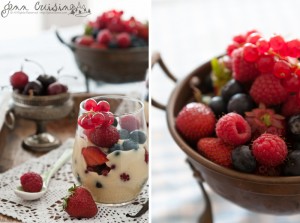
Like white wines, the aromas of reds can similarly be broken up into ‘fruity’ and ‘non-fruity’ categories. Rather than a fruit ‘spectrum’, however, I tend to think of red wines in terms of red fruit and black fruit. Some of the lighter, more ethereal red wines have notes of redcurrant, cranberry, raspberry and strawberry, while in fuller-bodied wines you’ll often find luscious blackcurrant, blackberry and damson. Some wines, notably Pinot Noir can straddle the red fruit-black fruit divide, while I often find cherry and red plum notes specifically in Italian varietals.

I mentioned that with white wines, the position of the wine’s aroma profile along a ‘spectrum’ can indicate the ripeness of the fruit, and thus the climate in which the vine has grown. There is an analogue with red wines, where wine from cooler climes may smell (and taste) more of tart, fresher fruit while wine from wamer places will have notes of ripe, jammy or even baked fruit. Think of the subtle notes of fresh raspberries versus the heady aroma of a pot of homemade raspberry jam on the boil. Grapes from very hot places can have yield wines with dried fruit notes such as raisin, prune or date.

Some fruit aromas found in red wine

It’s perhaps worth mentioning here, that other than flavouring added by maturation in oak barrels, the flavours and aromas in wine come entirely from the fermentation of grapes. Grapes are not so far removed from other fruits on the evolutionary tree that it should come as no surprise that we might find some of the same chemicals in grapes as we do in apples, cherries or blackberries. Over millennia humans have domesticated the vine and carried out a series of genetic selections to bring forward different characteristics in what we now term different ‘varieties’ of the vine.

On the whole, red wines are more suited to oak ageing than whites. Thus we’ll often get the characteristic vanilla or coconut notes from wines that have seen, respectively, new French or American oak. More red wines will be aged in what is termed ‘old oak’ or ‘second use’ barrels. These are barrels that have already been used for one vintage and have thus imparted most of their bright, toast and vanilla aromas to a previous wine. Their effect on a subsequent wine is thus more subtle, and in such wines you’ll often find aromas of nuts — hazelnuts and walnuts are the two I find more commonly — and also coffee, mocha and chocolate.

Image Copyright James Flewellen. All Rights Reserved.

French oak barrels used for maturing red wine in Bordeaux.

Red wines too have a broad spectrum of non-fruit aromas. Wine writers and critics have come up with all sorts of interesting descriptors to attempt to communicate these sensations to their readers, and although they may sound rather rude, they are in fact (usually) complimentary. Some that spring to mind are farmyard, wet wool, horse manure, charcoal, ash and earth.

Spices too are a rich vein to tap for red wine aroma descriptions. Licorice, anise, Chinese five-star, pepper – both white and freshly ground black, juniper, cloves, nutmeg to name a few.

Some red wines have a herbaceous aspect to their aroma profile. Cabernet Sauvignon from a relatively cool climate famously has a note of ‘green bell pepper’. Cabernet Franc can smell grassy and leafy while Pinot Noir can bring forth hints of mushroom or autumnal leaves. Others still have floral aromas.

The most interesting wines will smell of many things; the aroma will swirl, morph and change over time in the glass; with bottle age, even more aromas come to the fore while other recede into the background. And of course different people will notice different things in the same glass of wine. Smell is a very powerful  trigger for memory — which perhaps explains some of the more poetic descriptions for wine aromas. The great thing is that there are no wrong answers — nobody else has your olfactory sense nor your memories top draw upon. What can be frustrating to begin with is not to have the right vocabulary for describing what you smell. The best way to solve this is to buy some fruit, or some flowers, or some spices and just smell them! It might seem a bit mad but surely, not to notice what your wine smells like is to miss out on at least half the fun!

__________________

James Flewellen is The Rambling Epicure wine columnist. James is a biophysicist at the University of Oxford. Originally from New Zealand, the huge range of wine James discovered in Europe spurred his interest in all things vinous. He became involved in the University’s Blind Wine Tasting Society and has recently completed a two-year term as its President. During this time he represented the University in a number of domestic and international wine tasting competitions, winning several awards. He is currently completing the WSET Diploma in Wine and Spirits. James has a passion for wine communication and education and runs the Oxford Wine Blog and the Oxford Wine Academy.

Never miss a post
Name: 
Your email address:*
Please enter all required fields
Correct invalid entries

Switzerland: Take a Gourmet Walk in the Vineyards of Mont-sur-Rolle

Published by Monday, August 27, 2012 Permalink 0

by Jonell Galloway

Discover the various wine grape varieties and wines of Mont-sur-Rolle at the Caveau de Mont-sur-Rolle on September 1st, 2012. This is a great introductory wine course to Vaud wine.

The walk makes for a lovely daytime family outing. The 5-kilometer walk through the vineyards includes 9 stops at different grand cru wineries. Wine tastings are given by the actual wine maker, with explanations about the method and technique used. It is an easy walk, so children can even come along. The discovery tour starts every 15 minutes, from 10:30 a.m. to 2:00 p.m.


If you’d like to reserve a traditional Swiss dinner and make it a gourmet walk, you must reserve ahead. Adults 60 CHF, children 25 CHF.

Departure

From 10.30 a.m. in front of the Caveau des Vignerons
Address: Route du Coeur de la Côte, 1185 Mont-sur-Rolle

Festivities

From 12 p.m. at Domaine de Bellevue
Musical entertainment
Snacks and refreshments
Wine tasted on sale

 Contact Tania de Wateville by email at montbenay@gmail.com or by phone 41 (0)79 363 48 59.


Never miss a post
Name: 
Your email address:*
Please enter all required fields
Correct invalid entries

The Art of Tasting Wine with James Flewellen: Using your nose: Aromas in white wines

Published by Monday, August 27, 2012 Permalink 0

by James Flewellen

For me, the greatest tragedy of having a cold is not hours spent in bed when I could be out doing something ‘productive’. Rather, it’s losing my sense of smell with a blocked nose: food simply doesn’t taste the same!

Just like food, the aroma of a wine is very important to our overall perception, and enjoyment, of it. We smell a wine without even trying when we go to drink it. Our taste buds are immediately informed about what to expect and we unconsciously assess the flavour of a wine based on whether it lives up to how it smelled. We even have smell sensors that can be reached from inside our mouth. These are especially triggered by wine, whose alcoholic content helps lift the aroma molecules to reach these sensors even after we swallow. Wine can be such a complex beverage, it’s a shame not to experience fully everything it has to offer, which is why you’ll see wine geeks swirling a glass of fine wine and sticking their noses in endlessly, before even taking a sip!

Image Copyright. All Rights Reserved.

When pairing food and wine think also about complimenting the aromas of each. The stone fruit and honey aromas of this Tokaji paired very well with an apricot tarte tatin.

Given the density of aroma molecules found in a wine and a human’s comparatively poor sense of smell, it can sometimes be a challenge identifying what it is we’re actually smelling in a wine. This is no bad thing — if you can immediately name a single thing a wine smells like, it’s a sign that it’s not particularly complex or interesting wine.

To help simplify things I like to break up the aromas I might be getting in a wine into different categories. Firstly I focus on the ‘fruit’ aspect of the bouquet. Does the wine smell ‘fruity’ or is the nose (wine term for ‘aroma’) dominated by non-fruit aromas? Or perhaps they are both there in equal measure. If fruity, what sort of fruits?

For white wines, I tend to think of a ‘fruit spectrum’. At one end of the scale we have cool climate fruits, such as apples, pears, lemon and grapefruit. We move through to stone fruit — peaches, apricots — and then to tropical fruits — for instance pineapple, guava, mango. This ‘spectrum’ is an indication of the ripeness of the grapes and can give us a clue as to the climate in which the grapes are grown. To generalise, the more towards the tropical end of the spectrum, the warmer the climate.

Part of the ‘fruit spectrum’.

Of course there are exceptions to this rule, and some wines have distinct aromas of certain fruits — Gewurztraminer typically smells of lychee for instance. It’s interesting to note that very few wines actually smell of ‘grapes’. Perhaps this reflects the reduced variation in table grapes we have available to us in a globalised, homogenised food market — most of the table grapes I’ve seen in supermarkets around the world are Thompson Seedless. Although there is of course the argument that if grapes are fine enough to be made into wine, why would you waste them on a table! Wines made from Muscat are one exception to this rule, and are often described as having a ‘grapey’ aroma.

As far as non-fruit aromas go, we can have vegetal or herbaceous aromas — Sauvignon Blanc is often described as smelling of gooseberry and nettle, or even tomato leaf. Shelled peas, grass and hay are all terms I’ve used more than once too. Wines can smell musty or animally too, which is not always a pejorative term. Loire Chenin Blanc can have an intriguing aroma commonly referred to as ‘wet wool’! And of course we have flowers. Muscat smells of orange blossom; Chablis can be reminiscent of lilies. If you know your flowers you’ll be able to discover all sorts of comparisons with wine.Image Copyright. All Rights Reserved

You’ll often hear the term ‘minerality’ thrown about in wine descriptions. Minerality is more commonly used to describe a component of taste, and exactly what it means is a matter than is hotly debated. As far as aromas go, some wines do have a sort of chemical smell such as flint, gunpowder, kerosene, petrol or wet asphalt. Again, these are not always used in a negative way. The most complex wines will have elements from all categories in varying degrees and over the course of a meal or tasting different aspects of the bouquet will come to the fore, while others will recede in prominence as your nose gets used to smelling them.

The final aspect of the nose of a white wine may be the presence of oak. If a wine has been aged in new French oak, you may expect aromas of vanilla, butter, nuts, spices, or even freshly sawn planks — if the wine is very young. American oak has a more lifted, slightly confected aroma often described as coconut, but also as white chocolate.

As you’re picking up, wine is a complex concerto of hundreds of aromatic compounds. As humans, we’re lucky enough to be able to smell even some of the, though it can take practice to identify what exactly we smell. As with everything though, it is simply a matter of starting to pay attention to what we’re smelling, both in and out of the glass.

Never miss a post
Name: 
Your email address:*
Please enter all required fields
Correct invalid entries

The Art of Tasting Wine with James Flewellen: What are we looking for (in a wine)?

Published by Thursday, August 9, 2012 Permalink 0

by James Flewellen

Before we get to tasting or even smelling it, the first of our senses to be engaged by a wine is our sight. Observing a wine is the first thing a wine judge or blind taster will do when assessing a new wine, but what exactly can the appearance of a wine tell us and what are we looking for?

Colour, ‘brightness’ or intensity, spritz, sediment, the difference between the core and the rim of the wine all give away subtle clues to the wine-making process, the possible age of the wine, and the grape variety.

Spritz is the term given to small bubbles of gas that may appear just under the surface of a wine immediately after pouring. They are usually carbon dioxide, which is a natural by-product of the fermentation process. Most of it is coaxed out of the wine during the winemaking through the racking process prior to bottling. However, in some wines — especially white wines fermented in airtight stainless steel tanks — some dissolved CO2 remains. In the vast majority of cases, spritz is absolutely fine and will dissipate after giving the wine a good swirl.

A glass of sparkling wine from the Limoux regi...

A glass of sparkling wine from the Limoux region of France.


Champagne and other sparkling wines, of course, make use of this by-product to obtain their characteristic sparkle. The appearance of bubbles in a sparkling wine actually has a lot more to do with the glass in which the wine is served than any inherent quality of the wine. Bubbles of CO2 nucleate at imperfections on the glass surface — deliberate or accidental scratches or microscopic bits of dirt or left-over detergent. A sparkling wine’s mousse — the French term for the fizz — is best assessed on the palate for quality purposes. That said, semi-sparkling wines will have a different character to the bubbles than a full-blown traditional method sparkling wine.

White Burgundy in the glass.


The colour of a wine is certainly the most obvious characteristic of a wine’s appearance. White wines have a colour spectrum from almost watery-white, through green, to straw, lemon, golden, and finally to coppery-orange for some dessert wines, although the vast majority fall under ‘lemon’ or ‘straw’ for me! Reds can be various shades of red (you’ll frequently hear the more poetic ‘ruby’) or purple, and rosé can go from a quite deep magenta through to a pale salmon-pink.

Both white and red wines converge to orange, or ‘brick’, as they age. This is due to the slow oxidation of the colour components in the wine. The best way to assess potential age of a wine is to tilt the wine in the glass over a white background and to look for any difference in colour between the ‘core’  of the wine (the greater body of liquid) and the ‘rim’ (the edge). This is a lot more obvious in aged red wines, where you’ll see a deeper ruby core progressing to a brick-orange at the rim. A wine that is thoroughly oxidised will be brown in colour — not necessarily a fault as some wines, Madeira for instance, are made in a deliberately oxidative style.

Wines of the same hue can vary in the depth, or opacity, of this colour. Thicker-skinned grapes imbue more colour to a wine than those with thinner skins — think of Malbec or Syrah versus Pinot Noir. Grapes tend to develop thicker skins in hotter and sunnier climates too, thus a Chilean Cabernet Sauvignon will typically be deeper in colour than one from Bordeaux. The winemaker also has a role to play, with different winemaking techniques allowing greater or lesser extraction of these colour compounds into the final wine during the maceration process. Winemaking explains most of the differences in depth of colour in rosé wines.

Thick skin wine grapes.


This idea is not limited to red wines, with Pinot Gris and Gewurztraminer two examples of relatively thick-skinned grapes that can yield a deeper-coloured white wine.

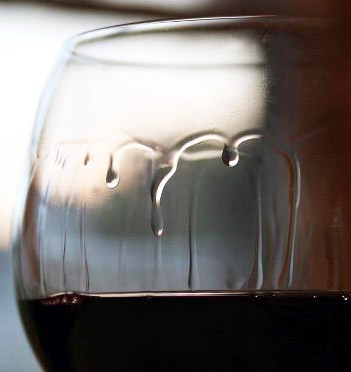
Some people pay a lot of attention to the ‘legs’ of a wine. That is to say, the ‘tears’ of alcohol that run down the inside of the glass following a swirl of the wine. They are an indication of viscosity, and related to alcohol, sugar and glycerol levels in the wine. The excellent wine tutor Michael Schuster once told me that he doesn’t worry about these – there’s far more information in the structure of the wine on the palate – and I’m inclined to agree. On the other hand, I learned from a French student of wine that these ‘legs’ are a good indication of age in sweet wines, Sauternes for instance. For me, the jury’s still out on that one – I’ll need to drink a lot more aged Sauternes to compare!


Legs or tears of wine on side of glass.


Finally we come to sediment in a wine. The only sediment you should see in a white wine is tartrate crystals. These originate from the natural tartaric acid in the wine and can solidify over time. They’re nothing to worry about, although many consumers have a perception that they are a fault. The only way to get rid of them is to chill the wine, prior to bottling, to at least -8°C for several days, and even then you may not get them all. As you can imagine, this is an expensive and energy-intensive exercise, which is one of the reasons the Riesling community in particular is trying to educate the public about the presence of these ‘wine diamonds’!


Sediment in wine.


Red wines will precipitate out tannins and colour molecules over time. The more tannic a wine is to begin with, the more potential for sediment it has. Very fine sediment, before it forms large clumps, can lead to a wine appearing slightly cloudy. These forms of sediment are nothing to worry about and can easily be dealt with by leaving a bottle upright for an hour or two to allow the sediment to collect at the bottom, or by decanting the wine before serving.

There’s a lot to an appearance of a wine, although ultimately its importance is superseded by what you smell, taste and feel about a wine. Thus for the average enthusiast, you’re more likely raring to get straight to the nose and the taste. If you are interested in puzzling over a wine’s appearance for tasting purposes, the important thing to remember is that there are few hard and fast rules. Each winemaker has a different approach to the next, which results in different wines – even if their vineyards are next door! The key is experience and observation. Make a note of what you’re drinking and use it to compare to other experiences. The huge variety of wines is what keeps blind tasting so interesting, so engaging, and is what makes it so hard!



Never miss a post
Name: 
Your email address:*
Please enter all required fields
Correct invalid entries

Geneva: Rock ‘n Roll Spanish Wine Tasting

Published by Thursday, August 9, 2012 Permalink 0

Wine Defender Geneva is sponsoring a wine tasting on August 9, 2012, from 7 p.m. to 10 p.m. at the Cave Do Bem, located at 14, boulevard James Fazy. The tasting will feature Spanish wines with tasty tapas and rock music provided by Bye Bye Chicken Head DJ, preceded by a tribute to Chavela Vargas. The cost of admission is 10 CHF.

Cave Do Bem is located just 2 minutes from the Cornavin train station. It is advisable to reserve ahead of time. Tel. 41 (0)76 273 88 27.


Never miss a post
Name: 
Your email address:*
Please enter all required fields
Correct invalid entries

The Art of Tasting Wine with James Flewellen: The Tools of the Trade

Published by Tuesday, July 31, 2012 Permalink 0

by James Flewellen

OK, so you’re interested in getting the most out of your wine. Perhaps you want to have a go at tasting some wines blind, or perhaps you want to maximize the expression of a wine to pair with your meal. What’s the first step? Well, to begin blind tasting, you need three things other than wine, a nose and taste buds: namely, an appropriate glass, a white background, and good lighting (you don’t need a blindfold – it’s hard enough as it is!).

A classic ‘tulip’ shaped glass is ideal for tasting wine as it allows the aromas to concentrate at the tapered mouth of the glass.


An ‘appropriate’ glass – what does that mean? Surely any old wine glass will do? Well, any wine glass is better than a coffee mug, say, but a long-stemmed tulip-shaped wine glass is ideal for blind tasting. The reason behind the tulip-shape is to allow the aromas of the wine to develop and concentrate inside the glass without them escaping too much. This shape also lets you tilt the glass significantly to observe it without spilling the wine everywhere. The appearance of a wine in the glass gives away great clues as to the climate the grapes were grown in, the age of the wine, elements of the wine-making process and even the grape variety itself. It should thus go without saying that the glass should be clear. While a very few tastings use black glasses to obscure the colour of the wine, I personally don’t see the point and would certainly steer clear from the hideous coloured champagne glasses I’ve seen in department stores!

Continue Reading…

Never miss a post
Name: 
Your email address:*
Please enter all required fields
Correct invalid entries

Jonell eats her way through Trieste: take a culinary and cultural stroll through Trieste

Published by Monday, July 23, 2012 Permalink 0

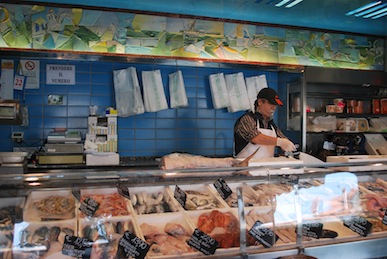
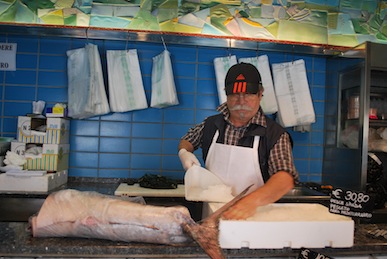
Trieste holds a unique place in European history and culture. Next to the Balkans (5 km from Slovenia and 10 km from Croatia), a port built by the Austro-Hungarian Empire on an ancient Roman site, for a short time an independent principality, now part of Italy: the influences are many. It has a mini-culture all its own, with influences from all these countries and periods. You’ll see it in the architecture, churches, food, and, we heard it in the language and names of dishes and foods. The author James Joyce lived in Trieste for 15 years, partially to get away from the “crowd” and get some writing done, and partially to be near his writer friend, the Italian author, Triestine Italo Svevo, whose statue you will see in this photo documentary, and who some say served as a model for Joyce’s character Leopold Bloom in Ulysses.

You can either watch this as a slideshow, or if you want to see the full shot, just click on the photo.


Never miss a post
Name: 
Your email address:*
Please enter all required fields
Correct invalid entries

UA-21892701-1