Food and Wine Tasting Masterclass in Chartres

Published by Thursday, June 15, 2017 Permalink 0

Exploring the Food and Wine of the Beauce and the Loire Valley

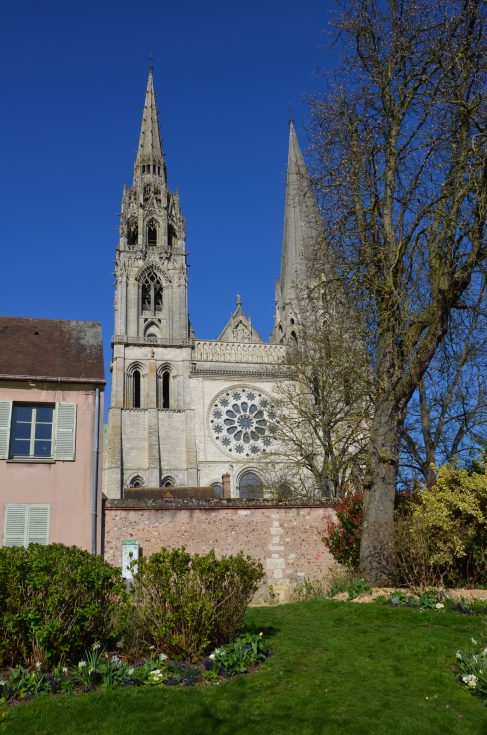
Award-winning wine writer, James Flewellen, and Cordon Bleu-educated cook and food journalist, Jonell Galloway, present wine and food tasting masterclasses in the historic French city of Chartres. Comprising dedicated wine tastings, sumptuous meals made from local ingredients paired with regional Loire Valley wines and a unique, “sense-awakening” taste experience, our food and wine holiday courses will help unlock your taste buds and introduce the richness of aromas, flavors and textures present in food and wine.

  • Courses conducted in English
  • All lunches, dinners, and wine included
  • We use only the highest quality, locally-sourced produce and ingredients
  • Over 10 hours of professional food and wine tasting instruction
  • Taste over 20 (4-day course) different wines from the Loire Valley
  • Learn the art of food and wine pairing
  • Dine and learn in a 1,000-year-old converted chapel
  • Socialize with like-minded wine- and food-lovers
  • Experience the atmosphere of the Chartres Festival of Lights in a UNESCO World Heritage site
  • Guided city tour & collection from the station included

Click here for more details.

Dates for our 2017 masterclass are now confirmed:

  • Our signature 4-day Taste Unlocked masterclass costs €695pp and runs from 14–17 September, coinciding with the world-famous Chartres Fête de la Lumière.

James and Jonell are also available for bespoke tasting courses and events throughout the year for groups of 4 or more. Please contact us for more information.

Never miss a post
Name: 
Your email address:*
Please enter all required fields
Correct invalid entries

3-DAY TASTE AWAKENING COURSE IN CHARTRES

Published by Tuesday, June 30, 2015 Permalink 0

SEPTEMBER 17-20, 2015, DURING AUTUMN EQUINOX AND LIGHT FESTIVAL IN CHARTRES, FRANCE

Award-winning wine writer James Flewellen and Cordon Bleu-educated cook and food journalist Jonell Galloway present food and wine tasting masterclasses in the historic French city of Chartres. Comprising dedicated wine tastings, sumptuous meals made from local ingredients paired with regional Loire Valley wines and a unique, “sense-awakening” taste experience, our food and wine holiday courses will help unlock your taste buds and introduce the richness of aromas, flavours and textures present in food and wine. A music festival, with live music in the streets, restaurants, theatres, churches and bars, is held to celebrate the Autumn Equinox and to mark the end of the Festival of Lights. To sign up, please click here or fill in the contact form below.

Continue Reading…

Never miss a post
Name: 
Your email address:*
Please enter all required fields
Correct invalid entries

La Semaine du Goût Geneva – Sept. 12, 2013

Published by Wednesday, September 11, 2013 Permalink 0


La Semaine du Goût Genève – Geneva Tasting Week

Swiss tasting week, referred to as “La Semaine du Goût” in the French-speaking part of the country, starts on Thursday, September 12, and runs until the 22nd. Each producer, restaurant and farm participating offers events. I will list a program of events, by day, in the Geneva area.This event is sponsored in part by Slow Food Switzerland. Here is the schedule for Thursday, September 12.

Swiss Fondue, Salone del Gusto 2012 in Turin


Continue Reading…

Never miss a post
Name: 
Your email address:*
Please enter all required fields
Correct invalid entries

Elements of Wine 7: Finish

Published by Tuesday, August 27, 2013 Permalink 0


Elements of Wine 7: Finish

by James Flewellen

The ‘finish’ of a wine is also known as its ‘length’. It refers to how we perceive the wine once we have swallowed it. Much of our sense of taste is actually due to olfactory senses in our nose picking up volatile aroma chemicals from inside the nasal cavity (called ‘retronasal stimulation’). Thus, we can continue to ‘taste’ the wine after it has left our tongues.

Senses of smell and taste.

Senses of smell and taste.


I think about the finish of a wine in a number of ways. Firstly, I consider the length: how long does the sensation of the wine’s flavours last after swallowing? Simple wines will disappear from the palate almost immediately after swallowing, whereas the flavours of the finest wines continue to be experienced after many minutes. Indeed, there have been occasions where I’ve woken up the next morning (even after brushing my teeth) and am still able to recall the flavours and aromas of a particularly fine wine the night before!


The finest wines in the world have finishes that can last for hours.

The finest wines in the world have finishes that can last for hours.


Secondly, I think about the quality of the finish. Inasmuch as the wine on the palate needs to be balanced, so too should the finish be harmonious. A final sensation of too much acidity without any fruit flavours present, or too much alcohol leaving an unpleasant burn on the back of the throat is not the sign of a fine wine – no matter how long these sensations last. Likewise a bitter tannic finish, or a cloying sweet finish, are signs that the wine is not well balanced structurally. Some wines can leave unpleasant flavours in the mouth that you would rather disappeared quickly! An ideal finish is one that combines length with elegance and has the perfect balance of flavour, alcohol, acidity and sugar.

Sign up for Jonell Galloway and James Flewellen’s  “Celebrate the Chartres Festival of Lights & Autumnal Equinox with a Food & Wine Tasting Masterclass” in France from September 19 to 22, 2013.


__________________

Dr James Flewellen is The Rambling Epicure wine columnist. James is a biophysicist at the University of Oxford. Originally from New Zealand, James learned his trade in taste through the Oxford Blind Wine Tasting Society, of which he was the President from 2010-2012. During his term, he represented Oxford at many international blind tasting competitions – twice winning the prestigious ‘Top Taster’ Award in the annual Varsity blind tasting match against Cambridge University and captaining winning teams in competitions throughout Europe.

James runs wine education courses in Oxford through the Oxford Wine Academy and is completing the WSET Professional Diploma in Wine and Spirits. He is the founder of  The Oxford Wine Blog and co-author of the forthcoming book: The Concise Guide to Wine and Blind Tasting.

Never miss a post
Name: 
Your email address:*
Please enter all required fields
Correct invalid entries

Elements of Wine 6: Oak

Published by Thursday, August 22, 2013 Permalink 0


by James Flewellen

Elements of Wine 6: Oak

Ageing a wine in oak barrels has two main effects. The first is to imbue the wine with flavour and aroma compounds from the wood. This occurs most notably when the wine is matured in barriques (225 litre barrels) made from ‘new’ oak. New oak means the barrels have not been used before for ageing wine, thus there is a higher concentration of flavour molecules to impart to the wine. Wines aged in new oak typically develop notes of butter, toast, nuts, spice, or – if the wine has been aged in American, rather than French oak – coconut and white chocolate.

wine barrels
Oak barriques for the maturation of red wineJim Nix / Nomadic Pursuits / Foter / CC BY-NC-SA


The second effect of oak maturation expresses itself structurally in the wine. Oak barrels, while impermeable to liquid, still allow a small amount of air into the wine. This air exchange allows for a very slight oxidation of the wine, an effect that can be controlled by the size of the barrel and the length of time the wine spends inside. As well as changing the colour of the wine (white wines deepen and red wines lighten) this natural micro-oxygenation ‘softens’ the wine, giving a rounder, fuller, creamier mouth-feel. Red wines also benefit from their tannins polymerising and becoming less harsh, thus integrating better into the body of the wine. Oak barrels are also often conducive to the conversion of malic acid to lactic acid.

Large oak vessels are also used as vinification vats.
Large oak vessels are also used as vinification vats.theqspeaks / Foter / CC BY-NC-SA


Old oak barrels – that is barrels which have been already used at least once to mature wine – give the benefit of the oxygen exchange with the wine without the transferal of wood flavours. It can thus be difficult to detect the use of old oak on the palate; although look out for more density on the palate and a harmonious integration of fruit flavours, body and tannin.

Sign up for Jonell Galloway and James Flewellen’s  “Celebrate the Chartres Festival of Lights & Autumnal Equinox with a Food & Wine Tasting Masterclass” in France from September 19 to 22, 2013.

__________________

Dr James Flewellen is The Rambling Epicure wine columnist. James is a biophysicist at the University of Oxford. Originally from New Zealand, James learned his trade in taste through the Oxford Blind Wine Tasting Society, of which he was the President from 2010-2012. During his term, he represented Oxford at many international blind tasting competitions – twice winning the prestigious ‘Top Taster’ Award in the annual Varsity blind tasting match against Cambridge University and captaining winning teams in competitions throughout Europe.

James runs wine education courses in Oxford through the Oxford Wine Academy and is completing the WSET Professional Diploma in Wine and Spirits. He is the founder of  The Oxford Wine Blog and co-author of the forthcoming book: The Concise Guide to Wine and Blind Tasting.


Never miss a post
Name: 
Your email address:*
Please enter all required fields
Correct invalid entries

Celebrate the Chartres Festival of Lights & Autumnal Equinox with a Food & Wine Tasting Masterclass

Published by Monday, August 5, 2013 Permalink 0

Join us at the Chartres Festival of Lights 2013 & Autumnal Equinox for a
Food and Wine Tasting Masterclass, given by Jonell Galloway, master food taster, and James Flewellen, master wine taster

The Beauce and the Loire Valley: Taste Unlocked

19 to 22 September 2013


A romantic getaway, a tasting Masterclass, and a big dose of
Druidic and Christian history, all in one long weekend at the autumnal equinox

Chartres Cathedral Lighted, creative common license, photographer unknown


Package:A 4-day Food and Wine Tasting Masterclass in the romantic, historical setting of Chartres. Classes are held in a 1,000-year-old chapel converted into Jonell’s home, just 2 minutes’ walk from the world-renowned Chartres Cathedral and 10 minutes from the train station. The Masterclass is held during the spectacular Chartres Festival of Lights, celebrated every year since 2003 on the weekend of the autumnal equinox.

Date: 19 to 22 September 2013

12 – 14 hours of instruction and workshop tasting, including discussion periods and Q&A

Lodging is in B&Bs and hotels within walking distance of the event, but lodging is not included in our price. Click here to find accommodations in all categories.

All meals and wine are included, except breakfast.

Price per person: 750 Euros

Limited to 12 participants. Early booking strongly advised.

Down payment: 250 Euros on reservation, remainder 30 days before event.

Possibility of purchasing the wines tasted during the weekend.

See details of programme and wine below.

Click on the Paypal button at the top right of the sidebar to pay by Paypal or credit card, or the  blue Contact Us button at the top right of the home page to pay by bank transfer.

[wp_paypal_payment_box email=”jonell@theramblingepicure.com” options=”Down payment 250 Euros|Full payment 750 Euros”]

Continue Reading…

Never miss a post
Name: 
Your email address:*
Please enter all required fields
Correct invalid entries

Switzerland: Ollon Wine Fair 2013, Photo Essay

Published by Monday, August 5, 2013 Permalink 0

Switzerland: Ollon Wine Fair, September 7-8, 2013

by Jonell Galloway

Balades dans le vignoble / Strolls through the Vineyards

The winemakers of Ollon in the canton of Vaud organize “Balades dans le Vignoble,” or strolls through the vineyards, every second weekend in September. You stroll through the vineyards and taste some hundred different wines from the vineyards of Ollon. It is possible to eat at numerous vineyards as well as in the restaurants and bistros in the village.

There are various means of transport, including:

  • Buses: two vintage buses as well as contemporary mini-buses to take you from one winemaker to another.
  • Mini-trains: trips through the vines.
  • Nostalgic vintage cars and sidecars: Vintage Citroën 2 CVs (see photos) and motorcycles with sidecars take visitors from one vineyard to another
  • Other transport: It is possible to walk the scenic mountain paths through the vineyards and from one vineyard to another.

Click here for details of the event: dépliant_2012.pdf (2 Mb).

Here are my photos from the 2012 wine tasting fair. Click the photos you like to enlarge them.

  • Burgundy Hail Damage May Lower Wine Output by 4 Million Bottles – Bloomberg
  • Swiss winemakers see red over duty-free plan
  • Your Cheesemonger: Understanding the Master of Milk
  • Switzerland’s real success story is not chocolates or cuckoo clocks but its economy
  • Everything Just Works Here
Never miss a post
Name: 
Your email address:*
Please enter all required fields
Correct invalid entries

Elements of Wine 3: Sugar

Published by Wednesday, July 31, 2013 Permalink 0


//

Elements of Wine 3: Sugar

Wine Tasting with James Flewellen

James Flewellen photo, wine tasting expert, The Art of Tasting Wine: James Flewellenby James Flewellen

As mentioned in my previous post on alcohol in wine, sugars accumulate in grapes as they ripen. At harvest time, grapes have a level of what is termed ‘potential alcohol’, that is the alcoholic strength of the future wine should all sugar in it be fermented to alcohol by the action of yeast cells. However, in some cases not all the sugar is fermented, leaving what is termed ‘residual sugar’ in the wine and a noticeable sweetness on the palate.

There are a number of ways to obtain sweetness in wine. The fermentation may be stopped deliberately, perhaps through addition of sulphur dioxide, which kills yeast, or through passing the wine through a membrane filter to remove the yeasts. This results in a wine of lower alcoholic strength and some residual sugar. A classic example is Riesling from the Mosel in Germany, which typically has 7-9% abv (Alcohol By Volume) and varying levels of sweetness depending on the initial level of ripeness of the grapes.
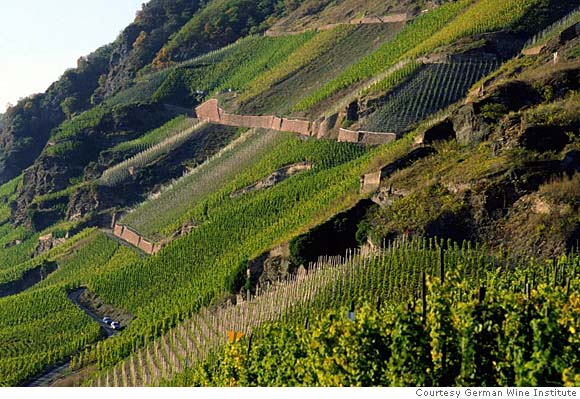
Steep Mosel vineyards in Germany, photo by http://lastingimpressionswineblog.wordpress.com/2011/02/23/german-wine-wineblog-20/

Steep vineyards of the Mosel vineyards in Germany


In other cases, there may be too much sugar for the yeast to convert it all to alcohol. Somewhere around 13-15% abv yeast stops being able to effectively ferment sugar to alcohol and naturally dies off. Super-ripe grapes will thus result in a wine with relatively high levels of alcohol and some residual sweetness. This sweetness can be quite subtle, or it can be syrupy and luscious – as found in dessert wines, which have very high concentrations of sugar in the harvested fruit.

Tasting sugar in wine is a difficult process. We can usually tell if something is ‘moderately sweet’; however it’s very hard to estimate the sweetness level in full-blown dessert wines. Wines with a little bit of residual sugar often have their sweetness masked by acidity and flavour compounds.

Sweet/Dry Wine Chart, Creative Commons photo by http://www.primermagazine.com


Sweetness in wine should be matched by a refreshing acidity for balance. This is especially true for dessert wines, which can come across as cloying without sufficient acidity. On the other hand, a touch of residual sugar, while not tasteable to most people, can give a welcome sense of roundness to a sharply acidic wine.


Sign up for Jonell Galloway and James Flewellen’s  “Celebrate the Chartres Festival of Lights & Autumnal Equinox with a Food & Wine Tasting Masterclass” in France from September 19 to 22, 2013.

___________________________


About James Flewellen

Dr James Flewellen is a biophysicist at the University of Oxford. James learned his trade in taste through the Oxford Blind Wine Tasting Society, of which he was the President from 2010-2012. During his term, he represented Oxford at many international blind tasting competitions – twice winning the prestigious ‘Top Taster’ Award in the annual Varsity blind tasting match against Cambridge University and captaining winning teams in competitions throughout Europe.

One of James’s goals is to clarify the complex and hard-to-navigate world of wine for both novice and experienced tasters. He applies his scientific training to wine education, illuminating concepts of taste, tannin and terroir in an approachable, entertaining manner. James runs wine education courses in Oxford through the The Oxford Wine Blog and is completing the WSET Professional Diploma in Wine and Spirits. He is the regular wine writer for The Rambling Epicure and is the founder of  The Oxford Wine Blog. He is also currently co-authoring The Concise Guide to Wine and Blind Tasting – a book surveying the wine regions of the world and how to blind taste.

Never miss a post
Name: 
Your email address:*
Please enter all required fields
Correct invalid entries

Elements of Wine 1: Acidity

Published by Friday, July 19, 2013 Permalink 0


James Flewellen photo, wine tasting expert, The Art of Tasting Wine: James FlewellenElements of Wine 1: Acidity

by James Flewellen

Acid in wine, photo by http://www.google.fr/imgres?client=firefox-a&sa=X&rls=org.mozilla:en-US:official&biw=1280&bih=527&tbm=isch&tbnid=0zJCNLOa8IHTHM:&imgrefurl=http://www.winesandwinemaking.com/acidity_wine.php&docid=lU-Yh-q_nn94CM&imgurl=http://www.winesandwinemaking.com/images/wine_acid.jpg&w=300&h=240&ei=la7pUYacEo7E4gSelYHYBA&zoom=1&iact=hc&vpx=768&vpy=131&dur=2051&hovh=192&hovw=240&tx=72&ty=94&page=1&tbnh=145&tbnw=178&start=0&ndsp=20&ved=1t:429,r:5,s:0,i:97 (CC)


Naturally occurring acids are present in all fruits. The major acids found in grapes are malic and tartaric. When the grape juice is fermented to become wine, these acids survive the fermentation process to end up in the bottle you’re about to open.

Acidity in wine plays a very important role in the overall structural harmony of the drink. Acid is required to balance residual sugar and alcohol. It also cuts through oils and fats present in food, providing the ideal palate cleanser between mouthfuls. An ideal wine will have a balanced acidity. Too much acid and the wine can be unpleasantly tart or sharp tasting; too little and it can taste ‘flabby’ or not as refreshing as it should.

Acids in Wine, photo by http://www.google.fr/imgres?client=firefox-a&hs=dae&sa=X&rls=org.mozilla:en-US:official&biw=1280&bih=527&tbm=isch&tbnid=m1IjwTmnK6CrlM:&imgrefurl=http://www.internationalwineguild.com/ask-iwg-acidity-and-organic-pairings&docid=foKo3uUC8dXDiM&imgurl=http://www.internationalwineguild.com/uploads/Image/AcidsinWine.jpg&w=669&h=1000&ei=f7LpUavBI-Sg4gTb9ICoBw&zoom=1&iact=hc&vpx=1057&vpy=4&dur=12309&hovh=275&hovw=184&tx=133&ty=143&page=1&tbnh=143&tbnw=103&start=0&ndsp=21&ved=1t:429,r:20,s:0,i:145 (CC)


The way in which we perceive acidity varies according to a number of factors. Different grape varieties will have different concentrations of acids, thus can taste more or less ‘acidic’. The climatic conditions throughout the growing season are also important – insufficient warmth or sunlight will mean the acids in the grapes do not ‘soften’ enough before harvest and the resulting wine may be tart and unpleasant. Other organic chemicals in the wine will also influence how we perceive acidity. Two wines may have the same pH, yet a wine with residual sugar that masks the immediate effect of the acid will come across as less acidic initially.

English: Diagram of the wine grape berry.

Diagram of the wine grape berry.


Practices in the winery can also change the acidity in the final wine from that we might expect in the initial grape juice. Malic acid can be converted to lactic acid, which comes across as a ‘softer’ acid on the palate, through a malolactic conversion by certain species of bacteria. Most red wines undergo a malolactic conversion (sometimes called a ‘fermentation’, though this is not strictly correct), which is why red wines often taste softer than whites.

In general we can register acidity by a tingling sensation on the sides of our tongue. Another approach is the ‘saliva response test’ – how quickly saliva returns to our mouth immediately after spitting or swallowing the wine. This can give us clues as to the grape variety, the growing conditions and the sorts of food the wine might pair well with.


Join James Flewellen and Jonell Galloway at “Celebrate the Chartres Festival of Lights & Autumnal Equinox with a Food & Wine Tasting Masterclass” in France from September 19 to 22, 2013.

_________________________

Dr James Flewellen is a biophysicist at the University of Oxford. James learned his trade in taste through the Oxford Blind Wine Tasting Society, of which he was the President from 2010-2012. During his term, he represented Oxford at many international blind tasting competitions – twice winning the prestigious ‘Top Taster’ Award in the annual Varsity blind tasting match against Cambridge University and captaining winning teams in competitions throughout Europe.

One of James’s goals is to clarify the complex and hard-to-navigate world of wine for both novice and experienced tasters. He applies his scientific training to wine education, illuminating concepts of taste, tannin and terroir in an approachable, entertaining manner. James runs wine education courses in Oxford through the Oxford Wine Academy and is completing the WSET Professional Diploma in Wine and Spirits. He is the regular wine writer for The Rambling Epicure and is the founder of The Oxford Wine Blog. He is also currently co-authoring The Concise Guide to Wine and Blind Tasting – a book surveying the wine regions of the world and how to blind taste.


Never miss a post
Name: 
Your email address:*
Please enter all required fields
Correct invalid entries

Wine and Food Pairing for Beginners, an Infographic

Published by Monday, July 8, 2013 Permalink 0


Wine and Food Pairing for Beginners, an Infographic

Wine Pairing Chart


Jonell Galloway and James Flewellen will be giving a food and wine tasting Masterclass in Chartres from September 19 to 22. Here is a thorough description: Celebrate the Chartres Festival of Lights & Autumnal Equinox with a Food & Wine Tasting Masterclass. Click here to reserve your place!


Never miss a post
Name: 
Your email address:*
Please enter all required fields
Correct invalid entries

UA-21892701-1