Switzerland: Pan-fried Sérac Cheese & Potato Salad Recipe

Published by Friday, August 5, 2011 Permalink 0

Spontaneous Cuisine, by Jonell Galloway

Swiss Sérac cheese, a fresh cow’s milk cheese made with whey

Whey cheese is produced when the curds are separated from the whey to make cheese. Ricotta is also a whey cheese, but unlike Sérac, it is often made with sheep’s milk. As a result, you can use your local cheesemonger’s Sérac in most recipes that call for ricotta.

Photo courtesy of FribourgRegion tourist office.

Photo courtesy of Fribourg Region tourist office.


Sérac is made in most regions of Switzerland, and each region has its own version. Some regions smoke it; others flavor it with herbs, spices or pepper.

Sérac cheese is soft and creamy in texture, so it is easy to spread it on bread to make a healthy sandwich or snack, but Sérac is not only a snack cheese. It can also be used to make healthy, quick meals, such as the recipe below. In the summertime, I often use it like mozzarella, with tomatoes and basil or other Italian-inspired recipes.

It is a great way of teaching your children to eat healthy snacks. Top it with fresh fruit to make a healthy, low-fat dessert, or use it for between-meal snacks on chunky whole-grain bread.

Since it is a fresh milk cheese, it does not keep, and should be eaten shortly after purchasing. Because it is made from fresh milk whey, it is also naturally low in fat. In Switzerland, it would have about a 3.8% fat content, the same as milk.

Continue Reading…

Never miss a post
Name: 
Your email address:*
Please enter all required fields
Correct invalid entries

Simon Says: Daily Food Quote, August 5, 2011

Published by Friday, August 5, 2011 Permalink 0

by Simon de Swaan

Rational habits permit of discarding nothing left over, and the use to which leftovers (and their economic allies, the wild things of nature) are put is often at the heart of a cooking’s character.–Richard Olney

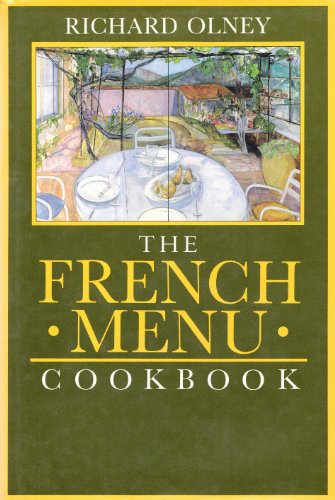
Richard Olney (1835-1917) was an American cookbook author, most noted for The French Menu Cookbook, and included in The Guardian‘s “The 50 Best Cookbooks.” The Guardian said: “On a summer afternoon at his home in Provence in 1999, the American food writer Richard Olney went to lie down after a light lunch, and never woke up. He was 72, and had led an interesting and fulfilling life (his friends included the writer James Baldwin, the poet John Ashbery, and the painter John Craxton). He had also, unlike many people, been able to cook his own last meal.”


Never miss a post
Name: 
Your email address:*
Please enter all required fields
Correct invalid entries

Switzerland: Spontaneous Cuisine: Fresh fruit croûte

Published by Friday, August 5, 2011 Permalink 0

by Jonell Galloway

Cheese Croûtes, a Perfect Winter Snack

Anyone who’s every traveled or skied in Switzerland knows we love croûte. Every ski station restaurant offers a wide range of croûtes. But what exactly is a croûte, you might ask.

A classic cheese croûte from the Refuge de Chesery

Literally, the word means “crust,” but in practice the dish is usually made with day-old bread, onto which a wide array of foodstuff can be placed. The classic croûtes are layers of toasted bread in a shallow baking dish, covered with any combination of ham, bacon, egg, cheese, tomatoes, etc., but never leaving out the cheese.

For these savory dishes, the bread is cut into slices about 1 cm thick and placed in a buttered shallow baking dish. The bread is browned on both sides in the oven, and then slightly dampened with a little white wine or water. Thin slices of a fatty, hard cheese, such as Gruyère or Emmental, are then distributed evenly over the toast, pepper is added (and other ingredients if desired), and the composition is popped back into the oven until the cheese melts and turns brown.

Because of the oven and the hot cheese, winter croûtes are certainly not appropriate for getting your kids in the kitchen, so I’ve come up with this summer version.

Continue Reading…

Never miss a post
Name: 
Your email address:*
Please enter all required fields
Correct invalid entries

Food Art: Spanish Salmorejo, food photography by Steve Homer

Published by Thursday, August 4, 2011 Permalink 0

Our ongoing series of tapas photos from our latest food artist discovery: food photographer Steve Homer of Sabor de Almería in the southeast of Spain.

Never miss a post
Name: 
Your email address:*
Please enter all required fields
Correct invalid entries

Cailler Chocolate Museum in Canton of Fribourg, Switzerland

Published by Thursday, August 4, 2011 Permalink 0

Cailler Chocolate Museum in Canton of Fribourg, Switzerland

by Jonell Galloway

The Maison Cailler (Nestlé), in Broc, in the canton of Fribourg in Switzerland recently opened its doors to the public. The factory, built in 1898, and still in operation, has been converted into a chocolate museum and visitor center. It offers an interactive audiovisual and guided walk through the factory-museum which explains everything aspect of chocolate making.

The fact that it’s located in a working chocolate factory enhances the experience, and the guided tour explains the history of the factory from its beginning in 1898 to present.

The 7 million CHF renovation project created nine themed areas, including Aztec temples and Swiss hillsides, says Aus Food News. Since the factory is still up and working, you can actually witness chocolate bars being made.

Continue Reading…

Never miss a post
Name: 
Your email address:*
Please enter all required fields
Correct invalid entries

French Food Quote: Daily Food Quote, August 4, 2011

Published by Thursday, August 4, 2011 Permalink 0

by Jonell Galloway

I wish I were a poet so I could write an ode to the peach. For your pleasure, sing of its unique beauty, its velvety skin splattered with green, yellow, red, pink and golden spots, which are really neither green nor yellow… My palette isn’t familiar with the colors of the sublime.

J’aimerais être poète pour composer une ode à la pêche. Pour vous plaire, chanter son unique beauté, sa peau de velours éclaboussée de taches vertes, jaunes, rouges, roses et dorées qui ne sont évidemment ni vertes, ni jaunes… Ma palette ne connaît pas les couleurs du sublime.

–Hubert Michel, Mes péchés bretons

French writer Hubert Michel was born in Brittany in 1960.


Never miss a post
Name: 
Your email address:*
Please enter all required fields
Correct invalid entries

Food Art: The incredible intimacy of olives, food photography by Steve Homer

Published by Thursday, August 4, 2011 Permalink 0

Our ongoing series of tapas photos from our latest food artist discovery: food photographer Steve Homer of Sabor de Almería in the southeast of Spain.

Never miss a post
Name: 
Your email address:*
Please enter all required fields
Correct invalid entries

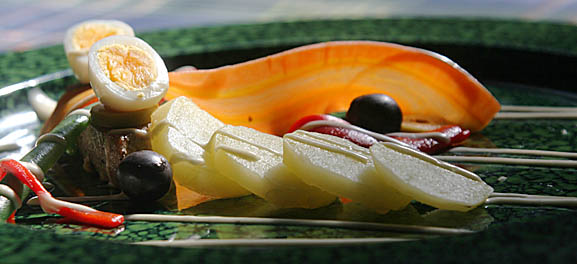
Food Art: Deconstructed Russian salad, food photography by Steve Homer

Published by Thursday, August 4, 2011 Permalink 0

Our ongoing series of tapas photos from our latest food artist discovery: food photographer Steve Homer of Sabor de Almería in the southeast of Spain.

Never miss a post
Name: 
Your email address:*
Please enter all required fields
Correct invalid entries

Simon Says: Daily Food Quote, August 4, 2011

Published by Thursday, August 4, 2011 Permalink 0

by Simón de Swaan

That last cherry soothes a roughness of my palate.–Robert Browning

Robert Browning (1812-1889), a Victorian English poet and playwright, including Pippa Passes (1841) and Elizabeth Barrett (1846). In 1844, he saw Poems‘s , and was so impressed that he soon convinced her to become Elizabeth Barret Browning.


Never miss a post
Name: 
Your email address:*
Please enter all required fields
Correct invalid entries

Kids in the Kitchen: Daily Food Joke for Kids, August 4, 2011

Published by Thursday, August 4, 2011 Permalink 0

What do you get when you put three ducks in a box?

Continue Reading…

Never miss a post
Name: 
Your email address:*
Please enter all required fields
Correct invalid entries