Food Art: Roast and Veg, food photography by Simone van den Berg

Published by Thursday, July 5, 2012 Permalink 0

Simone van den Berg is a food photographer in the Netherlands. She runs a professional photography studio, Junglefrog Images, as well as a personal food photography site, Fresh Food Photos, and gives photography workshops for food bloggers and beginners, teaching them to use the photo gear they have to the best of its advantage. She also runs the culinary magazine De Glazen Vork in Dutch.

Never miss a post
Name: 
Your email address:*
Please enter all required fields
Correct invalid entries

Food Art: Cheese Spread, food photography by Meeta Khurana Wolff

Published by Thursday, July 5, 2012 Permalink 0

See more food photo compositions at Meeta K. Wolff.

Never miss a post
Name: 
Your email address:*
Please enter all required fields
Correct invalid entries

Sustainable Sustenance: Fragrant Comfort — Indian Chai

Published by Thursday, July 5, 2012 Permalink 0

by Renu Chhabra

“There is something in the nature of tea that leads us into a world of quiet contemplation of life.”― Yutang Lin, The Importance Of Living

Drinking chai is a way of life in India. Mornings start with a cup of chai, and it finds its way into people’s lives throughout the day. It is an expression to take a break, and calm your senses, one sip at a time — like punctuation is to pauses — and then move ahead.

Chai is the Hindi term for tea itself in India, where this wonderful beverage comes from. In fact, masala chai means the spiced tea that we know as chai tea or chai in the West. Masala means spice and chai means tea, hence “spiced tea”.

Chai, an everyday beverage in the East has gained enormous popularity in the West. From coffee shops to gourmet restaurants, it has found a trendy platform where it is star. We find this fragrant flavor in lattés, ice creams, truffles, cookies, brownies, and cakes. A basic Eastern spice blend has been given a very sophisticated Western face. Another Western twist is the addition of vanilla at times, which is not part of the traditional blend.

Aromatic spices give chai its distinct character. Their oils are extracted when cooked and steeped in hot water giving chai its fragrant foundation. Then black tea leaves, whole milk, and sugar are added to it. And you have a cup of warm comfort, perfect for any time of the day. Whole milk  gives it richness and body, and sweetener brings out the flavor of the spices even more.

Chai spices can be combined in so many different ways. Every family has its own recipe — just like chili recipes. Make it as simple or as complex as you like, depending on the number and types of spices you like or have on hand. The usual spices that are used in chai are cardamom, ginger, cinnamon, cloves, fennel, and black pepper. Some are warm and some are sweet, but they all lend a fragrant note. Try new combinations to discover your favorite.

I usually like to keep chai simple with just one or two spices. My favorite spice combination is sweet cardamom and ginger; they go well together. Sometimes too many spices overlap each other’s distinct flavors and lose their individual personalities — not a good thing, I say. My philosophy is to keep it simple and clean. Chai can be tea leaves with just one spice of your choice, which I often do, or it can be with as many as your heart desires. Make your own concoction. After all, it’s your cup of tea. Take a break and savor it.

The first cup moistens my lips and throat. The second cup breaks my loneliness. The third cup searches my barren entrails, but to find therein some thousand volumes of odd ideograms. The fourth cup raises a slight perspiration — all the wrongs of life seep out through my pores. At the fifth cup I am purified. The sixth cup calls me to the realms of the immortals. The seventh cup — ah, but I could take no more! I only feel the breath of the cool wind that raises in my sleeves. Where is Elysium? Let me ride on this sweet breeze and waft away thither.–Lu Tung, “Tea-Drinking

This recipe has three spices: cardamom, ginger, and fennel. Cardamom and fennel give sweetness, whereas ginger gives warmth to this chai. If you are craving spicy flavors, add a small cinnamon stick, 2-3 cloves, and 3-4 peppercorns.

Recipe

Ingredients

2 cups water
4 cardamom pods, crushed
1/2-inch piece of ginger, grated
1/4 teaspoon fennel seeds
2 teaspoon black tea leaves
1/3-1/2 cup whole milk
Raw sugar or honey to taste
 
Click here for metric converter.


Directions

  1. Combine first four ingredients, and bring to a boil on medium heat.
  2. Turn off the heat and let it steep covered for 5-7 minutes.
  3. Add tea leaves and cook for 2 minutes.
  4. Stir in milk and cook for another minute or until heated through.
  5. Strain in cups.
  6. Add sugar or honey to taste.

Makes 2 cups

Never miss a post
Name: 
Your email address:*
Please enter all required fields
Correct invalid entries

Simple Sustenance: Chat and Chai — Nigella Seed Crackers

Published by Wednesday, July 4, 2012 Permalink 0


//

by Renu Chhabra

Remember the tea kettle — it is always up to its neck in hot water, yet it still sings!  ~Author Unknown

Last Saturday, I was invited to a fundraiser over Chat and Chai. A room full of lovely women, some dressed in Indian attire, were there to raise money for this noble cause in southern India. Colorful sarees and scarves were the stars of the show. They were displayed elegantly on a table for silent auction, creating a very exotic ambiance. A few guests were somewhat familiar with the Indian culture; whereas, others were inquisitive to learn about it. From food to draping of a saree, it was an enriching experience for many.

After viewing a short film about the cause, it was time to indulge in some Indian-inspired food — curried deviled eggs, lentil salad, tea sandwiches, and a variety of sweets and snacks. The table was full of mouth-watering choices, making it difficult to resist the temptation. Finding my way through this delicious spread was one big challenge. And I knew I wasn’t the only one facing this dilemma. Finally, a warm cup of fragrant chai completed the feast.

On my way back I kept thinking about mathri or mathi, a savory Indian snack. This salty and flaky cracker is laced with herbs and spices. Carom or nigella seeds add a flavorful punch, and black peppercorns give it a spicy bite. Traditionally, it is deep fried. The size and thickness can vary — large discs or bite size. It is a perfect tea-time snack paired with a cup of sweetened chai.

I have fond memories of making mathri with my great grandma. Sitting at the kitchen table, she used to flatten the dough balls with the heel of her palm. She did not use measurements, rolling pins, or fancy cutters. Just a pinch of this and a handful of that was the way to go for her. Her best tools were her hands to measure, knead, and flatten the dough — quite amazing. At the same time, the wisdom and stories that she shared while making this snack made the experience even more special. These are the moments most of us remember for years to come — rustic and soulful. And they linger in my memories as well, even decades later.

Inspired by my memories, I decided to make mathri today with a few of my own twists. Keeping them healthy, I used whole wheat pastry flour instead of regular white flour. Another detour from the original method was to bake them instead of frying – -a guilt-free indulgence. And they turned out quite delicious!

Recipe

2 cups whole wheat pastry flour
1 teaspoon baking powder
11/2   teaspoon salt
1/2 teaspoon nigella seeds
1/4 teaspoon carom seeds
Coarsely ground black pepper to taste
1/2 cup canola oil
1 /2-3/4 cups water
 

Click here for metric converter.

1. In a stand mixer with paddle attachment, add flour, baking powder, salt, nigella seeds, carom seeds, black pepper, and oil. Mix on low speed. Slowly add water to make firm dough.

2. If needed, bring the dough together with hands and knead to form a smooth ball. Cover with plastic wrap and set aside for 30 minutes. You can also make the dough in a food processor or by hand.

3. Line two baking sheets with parchment paper.
4. Roll the dough to 1/8 -inch thickness.
5. Cut the rolled dough into desired shapes.
6. Transfer them to the baking sheets, and prick with a fork.
7. Bake at 325° F for 20-25  minutes or until bottom is golden brown.
8. Re-roll the leftover dough and cut into shapes.

9. Cool completely on a wire rack. Store in an airtight container.
10. Serve with a hot cup of chai.

Makes approximately 3-3 1/ 2 dozen small crackers.

Please follow my next post about chai.

Never miss a post
Name: 
Your email address:*
Please enter all required fields
Correct invalid entries

Tasting Australia: The Internationally Recognised Aussie Food Fest

Published by Tuesday, July 3, 2012 Permalink 0

by Amanda McInerney

The stands have been taken down from the riverbanks in Elder Park; the visiting journalists and food writers have packed up their loot bags and flown home; PR bods are splinting their Tweeting/texting fingers, and exhausted, hardworking chefs, waiters, dishies and sommeliers all around Adelaide are breathing a huge sigh of relief as they slip into a restorative beverage or two. The Battle of the Chefs has been fought and won; celebrity dinners have been cooked and eaten; the master classes, kids cooking classes and celebrity demonstrations have been enjoyed, pearls of culinary literary wisdom have been dropped and retrieved at the Word of Mouth sessions, and the food-related exhibitions, workshops and competitions are done. The massive 8-day food and wine binge that is Tasting Australia is over for another two years.

A product of the fertile imagination of Western Australian chef and television personality Ian Parmenter, Tasting Australia has developed and grown since its very successful beginnings in 1997 to become one of the nation’s most influential and best attended culinary events. This year’s event has built upon this reputation and not only attracted more than 40,000 happy eaters to the two-day “Bank SA Feast of the Senses,” where the public can pick and choose food and wine from some of the state’s very best producers and chefs, but the informed eye would also have been able to spot flocks of interstate and international chefs, journalists and food writers. More than 150 high-profile gastronomic guests were being carefully herded about the state in manageable groups (not so simple a task as it might sound) as producers from Port Lincoln in the west, all the way down to the Coonawarra in the south-east took the opportunity to show off the culinary cachet for which this state has become noted.


Tasting Australia attracts an exceptional amount of international interest and food professionals from all areas of the culinary sphere, as well as journalists from all corners of the globe, who congregate in Adelaide for this time period.  I helped Mark Gleeson of the Providore conduct the very first formal event of Tasting Australia – a (very) quick walking tour of our prime food gem, Adelaide Central Market, followed by a cheese workshop conducted by Valerie Henbest of the Smelly Cheese Shop – with a group which included, among others, journalists from Singapore, Hong Kong, Italy and Sweden, author Matthew Fort and chef Mark Hix from London and Dublin-based food, wine and restaurant critic Ernie Whalley.  They were just one part of the international contingent which was here expressly to get to know South Australian and Australian food.

The kind of exposure this generates for us simply cannot be underestimated and I have heard it stated that this festival has generated in excess of $100 million worth of editorial PR for South Australia and Australia. The overseas guests who enjoy our hospitality are ushered around to some of our most talented and respected food producers – both in and around Adelaide and regionally. They get the chance to meet and engage with nationally and internationally recognised brands like Maggie Beer and Jacobs Creek, but also many of the smaller producers and food/wine businesses whose goods merit equal attention, but whose advertising budgets are more modest and thus are less well known. There are trips out to the oyster leases in the pristine waters off the Eyre Peninsula, visits to the free-range home of Minribbie Farm Berkshire pork and (no doubt happy) time spent at South Australia’s first boutique distillery on beautiful Kangaroo Island – all aimed at showing off what we enjoy here in the hopes it will be shared with the rest of the world.

Photo (C) Amanda McInenry, for The Rambling Epicure, Switzerland. Editor, Jonell Galloway.


The dust is settling on this year’s celebration and within a surprisingly short amount of time the planning for the next festival will begin.  Under fresh, new leadership things will change and the celebration may take on a different look, as it should after 16 years of much the same sort of format.  What won’t change is the remarkable wealth of great food and wine products which we enjoy in South Australia, and the enormous dedication, expertise and passion of the people who are behind the production and promotion of it. It is our local skills which make Tasting Australia the tremendous success it is today, so – South Australia, take a bow!

Never miss a post
Name: 
Your email address:*
Please enter all required fields
Correct invalid entries

4th of July Healthy Recipe Roundup

Published by Monday, July 2, 2012 Permalink 0

4th of July Recipe Roundup

by Christina Daub


With the fourth of July right around the corner, it’s time to clean the grill and get ready to barbecue. Whether you are using charcoal or gas, Independence Day just wouldn’t be the same without the smell and the sizzle of a big steak wafting through the backyard.

For my taste buds, however, nothing beats the old-fashioned, three-legged charcoal grill, whose heat has been reduced nearly to embers and tinged with hickory chips I’ve soaked to add that delicious smoky flavor that enhances grilled food so well. Unfortunately, in Switzerland, unless you have a personal source of wood chips, you’ll have to use regular charbon de bois, or wood charcoal, which is usually a mixture of several different woods.

To get juicy, flavorful steaks, try slathering each side with mustard, Worcestershire sauce and soy, then let the meat sit while the charcoal reduces itself for slow cooking.

When grilling ribs (the pork variety), soak your wood chips in apple juice for about 30 minutes, then wrap them in foil, perforate it, and lay it on the coals. This gives a slightly sweet taste to the ribs which complements the saltiness of the pork.

Traditional or healthy accompaniments?

While the kids line up for hot dogs (in the Lake Geneva region, local pork butchers or charcuteries often make their own homemade frankfurters) and hamburgers (get the butcher to grind it for you fresh on the morning of the 4th), think about what you want to serve with your grilled delicacies.

Traditionally, there was potato salad, great lumps or cubes of potatoes swamped in mayonnaise, with perhaps a scallion or two to give it some punch. However, not being a fan of such cholesterol- and fat-filled fare, I have always opted for the healthier green salad, loaded with a variety of lettuces and pea shoots I can get by hitting the farmers’ market early enough. In Switzerland, there is an endless choice of greens, herbs and shoots at this time of year in any farmers’ market you go to.

A platter of just-cut, ripe red tomatoes (local if you can find them), sprinkled with salt and drizzled with high quality olive oil and a local full bodied red wine round out the meal. Until  dessert.

Dessert: a healthier version than in the old days

Christine Koh
Photo used with authorization of Christine Koh

I have to say while the all-American barbecue meal totally sates me, I never pass up dessert, and this is one time of the year it’s really fun to use color in making dessert. There are a number of red, white and blue desserts I’ve come up with in the past, but everyone’s favorite seems to be what I call the “flag cake.”

This is a flat rectangular sheet cake that I cover either in white icing or whipped cream. On top, I create horizontal rows of raspberries for the red stripes of the flag and in the left corner, I intersperse blueberries so that the icing can shine through as “stars.”

For a lighter, but equally festive dessert, I layer yogurt with berries in parfait glasses, alternating the raspberries (you can also use strawberries or currants) with the blueberries in between the layers of yogurt. The kids seem to prefer vanilla yogurt, but for the adults I use plain, sweetened with a bit of honey.

Let the fireworks begin!

Christina Daub studied at L’Ecole du Cordon Bleu in Paris. She now lives in Washington, D.C. She is a poet, and teaches poetry at George Washington University and other writing workshops around the country.

Photos compliments of GenevaLunch.

Continue Reading…

Never miss a post
Name: 
Your email address:*
Please enter all required fields
Correct invalid entries

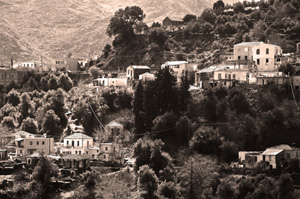
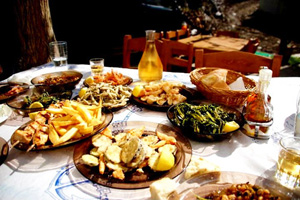
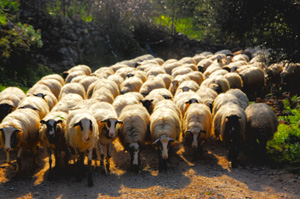
Food Art: Sights and Flavors of Crete, a photography exhibit by Linda Psillakis

Published by Monday, July 2, 2012 Permalink 0

My name is Linda Psillakis, free-lance photographer based on the Greek island of Crete. From the Atlantic Ocean, to the rolling hills of Tuscany stretching to the Mediterranean Sea and as far as the Himalayas, life has gifted me with unforgettable colors and stories which I  have lovingly documented with my camera. Click here to visit my travel photo website.


Never miss a post
Name: 
Your email address:*
Please enter all required fields
Correct invalid entries