Tackling Obesity through Food Relationships

Published by Thursday, April 10, 2014 Permalink 0

Jonell Galloway, Writer, Editor and Translator

Swiss Food


by Jonell Galloway

I was recently interviewed for a Swiss Info documentary called “Finding the Right Food Formula.” In the context of recent childhood obesity figures in Switzerland, Veronica De Vore is exploring the Swiss relationship to food and how that might have changed, how it might be related to the rise in childhood obesity.

Click here to listen to the show. I cooked a Kentucky Fried Chicken feast for Veronica, while discussing the more serious matter of relationships to food in the context of my work in mindful eating. (The article also includes an abridged recipe for my grandmothers’ traditional Kentucky Fried Chicken.)

Continue Reading…

Never miss a post
Name: 
Your email address:*
Please enter all required fields
Correct invalid entries

Jonell’s Proustian Rambling

Published by Wednesday, April 9, 2014 Permalink 0

Be the poem. Write the poem of your life every day through your kind words and good deeds. When your nights are dark, rise up. Take the rays of the morning sun into your heart and warm it again. Keep writing your poem.

Never miss a post
Name: 
Your email address:*
Please enter all required fields
Correct invalid entries

Flowers on the Thiou Canal in Annecy

Published by Tuesday, April 8, 2014 Permalink 0

Flowers on the Thiou Canal in Annecy, France: Documentary Travel Photos, by Jonell Galloway

April 8, 2014 The flowers are in bloom in the canal town of Annecy in France

Flowers on Thiou canal in Annecy, France, photo by Jonell Galloway (R)

Never miss a post
Name: 
Your email address:*
Please enter all required fields
Correct invalid entries

Jonell’s Proustian Rambling

Published by Friday, April 4, 2014 Permalink 0

Peter and I are eating dinner. Chopin’s Etudes play in the background; we sit in the midst of our eclectic collection of objets d’art from France and Italy and more exotic ones from Tibet, Persia, India. I am in my element. I am surrounded by music, poetry and art. How have I come to this? My mother. For her, life has been poetry, art, and music, syncopated with dramatic andantes and crescendos, tearing at her guts and ripping them wide open. She took it all in; she swathed herself in its drapery of blood-wrenched red and chilly blue pain. She has not gone gently into that good night; she is a fearless survivor. She has lived through earthquakes and hurricanes and always landed on her feet. I continue to write the poem of my life, blunder through the Gymnopèdes. Mother is playing Scarbo, flitting in and out of the darkness, disappearing and suddenly reappearing. I touch her hand. She hands me a pen.

Never miss a post
Name: 
Your email address:*
Please enter all required fields
Correct invalid entries

A Swiss Reader’s Tale of Knepfle

Published by Wednesday, April 2, 2014 Permalink 0

A Swiss Reader’s Tale of Knepfle

by Dee Rintoul

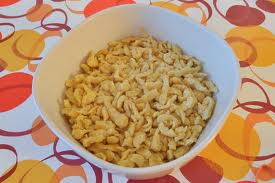
I grew up with “cheater” knepfle. I learned from my Oma, who had a Southern German background, but was Romanian-born. She made all kinds of noodles and pasta dishes — spatzle, real egg noodles that were dried and stored, but for everyday use. Knepfle were child’s play. In our own home, we made them for lunch and threw them into Lipton chicken noodle soup (which was not something we’d ever find in Oma’s kitchen!). God. That woman could cook…

Knepfles, Alsacian and Swiss pasta, photo by http://www.tribugourmande.com/recette_76618_knepfle


Anyway. The way we did it was to beat an egg or two (depending on how greedy we felt at the time), add a pinch of salt and some dried parsley if we thought of it or wanted to impress schoolmates, then beat in all-purpose flour until it was so stiff it wouldn’t take any more and/or became too difficult to stir. Then we’d drop pieces in a pot of boiling water with a fork and a teaspoon, dipping both implements into the simmering soup in between to help the stiff dough drop. Once they were all in, we put the lid on, turned down the heat, and kept it covered for a few minutes.

When we finally lifted  the lid, we found gorgeous, fluffy-looking, but very chewy little dumplings, all floating together on top of the soup. We loved these so much that as kids we used to scorn dumplings as being “too soft”. To our minds, dumplings, or anything that remotely resembled knepfle, ought to be quite al dente.

I still make these for chicken soup (and I try not to rely on Lipton but make my own as often as possible!).

Never miss a post
Name: 
Your email address:*
Please enter all required fields
Correct invalid entries

Paris to the Pyrenees: David Downie

Published by Tuesday, April 1, 2014 Permalink 0

Jonell Galloway, The Rambling EpicureParis to the Pyrenees: A Review of David Downie’s Book


by Jonell Galloway

CoverParisPyrenees


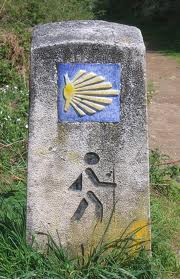
In Paris to the Pyrenees, David Downie takes us right along with him on the Way of St. James, without our ever leaving our armchairs. As stated in the subtitle, “A Skeptic Pilgrim Walks the Ways of St James,” we’re not talking about a conventional pilgrim, so we don’t expect his transformations to be like those of traditional Christians. But then, the Way of St. James, like so many pilgrim routes in the world, becomes a spiritual journey spreading well beyond the confines of Christianity.


St. James Camino Scallop Shel lMarker


Downie makes it a personal journey, full of the classical culture and history he knows so well, and we have the pleasure of experiencing it along with him. His journey through classicism and French history becomes ours, as we learn about the Druids, the Galls, the Romans, former French President François Mitterand, and much more; as he carries around a stone he was convinced had magical power because it looked like a scallop shell, until it becomes too heavy to carry; as we wolf down hearty French meals and sup coarse local wine after a long day of walking, before we fall like a stone into bed.

Author of Paris to the Pyrenees. A S


And though we might not receive penance, we end the journey all the richer in knowledge, having read a good tale, too. The book is a latter-day Canterbury Tales, with a varied lot of pilgrims, locals, and farmers all along the way. Alison Harris’ photos are in perfect harmony with Downie’s narrative. You’ll want to wear a scallop shell around your neck after reading this book.

Other sources of information about the book: NPR, 3 Quarks Daily, Boston Globe, Bonjour Paris


Never miss a post
Name: 
Your email address:*
Please enter all required fields
Correct invalid entries

Swiss Food: Tarte à la Raisinée – Apple & Pear Syrup Pie

Published by Sunday, March 30, 2014 Permalink 0

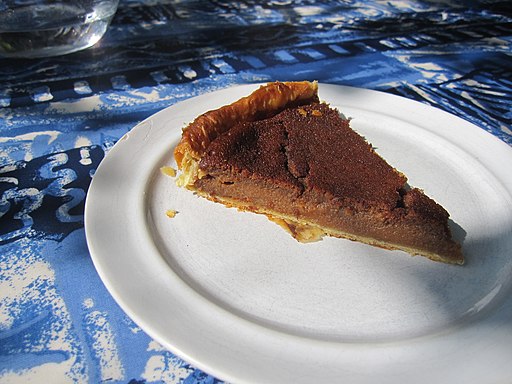
Swiss Food: Tarte à la Raisinée – Apple and Pear Molasses Pie

What is Swiss Raisinée?

The French-Vaudois word raisinée refers to a syrup or molasses made of the must of apples and pears. It was originally cooked in grape juice, thus the name — raisin means grape in French. Often called vin cuit, or “cooked wine,” it is in the form of a dark brown, viscous liquid. In still other parts of Switzerland, another concoction similar in consistency to jam and using the same ingredients is called cougnarde and probably dates back to at least the Middle Ages. Raisinée was used as a sweetener in many regions in Europe, and the tradition has lingered in Switzerland, especially in the cantons of Vaud, Fribourg and Neuchâtel. Today, it is mainly used for cakes and pies, and is not fermented, so it not technically a wine.

The tart itself has numerous names — raisinée, vin cuit (literally cooked wine), cougnarde and Biresaassa, depending on the location.

Recipe: Tarte à la Raisinée – Apple and Pear Syrup Pie

This recipe is inspired by Concert des Casseroles and translated with their authorization

Use a pie ring or pie tin 24 cm in diameter
Sweet Pie Crust
  • 200 g of flour
  • 100 g butter
  • 3 g of fine salt
  • 15 g walnut or hazelnut nillon* (here a mixture in equal parts)
  • 1 small egg (less than 60 g)
  • 60 g white sugar
Filling
  • 3 eggs
  • 2 egg yolks
  • 200 g double cream
  • 150 g pear raisinée (click on link to see our recipe for making raisinée)
  1. Dough: Combine the butter and sugar. Add the beaten egg and walnut/hazelnut nillon, then flour, mix and form into a ball, then roll out or pat down to flatten. Wrap in plastic and chill for 30 minutes.
  2. Spread the dough on a sheet of baking paper and place it along with the sheet in a pie ring or pie pan. Shape the edges by pinching the dough between your thumb and forefinger. Prick the bottom and edges with a fork. Cool for 30 minutes to firm up and avoid sagging when cooking.
  3. Preheat oven to 180° C. Place baking paper and beans or ceramic beads on the dough to prevent it from swelling. Bake for 20 minutes: the dough should barely brown.
  4. Meanwhile, prepare the filling by mixing the eggs and yolks, the double cream and the raisinée.
  5. Remove dough from oven. Remove weights and parchment paper. Lower thermostat to 150°C.
  6. Pour the filling into the dough and cook for about 30 to 40 minutes. The filling must be taken when it is not too firm and must have a slightly caramelized smell. It will probably still appear liquid when it comes out of the oven, but do not prolong the cooking, as it gets much firmer while it is cooling.

*Nillon: Nillon (or nion), is a local product used in French-speaking Switzerland. It is the residue from pressing of nuts. It is found in sheets, grated or powdered form. There are walnut and hazelnut nillons packaged in small 160-gram bags. In the canton of Vaud (Switzerland), nillon is used to make a walnut cake and apple pie. In France, it is known as walnut flour or walnut meal.


Never miss a post
Name: 
Your email address:*
Please enter all required fields
Correct invalid entries

About

Published by Tuesday, March 11, 2014 Permalink 0

Jonell Galloway, Food Writer, Editor and Translator, about, résuméI’m Jonell Galloway, a freelance food and travel writer, editor and consultant.

I created The Rambling Epicure in 2011. It is a daily international food ezine, joining the voices of professional food and travel writers from around the world who talk about the art of mindful and sustainable eating, drinking, traveling and living, with an emphasis on good writing and spectacular photos by some of the best in the business.

Based in Switzerland, The Rambling Epicure food writers and artists promote a mindful, responsible approach to real food shopping, cooking, and eating, as well as food politics, safety, history, art, literature and philosophy.

We sponsor this non-profit project through freelance writing, editing and publishing; custom-tailored culinary tours, cooking classes, and tasting events; recipe development and testing; book reviews and sales of recommended books and products, and seminars and workshops on the various subjects we cover. Thank you for supporting us by clicking the Sponsor Us button in the right-hand sidebar.

My Personal Profile

You can learn more about my personal career path in my LinkedIn profile. I’ve been rambling around the world eating food and writing about it for over 30 years now, so there’s a lot to tell.

I ramble mainly in Switzerland and Europe, looking for good food and restaurants. My articles are available on TheRamblingEpicure.com, 10Best.com/USAToday, GenevaLunch.com, Paris Voice and TheRamblingEpicure.tumblr.com.

I studied cooking at the Cordon Bleu and La Varenne in Paris, and wine tasting here, there and everywhere in France and at CAVE S.A. in Geneva and Gland. In France, I worked for some years as a contributing editor for the English edition of the GaultMillau guide and as a food translator, while I ran a small cooking school in a château near Paris. I now live in Switzerland, where I have learned to love the earthy Swiss food and wine. One of my many interests is promoting Les Artisanes de la Vigne et du Vin as an ambassadress for this Swiss women wine producers association and Slow Food, of which I am an active member.

Apart from various restaurant guides for France and Switzerland recently  published books include: Ma Cuisine Méditerranéenne in collaboration with Christophe Certain (in France) and Le tour du monde en 80 pains / Around the World with 80 Breads published by Orphie, in collaboration with Jean-Philippe de Tonnac (part of the French and all of the English) (covers history of bread around the world), André Raboud (Swiss sculptor), Edipresse.

My cooking method is “spontaneous cuisine.” Lessons consist of writing out a tentative menu based on seasonal, local products; going shopping for the products, and adapting the menu according to what is available and fresh; going to the wine seller to select a wine to go with the menu, then going home and cooking all afternoon with my students. The day ends with a candlelight dinner at the château (in the past), and now, at my chapel converted into a house in Chartres or in your home.

I give Mindful Eating seminars and therapy for those who have problem relationships with food and eating in general, helping them reconstruct their lifestyle and relationship to food and eating.

Specialties: French, Swiss and Italian cuisine with a bit of American influence. I believe in healthy, natural, sustainable cooking in the spirit of Slow Food, so all my articles, recipes and classes have this emphasis.

Never miss a post
Name: 
Your email address:*
Please enter all required fields
Correct invalid entries

Music as Food: Homage to Alice Herz-Sommer

Published by Thursday, March 6, 2014 Permalink 0

Music as Food: Homage to Alice Herz-SommerJonell Galloway, The Rambling Epicure

by Jonell Galloway

Alice Herz-Sommer died on Sunday, March 2, 2014, at her home in London, at the age of 110. She was the oldest known survivor of the Holocaust.

Mrs. Herz-Sommer was a concert pianist in her native Czechoslovakia before the war, and said that it was Frédéric Chopin who had “fed” both her and her audiences in over a hundred concerts she gave in her two years in the ghetto-concentration camp in Theresienstadt. She spent most of her time perfecting Chopin’s Études, a set of 27 solo pieces known for their technical innovation and sheer mechanical difficulty. Chopin became her food; it nourished her soul.

 Images from the book The Garden of Eden in Hell. Photograph: Droemer (C)

Images from the book The Garden of Eden in Hell. Photograph: Droemer (C)


In Theresienstadt, her son would often ask her, “Mother, why don’t we have anything to eat?” She believed human beings don’t need food when they have something spiritual. “The concerts, the music was our food.” But wasn’t it painful to not have food? “No, I was always laughing,” although she slept on a stone slab floor with no covers and no pillow.

If she could play the piano, she was happy. She was glad to be alive with her son; her concerts ensured that she and her son would survive. Her secret to happiness was to be thankful, thankful for everything. Thankful for seeing the sun, for seeing a smile, for a nice word from someone. Everything we experience is a gift; we have to be thankful for it all, was her philosophy.

Alice Herz-Sommer with her son


She learned Bach by heart. When she got cancer at 83, her doctor told her that knowing Bach by heart was more healing than all the pills she could take.

Sometimes she was thankful to have been at Terezin. “We all learn from mistakes.” Bad has to exist, she said with a smile, always a smile. I lived my life backwards, looking back at all the beautiful and wonderful things I have had.


And she learned from the bad, saying hatred eats the soul of the hater. Reminiscent of the Dalai Lama, she said complaining is a waste of time. “I know about the bad, but I only look at the good things.” Everything you receive is a present and arises out of how you look at the world.

Wealth is of the spirit, she told The Guardian.

She never hated, not even the Nazis, saying that we all do wrong sometimes: forgiveness of the ultimate sort.

Alice Herz-Sommer. Sheet Music Background


Until virtually the end of her life, she practiced for three hours every day, and it is what helped her survive the death of her son Raphael in 2001.

Music was the food of her soul, and her music fed the souls of so many. It kept them living when they had no food to eat. Her music continues to resonate, as does her example as a human being. She continues to nourish us, even though only in spirit.

Why don’t we have anything to eat, Mommy? Not to worry, we have music. Paraphrasing Shakespeare, “if music be the food of life, play on.”


Sources: A Few Precious Moments with Alice Herz-Sommer,Alice Herz-Sommer, 1903–2014: remembered by Ed Vulliamy, Alice Herz-Sommer, Who Found Peace in Chopin Amid Holocaust, Dies at 110, Oldest-Known Holocaust Survivor Dies; Pianist Was 110, Alice Herz-Sommer: Practice the Chopin Études, they will save you


Never miss a post
Name: 
Your email address:*
Please enter all required fields
Correct invalid entries

The Many Names for Tamales

Published by Friday, February 28, 2014 Permalink 0


The Many Names for Tamales

by Lenny Karpman

Now that Christmas and the New Year have passed, my neighbors here in Costa Rica are putting away lights, ornaments, Styrofoam snowmen, straw reindeer and faux pine trees. For the family Sunday mid-day meal many are dining on tamales.


MasaHarine


Tamales are stuffed cakes of corn dough, masa harina, wrapped and steamed. In Costa Rica, they are an art form as well as a common food. Tamale making is a seasonal family affair. Multiple generations of family cooks assemble pork or chicken, vegetables – mostly carrots and peas, and herb fillings artistically in rectangular packets of freshly made cornmeal, wrap them in folded plantain leaves and tie them decoratively with reeds or twine. They are traditionally given to neighbors at Christmas. It is an economical and egalitarian way for friends to exchange similar thoughtful gifts without the adversarial “can you top this” attitude that pervades gift giving in some other cultures.

Homemade tamales


In Colombia and Venezuela, they are called hallacas and may contain raisins or olive pieces. In Mexico, they are wrapped in dry corn- husks. Cuban tamales are fluffier and spicy. When the same ingredients are layered and baked without a wrapper, the result is tamale pie. Tex-Mex tamale pie usually is laced with red and green chili peppers.

Hallaca Leaves Drying (CC)

Hallaca leaves drying to make Venezuelan version of tamales


Tico (Costa Rican) tamales freeze well. They are most often tied together in groups of four. Tamales are steamed or simmered before eating, but they can go from freezer to table via the microwave in about two minutes and rekindle holiday warm fuzzy feelings and a delicious sense of community. Buen provecho and a happy and healthy 2014.


Never miss a post
Name: 
Your email address:*
Please enter all required fields
Correct invalid entries