WEEKENDS AWAY: TRASTEVERE, ROME, AND SANTA MARIA

Published by Saturday, February 15, 2014 Permalink 0

Jonell Galloway, The Rambling Epicure, Mindful Eating, Spontaneous Cuisine, Editor of The Rambling Epicure.WEEKENDS AWAY: TRASTEVERE, ROME, AND SANTA MARIA

by Jonell Galloway

A weekend in the Trastevere neighborhood of Rome lets you live and feast like a real Roman, if only for a short time. It is rich in history and culture, and plenty of fun and good food to boot. A little hotel we’ve found near Piazza Santa Maria will let you melt into this hidden corner of Rome.

A Little History about Trastevere

This side of the Tiber was Etruscan, until the Romans claimed it around the 6th century B.C. It was incorporated into the city of Rome’s 14 quarters by the Emperor Augustus with the “Trans Tiberim.” Thus the name, which means “across the Tevere,” the Roman name for the Tiber.
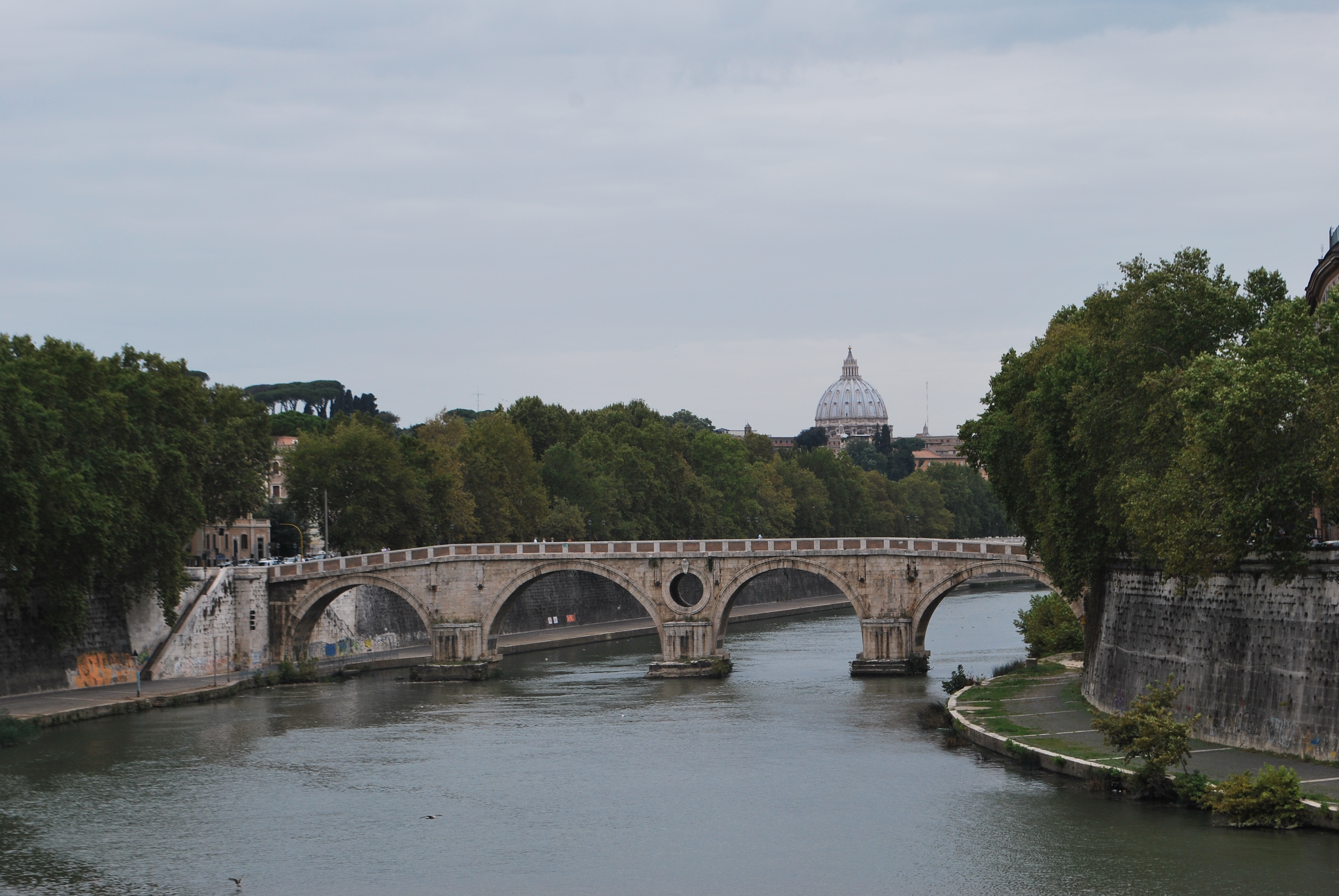
Bridge and River in Trastevere in Rome


It was a plebian quarter, where the servants and laborers and the free citizens of Rome’s as well as sailors, fishermen, Phoenicians and Jews lived. It would be the principal Jewish quarter of Rome until the end of the Middle Ages, when the Ghetto, across the river from Trastevere, became the residential area to which Jews were henceforth restricted.Rome Rione di Trastevere Logoastevere_logo


Renaissance Romans began building more noble villas around the edges of the ancient quarter, but the Trastevere of today retains its medieval, labyrinthine layout, full of narrow, winding alleys. It remains a working class neighborhood, with children playing soccer in the street, old people sitting on their stoops, and families gathering around a table in the street to visit. Trastevere lies between the western banks of the river Tiber and the Janiculum hill, one of Rome’s storied seven hills, that looms above it. It’s but a short 15-minute walk across the Tiber to the ruins of ancient Rome, the “salon” of Rome with its extravagant fountains, and only a little bit further by foot to St. Peter’s Square and the Vatican. One of the liveliest gathering places is the square in front of the church of Santa-Maria-in-Trastevere, construction of which began early in the 3rd century with the church completed in the mid-4th century, and ultimately completed in Romanesque style in the 12th century, then converted in several other centuries, giving it an unusual combination of Ancient Roman details and varied architectural features from later periods. The octagonal fountain in the piazza is an ancient Roman fountain restored and enlargened in the 17th century by Carlo Fontana.

Santa Maria Trastevere Roma Italy Carlo Fontana

Santa Maria with church, with ancient Roman foundation in center. The piazza is full of life at night.


What to See and Do in Trastevere

The Church of Santa Maria in Trastevere

Santa Maria in Trastevere is undoubtedly the oldest church in Rome, and deserves several visits if you want to appreciate its full architectural and historical depth. Most of the mosaics date from the 12th century. They are illuminated at night, and the golden light of the façade fills the piazza with a warm glow.
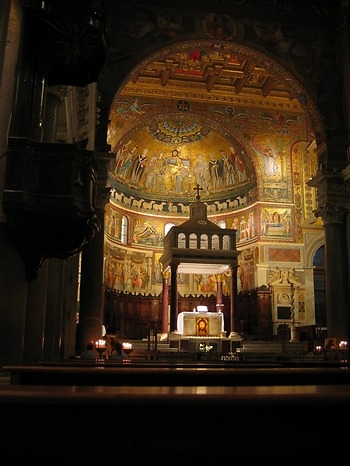
12th-century gold mosaics in Santa Maria in Trastevere, http://www.aztec-history.com/traditional-mexican-food.html

12th-century gold mosaics in Santa Maria in Trastevere


The 22 granite columns lining the nave are said to have come from the ruins of the Baths of Caracalla; the capitals are adorned with the heads of female pagan deities.
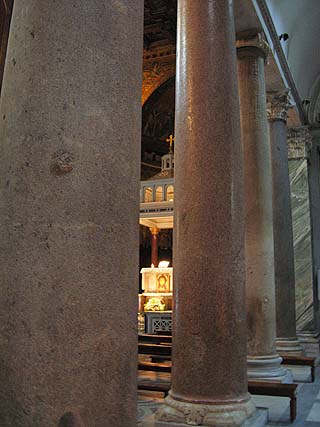
Granite columns in Santa Maria in Trastevere, from Baths of Caracalia

Numerous Roman funeral inscriptions can also be found in the church.

Ancient Roman etched gravestone in Santa Maria in Trastevere

Eating and Nightlife

There is no shortage of reasonably priced osterie, trattorie and restaurants that serve authentic Roman food in a no-frills setting. The neighborhood is timeless, with its mix of historical architectural periods and lively local residents; it remains quintessentially Roman. If you want to pretend you’re Roman for a weekend, this is the place to do it.


Old cellars and stables have been converted into bars, discos and cafés, providing a lively nightlife scene, with customers spreading out into the streets when the weather is fine.

DSC_0802


Signs like this demonstrate the colorful character of the locals, and offer contrast to our notion of contemporary, ultra-chic Italy.

Trastevere, Rugantino Trattoria Osteria Restaurant, Rome, Italy, photo by Jonell Galloway all rights reserved Jonell Galloway (R)


Sidewalk cafés and restaurants preserve the romantic character of Old Italy, spilling out onto the streets. My favorite source of restaurants in Rome is David Downie’s Food Wine Rome. David is half Roman, and sees food through the eyes of a Roman. His recommendations are all about the authentic and the unpretentious, and you’ll seldom find tourists in the places he recommends.

Hotel

While the Hotel Santa Maria is located in the very heart of the vibrant Santa Maria neighborhood just steps from the piazza, within the walls of this converted 16th-century convent, it’s so quiet and peaceful that you may think you’re staying in a remote Tuscan country house. The renovation is simple, but tasteful, with classic Roman terracotta floors and well-fitted bathrooms. Bedroom furnishings are tasteful, solid-wood reproductions. Almost all rooms are on the ground floor and give onto the courtyard. The few that do have a room above them (near the rooftop terrace) are not so quiet due to the tile floors. Otherwise, the clientele is quiet and respectful. Double Room Santa Maria Travestere, Rome, Italy


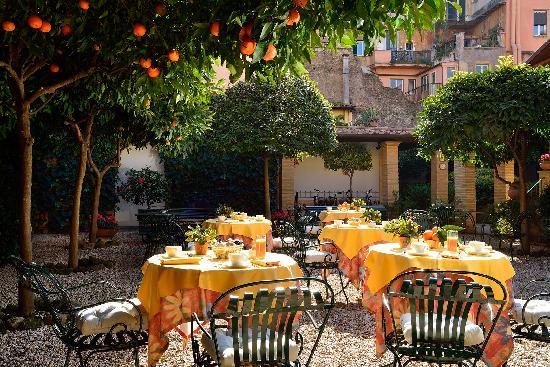
hotel-santa-maria Orange courtyard

Courtyard with orange trees where you can eat breakfast or have a drink

One enters the hotel courtyard through a large, locked iron gate, so security is good. The L-shaped convent-cum-hotel with an inner courtyard enclosing a small orange grove boasts wrought-iron tables and chairs for leisurely sitting in the sun or eating breakfast when weather permits. The breakfast room is in a converted cellar, with breakfast consisting of an international and Italian buffet with something to suit everyone, offering freshly squeezed orange juice and coffee from a professional espresso machine.

The small rooftop terrace is furnished with chic wooden lounge chairs and armchairs. It’s a great place to have a drink before dinner, read in the early evening, or sunbathe during the day. The view of the surrounding rooftops and balconies of Trastevere is a photographer’s dream. All rooms have satellite television and air conditioning, as well as Wi-Fi, which can sometimes be unstable. Bikes are available for rental at the reception.

How to Get There

If you’re flying, take the train from the Fiumicino Leonoardo da Vinci airport station to the Trastevere station, about a 30-minute train ride, then take a cab, which should take about 10 minutes. This should cost around 15 Euros all-inclusive, versus approximately 50 Euros with tip for a cab direct from the airport. A cab ride from the Termini train station to the hotel should cost around 15 Euros. The hotel is lost in a winding street and difficult to access by car. Even taxi drivers get confused with all the one-way and dead-end streets. Study your map and know the names of the surrounding streets and squares, because the driver may be forced to let you off in another street around the corner from the hotel.

Practical Info

Reservations: http://www.htlsantamaria.com Address Vicolo del Piede 2 – 00153 Rome – Italy Tel. (39) 06 5894626 – Fax: (39) 06 5894815 Click here for map: Map to Hotel Santa Maria


Jonell Galloway grew up on Wendell Berry and food straight from a backyard Kentucky garden. She is a freelance writer. She attended Le Cordon Bleu and La Varenne cooking schools in Paris and the Académie du Vin, worked for the GaultMillau restaurant guide and CityGuides in France and Paris and for Gannett Company in the U.S., and collaborated on Le tour du monde en 80 pains / Around the World with 80 Breads with Jean-Philippe de Tonnac in France; André Raboud, Sculptures 2002-2009 in Switzerland; Ma Cuisine Méditerranéenne with Christophe Certain in France, At the Table: Food and Family around the World with Ken Albala, and a biography of French chef Pierre Gagnaire. She ran a cooking school in France, and owned a farm-to-table restaurant, The Three Sisters’ Café, with her two sisters in the U.S. She organizes the Taste Unlocked bespoke food and wine tasting awareness workshops with James Flewellen, is an active member of Slow Food, and runs the food writing website The Rambling Epicure. Her work has been published in numerous international publications and she has been interviewed on international public radio in France, Switzerland, and the U.S. She has just signed on at In Search of Taste, a British print publication, and is now working on two books, What to Eat in France and What to Eat in Venice.

Related articles

Never miss a post
Name: 
Your email address:*
Please enter all required fields
Correct invalid entries

Spread love everywhere you go

Published by Friday, February 14, 2014 Permalink 0

Spread love everywhere you go. Let no one ever come to you without leaving better and happier.–Mother Teresa

Mother Teresa Baby


Never miss a post
Name: 
Your email address:*
Please enter all required fields
Correct invalid entries

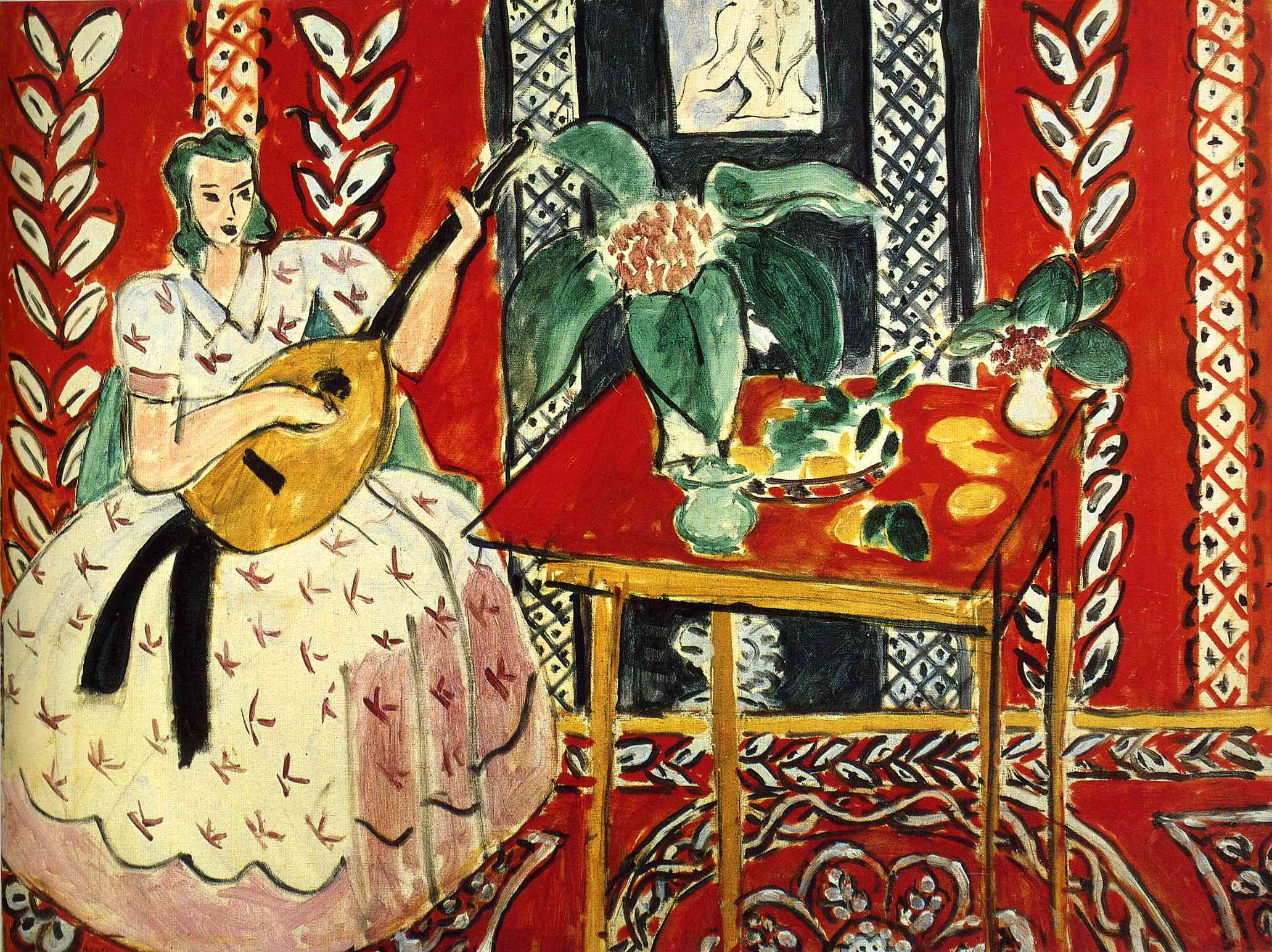
Food Art: Lute and Fruit, by Henri Matisse

Published by Friday, February 14, 2014 Permalink 0

Food Art: Lute and Fruit, by Henri Matisse

Lute and Fruit, painting by Henri Matisse


Never miss a post
Name: 
Your email address:*
Please enter all required fields
Correct invalid entries
Published by Monday, February 3, 2014 Permalink 0

Food Art: Still Life with Mouse, by Giovanna Garzoni (Italian Baroque Era Painter, 1600-1670), Rome

Garzone was one the first women painters to paint still lifes. Collectors loved her work, and she was able to immediately sell all she produced at just about any price she named. Garzone painted on vellum. She worked mainly for aristocratic patrons, such as the Medici family, and often took decorating commissions in their villas and palaces. She was most likely influenced by Jacopo Ligozzi, who was a botanical and zoological painter for the Medici court. Garzoni bequeathed all her work to the painters’ guild in Rome, the Accademia di San Luca, in exchange for the right to be buried there. Source: Getty Museum

Never miss a post
Name: 
Your email address:*
Please enter all required fields
Correct invalid entries

Gareth Jones is In Search of Taste

Published by Thursday, January 30, 2014 Permalink 0

Gareth Jones is In Search of Taste

by Jonell Galloway

Gareth Jones, editor of In Search of Taste

Gareth Jones, editor of In Search of Taste


Gareth has an incredible network of people who follow his every move. His whole family – and most of his friends — share his fervor for food. His dedication to an honest cuisine is matched by few. He is the epitome of what the French call “passionné”: unfaltering in his eternal search for the best quality ingredients at a fair price; willing to go to distant places and lose countless hours of sleep to find the perfect products. Whether it’s cooking and scrubbing pans with a Nonna in a hidden corner of Italy or crossing the Channel on a Sunday morning to buy fresh shellfish in Boulogne – to be served up fresh on his lunch table in London — his devotion to his “cause” is virtually boundless.

But Gareth’s blood can run hot when it comes to food and his vision of it. He is lucid about what he likes and what he doesn’t like and his sense of ethics and justice make him look on this world like the Egyptian goddess Ma’at with her scales of justice, weighing the “hearts” of products to decide whether they are balanced and good enough to go to his version of food heaven.

Ma'at Scales of Justice, Heart

Gareth Jones’s tastes were not formed overnight. He grew up on a farm in Wales, in the middle of fragrant orchards and gardens. The surrounding woods and pastures were his playground. He is a man of the earth. The scents, tastes and sensory experiences of these days gone by make up an essential part of who he is and how he relates to the world, in particular to food: rustic yet refined, never losing sight of his roots.

Gareth lives through his senses. Proust may put some to sleep, but no one better describes the degree to which all the senses awaken when recalling taste http://www.theramblingepicure.com/full-sensory-taste-and-proust/. As Scott Horton http://harpers.org/blog/2009/06/proust-memory-and-the-foods-of-childhood/ points out, Proust explored this long before neurogastronomy even existed, and so did Gareth Jones, in the woods and fields and pastures of his happy hunting ground called Wales.

When from the distant past nothing remains, after the beings have died, after the things are destroyed and scattered, still, alone, more fragile, yet more vital, more insubstantial, more persistent, more faithful, the smell and taste of things remain poised a long time, like souls, ready to remind us, waiting and hoping for their moment, amid the ruins of everything else; and bear unfaltering, in the tiny and almost impalpable drop of their essence, the immense architecture of memory.

Yet again I had recalled the taste of a bit of madeleine dunked in a linden-flower tea which my aunt used to give me (although I did not yet know and must long await the discovery of why this memory made me so happy), immediately the old gray house on the street where her room was found, arose like a theatrical tableau…

Marcel Proust, Du côté de chez Swann (1913) in: À la recherche du temps perdu vol. 1, p. 47

Proust's face engraved on a Madeleine

Proust’s face engraved on a Madeleine


Gareth is a living temple of Proust’s perception of the sensory experience that is life, with food as its altar. His devotion is boundless, and he surrounds himself with writers who share his zeal and dedication. There’s no better recipe for editing a food magazine.

Yet, there’s a lot of country gentleman mixed into his formula, which takes him a long way from Proust’s decadence. Thus the term he coined, “Blue Collar Gastronomy,” inspired by a visit to the Leclerc supermarket in Boulogne-Outreau – “often frequented by working class people the majority of whom are below average education and a town where unemployment is in the high teens if not +20%,” says Jones. As he was filling his trolley, he noted how intelligently and carefully the locals were filling theirs. You might never have known it was a poor, run-down, even sad, place if you looked at the contents, fit for a minor Roman feast.

The smells and tastes of the world have indeed been poised for a long time in Jones’s mind, but time has not been lost. His life has been a fine weave of the senses and food, which makes for dishes that have real taste, that are authentic and lacking all pretentions. He is a master at finding the crème-de-la-crème for even the simplest food purchase, even a chicken carcass for making soup and broth. In the words of Pete Seeger, “Any darn fool can make something complex; it takes a genius to make something simple.” And this is what Gareth Jones has understood and mastered.

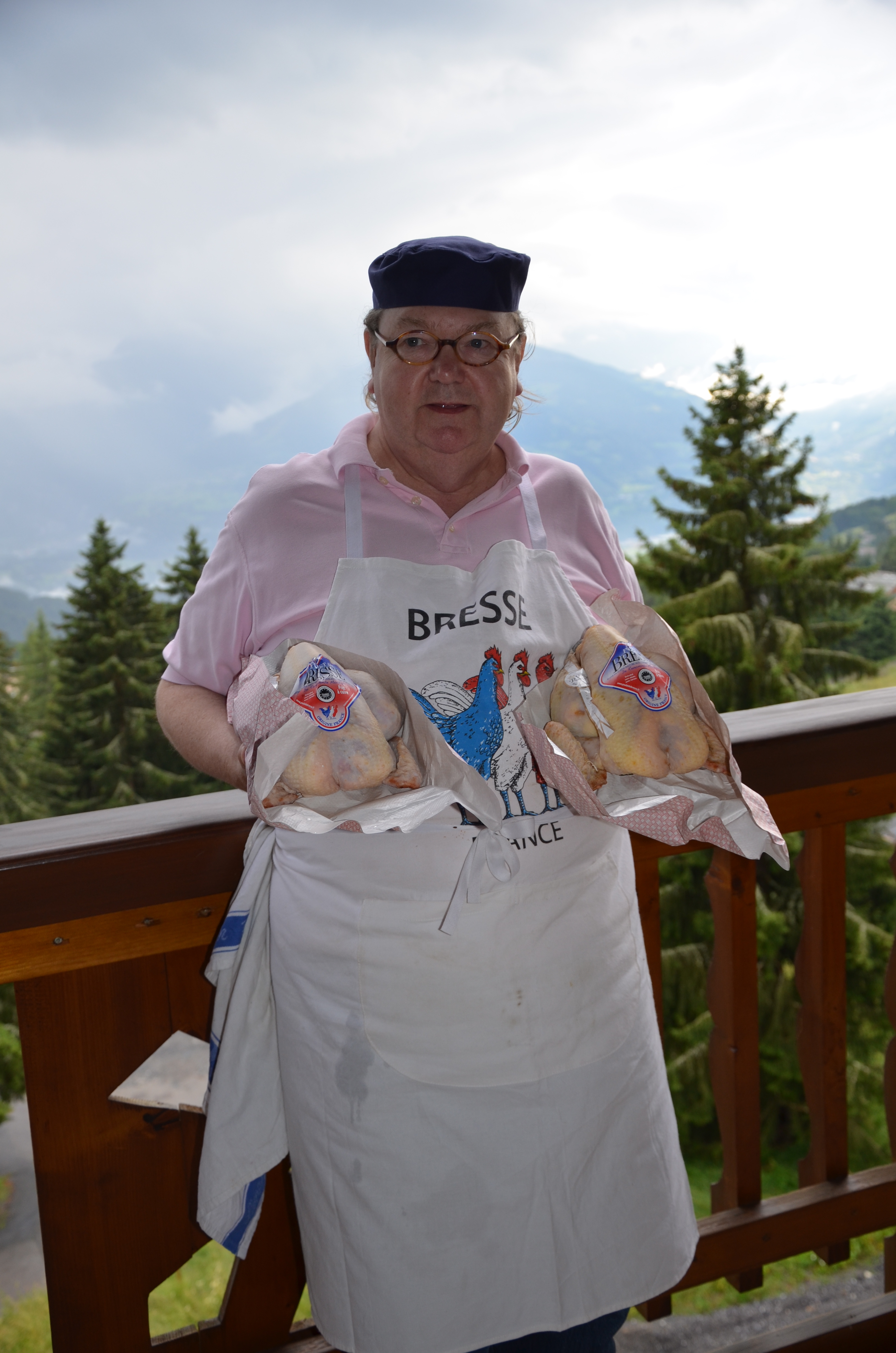
Gareth Jones Poulet de Bresse in Villars-sur-Ollon, Switzerland


On a sunny day in August, Gareth made poulets de Bresse, the prince of all chickens. He and his family had made a special detour to Bresse on their drive from London to our mountain home in Villars-sur-Ollon just to buy the chickens. To start the work, he put on his chef’s hat and apron – the one you see in all the photos — only to spend hours in the kitchen, smiling and giggling at their beauty all the while, patting them on the breast as if they were a much-loved child. His treatment of the “little princes” was itself princely and full of the respect they deserve. You would have thought it was a beast epic and that they were whispering to the chef, giving him instructions on how to proceed, but no. Gareth is the chicken whisperer and knows what they want and need. He knows the beauty of keeping it simple and letting the natural tastes come to the foreground. Bresse chickens will never be the same.

Gareth’s personal website: Gareth Jones FoodHis new glossy magazine: In Search of Taste

Never miss a post
Name: 
Your email address:*
Please enter all required fields
Correct invalid entries

Food Art: Medieval Feast, by Ensiferrum

Published by Wednesday, January 29, 2014 Permalink 0

MedievalFeast


The Duke’s Feast, by .

Never miss a post
Name: 
Your email address:*
Please enter all required fields
Correct invalid entries

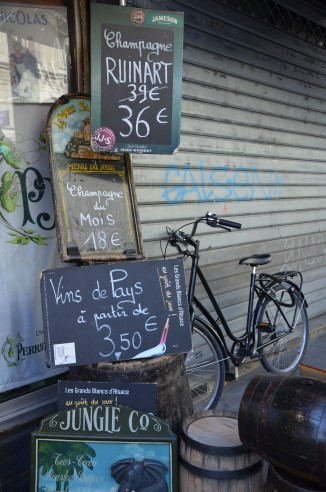
Food Photography: Wine Merchant & Bicycle

Published by Saturday, January 25, 2014 Permalink 0
An old-fashioned wine merchant in the Rue de Passy, Paris 16th, spreads his belongings onto the sidewalk
All rights reserved (R), by Jonell Galloway
Never miss a post
Name: 
Your email address:*
Please enter all required fields
Correct invalid entries

Swiss Food: Fribourg-style Saffron Bread

Published by Friday, January 24, 2014 Permalink 0


Swiss Food: Fribourg-style Cuchaule: Saffron Bread to Eat with Your Bénichon Mustard

by Jonell Galloway

From the archives

In my article, Bénichon Mustard, A Fribourg Specialty to Welcome the Cows Coming Home a few days ago, I talked about the brioche-like saffron bread cuchaule which is traditionally eaten with Bénichon mustard during the Bénichon fall fair in Fribourg, Switzerland.

I translated this recipe from the Delimoon site from the French and adapted it.

Photo courtesy of Moja Kuchnia with authorization.

Continue Reading…

Never miss a post
Name: 
Your email address:*
Please enter all required fields
Correct invalid entries

Saffron Culture: A Pictorial Cycle on Santorini, Part II

Published by Thursday, January 23, 2014 Permalink 1

Saffron Culture: A Pictorial Cycle on Santorini, Part II

Mistress of the Animals – Did She Make Powerful Medicine with Saffron?

by Elatia Harris

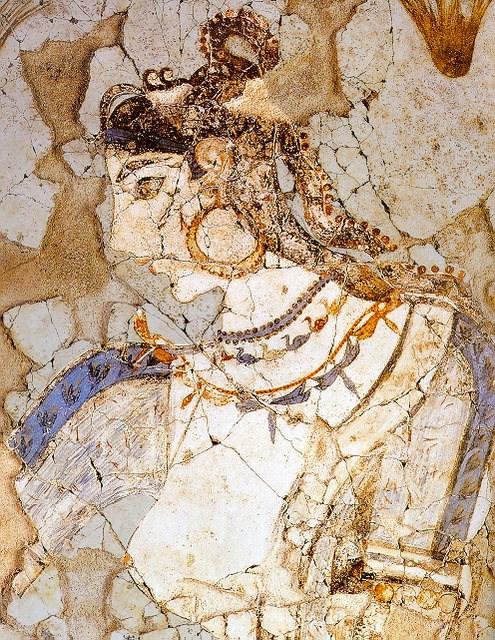
Mistress of the Animals from Xeste 3 on Thera

Mistress of the Animals from Xeste 3 on Thera.

Part Two in a series of articles on aspects of saffron. Photos of wall paintings from the excavated areas of Thera (also called Santorini), are taken from a magnificent site that has expired off the Internet, www.therafoundation.org. Other photos credited where possible. Part One examines the origins of saffron culture in Western Asia, with an overview of the saffron-dominated fresco cycle on Santorini, dating to the 17th century B.C.E. The present article looks at saffron in cultic rituals.

Mistress of the Animals

It is hard not to look at the goddess on the saffron cushion. Though her state of preservation is less than optimal, she is the focal point of the cycle.  In 1996, the archaeologist Paul Rehak undertook a gendered reading of the Xeste 3 fresco cycle – one that pointed up many subtleties in both the organization of society on Thera and the medicinal use of saffron, by and for women. In his monograph, “Myth, Medicine and Matriarchy: Reconstructing a Female Homosocial Environment in the Thera Frescoes,” he raises as well the issue whether the Xeste 3 frescoes were painted by women, for women – a possibility worth considering.

Necklaces with a duck and a dragonfly motif hang in an arc from the throat of the main image. Her blue and white costume is richly embroidered with a saffron crocus motif, the easily recognizable silhouette of the wild-growing C. cartwrightianus that is everywhere represented in Xeste 3 – clinging to rocks, garlanding its gatherers, piled into baskets, and patterning the creamy white field on which all the images are painted.

To us, perhaps the most compelling aspect of the goddess is not her regalia, but her expression.

akrotiri1

Drawing from Nanno Marinatos -- Wall of Xeste 3, with Mistress of the Animals

Drawing from Nanno Marinatos — Wall of Xeste 3, with Mistress of the Animals.

Head turned in profile, her eye is starry with interest, her lips parted as if in speech with the blue monkey to her right offering a handful of saffron. A gryphon flanks her left, present only in paw and wing. She may command girls to gather saffron and bring her tribute, but her companions are animals, on the same platform as herself. We do not know her name on Thera, but she is known to us anyhow. This is the Mistress of the Animals — potnia theron — one of the oldest goddesses of ancient times. And this is not her first or last iteration. As we enter historical times, she often takes the form of Aphrodite.

minetelbeidagoddess


Elatia Harris is a writer and consulting editor in Cambridge, Mass. She is most often at work on books and articles about food, wine and travel. Contact her at elatiaharrisATgmailDOTcom or via text at 617-599-7159.

Never miss a post
Name: 
Your email address:*
Please enter all required fields
Correct invalid entries

Truffles in Black and White: Part One: The Truffles of Alba

Published by Saturday, January 18, 2014 Permalink 0

Truffles in Black and White: Part One: The Truffles of Alba, or Italian White Gold

by David Downie, with photos by Alison Harris

The Truffles of Italy’s Piedmont

In the vaulted cellars at Tartufi Morra, the longest-established truffle dealership in Alba, a town of 30,000 in Piedmont 60 kilometers by road south of Turin, manager Alessandro Bonino fielded telephone orders while sorting white truffles still clotted with soil. “Truffles are hypogeous fungi,” Bonino said, waving his left hand, “meaning mushrooms that grow underground.” Of the 60 known species, 25 grow in Italy. Tartufi bianchi d’Alba—white Alba truffles—are the rarest, most aromatic and, the businesslike Bonino confirmed, by far the most expensive.


“White truffles only grow wild and only in a limited geographical area,” Bonino explained to me. “That’s why they’re so scarce and costly, and also why the statistics on them aren’t reliable—how do you tabulate them when their surrounded by secrecy?”

Alba’s Centro Nazionale Studi Tartufi (CNST), a government-funded research agency, estimates average Italian truffle production per year for all edible species at 400 tons, including about 40 tons of premium tartufo nero (Tuber melanosporum), the black truffles of northern and central Italy, half of which are farmed. In an exceptionally good year the southwest of France also produces about 40 tons of nearly identical melanosporum, the northeast of Spain 20 tons, in both cases 80 to 90 percent farmed. Harvests for the last decade or more for Italian, French and Spanish melanosporum have been small, with wholesale prices ranging between 650-1,200 euros per kilo.


By comparison white truffles occur only near Alba and in other parts of Piedmont, and, in far smaller quantities, in the Acqualagna area of the Marches, the province of Savona on the Italian Riviera, and in Croatia, Slovenia and Hungary. In an average year about 2 tons are found overall, though, as Bonino noted, statistics are notoriously unreliable. Wholesale prices in the 2010-2011 season range from an astonishing 3,000 to 4,000 euros per kilogram, about the same as Sevruga caviar.

As with caviar, demand far outstrips supply for prized white and black truffles. Bonino sells both.

Black and white truffles are not as different as apples and oranges, according to Bonino and others in the business. Comparing them is tricky. “All truffles are mushrooms. Preference is strictly personal, a question of taste, budget and use.”

White Alba truffles are actually pale to straw yellow. They look and feel like small, warty potatoes. Their scientific name is Tuber magnatum pico. Though unwieldy the name is widely used in commerce to avoid confusion with other pale-colored species.

The white truffle season runs from late September to mid-February. Except during the war years 1939-1945, in the second half of October since 1929 Alba has hosted the Fiera Internazionale del Tartufo (International Truffle Fair). The fair lasts two weeks, drawing tens of thousands of visitors. It has helped make white truffles synonymous with the town and the surrounding Langhe, a region of tuck ‘n’ roll hills where most white truffles are found.


As is typical, during a November visit to the Piedmont I experienced cold, damp weather. Wearing a woolen sweater the trim, middle-aged Bonino led me through the Tartufi Morra cellar to a room where an assistant in a blue lab coat hand-brushed white truffles, rinsed them under cold, running water and placed them on a drainboard. Bonino demonstrated how to gauge the firmness of a truffle, pinching one between forefinger and thumb. “When ripe, truffles white or black are as firm as tennis balls,” he said. “Too hard and they’re unripe. Too soft and they’re overripe.”

The smell and flavor of a ripe, healthy white truffle evokes mild garlic, honey, hay and fresh mushrooms. Scents of ammonia, humus or mold indicate rot.

“For security and conservation the bulk of our truffles are cellared,” Bonino added. “With all truffles the soil stays on until we prepare them for shipping. They’re 80 percent water. Soil preserves humidity.” Unbrushed, unwashed truffles last 7 to 10 days in a cool, dark room. Brushed and washed, they should be used within a few days. “Diamonds are forever, truffles are for now,” Bonino quipped, nostrils flaring.


Upstairs in the retail shop a few fresh white truffles covered by a moist cloth were in a refrigerated case. Canned or bottled whole truffles, truffled purées, pâtés, chocolates and olive oil filled shelves. Such transportable, long-lasting products appeal to many consumers, especially tourists, and allow truffle sellers to work year-round. Natural truffle essence, derived from fresh truffles, is the Holy Grail of researchers and retailers but has yet to be perfected. Most top-end shops like Tartufi Morra do not sell artificial truffle flavoring, an ersatz substitute scorned by serious Piedmontese chefs and food lovers.

Outside in the medieval tangle of streets, truffle scents wafted from restaurants and food shops. The enjoyment of white truffles is primarily an olfactory experience. During white truffle season Alba is a delight to the nose, and the scent is free for the taking.

Formerly plentiful and cheap, since at least the 1300s truffles, particularly white truffles, have been prized in Piedmontese cuisine. Scarcity and cost have not thinned the ranks of cultish truffle lovers. The half-dozen chefs in and near Alba I met during my 5-day visit concurred that white truffles lose potency and flavor when cooked and therefore should be eaten raw.

At Villa Tiboldi, a restaurant and B&B where I stayed, near Canale, equidistant from Alba and Turin, chef Stefano Pagagnini dressed fresh tagliolini with melted butter, set a digital scale on my table, weighed a white truffle then quickly shaved approximately 10 grams off it onto the pasta. “The heat releases the raw truffle’s scent,” he explained. “Smell is most of the experience. Simple food like pasta is best because it doesn’t overwhelm the truffle.”

Pagagnini was right. The luscious simplicity of the dish exalted the truffle’s aroma, which subtly evoked garlic, honeysuckle and mushroom. Flavors and aromas melded. I was unable to separate them. Even when I lifted a truffle shaving off the pasta and tasted it alone the sensations came almost entirely through my nose.

The photos in this series of articles on truffles were taken by Alison Harris. You can see the entire set as a slide show in Food Art: Behind the Scenes of the Noble Truffle, food photography by Alison Harris.

Next segment: truffle hunters.

See also: David Downie: Truffles in Black and White: Part Two, Truffle Hunting in PiedmontDavid Downie: Truffles in Black and White: Part Three: the Truffle Heartland of Southwest FranceThe Truffle-hunting Pig of Lalbenque

 
Never miss a post
Name: 
Your email address:*
Please enter all required fields
Correct invalid entries