Soy Sauce and Umami: Now a Staple in Western Cuisine
Soy sauce has been around as a staple condiment in Asian cuisine for thousands of years, used for flavoring all manner of dishes and foods. It’s prized for the “umami” character it gives to the overall taste of a dish, and can have a wide range of subtle notes beyond the obvious saltiness.
For example, Japanese tamari is often wheat free (I stress, not always). Still, most of the soy sauces available on store shelves contain wheat. While there is some debate as to exactly how much gluten from wheat survives the fermentation and processing, the Celiac Disease Foundation Foundation does list soy sauce as a food that may contain gluten and needs to be verified. The Mayo Clinic also states that soy sauce should be avoided unless otherwise labeled. There is also considerable anecdotal evidence of experiences of people being “glutened” by soy sauce (my husband included). Therefore, for those who must eat gluten free, soy sauce immediately becomes a food that requires attention and is a complicated topic.
The Huffington Post says Americans have reason for their eternal, but ever-changing, plate fright. In the US, E. Coli, Salmonella, Norovirus and numerous other bacteria and viruses are found in food more often that we might think.
Peppery pourpier from the Lake Geneva region.
The Center for Science in the Public Interest (CSPI), a non-profit, consumer advocacy group, often referred to as the “American food police”, says the leafy greens we are encouraged to eat every day can in fact be the most dangerous of all vegetables. Over the last 20 years, there has been some 363 outbreaks and 13,568 illnesses due to green leafy foods alone.
According to Dr. Steve Swanson of the U.S. Centers for Disease Control, lettuce is only second to ground or minced beef in cases of E. Coli. Snopes gives a good explanation of how all this happens, and many suggest that we lay off pre-washed, bagged salads until more is know about exactly how greens are contaminated.
One thing is almost sure: one of the reasons salad is particularly more high risk than other vegetables is that we most often eat it raw. So wash your salad, and then wash it again. Don’t just spray it. Wash it in a basin or sink, and change the water several times.
The other high risk food is eggs, numbering 352 outbreaks in the US in the last 20 years, with 11,163 cases of illness reported.
If we want to make a “top ten” list, the other culprits, in order, are tuna, oysters, potatoes, cheese, ice cream, tomatoes, sprouts and berries.
Naturally occurring acids are present in all fruits. The major acids found in grapes are malic and tartaric. When the grape juice is fermented to become wine, these acids survive the fermentation process to end up in the bottle you’re about to open.
Acidity in wine plays a very important role in the overall structural harmony of the drink. Acid is required to balance residual sugar and alcohol. It also cuts through oils and fats present in food, providing the ideal palate cleanser between mouthfuls. An ideal wine will have a balanced acidity. Too much acid and the wine can be unpleasantly tart or sharp tasting; too little and it can taste ‘flabby’ or not as refreshing as it should.
The way in which we perceive acidity varies according to a number of factors. Different grape varieties will have different concentrations of acids, thus can taste more or less ‘acidic’. The climatic conditions throughout the growing season are also important – insufficient warmth or sunlight will mean the acids in the grapes do not ‘soften’ enough before harvest and the resulting wine may be tart and unpleasant. Other organic chemicals in the wine will also influence how we perceive acidity. Two wines may have the same pH, yet a wine with residual sugar that masks the immediate effect of the acid will come across as less acidic initially.
Diagram of the wine grape berry.
Practices in the winery can also change the acidity in the final wine from that we might expect in the initial grape juice. Malic acid can be converted to lactic acid, which comes across as a ‘softer’ acid on the palate, through a malolactic conversion by certain species of bacteria. Most red wines undergo a malolactic conversion (sometimes called a ‘fermentation’, though this is not strictly correct), which is why red wines often taste softer than whites.
In general we can register acidity by a tingling sensation on the sides of our tongue. Another approach is the ‘saliva response test’ – how quickly saliva returns to our mouth immediately after spitting or swallowing the wine. This can give us clues as to the grape variety, the growing conditions and the sorts of food the wine might pair well with.
Dr James Flewellen is a biophysicist at the University of Oxford. James learned his trade in taste through the Oxford Blind Wine Tasting Society, of which he was the President from 2010-2012. During his term, he represented Oxford at many international blind tasting competitions – twice winning the prestigious ‘Top Taster’ Award in the annual Varsity blind tasting match against Cambridge University and captaining winning teams in competitions throughout Europe.
One of James’s goals is to clarify the complex and hard-to-navigate world of wine for both novice and experienced tasters. He applies his scientific training to wine education, illuminating concepts of taste, tannin and terroir in an approachable, entertaining manner. James runs wine education courses in Oxford through the Oxford Wine Academy and is completing the WSET Professional Diploma in Wine and Spirits. He is the regular wine writer for The Rambling Epicure and is the founder of The Oxford Wine Blog. He is also currently co-authoring The Concise Guide to Wine and Blind Tasting – a book surveying the wine regions of the world and how to blind taste.
Food doesn’t exist, but can only be invented. And reinvented. –– Joyce Carol Oates
Joyce Carol Oates is an American author, born on June 16, 1938, in Lockport, New York. She developed a love for writing as a child, going on to become an acclaimed, bestselling scribe known for her novels, stories, poetry and essays, and winning the National Book Award for 1969’s them. Oates has had a prolific, award-winning career, with books such as A Garden of Earthly Delights, We Were the Mulvaneys, Blonde, The Gravedigger’s Daughter and The Accursed.
————————–
Simon de Swaan is Food and Beverage Director at the Four Seasons hotel in New York City. He studied at the Culinary Institute of America and has an incredible collection of antique cookbooks and books about food and eating, from which he often posts interesting and unusual quotes. In his column Simon Says, he gives us daily food quotes from his tomes.
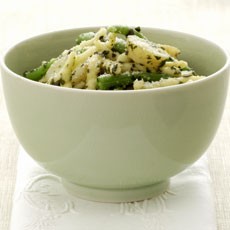
Trofie alle Castagne with Pesto, Potatoes and Green Bean
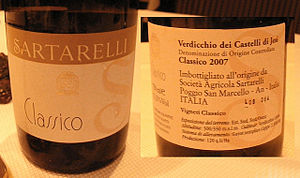
Try a Verdicchio wine from central Italy with this dish. This white wine has a complex, subtle, more vegetal flavour profile, as opposed to bright fruit and floral notes. This herbaceous quality will go very well with the similar flavours found in the green beans, while the acid in the wine will cut through the fats in the cheese and the oil in the pesto leaving your palate refreshed.
If you like your fruity wines, try a decent Pinot Grigio, whose acid will play a similar role to the Verdicchio. But be warned – many of the mass market Pinot Grigios out there have an overly fruity flavour profile and a touch of sweetness, which won’t complement the pesto as well.
On the red side and staying true to the Italian theme, a lighter red will do the job. You want something savoury on the whole and not overly tannic or alcoholic – which can be hard to find in Italy! A lighter-bodied Chianti Classico could work well, but you may want to have extra Parmesan on hand to round out the tannins!
Dr James Flewellen is a biophysicist at the University of Oxford. James learned his trade in taste through the Oxford Blind Wine Tasting Society, of which he was the President from 2010-2012. During his term, he represented Oxford at many international blind tasting competitions – twice winning the prestigious ‘Top Taster’ Award in the annual Varsity blind tasting match against Cambridge University and captaining winning teams in competitions throughout Europe.
One of James’s goals is to clarify the complex and hard-to-navigate world of wine for both novice and experienced tasters. He applies his scientific training to wine education, illuminating concepts of taste, tannin and terroir in an approachable, entertaining manner. James runs wine education courses in Oxford through the Oxford Wine Academy and is completing the WSET Professional Diploma in Wine and Spirits. He is the regular wine writer for The Rambling Epicure and is the founder of The Oxford Wine Blog. He is also currently co-authoring The Concise Guide to Wine and Blind Tasting – a book surveying the wine regions of the world and how to blind taste.
“When we think that 100 kgs of grapes converts into just 2 litres of Balsamico after 25 years ageing, we appreciate what’s quite so special.”
1985 aged Balsamic vinegar
Imagine a magical elixir which has a history charted back to 1785 – and probably earlier — that takes skills passed down through the generations of families, and is years in the making. Made traditionally, this elixir has the power to transport one to Heaven on a spoon, and just one word on the bottle tells us the real from the manufactured.
That word is ‘Tradizionale’ and to a cynic it could read like a word from the marketeer’s limited lexicon. This one word, however, divides the Heavenly stunning from the just special and Earthly – and sometimes not special at all for its added caramel and sugar. Time to become acquainted with the genuine Aceto Balsamico Tradizionale di Modena DOP.
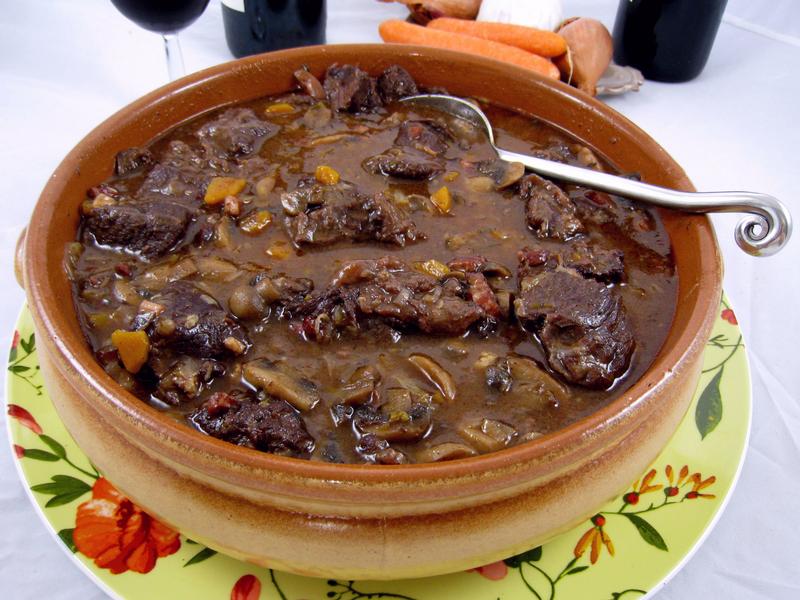
The classic wine for this hearty dish is a relatively youthful Burgundian Pinot Noir – ideally the same wine you’ve used in the cooking. The bright fruit flavours in the wine complement the savoury spice in the dish and the tannins – fine as they typically are in red Burgundy – interact with the proteins in the meat to bring overall harmony to the meal. An older Pinot Noir will have developed more subtle, complex savoury notes, which may be overwhelmed by the bold array of flavours in the stew, thus I’d stick to a more youthful example and save the mature wine until when you can enjoy it in all its glory.
Other Pinot Noirs from around the world will also work – particularly the rich, clean fruit profile of a New Zealand Pinot. You could also try a ‘serious’ Beaujolais Cru – made from the Gamay grape. These Cru wines are slightly more expensive than the infamous Beaujolais Nouveau, yet they provide a more complex flavour profile and robust, yet integrated tannins. The best, from for instance Moulin à Vent, Morgon and Fleurie, start to resemble their cousins from Burgundy to the north and as such, offer excellent value for money.
Cabernet Franc
To the west of Burgundy, the Loire valley produces a number of wines that would go very well with the dish. Sancerre Rouge is the Loire’s expression of Pinot Noir and, I feel, too light in body to stand up to a stew. A Chinon or Bourgueil, however, made from Cabernet Franc, is well up to the task. The thicker skins of Cabernet Franc make for more robust tannin, which go perfectly with beef. Meanwhile, these wines typically have a rich fruity core in their flavour profile not dissimilar to young Burgundy, although more towards blackcurrant rather than raspberry on the fruit spectrum. Cabernet Franc can also introduce leafy, minerally and peppery notes, which can serve as a lovely foil to the sweetness in the vegetables in the stew.
Dr James Flewellen is a biophysicist at the University of Oxford. James learned his trade in taste through the Oxford Blind Wine Tasting Society, of which he was the President from 2010-2012. During his term, he represented Oxford at many international blind tasting competitions – twice winning the prestigious ‘Top Taster’ Award in the annual Varsity blind tasting match against Cambridge University and captaining winning teams in competitions throughout Europe.
One of James’s goals is to clarify the complex and hard-to-navigate world of wine for both novice and experienced tasters. He applies his scientific training to wine education, illuminating concepts of taste, tannin and terroir in an approachable, entertaining manner. James runs wine education courses in Oxford through the Oxford Wine Academy and is completing the WSET Professional Diploma in Wine and Spirits. He is the regular wine writer for The Rambling Epicure and is the founder of The Oxford Wine Blog. He is also currently co-authoring The Concise Guide to Wine and Blind Tasting – a book surveying the wine regions of the world and how to blind taste.
SERENDIPITY: MEUS CAMINHOS NA COZINHA E NAS VIAGENS…
Translation coming soon in English – Introduction to Betina Mariante Cardoso’s new Brazilian food column
Olá!
Sou Betina Mariante Cardoso, brasileira, trinta e poucos anos. Nasci e moro em Porto Alegre, no Sul do Brasil, cidade que amo de coração e onde vivencio o apego, o calor da família e a constância, virtudes necessárias na minha vida. Paradoxo, tenho encantos por viajar, romper a linearidade rotineira, esquecer o mapa no hotel e perder-me pelas ruas dos lugares que visito. Por quê? Para ter a chance de conhecer aquela confeitaria antiga na rua lateral, coisa que só o acaso permite. Tenho uma ligação forte com o conforto do cotidiano mas, quando me torno viajante, parto em busca das descobertas, do desconhecido. É quando me entrego à Serendipity que as viagens propiciam.
E é com este mesmo estado anímico que venho para a cozinha: trazendo comigo a aventura, a curiosidade, o ímpeto pelo novo. Gosto de criar minhas receitas, mas sou também fã dos cadernos culinários, escritos à mão e com manchas de vida em suas páginas. Outro paradoxo.