France: How Reducing Food Waste is Part of Fighting Hunger
An initiative on the part of the French Ministry of Agriculture creates a link between professionals from the agrifood sector and public charities with the aim of reducing food waste and fighting hunger. It is referred to as the French National Pact against Food Waste.
A practical example: the “donation market”
The “donation market” is an initiative from the French Ministry of Agriculture to create a link between professionals from the agrifood sector and public charities. This idea arose out of the fact that professionals and charitable associations both have difficulty finding contacts, and don’t have time to give away food for free or find donors, says the French government. This public Internet platform responds to these difficulties and is easy to implement. Donors propose the kind of donation they want to make as well as its conditions of use and its transportation on the platform itself. As soon as it is posted on the Internet, all potential “receivers” are alerted by e-mail and can accept it. Donors can propose either food, equipment, transportation or knowledge on the platform.
As well as helping connect people and fighting hunger, this platform is also a way of reducing food waste, as it encourages people to give food rather than to throw it away and to offer extra room in transportation, for example.
Origin of Food Waste and Means of Action
In their Agrimonde and Dualine projects, French researchers from CIRAD, the French Agricultural Research for Development, and INRA, the French National Institute for Agricultural Research, examined possible systems of production and supply to feed the world in 2050. According to them, feeding 9 billion people by 2050 is possible so long as we:
increase yield in a sustainable way
reduce waste from field to fork
manage to change our food habits
They insist on the fact that wasting food also means wasting the energy, soil and water used to produce it, and will in turn be used to destroy the waste. Researchers also make a distinction between food loss, which occurs during the early stage of production (just after the harvest, during the first storage, transport, and first transformation) and which mostly concerns poor countries, and food waste, which is due to consumption habits (at home, in restaurants) or mismanagement of storage in the retail sector. Food waste mostly concerns rich countries. Food waste and food loss of course require different solutions.
To reduce food waste by 50% before 2025, the European Commission has proposed guidelines to Member States:
to educate people
to encourage better labeling and packaging
to ask Member States to favor partnership with responsible catering companies
Examples are also provided, such as:
to produce a new “sell-by date” label
to encourage new sizes of packaging for better preservation of products
to teach children good practices for proper use of food
Key Data
In the European Union, food waste comes from:
42% from domestic use
39% from the food-industry
5% from retailers
14% from the catering sector
every individual wastes 394 lbs. per year
89 million metric tons of food are wasted each year in the 27 countries of the EU
To learn more about this subject, here is the French National Pact against Food Waste.
Based on press release from the French Ministry of Agriculture
However humble it may be, a meal has a definite plot, the intention of which is to intrigue, stimulate and satisfy.–Margaret Visser
Margaret Visser writes on the history, anthropology, and mythology of everyday life. She lives between Toronto, Paris and Southwest France.
Her most recent book is The Gift of Thanks. “Her previous books, Much Depends on Dinner, The Rituals of Dinner, The Way We Are, and The Geometry of Love, have all been best sellers and have won major international awards, including the Glenfiddich Award for Foodbook of the Year in Britain in 1989, the International Association of Culinary Professionals’ Literary Food Writing Award, and the Jane Grigson Award,” she says on her site.
_________________
Simon de Swaan is Food and Beverage Director at the Four Seasons hotel in New York City. He studied at the Culinary Institute of America and has an incredible collection of antique cookbooks and books about food and eating, from which he often posts interesting and unusual quotes. In his column Simon Says, he gives us daily food quotes from his tomes.
Related articles
The History of How Food Shaped CitiesBook Review: The Table Comes First
O subjetivo na escrita culinária: revisitando M.F.K. Fisher
Betina Mariante Cardoso
Soon to be translated from the Portuguese to the English
Para mim, a leitura da obra de M.F.K. Fisher (Mary Frances Kennedy Fisher) ultrapassa o prazer literário provocado por sua escrita: trata-se de um profundo enriquecimento pessoal. Meu livro favorito desta autora? É difícil escolher, mas atravessar as linhas de The Gastronomical Me foi um fenômeno transformador.
Em uma tradução ligeira, o título é: “O Eu Gastronômico”. Sim, ligeira, pois há grande força e simbolismo nas fibras deste título. Apesar de Mary Frances explorar suas histórias e perspectivas subjetivas nos textos, ao ler com atenção, percebo que cada um de nós, para quem o ato culinário é precioso, poderia ocupar a identidade deste ‘Eu Gastronômico’, deste “Me”, no idioma inglês. Aliás, qualquer um de nós poderia ocupar esta identidade, pois temas como o ‘comer’ e a ‘fome’, também tratados por ela, respondem ao nosso Humano mais profundo.
Na minha leitura, são textos em que a narradora nos empresta seu lugar, seu ponto de vista, para que possamos experimentar suas vivências, como se estivéssemos em seu papel, em sua ‘primeira pessoa’, nos sabores que descobre. Esta característica dá grande força aos seus textos, através do uso desta narrativa em primeira pessoa do singular. Ler-nos em suas sensações, percepções, vicissitudes é aceitar que a autora nos conduza em uma viagem para dentro de nossas próprias narrativas. Um passeio autobiográfico, então. E pergunto: cozinhar não é também uma autobiografia, um ‘contar de si’?
‘Dip’ agridoce de tomates, para aperitivo- receita minha
Bom, há vários focos de encanto, no conjunto desta obra, que, sem aviso, despertam o leitor para a reflexão. Sou pega de surpresa já pelo trecho de abertura:
[Para ser feliz, você deve ter conhecido a dimensão de suas forças, experimentado as frutas de sua paixão e aprendido qual é seu lugar no mundo]- Santayana
(Tradução livre- Betina MC)
Ao folhear este livro, encontro diversos capítulos de mesmo nome, escritos em datas diversas e entremeados com textos de títulos diferentes.”The Measure of my powers” (‘A dimensão de minhas forças‘), repete-se uma série de vezes, trazendo à tona a menção ao trecho de abertura, de Santayana; a repetição deste título específico, contudo, dá o tom autobiográfico e intimista de “The Gastronomical Me”. Sinto, ao percorrer as páginas, a profundidade com que a autora conta de suas histórias culinárias, suas descobertas e reflexões. É como se, a cada um dos capítulos que intitula ‘A dimensão de minhas forças’, ela respondesse ao trecho inicial, contando de sua busca pela dita felicidade. “Para ser feliz, você deve ter conhecido a dimensão de suas forças”, diz o trecho, e Mary Frances trata de retomar esta ‘ordem’, nos capítulos do livro, mantendo a busca como linha condutora de sua escrita subjetiva.
Mercado Público: convite aos sentidos…
Se a tônica me parece estar no ‘ser feliz’, há, nas entrelinhas, uma procura ainda mais profunda: a procura pela sua identidade, por suas ‘forças’ e potenciais, por sua essência, facetas de si que ela traduz por sua relação com o universo do ‘comer’e do ‘fazer culinário’. Para mim, é neste aspecto que seu ‘eu‘, primeira pessoa do singular, pluraliza-se e torna-se ‘nós‘; é neste aspecto que o título do livro, “The Gastronomical Me” (“O ‘Eu’ Gastronômico”) destina-se a um plural de sujeitos que se identificam com as sensações, vivências e sentimentos escritos pela autora. Sujeitos em qualquer parte do mundo. É neste aspecto que ela empresta seu pronome ‘Me’ ao leitor, emprestando, também, seus sentidos para que possamos experimentar, em palavras, os sabores, aromas, texturas, sons, gostos e cores de suas cenas. É possível, ainda, ir além desta compreensão: ao abordar a dimensão de suas forças, ou ao exprimir emoções e memórias no conjunto de textos deste livro, a autora não apenas nos empresta sua fome, mas a partilha conosco, seus leitores. Fome que nós, humanos, sentimos.
Fome?
Esta é a palavra-chave da famosa introdução desta obra, em que ela responde por que escreve sobre comida, e não sobre a luta pelo poder, pela segurança, ou sobre o amor ou sobre a guerra. “A resposta mais fácil é dizer que, como a maioria dos Humanos, eu sinto fome“. E acrescenta, com maestria, que, quando escreve sobre fome, na verdade está escrevendo sobre o amor e a fome por este, sobre o afeto e o amor por este e a fome por este…”Conto sobre mim mesma (…), e acontece, sem que eu queira, que estou contando também sobre aqueles que estão comigo, e sobre sua necessidade mais profunda pelo amor e pela felicidade.”
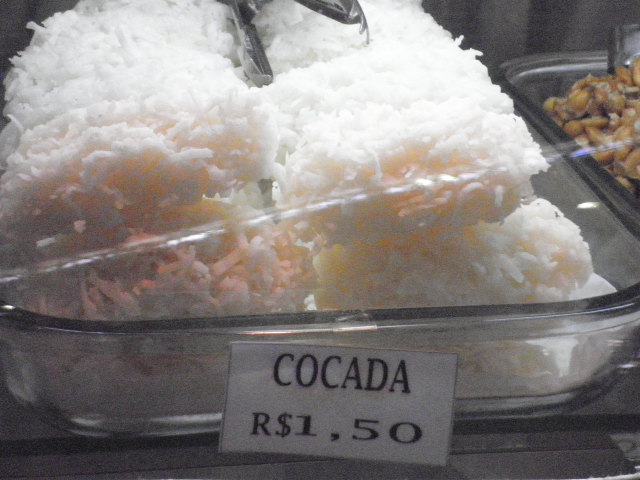
Cocada: doce brasileiro de coco, tradicional e saboroso
Sendo o alimento parte essencial da vida de todos nós, bem como as emoções e percepções através dos sentidos, cada indivíduo está presente no texto desta autora; suas experiências coincidem com as nossas próprias lembranças. Temos em comum a humanidade e, como ela refere, a ‘fome’. Por instantes, nos sentimos personagens de sua autoria; noutras vezes, nos sentimos o ‘Eu Gastronômico’ que escreve as histórias. As fomes são as mesmas.
E, então, a beleza do último parágrafo deste prefácio está na partilha de sua emoção, com o leitor: “Há uma comunhão para além dos nossos corpos, quando o pão é partido e o vinho é bebido. E esta é minha resposta, quando as pessoas me perguntam: ‘por que você escreve sobre fome, e não sobre guerras ou amor?‘”
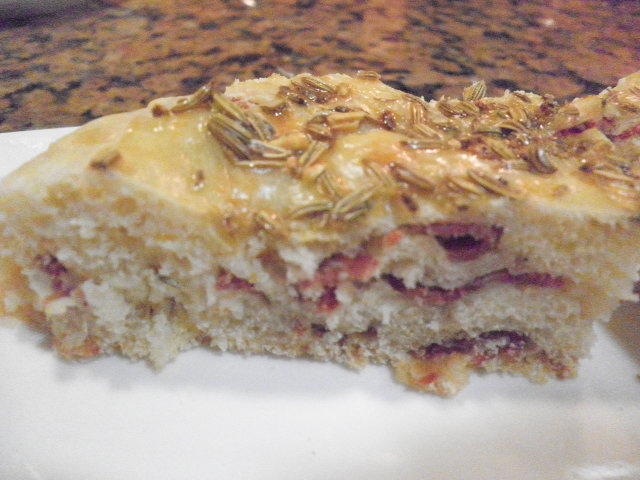
Partilha do meu pão de salame e funcho, no primeiro dia de 2013…
Seja ao ver sua avó fazendo geléias, seja ao partilhar uma refeição com sua irmã e seu pai, seja ao olhar com atenção um cardápio e escolher seu desejo, pela primeira vez: em cada história contada, há algo de nós. Porque, se as emoções são tão diversas em nossa subjetividade, há um ponto em comum em nós, humanos, e que nos torna co-autores destes textos: comemos, sentimos o sabor (ou a falta dele), temos fome, preparamos o alimento, sentimos prazer(aceso ou apagado)…Em qualquer tempo e geografia, comida e emoção nos despertam ou adormecem, nos satisfazem ou nos incompletam, nos nutrem ou nos destroem; seja como for, comida e emoção respondem à nossa necessidade primordial, a fome. Esta, de que Mary Frances Kennedy Fisher fala com tanta profundidade.
É de cada um de nós que a autora conta, quando escreve um texto que intitula: ‘A dimensão de minhas forças’. Você pode não desejar cozinhar, nem desejar escrever sobre a comida ou sobre o ato culinário; entretanto, a leitura desta obra é um passo firme, e prazeroso, na trajetória do comer consciente. E, com certeza, também na trajetória da conscientização de nossa fome pelo amor, pelo afeto, pela segurança, pela felicidade.
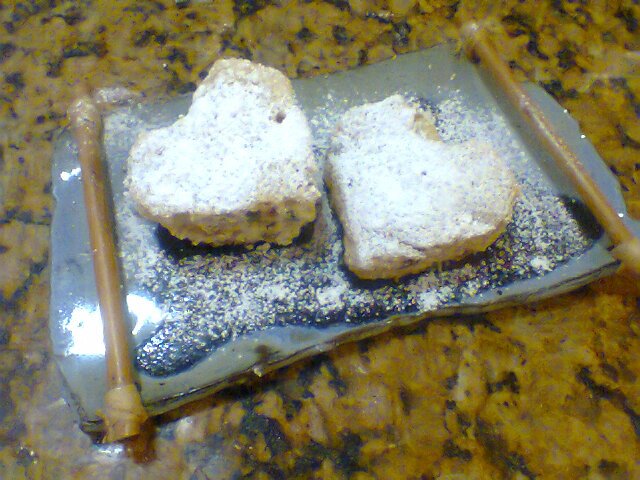
Bolo para celebrar o amor!
Minha leitura? A busca é, no fim das contas, pela ‘dimensão de nossas forças‘ e pelo saciar de nossas fomes, quanto mais buscamos conhecer a nós mesmos. Lendo ou cozinhando, descobrimos trechos de nosso subjetivo, experimentamos nossos sentidos e sentimentos. Somos nós, ali, refletidos em temperos ou em palavras. Basta nossa fome pela descoberta.
Sou Betina Mariante Cardoso, brasileira, trinta e poucos anos. Nasci e moro em Porto Alegre, no Sul do Brasil, cidade que amo de coração e onde vivencio o apego, o calor da família e a constância, virtudes necessárias na minha vida. Paradoxo, tenho encantos por viajar, romper a linearidade rotineira, esquecer o mapa no hotel e perder-me pelas ruas dos lugares que visito. Por quê? Para ter a chance de conhecer aquela confeitaria antiga na rua lateral, coisa que só o acaso permite. Tenho uma ligação forte com o conforto do cotidiano mas, quando me torno viajante, parto em busca das descobertas, do desconhecido. É quando me entrego à Serendipity que as viagens propiciam. E é com este mesmo estado anímico que venho para a cozinha: trazendo comigo a aventura, a curiosidade, o ímpeto pelo novo. Gosto de criar minhas receitas, mas sou também fã dos cadernos culinários, escritos à mão e com manchas de vida em suas páginas. Outro paradoxo.
Agradam-me os livros, as revistas, os blogs de forno-e-fogão. E tenho verdadeiro encanto pelas ‘Histórias do como-se-faz’, as narrativas orais que transmitem o conhecimento empírico, prático e caseiro, de geração a geração. Escutar uma história de cozinha é, para mim, uma riqueza única, porque faz parte de uma conversa, de uma partilha entre as pessoas. Sou médica psiquiatra e psicoterapeuta, profissão que exerço com amor e dedicação, e que dispara meu olhar para o subjetivo de nossas entrelinhas. Minha segunda atividade profissional é como proprietária de uma pequena editora, a Casa Editorial Luminara, ligação entre trabalho e espaço de liberdade.
No tempo livre, meu hobby principal é a culinária, desde a infância. Hoje, com a descoberta da ‘food writing‘, realizar a escrita culinária é, para mim, uma prática tão lúdica quanto cozinhar. Realizo algo que chamo de ‘cozinha perceptiva’. Nesta, escrita e a fotografia são ferramentas, pois ampliam a percepção e a descrição dos detalhes do ato culinário, ampliando também a exploração sensorial e a atenção ao presente, com benefícios para o autoconhecimento. Escrever, curiosar, ler, fazer colagens, blogar, viajar e fotografar são também experiências prazerosas para mim, com altas doses de felicidade.
I’ve just discovered , dedicated to making traditional Swiss and other recipes dairy-free.
Heddi started her site in 2012 to face up to the daily task of cooking for her son, who has multiple allergies, including milk allergies.
A dairy-free version of many traditional Swiss recipes for lactose-intolerant people. Switzerland is a land of milk and cheese, so this is a difficult task. Bravo for her efforts.
As grapes ripen, they accumulate sugars. At optimal ripeness, the grapes are harvested and sent to the winery for fermentation. Fermentation sees the pressed or crushed grape juice inoculated with yeasts that convert sugar to ethanol – the alcohol that ends up in our wine.
Red wine fermenting
The alcoholic strength of a wine thus depends on the initial sugar levels present in the harvested grapes. Grapes grown in cooler climates accumulate sugars more slowly than those grown in hot climes, thus we expect, in general, lower alcohol wines to come from cooler sites. Most dry, unfortified wines fall between 11% and 15% alcohol by volume. A wine may have lower alcohol than this, but with some residual sugar – that is to say not all the available sugars in the grape have been converted to alcohol.
It is legal in some regions of the EU (and certainly throughout the rest of the world) to add sugar to the pressed grape juice prior to fermentation in order to boost the alcoholic strength of the resulting wine. This is called ‘chaptalisation’ (after M. Chaptal, then French Minister of Culture) and is frequently practised in cold vintages in northern Europe. The type of sugar used here is inconsequential as it is all converted to ethanol and contributes nothing to the flavour of the resulting wine.
Let Ideas Compete / Foter / CC BY-NC-ND
In tasting, alcohol provides the main component of the ‘body’ of the wine – how the wine feels in the mouth. It dissolves certain chemicals found in food much better than water does (capsacain from chillies for instance) and also carries many of the aroma and flavour compounds that are less soluble in pure water. And of course, alcohol provides the intoxication that has been associated with the pleasures of drinking wine for millennia!
sgs_1019 / Foter / CC BY-NC-SA
Alcohol levels can be assessed by aerating the wine as it is held in your mouth. Try this by breathing in over a small amount of liquid. Highly alcoholic wines will register a burning sensation on the back of your throat. As with all structural elements in wine, balance is key. The alcohol should be sufficient to support the flavours of the wine yet not so overpowering as to be the only noticeable feature in the wine. Wines with high levels of alcohol (14%+) can still work, yet they need to matched with a robust body and flavour profile.
Dr James Flewellen is a biophysicist at the University of Oxford. James learned his trade in taste through the Oxford Blind Wine Tasting Society, of which he was the President from 2010-2012. During his term, he represented Oxford at many international blind tasting competitions – twice winning the prestigious ‘Top Taster’ Award in the annual Varsity blind tasting match against Cambridge University and captaining winning teams in competitions throughout Europe.
One of James’s goals is to clarify the complex and hard-to-navigate world of wine for both novice and experienced tasters. He applies his scientific training to wine education, illuminating concepts of taste, tannin and terroir in an approachable, entertaining manner. James runs wine education courses in Oxford through the Oxford Wine Academy and is completing the WSET Professional Diploma in Wine and Spirits. He is the regular wine writer for The Rambling Epicure and is the founder of The Oxford Wine Blog. He is also currently co-authoring The Concise Guide to Wine and Blind Tasting – a book surveying the wine regions of the world and how to blind taste.
Meeta Khurana Wolff is a freelance food photographer, stylist and writer, currently living in the culturally rich city of Weimar in Germany with her German husband and their 8-year-old son, where she enjoys preparing multicultural, home-cooked meals using fresh organic ingredients. When she is not styling, photographing or writing about food, Meeta loves to travel the world, exploring new cultures and capturing it all on camera. The unique mood that Meeta creates in her food photography is also found in her travel, still life and landscape photography.
When our souls are happy, they talk about food.–Charles Simic
Dušan “Charles” Simić is a Serbian-American poet and was co-poetry editor of The Paris Review. He is widely recognized as one of the most visceral and unique poets writing today, and his work has won numerous awards, including the Pulitzer Prize in 1990 for his prose poem “The World Doesn’t End:”
I am the last Napoleonic soldier. It’s almost two hundred years later and I am still retreating from Moscow. The road is lined with white birch trees and the mud comes up to my knees. The one-eyed woman wants to sell me a chicken, and I don’t even have any clothes on.
The Germans are going one way; I am going the other. The Russians are going still another way and waving good-by. I have a ceremonial saber. I use it to cut my hair, which is four feet long.
He also received the MacArthur Foundation “genius grant,” the Griffin International Poetry Prize, and, simultaneously, the Wallace Stevens Award and appointment as U.S. Poet Laureate.
___________________
Simon de Swaan is Food and Beverage Director at the Four Seasons hotel in New York City. He studied at the Culinary Institute of America and has an incredible collection of antique cookbooks and books about food and eating, from which he often posts interesting and unusual quotes. In his column Simon Says, he gives us daily food quotes from his tomes.
We’d like to welcome Italian food photographer Guila Scarpaleggia, who runs the website Juls’ Kitchen, to The Rambling Epicure.
Guila Scarpaleggia’s Bio
My name is Giulia Scarpaleggia, I am an optimist, a dreamer, a 28 29 30 31 year old full-time herbs blogger. I am the one who appears in the reflections of the spoons in this blog’s photos and – I have to admit it – I am also responsible for the missing slices in each cake.
I live in Tuscany, in the countryside between Siena and Florence, I dream of a blooming vegetable garden, though I am content with a brick wall crammed with pots of fresh herbs and a February 2009 plant that suffers from the heat.
A tradition so richly experienced on the festival eve of San Giovanni, better known as “St. John’s,” in Spilamberto (near Modena – Emilia-Romagna) had me transported me back to innocent childhood days in Wales. Straying across the fields from the parental home I’d live more in my grandmother’s old cottage – hers was once an inn on a long forgotten village green and was built using the village stocks as a door lintel into her dining room. So the story goes, mature hardwood had been short for building and everything was saved – including timbers from broken ships, recognised even then by their Lloyd’s number carved or burnt into the side. Grandma had one of those too – and stirring tales of bravery at sea to go with it.
Around this time (end-June/early-July), yet knowing nothing then of the Saint’s Day, we would pick ‘green’ walnuts – green skinned and soft before their hard shells formed below the fleshy outer casing.
These we would wash, dry and prick with a pin several times per nut. They would then be cooked in salted water, dried and let to cool before being set to cure in a vinegar sweetened with brown sugar – or perhaps it was molasses given the rich, dark colour. There are recipes going back through the ages – even Hannah Glasse in her The Art of Cookery wrote three. One each for ‘green’, ‘white’ and ‘black’ walnuts.
There would surely have been mace and nutmeg in Grandma’s recipe as there were her two favourite spices – she wore a whole nutmeg about her person, swearing it would ward off arthritis. At over 86 years when she died, arthritis was never one of her ailments.
Rachel Laudan is the prize-winning author ofThe Food of Paradise: Exploring Hawaii’s Culinary Heritageand a co-editor of theOxford Companion to the History of Modern Science. In this wide-ranging interview, Rachel and I talk about her long-awaited book, Cuisine and Empire: Cooking in World History. Paul Freedman remarks that the book is “a riveting and unique combination of culinary ideas and exposition on the materiality of eating.” Other delighted early readers include Anne Willan, Naomi Duguid and Dan Headrick. As a food lover, a cook, a world traveler or a student of cultural history, you might have asked yourself: What is this thing called food? If so, this is the book for you.
ELATIA HARRIS: To begin, I would love to know what was involved in the transition from historian of science to historian of food. I can remember when there was no such academic discipline as food history, and I’ll warrant so can many readers.
RACHEL LAUDAN: I can remember when there was no such discipline as science history! I think history is the thread through my life. Growing up in history-heavy Wiltshire, I felt I had to escape the weight of the past. I studied the key historical science, geology, at university, although this was almost unheard of for a woman. I then changed to history and philosophy of science and technology. Then to history of food. History is my way of understanding things.
A lot of food writing is about how we feel about food, particularly about the good feelings that food induces. I’m more interested in how we think about food. In fact, I put culinary philosophy at the center of my book. Our culinary philosophy is the bridge between food and culture, between what we eat and how we relate to the natural world, including our bodies, to the social world, and to the gods or morality.
EH: Your earlier book, The Food of Paradise, necessarily dealt with food politics and food history. So many cultures were blended into local food in Hawaii. I treasure that book — almost a miniature of what you’re doing in Cuisine and Empire.
RL: Well, thank you. It came as a surprise to me that I had a subject for a book-length treatment of something to do with food or cooking — as interested in the subject as I certainly was. The only genre I knew was the cookbook, and I am not cut out to write recipes.
It was prompted by a move to teach at the University of Hawaii in the mid-1980s. I went reluctantly, convinced by the tourist propaganda that the resources of the islands consisted of little more than sandy beaches and grass-skirted dancers doing the hula.
I couldn’t have been more wrong. These tiny islands, the most remote inhabited land on earth, have extraordinarily various peoples and environments. And as to the food, I was humiliatingly lost. The first morning in the office, Barbara Hoshida, the department secretary, held out a plate of golf-ball sized fried, well, fried whats? “These are Okinawan andagi,” she explained, “They’re just like Portuguese malasadas.” I didn’t dare ask what Portuguese malasadas were.
Before I knew it I had a stack of essays on the foods of the three diasporas that had ended up in the islands: the taro-based cuisine of the peoples from the South Pacific (the Hawaiians); the rice-based cuisine of the Asians (Koreans, Han and Hakka Chinese, Japanese, Okinawans, and Ilocanos and Tagalogs from the Philippines); and the bread-based cuisine of the Anglos (British and Americans).