David Downie: Artful Parisian Pastry, Part 2: Paris Present

Published by Wednesday, June 19, 2013 Permalink 0

Parisian Artful Pastry, Part 2: Paris Present

by David Downie

The minimalism of contemporary pastry art can be spectacular. A Paris-trained American pastry chef friend of mine from New York came to dinner carrying a hatbox. She lifted the lid and everyone gasped. “It’s a pastry radiator,” I couldn’t help exclaiming. The “radiator’s” buttery pastry fins were filled with ethereal cream, shielded by dark chocolate plates and mounted on a hard nougatine U-shaped base reminiscent of Bakelite.

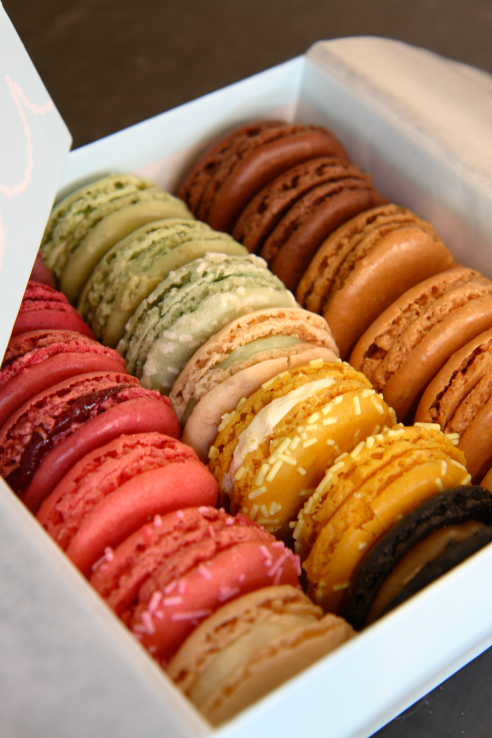
Classic chocolates from Jean-Paul Hévin ©Alison Harris

“Actually it’s a vertical millefeuille,” my friend explained as she heated the blade of a long knife—the only way to slice this incredible, gorgeous delicacy without destroying it.

The “radiator” turned out to be the conceptual-art brainchild of culinary designer Marc Brétillot, whose creations have often been spotted in the pastry department at the Bon Marché’s Grande Épicerie.

“Pastry is art,” Philippe Muzé, for a decade the wonder-worker at Paris’s bastion of traditionalism, Dalloyau, told me (he has since moved on and on and won many awards). “It’s poetry,” he added. “You can turn sugar, chocolate, herbs, spices and fruit into a million flavors and colors.” I hesitated before deconstructing his green Gâteau Vert, discovering a raspberry-colored biscuit, pear mousse, hot Szechwan pepper, cardamom, thyme and paprika.

Continue Reading…

Never miss a post
Name: 
Your email address:*
Please enter all required fields
Correct invalid entries

Jonell Eats her Way through Provence: A Photo Essay

Published by Tuesday, June 18, 2013 Permalink 0

Jonell Eats her Way through Provence: A Photo Essay

by Jonell Galloway

Tourettes-sur-Loup in France is the world capital of violets, and yes, you can eat violets. Candied, as you’ll see on my dessert in the photos; syrup; as jam (the stacked tins); and they even make violet pasta.

Never miss a post
Name: 
Your email address:*
Please enter all required fields
Correct invalid entries

Simon Says: Daily Food Quote, June 18, 2013

Published by Tuesday, June 18, 2013 Permalink 0

Simon Says: Daily Food Quote, June 18, 2013

by Simón de Swaan

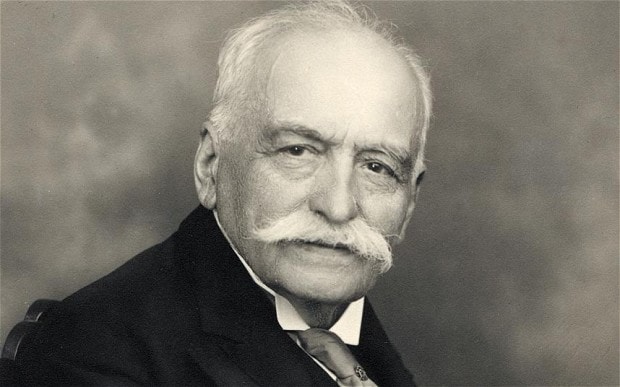
The greatest dishes are very simple dishes.–Auguste Escoffier


French chef, restaurateur and culinary writer August Escoffier (1846 – 1935) popularized and updated traditional French cooking methods. He is a legendary figure among chefs and gourmands, and was one of the most important leaders in the development of modern French cuisine.

Three of Escoffier’s most noted career achievements are revolutionizing and modernizing the menu, the art of cooking, and the organization of the professional kitchen. Escoffier simplified the menu as it had been, writing the dishes down in the order in which they would be served (service à la Russe), referred to Russian style service. He also developed the first à la carte menu. His books are still used by culinary students and chefs alike.


_atrk_opts = { atrk_acct:”vvoMh1aIE7000g”, domain:”theramblingepicure.com”,dynamic: true};
(function() { var as = document.createElement(‘script’); as.type = ‘text/javascript’; as.async = true; as.src = “https://d31qbv1cthcecs.cloudfront.net/atrk.js”; var s = document.getElementsByTagName(‘script’)[0];s.parentNode.insertBefore(as, s); })();


Never miss a post
Name: 
Your email address:*
Please enter all required fields
Correct invalid entries

Simon Says: Daily Food Quote, June 17, 2013

Published by Monday, June 17, 2013 Permalink 0


by Simón de Swaan

A nickel will get you on the subway, but garlic will get you a seat.—old New York proverb

New York City subway, Park Place, http://www.theramblingepicure.com/wp-content/uploads/2019/08/7c466963c851d426f396ee330d3b8020.jpg


_atrk_opts = { atrk_acct:”vvoMh1aIE7000g”, domain:”theramblingepicure.com”,dynamic: true};
(function() { var as = document.createElement(‘script’); as.type = ‘text/javascript’; as.async = true; as.src = “https://d31qbv1cthcecs.cloudfront.net/atrk.js”; var s = document.getElementsByTagName(‘script’)[0];s.parentNode.insertBefore(as, s); })();


Never miss a post
Name: 
Your email address:*
Please enter all required fields
Correct invalid entries

Kids in the Kitchen: Teach Your Kids How to Shop for Food

Published by Monday, June 17, 2013 Permalink 0


//

The Rambling Epicure, Editor, Jonell Galloway, food writer.Kids in the Kitchen: Teach Your Kids How to Shop for Food

by Jonell Galloway

Summertime is the perfect time to start!

Farmers Market

Going to the farmers market can be made into an exciting, weekly event. Summer offers lots of fresh fruit that they can choose to make their smoothies, to put on their breakfast cereal, or to make fruit salads. Vegetables are tastier in summer than in winter, and there is a larger selection, so it is also an occasion to encourage them to try more vegetables. If they choose fruit and vegetables themselves, they will feel more part of the process, and are more likely to eat them.

Making the Shopping List

Start by discussing the fruits and vegetables that are in season with your child before you go to the market. For the Lake Geneva region, you can look at our MarketDay photo albums, published regularly, to get an idea of what you can expect to find. If you are planning on making a meal together, choose the dishes and ingredients together when making your shopping list. If it’s fruit for snacks or smoothies, let them decide which ones they prefer.

It is a good idea to put up a food pyramid and a seasonal products chart somewhere in the kitchen, so you can refer to it when planning meals with the children, and also to explain why they must eat food such as green vegetables or fruit, for example. More suggestions are available in our 9 May 2009 post A fun, interactive guide for teaching your children good eating habits.

Explain the importance of buying local when possible. It is not only cheaper, but fresher, and therefore has more vitamins.

At the Market

Once you’re at the market, let them start looking for the items on the list. When they’ve spotted them, explain how to choose, by color, smell, touch, ripeness, etc., but make sure to ask the vendor if it’s all right to touch first.

This is also a time to let them look for products that have a local origin written on the tags, and to explain that if the products are local, they are also more ecological, because the cost of transport is less, and that in turn makes them more economical. It takes a lot of fuel to bring tomatoes from Holland in July and August when we have them right here in the region. Reduced transport also cuts pollution.

Buying from local producers allows children to have direct contact with the farmers, and to ask questions if they like. Farmers love to talk about what they have lovingly produced, and this in turn encourages children to appreciate farmers’ hard work and the satisfaction that it brings them. There is a reciprocity: the farmer gives you something he or she has produced with care, and you in turn get to satisfy your tastebuds.

Make kids part of the entire process by letting them help prepare the meal or dish afterwards. Once again, they are more likely to eat it if they help prepare it.


//

Never miss a post
Name: 
Your email address:*
Please enter all required fields
Correct invalid entries

David Downie: Artful Parisian Pastry: Paris Past, Part 1

Published by Monday, June 17, 2013 Permalink 0

David Downie: Artful Parisian Pastry: Paris Past, Part 1

by David Downie

What do the glories of ancient Greece and imperial Rome, baroque Naples and pre-revolutionary “Let-them-eat-cake” France have in common with contemporary Paris?

Easy: artful pastry.


Toss out a euro coin nowadays and it will probably land on a Paris pâtisserie whose chef is bent on titillating customers’ taste buds while dazzling eyes and lightening wallets. White chocolate roses crown red powdered-sugar lips. Fruit still-lifes à la Caravaggio top praline plinths. Dark chocolate treasure chests enclose luscious layer cakes, and bras are not of silk but of purest chocolat.

Training in artistic Parisian pastry making is also in vogue: ever since the renowned École Grégoire-Ferrandi cooking school began partnering with mega-star Pierre Hermé, the chef Vogue has dubbed “the Picasso of pastry”, the “Haute Pâtisserie” concept has ruled Paris tastes.

“The fine arts number five,” wrote Marie-Antoine Carême in the late 18th century, “painting, sculpture, poetry, music and architecture, the principal branch of which is pastry.”

Ever the tongue-in-cheek wit, not for nothing Carême was known as “the king of chefs and the chef of kings”. His claim to pastry fame was the invention of Pièces Montées—precursors of today’s tiered wedding cakes. Remember Tony Curtis and Marilyn Monroe in Some Like it Hot? Carême pièces were big enough to hide a man, like the cakes machine gun-toting Mafiosi burst from in gangster movies.

Continue Reading…

Never miss a post
Name: 
Your email address:*
Please enter all required fields
Correct invalid entries

Foraging and Post-Neolithic Cooking: Antonio’s Wild Spinach Salad Recipe, by Jane Le Besque

Published by Sunday, June 16, 2013 Permalink 0

Foraging and Post-Neolithic Cooking: Antonio’s Wild Spinach Salad Recipe, by Jane Le Besque

Antonio’s Wild Spinach Salad Recipe

Jane and Antonio’s recipe is based on foraging and what they imagine post-neolithic cooking to be, foraging and all, but with a modern twist, i.e. the olive oil.


Continue Reading…

Never miss a post
Name: 
Your email address:*
Please enter all required fields
Correct invalid entries

Top 13 Hotels in Geneva, Switzerland

Published by Friday, June 14, 2013 Permalink 0

 Top 13 Hotels in Geneva, Switzerland


English: Geneva


Grand Hotel Kempinski Geneva

Hôtel Président Wilson

Intercontinental

Mandarin Oriental Geneva

Four Seasons Hotel des Bergues Geneva

Beau-Rivage Geneva

Hotel de la Paix Geneva

La Reserve Geneva Hotel and Spa

Le Richemond

Mövenpick Hotel & Casino

D’Angleterre Geneva

Hotel Bristol Geneva

Tiffany Hotel Geneva

Warwick Geneva

Continue Reading…

Never miss a post
Name: 
Your email address:*
Please enter all required fields
Correct invalid entries

Food Art: Rolling in the Beets, food photography by SandeeA

Published by Friday, June 14, 2013 Permalink 0

Food Art: Rolling in the Beets, food photography by SandeeA

SandeeA does original, exciting food photography, always in a playful manner. A woman of many talents, she is also author of our Food Play column. She writes in both English and Spanish and runs the popular food blog La Receta de la Felicidad, where you can find the recipes for these beautiful creations.

Continue Reading…

Never miss a post
Name: 
Your email address:*
Please enter all required fields
Correct invalid entries

Switzerland: Swiss-style Knepfle Pasta

Published by Thursday, June 13, 2013 Permalink 0

by Jonell Galloway

Switzerland: Swiss-style Knepfle Pasta

Knepfle is originally from Alsace in France, but it is also eaten in Switzerland, in particular in the Jura region, which borders Alsace.

You can buy them at the supermarket, but they’re much better when you make them at  home.

Swiss-style Knepfle Recipe

Ingredients

3 1/3 to 4 1/10th cups unbleached white flour
3 eggs
2 cups milk
About 1/2 cup water
3 large pinches of salt
1 oz. butter
Large pan of water for boiling knepfles
Coarse sieve with large holes

Instructions

  1. Put eggs into a bowl. Add milk, water and a pinch of salt. Beat with wire whip.
  2. Little by little, use wire whip to add flour until a heavy dough is formed. The dough should fall naturally off the whip.
  3. Let dough rest for 30 to 60 min.
  4. When time is almost up, bring  large saucepan of water to boil. Add 2 pinches of salt.
  5. Heat an oven dish large enough to hold all the knepfles.
  6. NOTE: The hard part: Real pros push the dough through a coarse sieve, but this can be a bit tricky. If this is your first time making knepfles, I suggest that you drop the dough by teaspoons the first time, and try using a sieve the next time. Make sure you have a sieve with large holes before trying this.
  7. Leave water to boil gently and start dropping teaspoons of dough into water, in several goes.
  8. Let knepfles poach until they rise to the surface. This should take about 15 minutes.
  9. Use a slotted spoon to remove them. Do this carefully so they don’t fall apart. Drain well. Place in heated oven dish.
  10. Do this in steps, until all the dough is used up.
  11. To serve, over medium to medium high heat, melt butter in a frying pan (butter should be sizzling).
  12. When hot, add dry knepfles and brown, carefully turning them from time to time. Cook until browned, about 15 minutes.
  13. Serving: There are many ways to serve knepfles: plain, with cream or bacon bits, or with other sauces.


Never miss a post
Name: 
Your email address:*
Please enter all required fields
Correct invalid entries

UA-21892701-1