The Art of Tasting Wine with James Flewellen: Spotlight on Chardonnay Grapes

Published by Monday, June 24, 2013 Permalink 0

The Art of Tasting Wine with James Flewellen: Spotlight on Chardonnay Grapes

by James Flewellen

Just as Pinot Noir is Burgundy’s queen of red grapes, so Chardonnay is Burgundy’s king of whites. Although originating from Burgundy, Chardonnay is so widely grown around the world it is now considered to be an ‘international variety’. 

Chardonnay is often described as a ‘winemaker’s grape’ in that the primary qualities of the grape are overwhelmed by the winemaking procedure, meaning the winemaker has an essentially blank canvas upon which to work. I take exception to this somewhat in that there is certainly something about Chardonnay that makes it ‘Chardonnay’, it’s just that this quality may vary depending on location and climate.

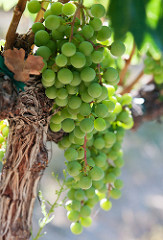
Chardonnay grapes close up, creative commons photo by  Dan Random / Foter.com /
Close-up view of Chardonnay grapes


The typical flavour profile of the grape is green apple and lemon if grown in cool places like Chablis in France, moving through to ripe red apple, peach and melon in warmer climes and eventually to tropical pineapple, mango and even banana notes in hot climates such as California and parts of Australia. Wines from hotter places tend to have a fatter, heavier texture, lower acidity and higher alcohol, whereas those from cold climates can be lean, austere and steely.

Chardonnay and oak go together like a hand in glove. Although there are many ways of integrating oak flavours with those of the grape, some winemakers in the past have chosen to overwhelm the natural expression of the grape with an unsubtle whack of oak. This has led to the association in many people’s minds that Chardonnay “tastes like wood.” Judicious use of new French oak adds butter, toast, nutty aromas and flavours to the wine, while new American oak brings a slightly ‘sweeter’ coconut or white chocolate profile. While some very fine wines can be profoundly ‘oaky’, to my mind this should always work with the available fruit flavours rather than overwhelm them. There is a recent movement in new world countries such as Australia and New Zealand to produce leaner, more mineral Chardonnays with very little new oak influence, while this has been practised as the norm in Chablis, in particular, for decades.

Continue Reading…

Never miss a post
Name: 
Your email address:*
Please enter all required fields
Correct invalid entries

Metric-Imperial Recipe Converter – French/British/American Equivalents

Published by Sunday, June 23, 2013 Permalink 0

Metric-Imperial Recipe Converter – French/British/American Equivalents //


From Southern Food:

Liquid Measures

1 cup 8 fluid ounces 1/2 pint 237 ml
2 cups 16 fluid ounces 1 pint 474 ml
4 cups 32 fluid ounces 1 quart 946 ml
2 pints 32 fluid ounces 1 quart 946 ml
4 quarts 128 fluid ounces 1 gallon 3.784 liters
8 quarts one peck
4 pecks one bushel
dash less than 1/4 teaspoon

Dry Measures

3 teaspoons 1 tablespoon 1/2 ounce 14.3 grams
2 tablespoons 1/8 cup 1 fluid ounce 28.3 grams
4 tablspoons 1/4 cup 2 fluid ounces 56.7 grams
5 1/3 tablespoons 1/3 cup 2.6 fluid ounces 75.6 grams
8 tablespoons 1/2 cup 4 ounces 113.4 grams 1 stick butter
12 tablespoons 3/4 cup 6 ounces .375 pound 170 grams
32 tablespoons 2 cups 16 ounces 1 pound 453.6 grams
64 tablespoons 4 cups 32 ounces 2 pounds 907 grams

Continue Reading…

Never miss a post
Name: 
Your email address:*
Please enter all required fields
Correct invalid entries

Chocolate: Everything You Need to Know about Chocolate Fountains

Published by Sunday, June 23, 2013 Permalink 0

Chocolate fountains are in!

Chocolate fountains are the rage these days. You see them at dinner parties, weddings, all sorts of celebrations. This article gives you all the in’s and out’s, from mini fountains to giant ones.

CHOCOLATE_FOUNTAIN creative commons photo by http://www.google.fr/imgres?client=firefox-a&hs=xVk&sa=X&rls=org.mozilla:en-US:official&biw=1280&bih=527&tbm=isch&tbnid=xgmQrFXS7NTuoM:&imgrefurl=http://chadschocolatefountains.com/&docid=WwpEBl0jAvZB2M&imgurl=http://chadschocolatefountains.com/sitebuilder/images/CHOCOLATE_FOUNTAIN_ROSES_STRAWBERRIES-391x254.png&w=391&h=254&ei=ZeTGUZmPNImc0AWSmICQDg&zoom=1&iact=hc&vpx=349&vpy=107&dur=5146&hovh=181&hovw=279&tx=115&ty=103&page=3&tbnh=141&tbnw=235&start=51&ndsp=26&ved=1t:429,r:72,s:0,i:384_ROSES_STRAWBERRIES-391x254


Most Swiss chocolate makers make a special chocolate to be used in fountains. I would advise asking their opinion before attempting this, because it can be tricky and even dangerous. Last winter, I heard a story about a naked teenager falling into an oversized chocolate fountain in a party in Cologny and then running through the cold streets of Cologny before ending up in the hospital (escorted by the police).

Continue Reading…

Never miss a post
Name: 
Your email address:*
Please enter all required fields
Correct invalid entries

The Art of Tasting Wine with James Flewellen: Top 10 White Wine Grapes

Published by Sunday, June 23, 2013 Permalink 0

The Art of Tasting Wine with James Flewellen: Top 10 White Wine Grapes

by James Flewellen

With over 1,300(!) vine varieties out there making commercial wine, it’s a tough task to narrow down to only 10. Nevertheless, here are my ‘top 10’ white wine producing grapes. The order is my own preference, based on commercial importance, potential quality of the grape and whether it produces a ‘classic style’.

10. Albariño

Deutsch: Albariño-Weingut. Weingut Granbazan. ...

Bodega Granbazán en las Rías Baixas, producer of Albariño


Perhaps a controversial start to the list, Albariño is a rising star in my book. The grape can produce well-balanced aromatic, peachy wines with fresh acidity, suitable as an aperitif or with fish and vegetarian dishes. It’s not yet grown much outside its native Galicia in Spain (and parts of Portugal), yet its stature is certainly on the up and much interest is being shown in growing the grape in a number of new world countries.

9. Gewurztraminer

Tramin - Gewurztraminer Grapes

Tramin – Gewurztraminer Grapes (Photo credit: Lynne Hand)


A very distinctive grape producing ‘love-em or hate-em’ wines. Gewurztraminer has its spiritual home in Alsace, France, though can be found throughout Central Europe and in many new world countries. The grape is typically pink-skinned and produces an abundance of sugars in the right growing conditions. This leads to deeply-coloured, rich, full-bodied wines – many of which are off-dry, or even sweet. Gewurztraminer wines are flamboyantly fragrant with unmistakable notes of lychee, pot pourri and sometimes cloves.

8. Viognier

English: Viognier grapes ripening on a vine in...

Viognier grapes ripening on a vine in Amador county, California.


Another full-bodied, distinctively aromatic wine. Viognier brings forth characteristic notes of peach, apricot and ginger. The very best examples come from the tiny appellation of Condrieu, in the Rhône Valley in France. However, it is found in the blended white wines of southern France, and increasingly in the new world. A single producer in the Barossa, South Australia — Yalumba — could be credited with re-popularising this grape and bringing it to a new audience in the modern era.

Continue Reading…

Never miss a post
Name: 
Your email address:*
Please enter all required fields
Correct invalid entries

Food Art: Still Life with Geraniums, painting by Henri Matisse

Published by Friday, June 21, 2013 Permalink 0

Food Art: Still Life with Geraniums, painting by Henri Matisse

Henri Matisse painted “Still Life With Geranium” in 1906, when he was considered the “King of Fauvism.”It was the first Matisse painting to be purchased for a public exhibition.

An everyday subject matter is depicted in primary colors, thus infusing it with energy and emotion. At the same time, it resembles traditional decorative art.

Matisse was the leader of the Fauvist movement, and used vivid, primary colors long before his contemporaries. The colors always lent a sense of turbulent emotion to his work.

The term “Fauve” means literally “wild beast”. Another prominent member of this movement was André Derain.


Never miss a post
Name: 
Your email address:*
Please enter all required fields
Correct invalid entries

Resources for Learners of Swiss German

Published by Friday, June 21, 2013 Permalink 0

Resources for Learners of Swiss German

I’ve just discovered this Swiss blog, A Humourous Guide to Switzerland.

Miss Peaches, as the blogger calls herself, has compiled this excellent list of resources for those who are learning Swiss German.


Never miss a post
Name: 
Your email address:*
Please enter all required fields
Correct invalid entries

Swiss Supermarket Discoveries, Part III: Hike Switzerland

Published by Friday, June 21, 2013 Permalink 0


//

Swiss Supermarket Discoveries, Part III: Hike Switzerland

by Sonja Holverson

If you actually want to take a hike in Switzerland (and of course you do!), there are all levels from hikes for flatlanders to experts to alpinists. (See Swiss Alpine Wanderlust Packing List for Serious Hikers.)

So don’t let those enormous Alps intimidate you, because you can do a lot at lower altitudes. You might start by hiking around the Swiss vineyards, a common practice in Switzerland, or even in villages; you can hike down to the lake and the one of the relaxing and scenic cruises on Lake Geneva. Whatever the activity you will need a picnic lunch and the best place to find the ingredients is the Swiss supermarket.

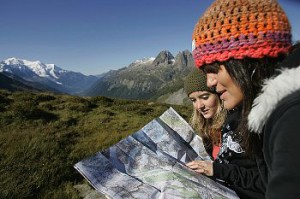
Alpine picnic image courtesy of Olivier Bruchez

Continue Reading…

Never miss a post
Name: 
Your email address:*
Please enter all required fields
Correct invalid entries

Food Art: Still Life with Flowers and Fruit, food painting by Alexej Georgewitsch Von Jawlensky

Published by Thursday, June 20, 2013 Permalink 0

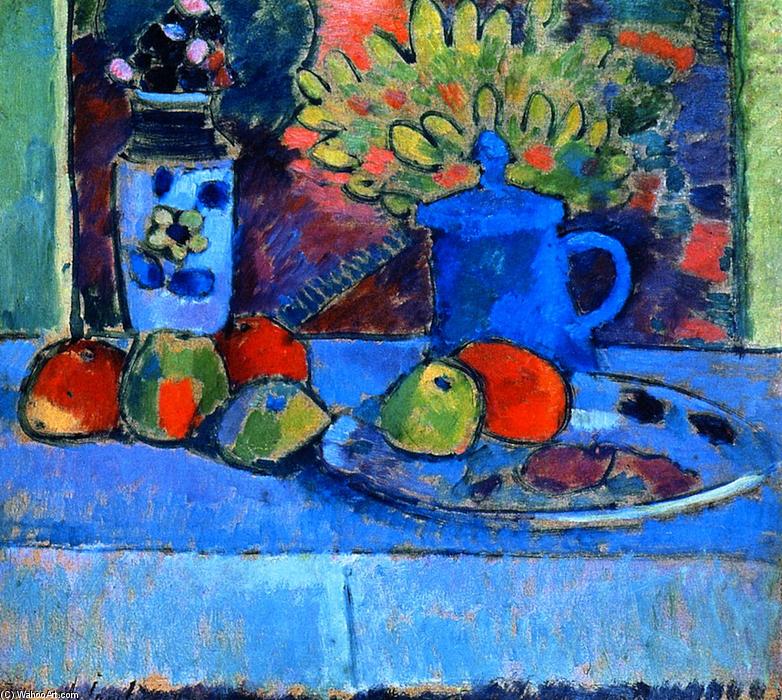
Food Art: Still Life with Flowers and Fruit, food painting by Alexej Georgewitsch Von Jawlensky

Still Life with Flowers and Fruit, by by Alexej Georgewitsch Von Jawlensky (1864-1941, Russia), http://en.wahooart.com/@@/8YE2G9-Alexej-Georgewitsch-Von-Jawlensky-Still-LIfe-with-Flowers-and-Fruit


Alexej Georgewitsch von Jawlensky was a Russian expressionist who lived from 1864 to 1941. “He was a key member of the New Munich Artist’s Association (Neue Künstlervereinigung München), Der Blaue Reiter (The Blue Rider) group and later the Die Blaue Vier (The Blue Four),” says Wikipedia. There is very little biographical information about him in Western literature.

Every artist works within a tradition. I am a native of Russia. My Russian soul has always been close to the art of old Russia, the Russian icons, Byzantine art, the mosaics in Ravenna, Venice, Rome, and to Romanesque art. All these artworks produced a religious vibration in my soul, as I sensed in them a deep spiritual language. This art was my tradition.—Alexej Georgewitsch Von Jawlensky


Never miss a post
Name: 
Your email address:*
Please enter all required fields
Correct invalid entries

Simon Says: Daily Food Quote, June 20, 2013

Published by Thursday, June 20, 2013 Permalink 0

by Simón de Swaan

Food, like love, must never be a joyless experience.–Bert Greene


Bert Greene was a cookbook author and food columnist. His food column for the New York Daily News ran from 1979 until his death in 1988, and was eventually syndicated.


Never miss a post
Name: 
Your email address:*
Please enter all required fields
Correct invalid entries

Food Photography: Still Life with Lemon, by Nawfal Johnson Nur

Published by Wednesday, June 19, 2013 Permalink 0


Never miss a post
Name: 
Your email address:*
Please enter all required fields
Correct invalid entries

UA-21892701-1