Culinary Chemistry: 10 Gluten-Free Tips for the Holiday Meals

Published by Thursday, December 15, 2011 Permalink 0


Culinary Chemistry: 10 Gluten-Free Tips for the Holiday Meals

by Jenn Oliver

The upcoming festivities are all about sharing, seeing friends and family, creating new memories and reliving old ones. It’s a time of joy, inspiration, goodwill, and laughter that I look forward to each year, while looking ahead to the New Year and the fun and exciting experiences the coming seasons will bring. We stroll around the Christmas markets tasting chocolate, nougat, mulled wine, and roasted chestnuts, flavors and delights not just for the taste buds but all five senses — and has become something I look forward to at this time every year.

But for some — such as those who are gluten intolerant or celiac — holiday festivities can bring about a certain anxiety, a stress caused by imposing dietary restrictions on those doing the cooking, or fear of gluten contamination from the grand holiday meal. Just having had a successful family Thanksgiving dinner that everyone, including the gluten free enjoyed, I thought it might be useful to share some of our tips for surviving, and keeping the holidays fun without stressing out about food. So here are 10 gluten-free tips for surviving the holidays.

  1. Be involved – The more you are involved in the process of deciding what gets made and from where everything comes from, the better chance you will have to help direct the meal towards foods and dishes that are safe for you. Being proactive from early on rather than waiting til the last minute may save a lot of stress and worry.
  2. Educate friends and family – It is beneficial for others to know about your dietary needs and what is involved in creating a safe environment. Not everyone fully understands the risks of cross contamination, or that croutons can’t just be picked off of a salad and that a knife can’t be double dipped into the apple butter when spreading on rolls.
  3. Suggest naturally gluten-free dishes – Recipes abound for a myriad lovely and flavorful courses that never contained any flour to begin with, such as salads, roast meats, vegetables. Feel free to explore/suggest dishes that require no alterations to prepare gluten free.
  4. Cook from scratch – Processed foods have a tendency to have a long list of ingredients, including some off limits and questionable ingredients, such as barley malt syrup, modified food starch, etc. Cooking from scratch gives one more control over what goes into a dish and is also easier to modify in order to make a food gluten free.
  5. Offer to host  – While hosting is often a lot of work, you know the safety status of your own kitchen with regard to holidays foods, and it may be easier to host than making sure that someone’s kitchen counter that was dusted with flour earlier that day from baking holiday cookies doesn’t end up contaminating your dinner. If you can’t host, offer to cook some of the dishes to help make it easier for the host to accommodate you, or at least to help with the cooking when you arrive so that you can help keep food prep safe for you.
  6. Make GF versions of your favorites – Many dishes require very simple substitutions to be made gluten free – stuffing can be made by just substituting GF bread; gravy and creamed sauces by substituting GF all-purpose flour, or GF cookies can be used to make your favorite cookie crumb crust for a pie.
  7. Keep GF foods completely separated from gluten foods – If you are eating at a mixed GF/gluten dinner, make sure that the foods you want to be able to eat are completely separated, so no one mistakes which serving spoons go into which dish and bread crumbs don’t find their way into the GF courses. Another idea is to serve the gluten-free folks first, before anything has a chance to get contaminated.
  8. Try new traditions and recipes – Holidays are all about traditions, but they can be as much about making traditions as keeping them. Rather than trying to replicate a longstanding favorite dish, why not try something completely different? A new set of flavors perhaps, so you don’t feel as if you are replacing your great grandmother’s heirloom recipe, but more just creating a new tradition for friends and family to enjoy in the years to come.
  9. Don’t gamble with your dinner – If you are not sure whether or not a dish is GF, it may be best to pass on it. No one enjoys being sick from having a gluten reaction over the holidays or while traveling. Depending on how long you will be there and who you are staying with, it may be a good idea to also bring some snacks just in case.
  10. Remember, it’s just a meal – There is so much more to the holidays than simply one dinner together – the holidays are also about spending time with friends and family, and sharing those special moments. If dinner doesn’t end up being the idyllic meal you had dancing around with those sugarplums in your head, remember the fun moments and spirit of the season, and the real reason for getting together in the first place.
Wishing everyone a happy and safe holiday season, and a joyous New Year!
_________________
Jenn Oliver writes our column Culinary Chemistry. She has a Ph.D. in science, and explains the scientific aspects of what really goes on when you cook (the next Harold McGee?). She’s been running a gluten-free blog, Jenn Cuisine, since 2008 and her kitchen is more like a laboratory than a kitchen. She’s focuses her chemical calculations and experiments on figuring out how to make traditionally glutinous food gluten-free.
Never miss a post
Name: 
Your email address:*
Please enter all required fields
Correct invalid entries

Health Challenge: Luscious Red Cranberries, good for your Health and Good for your Heart

Published by Wednesday, November 16, 2011 Permalink 0

by Tamar Chamlian

5 Easy Ways to Use Cranberries to Make Dishes Healthier and Add Pizzazz

Cranberry harvest in New Jersey.

Cranberry harvest in New Jersey in U.S.


It’s autumn, a season when the color of much of nature goes red by default — vineyards, trees, Japanese oaks, Virginia creeper. Houseware and kitchen accessories — and even Starbucks — magically sells everything in red, even the paper cups. Except for cranberries, which are naturally red, and we have plenty of good reasons to eat them in abundance during the two months they are available, not just for their color, but for their taste and health benefits.

Here are five easy ways to incorporate cranberries into pretty much any dish you’re whipping up.

Continue Reading…

Never miss a post
Name: 
Your email address:*
Please enter all required fields
Correct invalid entries

What makes fresh fruit and vegetables go bad, and how to separate them so they’ll keep longer

Published by Wednesday, October 26, 2011 Permalink 0

by Jonell Galloway

“Many fruits and vegetables produce ethylene gas, a colorless, odorless gas, as they begin to ripen. Some foods aren’t affected much by ethylene gas, while others are extremely sensitive to it.”

I never knew that it was a natural gas that fruit and vegetables produce that causes this to happen.

One thing I have noted is that when you buy fruit and vegetables that come from large agribusiness farms, they have a particularly high water content and they rot much faster than fresh garden and organic produce.

In any case, it is good to separate the ethylene-producing produce from the non-ethylene-producing. There is actually a method.

Click here for more details.


Never miss a post
Name: 
Your email address:*
Please enter all required fields
Correct invalid entries

Eve Tempted Adam with an Apple

Published by Wednesday, October 26, 2011 Permalink 0

by Alice DeLuca

I stopped by the gourmet cooking shop this week and idly asked the proprietor the identity of their best-selling item. Without hesitating, she said “towels.”  I don’t know what I expected, but it wasn’t towels. Is everything wet, that it must be dried? Is everything dull, that it must be polished?  Where are the cooks, the armies of well-intentioned flavor-mongers inspired by a reality-chef show to go out and purchase a kugelhopf pan, individual casserole dishes for pastel de choclo or half-pint canning jars for tiny gifts of strawberry guava compote? I myself have dozens of towels at the ready, and only one steel crepe pan that will last a lifetime, so maybe the disposable nature of towels is the explanation.

I am reminded of flour-sack towels, which were, obviously, made from actual flour sacks. They were very large, and are still available, although not as a cost-recovery measure from the Depression, but as a new purchase from the Vermont Country Store. Frankly, the flour-sack towels are not as good for drying glassware as the new microfiber towels. But, they led my mind down the garden path a ways, and I was reminded of why a cotton pillow case is of great value when making jelly in the home kitchen.

When we were young we made a lot of apple jelly. I am not talking about a few jars of apple jelly; I am talking about gallons. We made this jelly from antique apple varieties, Stark, Baldwin and Hurlbut varieties that grew on tall, old, gnarly apple trees you had to climb. We were drawn to these apples like moths to the flame; I learned later that one or our great-grandfathers, someone I never met and never knew, actually died after falling out of his favorite apple tree, getting hurt and contracting pneumonia. Coincidence? I think not.

There are thousands of varieties of apples, of which hundreds are now available. The Baldwin apple originated in 1750 or so, and is good for making cider and pies. According to Tom Burford[i], it was once the most popular apple in New England, until a very cold winter in 1934 took a terrible toll on the Baldwin orchards. Today, there are fewer than a dozen apple varieties in our local grocery store, even though the farm stands on all sides sell many other kinds. The popular apples in the grocery store are “crisp” and juicy and, like any movie star, an apple popular this season may not be so sought after the next, prompting orchardists to change the apple varieties they grow. None of the modern grocery store apples is as highly flavored as antique varieties like Golden Russet, Ashmead’s Kernel or Calville Blanc d’Hiver.


Today’s apple trees are dwarf trees, apple varieties grafted to root stock that cannot produce a tall tree. The apples on a modern dwarf tree practically walk in to your hands. Conversely, to obtain apples from the top of the antique tree requires planning, cunning and athletic activity. In coastal Maine, you may have to compete with industrious porcupines that sit in the tops of the trees, moving slowly around as they munch the crop.

You can use a strange-looking ladder (narrower at the top than at the bottom), a picking pole resembling a lacrosse stick (with a basket at the top), or risky climbing techniques, to pick the apples in a really tall apple tree. You can shake the tree, causing the apples to fall on to a waiting tarpaulin, but if you plan to make fresh cider from the apples great care must be taken not to include any wind-blown “drops” that have been lying around accumulating bacteria from local wildlife.

Whatever method is selected, once the picking is done, you will be confronted with the hard facts – you will most likely have picked more apples that you know what to do with. After all, only 8 apples are needed for a single deep-dish pie. What will you do with bushels?

This brings us back to the subject at hand: the need for a pillow case in a modern kitchen. Save those old worn out pillow cases, just like they did in what now should be called “the Greater Depression.”  Launder one well, using a minimal amount of perfume-free detergent and an extra rinse, and use it as a jelly bag for making apple jelly.  I will tell you how in a minute.

Homemade apple jelly is like no other apple jelly. Due to the pectin in the apple skins, the juice of fresh apples will make a jelly that clings to toast and shakes, just like Santa’s belly[ii].  Real jelly made with just apples and sugar has double the flavor of commercial jelly. The commercial pectin allows you to jell a much more dilute, watery juice, and allows for the addition of a lot of sugar.  The result of using the commercial pectin is a consistently-textured jelly with minimal flavor, requiring only a few minutes of time at the stove. If you can even find a commercial apple jelly in the market today, it will likely contain added pectin and corn syrup, and taste like apple juice concentrate found in the back of the freezer after a long winter. Instead, take your chances, spend some time making jelly with the pectin that is native in the fresh apple’s own peel and you won’t be sorry.

Homemade apple jelly on a Royal Copenhagen plate

Here’s how.

Recipe

Alice’s Apple Jelly

Ingredients: Apples, fresh water that is not chlorinated, sugar

Time required: 2 days

Results: Priceless

Make the Jelly Juice: Wash thoroughly enough strongly flavored apples to fill a jelly pot. Use apples that would make a good pie — sourness is desirable, and strong apple flavor is mandatory.  They need not be “crisp” but they must be very tasty. Cut the apples in quarters, then use a paring knife to remove the stem and blossom ends and any worms that have taken up residence. To the apples you may optionally add 1/2 cup of cranberries or crabapples, halved, for color.  Pour in un-chlorinated water, barely enough to cover the fruit.

Washing “antique” apples

Bring the apples and water to a boil and simmer until the apples are very soft.

To strain the juice: Open the clean pillow case and place it in a large, clean pot that will hold the whole pillow case and all of the cooked material. Pour the hot cooked apples material and all the juice in to the clean pillow case. This is hot material, so you have to be careful not to burn yourself, and you must keep small children away during this activity.

Pick up the top of the case and tie it up carefully with twine or rope. You will be hanging the pillow case full of cooked apples and liquid from a hook or knob that will hold this heavy weight. We used to hang the case from a cabinet door knob, suspended over a pot. You may have to study up on your knots so that the knot you tie will cause the bag will stay put. (Useful knots are demonstrated at Animated Knots by Grog.)

Hang the pillow case filled with hot apple mush over the pot and let the heavy, sagging bag drip overnight. Despite the strong temptation to do so, do NOT squeeze the bag or the resulting jelly will be cloudy.  You will notice that the exterior of the bag is slimy – that is from the pectin in the apple peels.

The next day, take down the pillow case and discard the apple material – it is perfect for the compost heap. Wash the pillow case as before, using minimal detergent and no fragrance, and store it to use again another time. If you have used cranberries or apples with a lot of red color in their skin, the bag will be stained in interesting ways. The juice in the pan will be slightly cloudy, somewhat pink if you have used pink apples or added red-skinned fruit, and somewhat slimy from the pectin. The juice will be thicker than plain apple juice or cider. (You cannot substitute plain apple juice.)

To make the jelly, here is my recipe: for every 4 cups of jelly juice, add 1 or 2 teaspoons of lemon juice.

Put the juice in to a jelly pot – this would be a large heavy-bottomed pot that is wider than it is tall and that will hold the juice with plenty of room for boiling up. I use a 5-liter pot that is 9 inches in diameter and 5 inches deep. Bring the juice to a hard rolling boil, reached when all the juice is turning over and over as it boils (whereas when simmering there will be only little bubbles at the edges) and boil the juice for 7 minutes.

Then add 3 cups of sugar and boil the mixture “until it jells.”  (The ratio of juice to sugar is 1 cup of juice to ¾ cups of sugar.  Checking an historic recipe from the Settlement Cook Book 1940, recipes sometimes call for more sugar.)

How do you know when the syrup has reached the jelling stage?  Take a large metal spoon, dip it in the boiling syrup and hold it high up over the pan, with the bowl of the spoon facing you and the handle parallel to the floor. If the jelly is ready, the syrup will “sheet” – as the syrup drips off the spoon, the drips will come together to form a band of syrup that falls off the spoon as a sheet, rather than 2 drips of syrup. You will know it when you see it, and it can take quite a while (15-30 minutes). Alternatively, a half teaspoon of syrup spooned on to a cold plate will jell; however this method is flawed because the syrup is still boiling while you test, making for a harder finished product.

Stir the syrup, removing and discarding any “scum” or foam that rises to the top. As soon as the syrup reaches the jelling stage, turn off the heat and skim off any last bits of unattractive foam on the top of the syrup. Pour the jelly in to sterilized jelly jars and cover the surface of each jar with melted paraffin wax, or if you are using canning jars you can process the jelly in a boiling water bath for 10 minutes, per your Ball Blue Book’s instructions.

One note on the paraffin wax sealing method:  If your house has a lot of carpenter ants, the ants will find the jelly and mount a campaign to help themselves to the jelly by damaging the paraffin around the edges.  Sadly for both the jelly maker and the ants, these campaigns result in numerous ant casualties by drowning.  So, it is advisable to store jelly that has been sealed with wax in such a way that ants cannot gain access.

If you have some organic rose geranium leaves (an herbal geranium variety scented like roses), you can flavor the jelly with these beautifully aromatic leaves, to obtain a rose-flavored medieval jelly.  Rose geranium flavored jelly is found to be delicious by adults, but not generally appreciated by children.

2 different Rose Geranium leaf varieties on a reproduction Dedham Pottery plate with raised bunnies

When you spoon your homemade apple jelly on to toast, you will know why people used to spend so much time boiling down syrup to make jelly – the lovely texture and richly concentrated flavors are not obtainable in any other way. Your old pillow case will serve well for many years as a jelly bag, proving the old adage:

Use it up, wear it out, make do or do without.”


[i] Burford, Tom. Apples: A Catalog of International Varieties. Mr. Burford is also known as Professor Apple and his family has been involved in the Virginia fruit industry for 7 generations, since the early 1700s.  Click here to listen to him on Meet the Farmer TV!

[ii] A reference to the children’s poem ‘Twas the Night Before Christmas, published first in 1823, which contains the following description of Saint Nick’s (Santa’s) belly: “He had a broad face, and a little round belly that shook when he laugh’d, like a bowl full of jelly.”


Related articles

Never miss a post
Name: 
Your email address:*
Please enter all required fields
Correct invalid entries

Health Challenge: 5 easy ways to make your lasagne healthier

Published by Wednesday, October 19, 2011 Permalink 0

by Tamar Chamlian

Lasagne doesn’t have to be fattening. Here are five easy steps to make your lasagne healthy while keeping it delicious!

  1. Opt for organic lasagne sheets instead of the traditional ones we find at local markets.
  2. Don’t butter the plate you are cooking the lasagne in. Add just a drizzle of olive oil and spread it with a paper towel.
  3. Substitute a traditional Béchamel Sauce for light double cream (there are several versions available such as fat free, low-fat, etc.).
  4. While cooking the meat for a Bolognese, for example, add tomato paste as well as smaller chunks of tomato. Make an even more vitamin-infused version of this by making a ragout of celery, carrot, and other veggies, and add it to the meat while cooking
  5. The lasagne is taking shape and you’re ready to top it with mozzarella, cheddar and Parmesan. Great, well not really! Opt for the fat-free version of the above cheeses, and be careful to sprinkle it on as lightly as possible.

Bon Appetit!

Never miss a post
Name: 
Your email address:*
Please enter all required fields
Correct invalid entries

Simon Says: Daily Food Quote, October 12, 2011

Published by Wednesday, October 12, 2011 Permalink 0

by Simón de Swaan

Good food is in effect the basis for true happiness.–Auguste Escoffier, c. 1912

French chef, restaurateur and culinary writer August Escoffier (1846 – 1935) popularized and updated traditional French cooking methods. He is a legendary figure among chefs and gourmands, and was one of the most important leaders in the development of modern French cuisine.

Three of Escoffier’s most noted career achievements are revolutionizing and modernizing the menu, the art of cooking, and the organization of the professional kitchen. Escoffier simplified the menu as it had been, writing the dishes down in the order in which they would be served (service à la Russe), referred to Russian style service. He also developed the first à la carte menu. His books are still used by culinary students and chefs alike.

Marie-Antoine Carême
Related articles
Never miss a post
Name: 
Your email address:*
Please enter all required fields
Correct invalid entries

Chocolate News: It’s chocolate week, & here are some exciting chocolate adventures around the world

Published by Tuesday, October 11, 2011 Permalink 0

by Jonell Galloway

This is one of the best and most comprehensive lists I’ve seen about high-quality chocolate adventures around the world. I want to go them all!

Click here to read the entire article.

The evidence continues to build a factual basis that dark chocolate is actually good for you. See the related articles:

  • Chocolate – the miracle drug?
  • Chocolate Week Heaven
  • High Chocolate Consumption Linked To Lower Stroke Risk In Females

And in Peru, they’re still finding new varieties of chocolate. Exciting future for chocoholics! Click here to read.


Related articles
Never miss a post
Name: 
Your email address:*
Please enter all required fields
Correct invalid entries

A Brief History of the Oreo Emboss

Published by Friday, October 7, 2011 Permalink 0
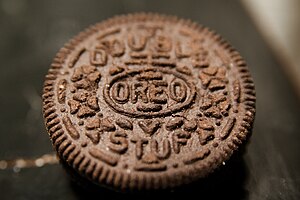
Oreo Double Stuff Cookie


Interestingly, when the Oreo was first introduced by Nabisco in 1912, it used a much more organic wreath for its emboss, later augmented with two pairs of turtledoves in a 1924 redesign.

To follow the evolution of the Oreo cookie’s embossing, click here.

Related articles
  • Food Art: Giant Oreo cake, food photography by SandeeA


Never miss a post
Name: 
Your email address:*
Please enter all required fields
Correct invalid entries

And here are the winners of the 6 Kuhn Rikon knives at our Expat Expo drawing

Published by Tuesday, October 4, 2011 Permalink 0

by Jonell Galloway

Husband Peter and I and Rosa Mayland, author of our column “Rosa’s Musings,” had a great time at the Expat Expo Geneva on Sunday. It’s a great way to make contacts in Geneva.

Jonell Galloway at The Rambling Epicure’s stand at Expat Expo Geneva 2011


We had a drawing for 6 red polka-dot Kuhn Rikon knives.


Kuhn Rikon Knives Drawing, The Rambling Epicure, Expat Expo Geneva

Here are the winners:

Paula Davies-Smith
M. Rowe
Peter Zornow
Sayjel
Alison Farley
Michelle Arevalo-Carpenter

Congratulations. You are now the proud owner of knives made by one of the most reputable brands of cookware in the world, and they’re made in Switzerland!

Related articles


Never miss a post
Name: 
Your email address:*
Please enter all required fields
Correct invalid entries

Support a worthy cause: Jamie Oliver’s Food Revolution

Published by Friday, September 2, 2011 Permalink 0

Jamie Oliver’s Food Revolution petition reads: I support the Food Revolution. Kids need better food at school and better health prospects. We need to keep cooking skills alive.” It’s pretty simple, and difficult to disagree with. It’s simply a real food revolution, asking us to teach our kids how to eat and cook so we won’t end up with a generation of children without this knowledge and these skills, a sort of Dark Ages.

Click here to sign the petition.

Never miss a post
Name: 
Your email address:*
Please enter all required fields
Correct invalid entries

UA-21892701-1