Tackling Obesity through Food Relationships

Published by Thursday, April 10, 2014 Permalink 0

Jonell Galloway, Writer, Editor and Translator

Swiss Food


by Jonell Galloway

I was recently interviewed for a Swiss Info documentary called “Finding the Right Food Formula.” In the context of recent childhood obesity figures in Switzerland, Veronica De Vore is exploring the Swiss relationship to food and how that might have changed, how it might be related to the rise in childhood obesity.

Click here to listen to the show. I cooked a Kentucky Fried Chicken feast for Veronica, while discussing the more serious matter of relationships to food in the context of my work in mindful eating. (The article also includes an abridged recipe for my grandmothers’ traditional Kentucky Fried Chicken.)

Continue Reading…

Never miss a post
Name: 
Your email address:*
Please enter all required fields
Correct invalid entries

Paris to the Pyrenees: David Downie

Published by Tuesday, April 1, 2014 Permalink 0

Jonell Galloway, The Rambling EpicureParis to the Pyrenees: A Review of David Downie’s Book


by Jonell Galloway

CoverParisPyrenees


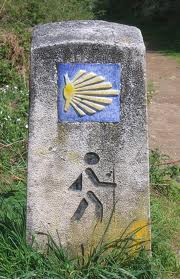
In Paris to the Pyrenees, David Downie takes us right along with him on the Way of St. James, without our ever leaving our armchairs. As stated in the subtitle, “A Skeptic Pilgrim Walks the Ways of St James,” we’re not talking about a conventional pilgrim, so we don’t expect his transformations to be like those of traditional Christians. But then, the Way of St. James, like so many pilgrim routes in the world, becomes a spiritual journey spreading well beyond the confines of Christianity.


St. James Camino Scallop Shel lMarker


Downie makes it a personal journey, full of the classical culture and history he knows so well, and we have the pleasure of experiencing it along with him. His journey through classicism and French history becomes ours, as we learn about the Druids, the Galls, the Romans, former French President François Mitterand, and much more; as he carries around a stone he was convinced had magical power because it looked like a scallop shell, until it becomes too heavy to carry; as we wolf down hearty French meals and sup coarse local wine after a long day of walking, before we fall like a stone into bed.

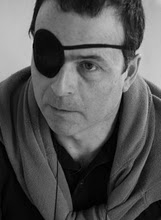
Author of Paris to the Pyrenees. A S


And though we might not receive penance, we end the journey all the richer in knowledge, having read a good tale, too. The book is a latter-day Canterbury Tales, with a varied lot of pilgrims, locals, and farmers all along the way. Alison Harris’ photos are in perfect harmony with Downie’s narrative. You’ll want to wear a scallop shell around your neck after reading this book.

Other sources of information about the book: NPR, 3 Quarks Daily, Boston Globe, Bonjour Paris


Never miss a post
Name: 
Your email address:*
Please enter all required fields
Correct invalid entries

France: How Reducing Food Waste is Part of Fighting Hunger

Published by Tuesday, July 30, 2013 Permalink 0

France: How Reducing Food Waste is Part of Fighting Hunger

An initiative on the part of the French Ministry of Agriculture creates a link between professionals from the agrifood sector and public charities with the aim of reducing food waste and fighting hunger. It is referred to as the French National Pact against Food Waste.

A practical example: the “donation market”

The “donation market” is an initiative from the French Ministry of Agriculture to create a link between professionals from the agrifood sector and public charities. This idea arose out of the fact that professionals and charitable associations both have difficulty finding contacts, and don’t have time to give away food for free or find donors, says the French government. This public Internet platform responds to these difficulties and is easy to implement. Donors propose  the kind of donation they want to make as well as its conditions of use and its transportation on the platform itself. As soon as it is posted on the Internet, all  potential “receivers” are alerted by e-mail and can accept it. Donors can propose either food, equipment, transportation or knowledge on the platform.


As well as helping connect people and fighting hunger, this platform is also a way of reducing food waste, as it encourages people to give food rather than to throw it away and to offer extra room in transportation, for example.

Origin of Food Waste and Means of Action

In their Agrimonde and Dualine projects, French researchers from CIRAD, the French Agricultural Research for Development,  and INRA, the French National Institute for Agricultural Research, examined possible systems of production and supply to feed the world in 2050. According to them, feeding 9 billion people by 2050 is possible so long as we:

  • increase yield in a sustainable way
  • reduce waste from field to fork
  • manage to change our food habits

They insist on the fact that wasting food also means wasting the energy, soil and water used to produce it, and will in turn be used to destroy the waste. Researchers also make a distinction between food loss, which occurs during the early stage of production (just after the harvest, during the first storage, transport, and first transformation) and which mostly concerns poor countries, and food waste, which is due to consumption habits (at home, in restaurants) or mismanagement of storage in the retail sector. Food waste mostly concerns rich countries. Food waste and food loss of course require different solutions.


To reduce food waste by 50% before 2025, the European Commission has proposed guidelines to Member States:

  • to educate people
  • to encourage better labeling and packaging
  • to ask Member States to favor partnership with responsible catering companies

Examples are also provided, such as:

  • to produce a new “sell-by date” label
  • to encourage new sizes of packaging for better preservation of products
  • to teach children good practices for proper use of food


Key Data

In the European Union, food waste comes from:

  • 42% from domestic use
  • 39% from the food-industry
  • 5% from retailers
  • 14% from the catering sector
  • every individual wastes 394 lbs. per year
  • 89 million metric tons of food are wasted each year in the 27 countries of the EU

To learn more about this subject, here is the French National Pact against Food Waste.

Based on press release from the French Ministry of Agriculture


Never miss a post
Name: 
Your email address:*
Please enter all required fields
Correct invalid entries

The Kitchen at the Center of History: An Interview with Rachel Laudan

Published by Tuesday, July 23, 2013 Permalink 0


Rachel Lauden, author of Cusine & Empire

Rachel Laudan, author of Cuisine & Empire

by Elatia Harris

All photos courtesy of Rachel Laudan

Rachel Laudan is the prize-winning author of The Food of Paradise: Exploring Hawaii’s Culinary Heritage and a co-editor of the Oxford Companion to the History of Modern Science. In this wide-ranging interview, Rachel and I talk about her long-awaited book, Cuisine and Empire: Cooking in World History. Paul Freedman remarks that  the book is a riveting and unique combination of culinary ideas and exposition on the materiality of eating.” Other delighted early readers include Anne Willan, Naomi Duguid and Dan Headrick. As a food lover, a cook, a world traveler or a student of cultural history, you might have asked yourself: What is this thing called food? If so, this is the book for you. 

Laudan_Cuisine-001

ELATIA HARRIS: To begin, I would love to know what was involved in the transition from historian of science to historian of food. I can remember when there was no such academic discipline as food history, and I’ll warrant so can many readers.

RACHEL LAUDAN: I can remember when there was no such discipline as science history! I think history is the thread through my life. Growing up in history-heavy Wiltshire, I felt I had to escape the weight of the past. I studied the key historical science, geology, at university, although this was almost unheard of for a woman. I then changed to history and philosophy of science and technology. Then to history of food. History is my way of understanding things.

A lot of food writing is about how we feel about food, particularly about the good feelings that food induces. I’m more interested in how we think about food. In fact, I put culinary philosophy at the center of my book. Our culinary philosophy is the bridge between food and culture, between what we eat and how we relate to the natural world, including our bodies, to the social world, and to the gods or morality.

EH: Your earlier book, The Food of Paradise, necessarily dealt with food politics and food history. So many cultures were blended into local food in Hawaii. I treasure that book — almost a miniature of what you’re doing in Cuisine and Empire.

RL: Well, thank you. It came as a surprise to me that I had a subject for a book-length treatment of something to do with food or cooking — as interested in the subject as I certainly was. The only genre I knew was the cookbook, and I am not cut out to write recipes.  

It was prompted by a move to teach at the University of Hawaii in the mid-1980s. I went reluctantly, convinced by the tourist propaganda that the resources of the islands consisted of little more than sandy beaches and grass-skirted dancers doing the hula.

I couldn’t have been more wrong. These tiny islands, the most remote inhabited land on earth, have extraordinarily various peoples and environments. And as to the food, I was humiliatingly lost. The first morning in the office, Barbara Hoshida, the department secretary, held out a plate of golf-ball sized fried, well, fried whats? “These are Okinawan andagi,” she explained, “They’re just like Portuguese malasadas.”  I didn’t dare ask what Portuguese malasadas were. 

Before I knew it I had a stack of essays on the foods of the three diasporas that had ended up in the islands: the taro-based cuisine of the peoples from the South Pacific (the Hawaiians); the rice-based cuisine of the Asians (Koreans, Han and Hakka Chinese, Japanese, Okinawans, and Ilocanos and Tagalogs from the Philippines); and the bread-based cuisine of the Anglos (British and Americans).

Continue Reading…

Never miss a post
Name: 
Your email address:*
Please enter all required fields
Correct invalid entries

Apollonia Poilâne and the Making of the Paris Poilâne Bread “Empire”

Published by Saturday, June 1, 2013 Permalink 0

by Jonell Galloway

Did the French Bread Revolution start with Poilâne Bread?

The familiar French word for friend, “copain,” means “to share bread with each other.”–Apollonia Poilâne, now head of the Poilâne bread “empire”

A humble baker called Pierre Poilâne started a bakery on the rue du Cherche-Midi in Paris in 1932. The 6th arrondissement was not a chic neighborhood at the time; penniless artists lived there, and often paid Poilâne in paintings. We might ask, did the French Bread Revolution start here at 8 rue du Cherche-Midi?

Poilâne used stoneground, unprocessed, whole-grain flour and sourdough starter, baking his bread in a wood oven — then unheard of in Paris, the capital of the baguette. It was unfashionable to eat anything other than white bread. This way of thinking was further reinforced by WWII, during which the French had no choice but to eat heavy, dark bread. He continued making it nonetheless, says France Today, and today, Apollonia Poilâne, Pierre’s granddaughter, runs the bakery.

Until 2007, she studied at Harvard and ran the bakery at the same time, having her personal supply of bread sent to her every week in Boston.

Note the elegant “P” carved into the top of each loaf.


This now-classic Poilâne loaf has a hard, crusty outside and a firm, dense crumb on the inside. It can keep be eaten fresh for up to 5 days after baking, after which it can be toasted.
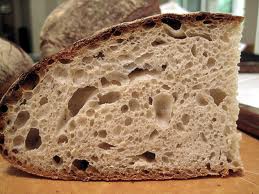
Inside Pain Poilane bread creative common license http://www.thefreshloaf.com/keyword/pointeacalliere


Pain Poilâne or miche, meaning “round loaf,” weighs in at around 2 kg / 4.4 lb. The recipe is secret, and it is not a whole-grain bread in the traditional sense of the word. Environmentally correct, pesticide-free varieties of wheat are grown and stored. They are then stone-ground, thus preserving the wheat germ. Stone grinding makes it possible to eliminate any coarse bran that might contain impurities.

Poilâne flour is what is called in French farine biseor wheatmeal — a brown flour intermediate between white flour and wholemeal flour — which maintains a higher nutritional value than white flour. Levain or sourdough starter and salt from the salterns of Guérande, a swamp of salt water in Brittany.

Pierre brought this type of bread with him from his native Normandy, where loaves were large and round, in the style of what the French now call “country bread.” Today, it is distributed all over the world.
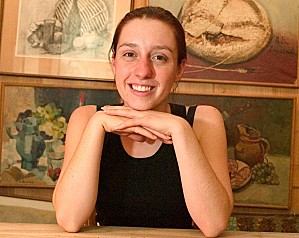
Apollonia Poilâne, current owner of Poilâne bread bakeries


Pierre’s sons Lionel and Max took over the bakery in 1970. Just like Apollonia, they had learned bread baking by working right alongside their father, and continued the tradition of the original round loaf marked with the signature “P.” They eventually took separate paths, with Lionel keeping the original bakery started by his father, and Max going off on his own to start a bakery under his own name, Max Poilâne. In Paris, people have long discussions over which of the brothers makes/made the better bread, since both have continued to bake their father’s signature recipe.

Lionel Poilâne is better known outside France, since he grew the original family business, making it into an international name. This growth was made possible by his excellent teaching skills and his embracing of modern developments in the industry, such as the use of machine kneading, while at the same time maintaining his father’s philosophy of each baker following and taking responsibility for his or her loaves from start to finish. He referred to his concept as “retro-innovation.”

Lionel and his wife died when their helicopter, piloted by Lionel, crashed in 2002, leaving behind daughters Athena and Apollonia, the latter who is now following in her father’s footsteps. She started running the bakery on graduation from high school.

In this video, Martha Stewart visits the Poilâne bakery in Paris and learns about the bread making process in an interview with 22-year-old Apollonia Poilâne when she was still at Harvard. Click here to watch the video interview of Apollonia by Martha Stewart herself.


Martha Stewart

The offiical Poilâne site lists a number of recipes, for making and using some of the Poilâne bread and pastries.


Poilâne Bakeries

8 rue du Cherche-Midi, Paris 6th arrondissement
Tel. +33 (0) 1 45 48 42 59
 
49 bld de Grenelle, Paris 15th arrondissement
Tel. +33 (0) 1 45 79 11 49
Open on Sundays
 
38 rue Debelleyme, Paris 3rd arrondissement
Tel. +33 (0) 1 44 61 83 39
Open on Sundays
 
46 Elizabeth Street, London SW1W
Tel. +44 (0) 207 808 4910


To read more about the French Bread Revolution, see also (bilingual in French and English):

The Revolution of French Bread Baking (part 1), by Jean-Philippe de Tonnac

The Revolution of French Bread Baking (part 2), by Jean-Philippe de Tonnac

Book Review: Jean-Philippe de Tonnac’s “Dictionnaire Universel du Pain” or Universal Dictionary of Bread, by Jean-Philippe de Tonnac

The 7 Lives of Bread: Pascal Auriac, master bread baker in Laguiole, a hidden corner of France, by Jean-Philippe de Tonnac

Never miss a post
Name: 
Your email address:*
Please enter all required fields
Correct invalid entries

The Rambling Epicure Made Loads of New Friends at the Wendell Berry Conference 2013

Published by Tuesday, April 23, 2013 Permalink 0

by Jonell Galloway

“A Rambling Epicure”: a short article about my work

One great thing about spending 3 days with a group of like-minded people, who have come from all over the country (and Switzerland) to pay homage to their “spiritual guide”, Wendell Berry, is that the audience is already filtered, and you can be sure to meet people you can relate to and that you will stay in contact with.

Wendell Berry speaking in Frankfort, Indiana

Wendell Berry speaking in Frankfort, Indiana


Such is the case with Elias Crim, a native Texan who spent “several good years studying classics and medieval Italian at U.C. Berkeley before wasting several more years in financial journalism around Chicago.” Crim has also written for The American Scholar, The American Conservative, the Washington Times and The Chicago Observer.

This is the only photo ID I could muster up and I think it rather amusing.


He also runs a website, Solidarity Hall, which he describes as “as a hospitable old hostelry, a mental oasis in the deserted landscapes that surround us. We no longer have the coffeehouses of eighteenth-century London, where Samuel Johnson and his friends said more of substance in an hour than our blogs today could manage in a week. Nor do we have a local culture of pubs such as Chesterton’s Old Cheshire Cheese, where friendship could flourish easily, even amidst clashing opinions.” I thoroughly recommend that you take a look and start a conversation of your own.

Elias was so kind to publish this article, “A Rambling Epicure,” about my work after the Wendell Berry conference. I invite you to take a look.

Start here and then continue on Solidarity Hall:

Jonell Galloway is surely the only person from Hardinsburg, Kentucky, to ever study Sanskrit. But that’s secondary. More important is the way this spiritual daughter of Wendell Berry has developed the Rambling Epicure, an encyclopedic and literate website which describes itself thusly: “A gastronome’s guide to mindful eating. A serious approach to real-food shopping, cooking, and dining.”

Click here to continue.


Never miss a post
Name: 
Your email address:*
Please enter all required fields
Correct invalid entries

Paris to the Pyrenees: David Downie Eats His Way Down the Way of St. James, Interview by Elatia Harris

Published by Monday, April 22, 2013 Permalink 0


Left: Cross with Rocks, copyright Alison Harris.
Right: Forest Cathedral, copyright Alison Harris


Interview by Elatia Harris

Their 50th birthdays in sight, the acclaimed travel and food writer David Downie, and his wife, the photographer Alison Harris, decided that trekking from Paris to Spain, would be just the thing. They are based in Paris, so the Way of St. James, for a millennium one of the world’s most celebrated pilgrimage routes, was right at their back door. Neither Alison nor David is religious — the classical pilgrimage experience was not what they were seeking. What were they seeking? Renewal, changed perspectives. Perhaps to test themselves, over 72 days and 1100 km of — at times — very rough terrain. And thereby hangs a tale.

Paris to the Pyrenees: A Skeptic Pilgrim Walks the Way of St. Jameslaunches this week. Scroll to the end to see book tour information. Permission to post on TRE the superb photos from the book was granted by Alison Harris.


ELATIA HARRIS: There has been a lot in the news lately on pilgrimage, however one understands the phenomenon. People who do it talk about needing to lose their routine and find themselves. Most set out alone, meeting others en route. You and Alison started together.

DAVID DOWNIE: Our choice to walk together happened organically. I had planned to do this on my own. Alison came along to keep me out of trouble. If you ask her, she’s likely to say it was her idea about 25 years ago, when she suggested we do something similar.

EH: Readers cannot but wonder how they would hold up, in these circumstances. I pictured a long leisurely walk through a French countryside movie. Cows, chateaux…oh, perhaps a few mildly strenuous stints.  I was so wrong. This was a test of all your combined resources. It would be for any couple. 72 days of togetherness and real physical hardship. And you had already spent years collaborating on your books.

DD: Like some old couples, we have merged in mind and spirit — if such a thing exists — while remaining very different people, and very pig-headedly independent. So, while we were together on the pilgrimage, we were often apart both in our mental spheres and physically. Alison stopped constantly, ran ahead, took detours, disappeared, got lost—often, though not always, in pursuit of a photograph. She probably walked twice as many miles as I did. By the end of the pilgrimage, my regard for her had only deepened. I can’t speak for her, of course.

Continue Reading…

Never miss a post
Name: 
Your email address:*
Please enter all required fields
Correct invalid entries

Documentary: Building a Slow Food Nation

Published by Friday, March 29, 2013 Permalink 0

by Jonell Galloway

Wendell Berry speaking in Frankfort, Indiana

Wendell Berry speaking in Frankfort, Indiana


The Atlantic‘s Corby Kummer interviews Wendell Berry, food philosopher, poet and advocate as well as farmer; Eric Schlosser, author of Fast Food Nation; Carlo Petrini, founder of Slow Food; Vandana Shiva, philosopher, environmental activist, eco feminist, and advocate in the domain of agriculture and food; and Alice Waters, American chef, restaurateur, activist, and humanitarian.

Part 1 of this movie-interview lasts 1 hour 21 minutes, but is broken up into shorter segments, consisting of interviews with the people listed above. Part 2 lasts 53 minutes.

Click here to view documentaries Building a Slow Food Nation, Part 1 and Building a Slow Food Nation, Part 2.


Never miss a post
Name: 
Your email address:*
Please enter all required fields
Correct invalid entries

Meet New Zealand Celebrity Chef Annabel Langbein

Published by Tuesday, September 25, 2012 Permalink 0

by Amanda McInerney

The celebrity cooks and chefs of the United States, the UK and Europe are frequently familiar to Australians too, but I sometimes wonder if the reverse is true. We’ve bred some truly remarkable kitchen talents down here in the antipodes — both in Australia and New Zealand — and we well and truly have our share of local celebrity chefs on TV shows and cookbook shelves. While the international Masterchef franchise has blazed across our screens and spawned an entire new crop of  culinary household names, there are plenty that have been steadily and consistently doing their kitchen/foodie thing without all of that fanfare and I’m taking this opportunity to introduce you to one of them.

Continue Reading…

Never miss a post
Name: 
Your email address:*
Please enter all required fields
Correct invalid entries

Switzerland: Tasting Week (La Semaine du Goût) Program

Published by Thursday, September 20, 2012 Permalink 0

by Jonell Galloway

Click to see the Tasting Week program for the entire country. Tasting week runs from 13 to 23 September 2012.

This year many of the events are sponsored by Savoring a week of ‘slow food’ across the country.


Never miss a post
Name: 
Your email address:*
Please enter all required fields
Correct invalid entries

UA-21892701-1