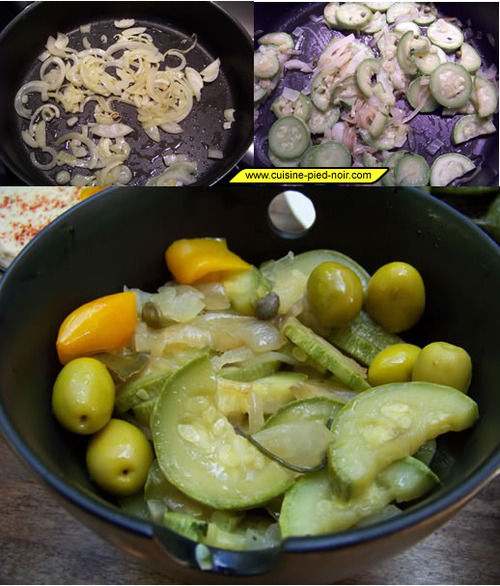
Mediterranean Food Connection: Zucchini and preserved lemon salad, a recipe by Christophe Certain

Published by Tuesday, July 9, 2013 Permalink 0


Mediterranean Food Connection: Zucchini and preserved lemon salad, a recipe by Christophe Certain

Recipe translated from the French and adapted by Jonell Galloway

This recipe is perfect for Ramadan.

Recipe

Ingredients

2 onions, chopped
4 zucchini / courgettes
1 tablespoon of capers in vinegar
1 preserved lemon (see note I posted here a month or so ago about how to make them), chopped into 3 mm / 1/8” cubes
Salt
Pepper
Olive oil or butter

Equipment

Large, deep frying pan

Instructions

  1. Heat olive oil or butter. Sautée onions.
  2. While onions are cooking, wash zucchini / courgettes. Start by cutting off ends, then cut then slice them into medium-thick slices, leaving the skin on.
  3. When onion is translucent, add zucchini / courgettes. Mix well, but gently.
  4. Let this mixture cook over low heat for about 15 minutes, until the water from zucchini / courgette has evaporated. They should remain crunchy, but if you prefer them soft, just cook them a little longer.
  5. Add capers and chopped lemon.
  6. Leave on burner for a few minutes, gently stirring, so that the zucchini / courgette will absorb the lemon flavor.
  7. This dish can be eaten warm with chicken or fish, for example, or cold, as a salad.

You can view the original recipe in French on Christophe’s website Cuisine Pied Noir.


Never miss a post
Name: 
Your email address:*
Please enter all required fields
Correct invalid entries

Immortal Cheese with Eric LeMay: Cheese Making 101

Published by Friday, July 5, 2013 Permalink 0

Immortal Cheese with Eric LeMay: A pithy and picky video tour through everything worth knowing about cheese.

Never miss a post
Name: 
Your email address:*
Please enter all required fields
Correct invalid entries

Gareth Jones: Memories of Old Belgium & Malmedy’s Gooey Kisses

Published by Wednesday, July 3, 2013 Permalink 0


//

ID photo of Gareth Jones, food writer and consultantMemories of Old Belgium and Malmedy’s Gooey Kisses, including Recipe

by Gareth Jones

IMG_0047 (250x188)

When two chewy, gooey meringues come stuck together either side of a slather of butter cream or crême chantilly, the pâtissiers of Malmédy call this a ‘kiss’. Their description is obvious – it’s a fond embrace. Such is its fame, the Baiser had a place in the original Larousse Gastronomique compiled by Prosper Montagné in 1938.

The story goes that the Baiser de Malmédy started life in the late 19th century in this region of the Eastern Ardennes that many still prefer to call ‘Old Belgium’. The name appreciates that here, in the small towns like Malmédy, Stavelot, Bastogne, Spa and Francorchamps, the old ways continue and courtesy comes before all else – much as continues in Norfolk and Suffolk, Dorset and Somerset, where people living here still have time for each other.

OLYMPUS DIGITAL CAMERA

Continue Reading…

Never miss a post
Name: 
Your email address:*
Please enter all required fields
Correct invalid entries

Spontaneous Cuisine Recipe: Easy Corn Flan or Pudding

Published by Tuesday, July 2, 2013 Permalink 0


//

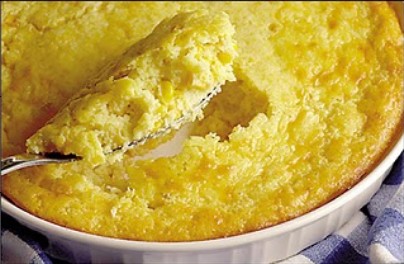
Spontaneous Cuisine Recipe: Easy Corn Flan or Pudding

a recipe by Jonell Galloway

Spontaneous Cuisine Recipe: Easy Corn Flan or Pudding


The Indians taught the original American settlers how to make corn pudding or flan. This dish has remained a classic in the American South, where corn is still, to a large degree, one of the main grains in the traditional Southern diet.

Continue Reading…

Never miss a post
Name: 
Your email address:*
Please enter all required fields
Correct invalid entries

Mindful Eating: Getting your Kids into the Kitchen: Fresh Fruit Smoothies

Published by Sunday, June 30, 2013 Permalink 0


//

Jonell Galloway, Editor, The Rambling EpicureMindful Eating: Getting your Kids into the Kitchen: Fresh Fruit Smoothies

Getting your Children Interested in Food

From the archives

For younger children, one of the easiest ways of introducing them to the kitchen is to tempt them with a sweet, fruit smoothie.

Smoothies are easy and can be made all year, changing
the flavor according to what fruits are in season.

So as to avoid adding sugar, it’s best to choose a fruit that is very ripe and sweet, and, of course, one that your child likes. Letting your child choose the fruit is also a way of teaching him or her how to shop for fresh fruit, and explain why you don’t buy strawberries from Chile at Christmas. Local fruit is not only fresher and therefore has more vitamins, but it is also nicer on the purse.

Bananas are good all year, and can be mixed with different fruits in the summer. There are endless combinations that change with the seasons.

At the moment, strawberries, melons, peaches, and raspberries are already available in the Geneva region or from nearby France or Italy. Indian mangoes make a divine smoothie, similar to an Indian lassi, and always a favorite for children. The buttery, honey-flavored yellow kiwis from New Zealand have a very short season, but are not as acidic as the green ones, and have just come on the market.

Take a look at what’s in season before you go to the market.

Continue Reading…

Never miss a post
Name: 
Your email address:*
Please enter all required fields
Correct invalid entries

What is Spontaneous Cuisine?

Published by Thursday, June 27, 2013 Permalink 0

Jonell Galloway, Slow Food, Spontaneous Cuisine, Slow Food, Editor of The Rambling Epicure, Mindful EatingMy Spontaneous Cuisine, by Jonell Galloway

Spontaneous Cuisine is an approach to cooking that I “invented” 25 years ago, around the same time as Paul Bocuse started talking about la cuisine du marché, or “market cuisine.”

Happy Thanksgiving


The Spontaneous Cuisine method consists of writing out a tentative menu based on seasonal, local products; going shopping for the products, and adapting the menu according to what is available and fresh; going to the wine seller to select a wine to go with the menu, then going home and cooking all afternoon with my students. A day in the classroom-kitchen usually ends with a candlelight dinner at the château (in my past life in France), and now, at my 1,000-year-old chapel converted into a house in Chartres.

Never miss a post
Name: 
Your email address:*
Please enter all required fields
Correct invalid entries

Swiss Supermarket Discoveries, Part III: Hike Switzerland

Published by Friday, June 21, 2013 Permalink 0


//

Swiss Supermarket Discoveries, Part III: Hike Switzerland

by Sonja Holverson

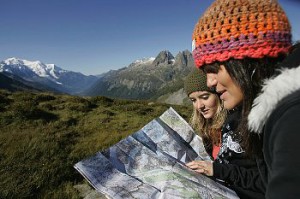
If you actually want to take a hike in Switzerland (and of course you do!), there are all levels from hikes for flatlanders to experts to alpinists. (See Swiss Alpine Wanderlust Packing List for Serious Hikers.)

So don’t let those enormous Alps intimidate you, because you can do a lot at lower altitudes. You might start by hiking around the Swiss vineyards, a common practice in Switzerland, or even in villages; you can hike down to the lake and the one of the relaxing and scenic cruises on Lake Geneva. Whatever the activity you will need a picnic lunch and the best place to find the ingredients is the Swiss supermarket.

Alpine picnic image courtesy of Olivier Bruchez

Continue Reading…

Never miss a post
Name: 
Your email address:*
Please enter all required fields
Correct invalid entries

David Downie: Artful Parisian Pastry, Part 2: Paris Present

Published by Wednesday, June 19, 2013 Permalink 0

Parisian Artful Pastry, Part 2: Paris Present

by David Downie

The minimalism of contemporary pastry art can be spectacular. A Paris-trained American pastry chef friend of mine from New York came to dinner carrying a hatbox. She lifted the lid and everyone gasped. “It’s a pastry radiator,” I couldn’t help exclaiming. The “radiator’s” buttery pastry fins were filled with ethereal cream, shielded by dark chocolate plates and mounted on a hard nougatine U-shaped base reminiscent of Bakelite.

Classic chocolates from Jean-Paul Hévin ©Alison Harris

“Actually it’s a vertical millefeuille,” my friend explained as she heated the blade of a long knife—the only way to slice this incredible, gorgeous delicacy without destroying it.

The “radiator” turned out to be the conceptual-art brainchild of culinary designer Marc Brétillot, whose creations have often been spotted in the pastry department at the Bon Marché’s Grande Épicerie.

“Pastry is art,” Philippe Muzé, for a decade the wonder-worker at Paris’s bastion of traditionalism, Dalloyau, told me (he has since moved on and on and won many awards). “It’s poetry,” he added. “You can turn sugar, chocolate, herbs, spices and fruit into a million flavors and colors.” I hesitated before deconstructing his green Gâteau Vert, discovering a raspberry-colored biscuit, pear mousse, hot Szechwan pepper, cardamom, thyme and paprika.

Continue Reading…

Never miss a post
Name: 
Your email address:*
Please enter all required fields
Correct invalid entries

Jonell Eats her Way through Provence: A Photo Essay

Published by Tuesday, June 18, 2013 Permalink 0

Jonell Eats her Way through Provence: A Photo Essay

by Jonell Galloway

Tourettes-sur-Loup in France is the world capital of violets, and yes, you can eat violets. Candied, as you’ll see on my dessert in the photos; syrup; as jam (the stacked tins); and they even make violet pasta.

Never miss a post
Name: 
Your email address:*
Please enter all required fields
Correct invalid entries

Kids in the Kitchen: Teach Your Kids How to Shop for Food

Published by Monday, June 17, 2013 Permalink 0


//

The Rambling Epicure, Editor, Jonell Galloway, food writer.Kids in the Kitchen: Teach Your Kids How to Shop for Food

by Jonell Galloway

Summertime is the perfect time to start!

Farmers Market

Going to the farmers market can be made into an exciting, weekly event. Summer offers lots of fresh fruit that they can choose to make their smoothies, to put on their breakfast cereal, or to make fruit salads. Vegetables are tastier in summer than in winter, and there is a larger selection, so it is also an occasion to encourage them to try more vegetables. If they choose fruit and vegetables themselves, they will feel more part of the process, and are more likely to eat them.

Making the Shopping List

Start by discussing the fruits and vegetables that are in season with your child before you go to the market. For the Lake Geneva region, you can look at our MarketDay photo albums, published regularly, to get an idea of what you can expect to find. If you are planning on making a meal together, choose the dishes and ingredients together when making your shopping list. If it’s fruit for snacks or smoothies, let them decide which ones they prefer.

It is a good idea to put up a food pyramid and a seasonal products chart somewhere in the kitchen, so you can refer to it when planning meals with the children, and also to explain why they must eat food such as green vegetables or fruit, for example. More suggestions are available in our 9 May 2009 post A fun, interactive guide for teaching your children good eating habits.

Explain the importance of buying local when possible. It is not only cheaper, but fresher, and therefore has more vitamins.

At the Market

Once you’re at the market, let them start looking for the items on the list. When they’ve spotted them, explain how to choose, by color, smell, touch, ripeness, etc., but make sure to ask the vendor if it’s all right to touch first.

This is also a time to let them look for products that have a local origin written on the tags, and to explain that if the products are local, they are also more ecological, because the cost of transport is less, and that in turn makes them more economical. It takes a lot of fuel to bring tomatoes from Holland in July and August when we have them right here in the region. Reduced transport also cuts pollution.

Buying from local producers allows children to have direct contact with the farmers, and to ask questions if they like. Farmers love to talk about what they have lovingly produced, and this in turn encourages children to appreciate farmers’ hard work and the satisfaction that it brings them. There is a reciprocity: the farmer gives you something he or she has produced with care, and you in turn get to satisfy your tastebuds.

Make kids part of the entire process by letting them help prepare the meal or dish afterwards. Once again, they are more likely to eat it if they help prepare it.


//

Never miss a post
Name: 
Your email address:*
Please enter all required fields
Correct invalid entries

UA-21892701-1