From Tokyo: Quirk of Fate after the Quake

Published by Wednesday, November 14, 2012 Permalink 0

by Nancy Singleton Hachisu

From the archives, in celebration of Nancy Singleton Hachisu’s new book Japanese Farm Food, already on its way to becoming a classic

My Surreal Dinner at Les Créations de Narisawa Restaurant after the Quake in Tokyo

Just moments before the Great East Japan Earthquake began to shake I was thinking about food.

While making my way towards Tokyo Station to catch the bullet train back to my local area 100 kilometers northwest of Tokyo, I was toying with dropping by my regular sushi shop near Tokyo Station for a palate cleanser (to chase away a disappointing sushi lunch earlier). Though really, I was wishing I could stay in town for dinner. Alas, I knew this would not sit well with my husband as I had just gotten back a couple days earlier from a quick trip to the U.S. And I had been gone way too much this last year.

Nonetheless, the idea took hold.

That morning I had sat in on a brain storming session exploring logistics of bringing the next edition of Cook It Raw to Japan. As the talk flowed around me, my nascent desire to “experience” Yoshihiro Narisawa’s provocative Japanese-influenced French “food” swelled into an obsessive urge to eat at his Minami Aoyama restaurant, Les Créations de Narisawa that night. Impractical, crazy, costly…impossible. Or so I thought.

When the ground of the massive station building where I stood stopped rippling and the initial terror had passed, the other passengers and I all waited quietly with backs leaning against the station walls. All eyes were fixed on our cell phones in hand, trying unsuccessfully to get a signal. No one said a word.

I emailed my 14-year-old son, home sick from school that day, and got a return email immediately. The house and family were fine.

At that point I still thought the trains would be running again, because the JR announcements were telling us there had been a “big earthquake,” and to wait as they checked the train lines. I dutifully waited for 45 minutes before realizing it was pointless. And so I made my way through underground walkways to Tokyo Station and began to realize the enormity of what had just happened.

Student groups trapped on their way through Tokyo for the annual School Trip were seated on the floor as teachers gave instructions. The bullet train would not be running that day (or the next).

My first thought was getting a hotel (and that I could stay for dinner). I had already squandered a crucial hour waiting for the trains to run, so the streets had swollen with commuters by the time I surfaced outside of Tokyo Station. I only knew of a few hotels and was not sure which side of the station they were located. Tokyo Station is a massive behemoth spanning multiple city blocks. When I finally got my bearings, it was getting on towards 5pm, already 2 hours after the earthquake. The hotels were full, so I lined up for the payphone to call Les Créations de Narisawa. My iPhone battery was dying, I was getting cold, and I knew I needed to get to a safe haven to recoup my energy before the night ahead of me. I needed food and I needed good food.

It was now about 6pm. I glanced over at the hoards waiting for taxis and optimistically told the restaurant I would try to get there by 7:30, but gave them my email for contact.

I now had a destination and nothing would deter me from getting there. Nothing.

The line for taxis looked insanely long and seemed to feed in from different directions. I dithered. I stood in line for a while, still unable to commit: wait it out or find another way. I tried to gauge how long it would take by talking to others around me in line—I’m not sure what we were thinking. We somehow believed that if we stood there long enough, the taxi would take us where we wanted to go. But what exactly was, “long enough?” One hour…five?

The alternative was unthinkable. Walk.

But I didn’t have all night to passively wait. I had less than 2 hours to get to my asylum away from the massive surge of humanity that had filled the sidewalks and streets. I knew I could handle a night on the floor of Tokyo Station, but desperately needed something to ground me in the chaos. And the only thing that does that for me is a quiet room and thoughtful food.

So I set off walking. Power walking, that is.

Thanks to a fellow “traveler” met early on in my trek, I got to Minami Aoyama in about an hour and a half. We stopped one time on a pedestrian bridge over Aoyama Dori (a main thoroughfare). The vast sea of lights before us was from the cars that barely inched forward. No taxis were getting through that night. Walking had been a good decision.

A flute of champagne in hand, my iPhone charging, I heaved a huge sigh of relief. I was “home.”

For the next two hours, a surreal dinner like I had never had before unfolded. It almost seems obscene in retrospect: tree bark, tree sap…bread baked before my eyes in a small stone capsule. Unusual and whimsical morsels from land and sea played together on the equally fanciful “plates.” I was the only customer that night. Perhaps I was the only one crazy enough to take refuge in such a place. Shut off from the outside world, none of us in that hushed room of Les Créations de Narisawa really knew or understood the gravity of the earthquake and all the horror and devastation it had brought. Nor had any of us imagined the unthinkable happening as it has happened at Fukushima Daiichi.

That night at Les Créations de Narisawa, I was caught in a soft little bubble, coddled by the staff. All of us unaware of what awaited us when the bubble burst.

At 10 o’clock, I stepped back out into the brisk night and started my return voyage. Long (useless) waits for trains, a night spent shivering on the marble floor of Tokyo Station, and more endless lines later, I finally got home late the following day. And for now we are safe, though 215 kilometers does not seem far enough from Fukushima Daiichi. But hundreds of thousands of Japanese are still in shelters and many will not be able to go home for many years to come.

And in the aftermath, we try to pick up our lives. I am planting seeds for the summer and looking towards the future. I am trying to organize food for a shelter in our prefecture and to offer a family the vacant teacher apartment at our school, but the wheels grind slowly here and accepting help from outside sources means someone has to manage that. There seems to be an absence of organization to deal with donations and the shelter contacts prefer money or instant ramen over real food like a big pot of stew from farm chickens and local (non-irradiated) vegetables. But that’s Japan, it’s all about the face-to-face meeting, not phone arrangements. I suppose a road trip is in order.


Never miss a post
Name: 
Your email address:*
Please enter all required fields
Correct invalid entries

Itsy Bitsy History of Candy Corn and other Halloween News

Published by Sunday, October 28, 2012 Permalink 0

by Jonell Galloway

Don’t miss Gourmet Live’s history of how candy corn was invented in a time when corn was seen as low-brow, and how it later came to be associated with autumn.

Click here to read more.

For lots of fun and novel uses for candy corn (and for a few good laughs), you might want to read this article on Jezebel.

Laughing Squid has produced an series of sculptures made from candy corn.

Craftberry Bush shows a step-by-step photographic explanation of how to make candy corn party favors. These are some of the most original Halloween treats I’ve seen.


Never miss a post
Name: 
Your email address:*
Please enter all required fields
Correct invalid entries

Food History: Before there were Restaurants, there were Street Kitchens

Published by Friday, October 5, 2012 Permalink 0

by Jonell Galloway

Some form of restaurant has existed ever since humans have been eating. The phenomenon grew as large cities formed, and as people traveled on the ancient silk roads in the Middle East and China, and in the Roman Empire, often in the form of inns where one could both sleep and eat.

Street kitchens and food trucks are by no means a modern invention. Jean-Robert Pitte says in his  essay “The Rise of the Restaurant”:

Throughout the world, the principal type of eating establishment has always been the street kitchen, where a person can buy a precooked dish for a modest sum. They have always existed in China and still exist throughout Asia, even in industrial and postindustrial countries such as Japan…Street restaurants are still common in Latin America and the Middle East and Africa… (from A Culinary History: Food, edited by Jean-Louis Flandrin and Massimo Montanari)


Never miss a post
Name: 
Your email address:*
Please enter all required fields
Correct invalid entries

La Vendange: The Grape Harvest on a Small Country Estate in France

Published by Monday, September 24, 2012 Permalink 0

by Vendange

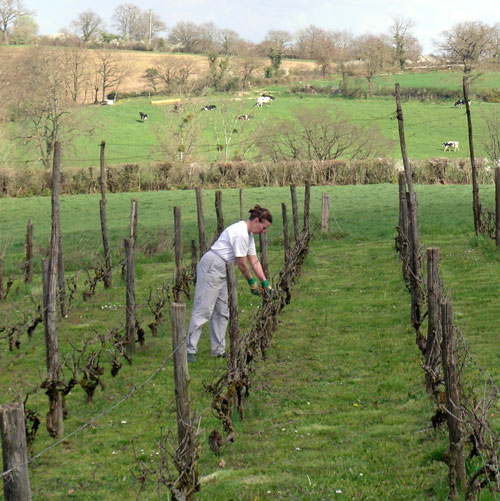
When we lived in the white wine we had vines. We were outrageously excited about the prospect of making our own wine. Of course, we were sure it would be wonderful. I mean, we had been drinking it for years, we should know how to do it, right?

Continue Reading…

Never miss a post
Name: 
Your email address:*
Please enter all required fields
Correct invalid entries

Simon Says: Daily Food Quote, September 19, 2012

Published by Wednesday, September 19, 2012 Permalink 0

by Simón de Swaan

Cuisine is when things taste like themselves.–Curnonsky

Maurice Edmond Sailland, better known by his pen-name Curnonsky, and dubbed the Prince of Gastronomy, was the most celebrated writer on gastronomy in France in the 20th century. He wrote or ghost-wrote over 65 books and enormous numbers of newspaper columns, included his most famous book, La France Gastronomique: Guide Des Merveilles Culinaires Et Des Bonnes Auberges Fran Aises (Gastronomic France: Guide to Culinary Marvels and Good French Inns).


Never miss a post
Name: 
Your email address:*
Please enter all required fields
Correct invalid entries

How Smart is a Sheep? The Churra da Terra Quente

Published by Friday, August 3, 2012 Permalink 0

by Diana Zahuranec

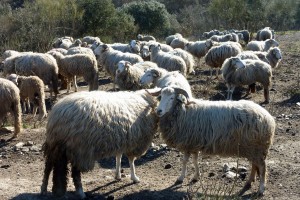
As I stood in the crisp air and bright sun of a Portuguese farm with the other Slow Food University of Gastronomic Sciences students, a single question popped into my mind. We were learning about the Churra da Terra Quente sheep breed, an indigenous and endangered animal with tangled wool and long, dirty tails. They were a rough-looking lot, but watched us curiously and weren’t as shy as other sheep I’ve unwittingly terrified just by standing by them. Some scratched their dirty wool on dry tree trunks, and others flopped down onto the dry soil that was bereft of rain for 4 ½ months, unconsciously dirtying themselves even more. They had curly horns like trofiette pasta. I got the impression that they were happy, or content, to be out in the sun watching us watching them.

Churra da Terra Quente sheep in the dry Douro


In an indigenous flock – or group, or pack, or what-have-you – the purity of the breed is kept by inbreeding. In dogs, I know this leads to some odd character traits: Dalmations, for example, can be suddenly temperamental; my family’s Vizsla at times suffered anxiety and, strangely for a dog, psychological problems – and was also, of course, the most intelligent dog on earth.

Continue Reading…

Never miss a post
Name: 
Your email address:*
Please enter all required fields
Correct invalid entries

Part 1: Food Fermentation for Beginners

Published by Tuesday, July 24, 2012 Permalink 0

Part 1: Food Fermentation for Beginners

by Diana Zahuranec

Cultures all over the world and for thousands of years have developed fermented foods and drinks. Japanese miso, Korean kimchi, kefir from Eastern Europe and the Middle East, sauerkraut from Germany; yogurt, sourdough bread, and even chocolate are some examples. While scarfing down some quickly “pickled” carrots I had made, I thought, why not make real fermented vegetables? I have a penchant for salty, sour foods, so why not ferment a big batch of it? The nutritional value actually builds and multiplies in fermented foods. I would satisfy my cravings, indulge in a natural, traditional super-food, learn about an ancient practice, and have a project to boot.

To learn the scientific details behind fermenting, I picked up Harold McGee’s On Food and Cooking: The Science and Lore of the Kitchen. For fermentation how-to, I quickly found an article on Sandor Ellix Katz’s blog (who, before, helped my friends and I make cheese). For a fermentation step-by-step picture guide, I found Recipes from a German Grandma.


I wanted to settle the nagging doubt about using equipment no more advanced than big glass bowls picked up in a used goods store. Pickl-It jars, Harsch crocks , and other crocks aren’t found easily in Italy, my home-away-from-home, or if they were I wouldn’t carry them around on my back while biking from store to store in the sweltering heat. Ideally, I would use Pickl-It jars or a Harsch crock over my open crock method, because I’ve never fermented vegetables and believe I’ve already made a few mistakes (ahem…this I will find out in roughly two weeks). Small batches of fermenting veggies are prone to come into contact with air when using the open crock method, causing you to lose some of the precious little you’ve made.

I don’t know which I would choose over the other, but apparently there are Team Pickl-It and Team Harsch Crock sides to this debate.

Too late now. I’ll find out if my haphazard but enthusiastic open crock method works in about two weeks. That will be the turning point in my brief fermentation career in making a major decision: to buy or not to buy a Pickl-It jar.

Pickl-It jars


Along with growing doubts as I read about fermentation, the more fascinating information I find. This post will be just the beginning of a short fermentation series that sort of follows along with my own method: dive right in knowing the basics, then nervously twist a strand of hair as I read more about it, then fixate on all things fermentation.

Harsch crock. I didn’t have strong doubts about the open crock method. No one 500 or 2,000 years ago had Pickl-It jars or a standard Harsch crock. Unfortunately, and after I already had my kraut for a day and a half, the more I read about it, the more uncertain I’ve become. Sandor Ellix Katz’s directions seemed straightforward, but some other articles worried me.


Let the fermentation begin!

Here are some other links I found useful:

Make your own sauerkraut, by Mary E. Mennes
Comparison of Vegetable Fermentation Methods, by Kimi Harris
Homemade sauerkraut, by Jenny
Vegetable Fermentation Further Simplified, by WildAdmin
Fermented Foods Webinair, by Jenny

Never miss a post
Name: 
Your email address:*
Please enter all required fields
Correct invalid entries

A Sausage Walks in to a Bar…..

Published by Monday, July 16, 2012 Permalink 0

by Alice DeLuca

A story for carnivores

Assador - Alice DeLuca 2012 (C) digimarc

Assador


This whole adventure started with a search for the perfect sausage to use in a recipe for pork with clams, which led to a little ceramic pig, and ended up with a truly excellent party. This cute little piece of specialty cookware, which looks like footwear for some impossible outer-space monster, is in fact designed for brazing sausages over flaming, hi-octane Portuguese liquor. As we learned the purpose and the method for using this device, we became completely distracted from our original mission and found ourselves planning a sausage-roast.

Linguica roasting - Alice DeLuca 2012 digimarc

Sausages roasting over flaming Aguardente

First, we had to obtain the little pig dishes from Portugal – that was easy and took only a few weeks. As soon as the dishes arrived we set about making home-smoked sausages and invited some guests to come over and roast them with us – RSVPs were instantaneous and none declined the invitation.

Continue Reading…

Never miss a post
Name: 
Your email address:*
Please enter all required fields
Correct invalid entries

Sustainable Sustenance: Fragrant Comfort — Indian Chai

Published by Thursday, July 5, 2012 Permalink 0

by Renu Chhabra

“There is something in the nature of tea that leads us into a world of quiet contemplation of life.”― Yutang Lin, The Importance Of Living

Drinking chai is a way of life in India. Mornings start with a cup of chai, and it finds its way into people’s lives throughout the day. It is an expression to take a break, and calm your senses, one sip at a time — like punctuation is to pauses — and then move ahead.

Chai is the Hindi term for tea itself in India, where this wonderful beverage comes from. In fact, masala chai means the spiced tea that we know as chai tea or chai in the West. Masala means spice and chai means tea, hence “spiced tea”.

Chai, an everyday beverage in the East has gained enormous popularity in the West. From coffee shops to gourmet restaurants, it has found a trendy platform where it is star. We find this fragrant flavor in lattés, ice creams, truffles, cookies, brownies, and cakes. A basic Eastern spice blend has been given a very sophisticated Western face. Another Western twist is the addition of vanilla at times, which is not part of the traditional blend.

Aromatic spices give chai its distinct character. Their oils are extracted when cooked and steeped in hot water giving chai its fragrant foundation. Then black tea leaves, whole milk, and sugar are added to it. And you have a cup of warm comfort, perfect for any time of the day. Whole milk  gives it richness and body, and sweetener brings out the flavor of the spices even more.

Chai spices can be combined in so many different ways. Every family has its own recipe — just like chili recipes. Make it as simple or as complex as you like, depending on the number and types of spices you like or have on hand. The usual spices that are used in chai are cardamom, ginger, cinnamon, cloves, fennel, and black pepper. Some are warm and some are sweet, but they all lend a fragrant note. Try new combinations to discover your favorite.

I usually like to keep chai simple with just one or two spices. My favorite spice combination is sweet cardamom and ginger; they go well together. Sometimes too many spices overlap each other’s distinct flavors and lose their individual personalities — not a good thing, I say. My philosophy is to keep it simple and clean. Chai can be tea leaves with just one spice of your choice, which I often do, or it can be with as many as your heart desires. Make your own concoction. After all, it’s your cup of tea. Take a break and savor it.

The first cup moistens my lips and throat. The second cup breaks my loneliness. The third cup searches my barren entrails, but to find therein some thousand volumes of odd ideograms. The fourth cup raises a slight perspiration — all the wrongs of life seep out through my pores. At the fifth cup I am purified. The sixth cup calls me to the realms of the immortals. The seventh cup — ah, but I could take no more! I only feel the breath of the cool wind that raises in my sleeves. Where is Elysium? Let me ride on this sweet breeze and waft away thither.–Lu Tung, “Tea-Drinking

This recipe has three spices: cardamom, ginger, and fennel. Cardamom and fennel give sweetness, whereas ginger gives warmth to this chai. If you are craving spicy flavors, add a small cinnamon stick, 2-3 cloves, and 3-4 peppercorns.

Recipe

Ingredients

2 cups water
4 cardamom pods, crushed
1/2-inch piece of ginger, grated
1/4 teaspoon fennel seeds
2 teaspoon black tea leaves
1/3-1/2 cup whole milk
Raw sugar or honey to taste
 
Click here for metric converter.


Directions

  1. Combine first four ingredients, and bring to a boil on medium heat.
  2. Turn off the heat and let it steep covered for 5-7 minutes.
  3. Add tea leaves and cook for 2 minutes.
  4. Stir in milk and cook for another minute or until heated through.
  5. Strain in cups.
  6. Add sugar or honey to taste.

Makes 2 cups

Never miss a post
Name: 
Your email address:*
Please enter all required fields
Correct invalid entries

Lost in Translation: Brown Sugar

Published by Friday, June 15, 2012 Permalink 0

Brown sugar and molasses can be made from both cane and sugar beets

Over more dinners with friends than I can remember, chocolate chip cookies have become synonymous with coming to my house. While my dorm neighbors were making tartiflettes and curries to plant little seeds of home in campus life, I was either making apple crumbles in a roasting pan, or trying to beat butter and sugar until fluffy with a wooden spoon. This is really not as sophisticated or even as homey as it sounds, considering that our 50-year-old kitchens had a decorating scheme typical of a detention centre, and faulty wiring that’s led the university to demolish the buildings. Still, the sentiment was there.


Neglecting the brownie, the chocolate chip cookie might be the greatest American delicacy that is almost untraceable on this side of the ocean — apart from some pretty pathetic, grey-looking supermarket things and the greasy mondo version from Millie’s Cookies branches in shopping centres. No matter which recipe I use, the chocolate chip cookie is one I’m asked for more than anything else by friends from all over the place (and is the main reason some called me “Monica” for being anal enough to write “226 grams of butter”).

In those beginning days in university halls, the oven was so temperamental that it was okay to make sweeping substitutions with whatever you had on hand, because you never knew what would come of it. (Seriously – there was always a poor and hungry Frenchie willing to vacuum up the disasters.) It wasn’t until I moved kitchens that I realized my “randomize” approach just wasn’t cutting it. I needed to test several recipes, and I needed to know which one was the best…and so began the Great Chocolate Chip Cookie Quest!

A chocolate-chip cookie.

A chocolate-chip cookie.


One thing that stood out immediately was the small but obvious difference in taste and texture between the light brown sugars found in North America and the UK  — an ingredient essential to the success of a good chocolate chip cookie recipe. Inspired by fellow expat David Lebovitz, I set about finding out the difference, and here’s what I found.

Disclaimer: I researched general processes — not those of specific companies — and I am no food scientist. The further I dug into the subject, the more I wanted to learn (and I’d heartily welcome any corrections).

3 TYPES OF COMMONLY USED BROWN SUGAR

To figure out what kind of product I’m actually trying to reproduce, I looked at light, dark, and muscovado (or “regular”) brown sugars. Light brown sugar consists of a small proportion of molasses at 3.5%; dark brown sugar at 6.5%; and muscovado sugar at nearer 10%.


Brown sugar examples: Muscovado (top), dark br...

Brown sugar examples: Muscovado (top), dark brown (left), golden brown (right).


SUGAR CANE vs. SUGAR BEETS


Sugar is made from a variety of plants, but most of the sugar that we reach for in the baking aisle comes from either sugarcane or sugar beets; which one you use is all about climate. Sugar cane grows exclusively in tropical climates like in Hawaii. Brazil and Indonesia, making it the main import in the US market. Sugar beet grows exclusively in “temperate” climates like parts of Russia, the American Midwest, and East Anglia in the UK, making it the standard in Britain and the surrounding European countries.

It seems that sugar beet in the UK has a greater consumer loyalty (than the non-loyalty of North Americans to a specific plant), due to sugar beet being viewed as a more “green, local, British” product. This is also true for the parts of the States that grow sugar beet, but because we’re a huge country with such varied climates, branding a ‘national’ sugar source presents some problems.

English: Sugar beet Sugar beet at Blue Barn Farm

English: Sugar beet Sugar beet at Blue Barn Farm


Fun fact: it takes about 6-9 kg (or 4-6 bulbs) of sugar beet to produce a kilogram of refined white sugar, and about 8 kg (or 5-6 stalks) of sugar cane to produce a kilogram of brown sugar. (Brown and refined white sugars have surprisingly similar densities.)

Cane sugar is often touted as being more beneficial for health, due to its roots reaching further into the ground beyond topsoil that may have had many of its nutrients washed away. But this appears to be true only of unrefined — and not refined white — sugars. White sugars are refined by stripping all flavorful minerals and “impurities” from plant juice by centrifuging out the syrup by-products from the crystallized sugar, the only slight and indiscernible difference between cane and beet sugars being that during the treating and whitening of beet juice, a few more natural agents are used due to its different chemical composition. This difference in processing has absolutely no effect on the flavor and little effect on the natural composition of the final product in white sugars. (Recent studies have shown that it is possible to ‘fingerprint’ a beet or cane sugar particle and reveal trace elements leeched from the soil where it was produced, and lock down regional connections, but any elements found are in such small quantities that differences are pretty negligible to nutrition. Pretty cool, eh?)

Venezuelan sugar cane (Saccharum) harvested fo...

Venezuelan sugar cane (Saccharum) harvested for processing.


But I’m getting sidetracked: the principal difference between cane and beet brown sugars is in the nature of the syrupy by-products from each plant.

English: Ox-wagons transporting harvested suga...

English: Ox-wagons transporting harvested sugar cane to the sugar factory in the Netherlands.


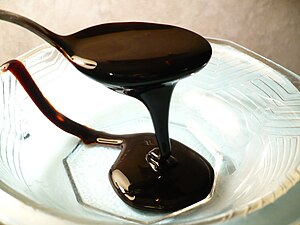
In sugarcane processing, the molasses syrup that results from removing sugar after each stage of boiling can be categorized as either sulphured or unsulphured. Sulphur dioxide is added in the first case to preserve sugarcane which has been picked ‘young’, and unsulphured molasses is derived from fully mature stalks which have sun-ripened over 12-15 months. Regardless of whether sulphur dioxide has been added or not, the first boiling of juice yields ‘mild’ molasses and the second yields ‘dark’. ‘Blackstrap’ molasses is obtained from the third and final round of boiling, after which the proportion of sugar in the syrup is too small to be extracted economically. This makes blackstrap molasses the lowest in sugar content and the most rich in “impurities” (like B6, calcium, magnesium, potassium and iron). That’s why it’s promoted for good health, providing the most concentrated dosage of all of those minerals and accounting for up to 20% of their recommended daily amounts!

English: Organically produced blackstrap molas...

Refiners’ syrup, used widely in the commonwealth countries under the name golden syrup, is made by refining and filtering the pre-boil, concentrated cane juice through bone charcoal. It’s similar to molasses, but consists of only certain sugars and moisture – and does not include any of the minerals and other “impurities” in molasses that cause its distinct flavors.

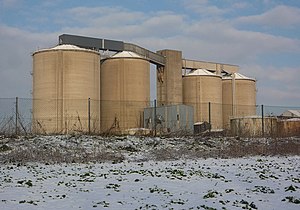
English: Old sugar beet factory A landmark on ...

English: Old sugar beet factory A landmark on this side of Ipswich, in view from the A14 but seen here at close hand from the Gipping footpath.


On the other hand, sugar beet processing yields different results. Molasses can be produced from beet sugar, but it only appears after the second round of boiling (because of this, the first and second boils are called the ‘high’ and ‘low’ greens, or raws). Sugar beet molasses, obtained from the second or third boil, contains a lot of salts and compounds which don’t make it very tasty for humans, so it’s used predominantly in the production of cattle feed. In the Low Countries, sugar beet molasses is sold as “sirop de candi“, in a normal version branded as ‘sweet’ — due to a higher proportion of remaining sugars — and also the third boil, very dark version. Sirop de candi is used as an ingredient in traditional treats like speculoos biscuits (cookies), or as a topping for toast or waffles. Beet molasses is also used as a coating for road salt, due to its low melting point and de-icing properties (which actually ends up attracting deer to road networks in cold weather, but that’s a tangent for the transportation engineer in me!). Refiners’ syrup can also be made from beet sugars by a different process than that used to obtain it from cane.

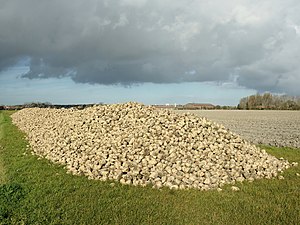
Sugar beet clamp at Vlissegem, Belgium

Sugar beet farm at Vlissegem, Belgium.


It’s important to note here that some of the products we know as molasses in North America (such as Grandma’s Own Original Molasses) are, in fact, reduced cane syrup: molasses which has been gently heated, but not boiled, and had none of its sugars removed. This is sometimes referred to as ‘high-test’ molasses, and is not a by-product of sugar production. As a result, what most people recognize as normal pantry molasses is much less bitter than black treacle here in the UK, which is a 50/50 mixture of blackstrap molasses and golden syrup. Bottom line: unless your North American recipe calls for ‘dark’ molasses, don’t use black treacle as a substitute and expect exact results!

THE BIG DIFFERENCE ACROSS THE POND

Essentially, all of this means that most standard brown sugars in the UK have to have the less palatable beet molasses completely extracted, and then add in ‘dark’ sugar cane molasses to the refined white beet sugars. (So that package of “British” brown sugar actually has a pretty large carbon footprint!) This alone doesn’t cause any variations — even most brown cane sugar producers totally refine their sugar and then re-add the extracted molasses, in order to control variations in the harvest and make a uniform product with a standard molasses content. It’s the processes commonly used for re-adding the cane molasses to either kind of white sugar which makes a difference. While the molasses added to the cane sugar is combined via a stage of re-boiling, the molasses added to beet sugar is always sprayed over the granules. This coating of the white sugar creates coarser and less saturated particles, and totally explains why North American light brown sugars are softer and more compactable than the relatively free-flowing light brown sugars in the UK — like the difference between slightly moist and just-drying sand.

So after all of that technical mumbo jumbo — now what? To make your own brown sugar at home, molasses can be re-added to white sugar at a recommended proportion of 1 tablespoon to 200 grams. But which grade of molasses to add is never mentioned! This is because the syrup that is said to be re-added into white sugars at the factory is always a blend of molasses and/or treacle varieties produced and sold differently to companies in different parts of the world. Whichever blend is used contributes to the different flavors found in every country.

Now that I’m itching for a factory tour, I want to reproduce this in my own kitchen. The homemade method means that the molasses content is roughly 7.5% if using the ‘blackstrap’ variety.  Using my highly developed engineering skills, I calculated that in order to get a 3.5% molasses content, one tablespoon of molasses must be at around 60% sucrose content; dark second-boil molasses contains about 55% sucrose, as does black treacle. Like most things worth doing in baking, I might play mad scientist, go try some British-made cane sugars, or even make my own, and see what happens. All in the name of chocolate chip glory!


This post has previously appeared on Rowth an’ Scowth, where Melissa writes about baking and expatriation from Edinburgh, Scotland.


Never miss a post
Name: 
Your email address:*
Please enter all required fields
Correct invalid entries

UA-21892701-1