Simon Says: Daily Food Quote, November 11, 2011

Published by Friday, November 11, 2011 Permalink 0

by Simón de Swaan

X. Men who stuff themselves and grow tipsy know neither how to eat nor how to drink.–Jean Anthelme Brillat-Savarin

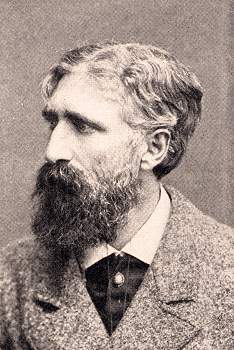
Jean Anthelme Brillat-Savarin was a French lawyer and politician, and gained fame as an epicure and gastronome. His famous work, Physiologie du goût (Physiology of Taste), was published in December 1825. The full title is Physiologie du Goût, ou Méditations de Gastronomie Transcendante; ouvrage théorique, historique et à l’ordre du jour, dédié aux Gastronomes parisiens, par un Professeur, membre de plusieurs sociétés littéraires et savantes. The book has never been out of print since it first appeared, two months before Brillat-Savarin’s death. Its most notable English translation was done by food writer and critic M.F.K. Fisher, who remarked, “I hold myself blessed among translators.” Her translation was first published in 1949.

Continue Reading…

Never miss a post
Name: 
Your email address:*
Please enter all required fields
Correct invalid entries

Simon Says: Daily Food Quote, November 10, 2011

Published by Thursday, November 10, 2011 Permalink 0

by Simón de Swaan

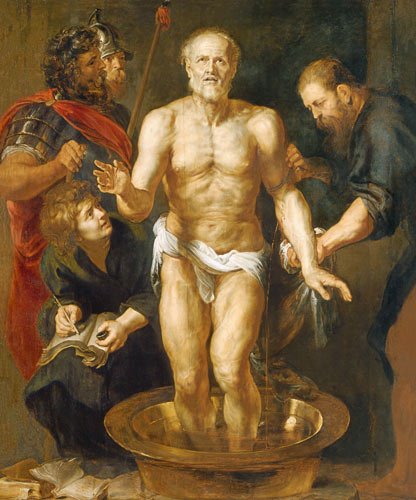
A great step toward independence is a good-humored stomach, one that is willing to endure rough treatment.–Seneca, c. 60

Lucius Annaeus Seneca (often known simply as Seneca) (c. 4 BC – 65 AD) was a Roman Stoic philosopher, statesman, dramatist, and, in one work, humorist, of the Silver Age of Latin literature. He was tutor and later an adviser to Emperor Nero. While he was later forced to commit suicide for alleged complicity in the Pisonian conspiracy to assassinate Nero, the last of the Julio-Claudian emperors, he may have been innocent. His father was Seneca the Elder and his older brother was Gallio.


Never miss a post
Name: 
Your email address:*
Please enter all required fields
Correct invalid entries

Simon Says: Daily Food Quote, November 9, 2011

Published by Wednesday, November 9, 2011 Permalink 0

by Simón de Swaan

Hors d’oeuvres have always a pathetic interest for me; they remind me of one’s childhood that one goes through wondering what the next course is going to be like – and during the rest of the menu one wishes one had eaten more of the hors d’oeuvres.–Saki, 1904

(18 December 1870 – 13 November 1916), better known by his pen name Saki, and frequently as H. H. Munro, was a British writer whose witty, mischievous and sometimes macabre stories satirized Edwardian society and culture. He is considered a master of the short story and often compared to O. Henry and Dorothy Parker.


Never miss a post
Name: 
Your email address:*
Please enter all required fields
Correct invalid entries

Simon Says: Daily Food Quote, November 8, 2011

Published by Tuesday, November 8, 2011 Permalink 0

by Simón de Swaan

VIII. The table is the only place where man is never bored for the first hour.–Jean Anthelme Brillat-Savarin

Jean Anthelme Brillat-Savarin was a French lawyer and politician, and gained fame as an epicure and gastronome. His famous work, Physiologie du goût (Physiology of Taste), was published in December 1825. The full title is Physiologie du Goût, ou Méditations de Gastronomie Transcendante; ouvrage théorique, historique et à l’ordre du jour, dédié aux Gastronomes parisiens, par un Professeur, membre de plusieurs sociétés littéraires et savantes. The book has never been out of print since it first appeared, two months before Brillat-Savarin’s death. Its most notable English translation was done by food writer and critic M.F.K. Fisher, who remarked, “I hold myself blessed among translators.” Her translation was first published in 1949.


Never miss a post
Name: 
Your email address:*
Please enter all required fields
Correct invalid entries

Simon Says: Daily Food Quote, November 7, 2011

Published by Monday, November 7, 2011 Permalink 0

by Simón de Swaan

It is not from the benevolence of the butcher, the brewer, or the baker that we expect our dinner, but from their regard to their own interest.–Adam Smith, 1776

Adam Smith was a Scottish social philosopher and a pioneer of political economy. One of the key figures of the Scottish Enlightenment, Smith is the author of The Theory of Moral Sentiments and An Inquiry into the Nature and Causes of the Wealth of Nations. An Inquiry into the Nature and Causes of the Wealth of Nations, generally referred to by its shortened title “The Wealth of Nations,” is the magnum opus of the Scottish economist and moral philosopher Adam Smith. First published in 1776, it is a reflection on economics at the beginning of the Industrial Revolution and argues that free market economies are more productive and beneficial to their societies. The book is a fundamental work in classical economics.


Never miss a post
Name: 
Your email address:*
Please enter all required fields
Correct invalid entries

Simon Says: Daily Food Quote, November 4, 2011

Published by Friday, November 4, 2011 Permalink 0

by Simón de Swaan

Sadder than destitution, sadder than a beggar is the man who eats alone in public. Nothing more contradicts the laws of man or beast, for animals always do each other the honor of sharing or disputing each other’s food.–Jean Baudrillard, 1986

French theorist Jean Baudrillard (1929–2007) was one of the foremost intellectual figures in modern history. His work combines philosophy, social theory, and an idiosyncratic cultural metaphysics that reflects on key events of phenomena of the period.


Related articles
Never miss a post
Name: 
Your email address:*
Please enter all required fields
Correct invalid entries

Simon Says: Daily Food Quote, November 3, 2011

Published by Thursday, November 3, 2011 Permalink 0

by Simón de Swaan

If you don’t eat yer meat, you can’t have any pudding. How can you have any pudding if you don’t eat yer meat?–Pink Floyd, “Another Brick in the Wall,” Part II (1979)

Pink Floyd were an English rock band that achieved worldwide success with their progressive and psychedelic rock music. Their work is marked by the use of philosophical lyrics, sonic experimentation, innovative album art, and elaborate live shows. Pink Floyd are one of the most commercially successful and influential rock music groups of all time.

Click here to listen to a video of the song.

Pink Floyd in 1968 (from left to right): Nick ...


Never miss a post
Name: 
Your email address:*
Please enter all required fields
Correct invalid entries

Simon Says: Daily Food Quote, November 2, 2011

Published by Wednesday, November 2, 2011 Permalink 0

by Simón de Swaan

Happy is said to be the family which can eat onions together. They are, for the time being, separate, from the world, and have a harmony of aspiration.–Charles Dudley Warner, My Summer in a Garden (1871)

Charles Dudley Warner was an American essayist, novelist, and friend of Mark Twain, with whom he co-authored the novel The Gilded Age: A Tale of Today.


Never miss a post
Name: 
Your email address:*
Please enter all required fields
Correct invalid entries

Simon Says: Daily Food Quote, November 1, 2011

Published by Tuesday, November 1, 2011 Permalink 0

by Simón de Swaan

A woman should never be seen eating or drinking unless it be lobster salad and champagne, the only truly feminine and becoming viands.–Lord Byron, 1812

George Gordon Byron, 6th Baron Byron, later George Gordon Noel, 6th Baron Byron, FRS, commonly known simply as Lord Byron, was an English poet and a leading figure in the Romantic movement. Amongst Byron’s best-known works are the short poems “George Gordon Byron,” “She Walks in Beauty,” and “When We Two Parted,” in addition to the narrative poems So, we’ll go no more a roving and Childe Harold’s Pilgrimage. He is regarded as one of the greatest English poets.

Related articles

  • Simon Says: Daily Food Quote, August 4, 2011
  • Simon Says: Daily Food Quote, September 23, 2011
  • Simon Says: Daily Food Quote, October 14, 2011
  • Never miss a post
    Name: 
    Your email address:*
    Please enter all required fields
    Correct invalid entries

    Simon Says: Daily Food Quote, October 31, 2011

    Published by Monday, October 31, 2011 Permalink 0

    by Simón de Swaan

    Man is the only animal that can remain on friendly terms with the victims he intends to eat until he eats them.–Samuel Butler

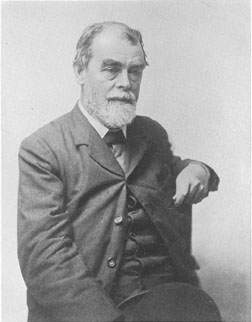
    Samuel Butler was a Victorian author who published a variety of works. Two of his most famous pieces are the Utopian satire Erewhon and a semi-autobiographical novel published posthumously, The Way of All Flesh. Butler also made prose translations of The Iliad and The Odyssey which remain in use to this day.


    Never miss a post
    Name: 
    Your email address:*
    Please enter all required fields
    Correct invalid entries

    UA-21892701-1