



















|
|
Editorial: Why I don’t like French salads
We all know what a Francophile I am, especially when it comes to food and wine.
But there is ONE thing the French do which really gets on my nerves!
In the first place, rare is the restaurant that uses good lettuce. Mesclun is considered some kind of luxury, and now that I’ve lived in Switzerland, I’m accustomed to eating the wild greens and mesclun fresh from the mountains. So the supermarket lettuce in France is really not to my liking.
The other thing that really annoys me is that they just throw a bit of mesclun on top of the salad, and the bowl is invariably too small to allow one to mix the greens and the vinaigrette without spilling it out onto the table, so I inevitably end up feeling like a klutz.
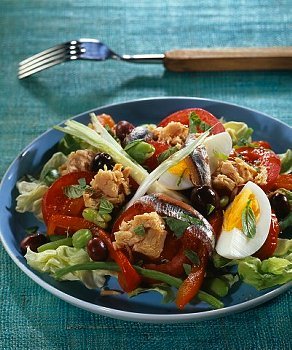
Of course, Julia Child’s Niçoise salad, when made with top quality, fresh, local ingredients, is impeccable. Ironically and unfortunately, Nice is about the hardest place to find a good Niçoise. The tomatoes are invariably hothouse from Holland, even in the middle of the summer, and the green beans are frozen in the height of the green bean season.
My conclusion is that French restaurants most often just throw salads together, and don’t consider it real cuisine, so they can’t be bothered. But if you really like or yearn for a salad, this is disappointing, especially since the salads are overpriced, as if they were “real” cuisine.
|
|
Paris Salon du Chocolat 2011: Edible Chocolate Dresses for Inauguration
by Jonell Galloway
So the Paris chocolate show, the Salon du Chocolat — undoubtedly the most cherished in the world — is officially open to the public, from October 20 to 24, 2011.

More than 800 chefs have created some 700 recipes to the delight of young and old alike, and pastry chefs will be demonstrating their master creations for all to see.
The the 17th Salon du Chocolat was officially inaugurated last night, and started out with bang: the initial bang of the fashion show, made up of chocolate dresses. The fashion show will be shown every day at 5 p.m. The photo above shows just a sample of the amazing creations that adorned the runway. This year, the dresses include creations by France’s best chocolatiers, as well as by up-and-coming fashion designers, and the Godmother of French fashion, Chantal Thomass.
Related articles
- Chocolate News: eat as much chocolate as you can now, it’s disappearing, chocolate art, etc.
- Chocolate News: Paris Salon du Chocolat to be Inaugurated Tonight
- Chocolate News: It’s chocolate week, & here are some exciting chocolate adventures around the world
- Food News Daily: August 18, 2011
|
|
Our site is currently being migrated, so if you see strange headings and error messages, they are temporary
Thank you for your patience and understanding.
Jonell Galloway, Editor
|
|
A Taste of Switzerland: Absinthe Anyone?
A Taste of Switzerland: Absinthe Anyone?
by Sonja Holverson
Our thoughts immediately go back to Bohemian culture, to writers and artists of 19th-century France: absinthe, also known as La Fée Verte (literally, “the green fairy”), was created in the canton of Neuchâtel, Switzerland, notably in the Jura Mountains bordering France. Most of the production has traditionally been in small quantities. But absinthe is back after being outlawed for nearly a century.

Absinthe glass and customary spoon
The liquor, high in alcohol content and with a full anise flavor, is made from plants such as anise, fennel, flowers, and leaves of the medicinal plant called Artemisia Absinthium, which we know as wormwood, and which is found in abundance in Switzerland. Other herbs such as lemon balm angelica, dittany, coriander, juniper and nutmeg are sometimes added. The nickname “green fairy” comes from its color, a pale green.
Chemist and absinthe expert T.A. Breaux describes it as “a push-me, pull-you effect of the various herbs; some have a heightening effect while others have a lowering effect.” It as a double impact: a sensation of inebriation along with a heightened state of clarity.
Romanticized by many famous people in the 19th and early 20th centuries, including Henri de Toulouse-Lautrec, Edgar Degas, Vincent van Gogh, Édouard Manet, Pablo Picasso, Oscar Wilde, Charles Baudelaire, Paul Verlaine, Ernest Hemingway and the list goes on, absinthe is ever-present in both the stories and works of these creative people.

“L’Absinthe” by Edgar Degas 1876
Practical uses were also found during this period of history and absinthe was given to French troops to prevent fever. Naturally, they acquired a taste for the “green fairy” and when they returned home, they popularized the drink in bars, bistros and cabarets. Absinthe was initially expensive, but when prices declined, the French began drinking it to excess and experienced addictive psychoactive reactions. As a result, opposition movements started scare campaigns that resulted in the ban of absinthe in 1914 in France.
Ironically, Switzerland had already banned it in 1907, although the production went underground and home distillers produced the much sought-after liquor clandestinely in small quantities. In the U.S., it was banned in 1912. By 1915, most European countries followed suit, except Britain, where it was not popular, and both the production and consumption of absinthe were made illegal.
In the mid-1990s, legal practices regarding absinthe were highly ambiguous. Drinking it was legal, but producing it was illegal. Former French President Jacques Chirac drew criticism from his own citizens because he drank absinthe during a state visit to Switzerland in the late 1990s. President Chirac and I had something in common but no one really cared if I drank it… Anyway, it was difficult to come by and you had to have friends who lived in the canton of Neuchâtel to get your hands on it.
With renewal of interest on the part of both producers and consumers, the Swiss Parliament lifted the 97-year ban on the production, sales and consumption of absinthe in 2004. A French absinthe producer, Lucid, was the first absinthe producer to receive certification in France in 2007.
Other European countries followed, and by 2008, there were nearly 200 brands of absinthe available in a dozen countries such as Switzerland, France, Spain and the Czech Republic.
In the U.S., the first legal brand of absinthe was approved in 2007: St. George Absinthe Verte, made in Northern California.

Kubler Swiss Absinthe
While visiting Switzerland, some of you may want to taste this once forbidden elixir. Kubler Absinthe was the first Swiss absinthe to become commercially available and has an excellent reputation for being the highest quality of all international absinthe brands. They use only natural plants in accordance with local traditions, rather than extracts or oils that are used by some other European producers.
Another excellent Swiss brand is Absinthe Studer, made of distilled wormwood, a blend of 8 different secretly selected herbs, pure alcohol and fresh water from their own spring. The original recipe has been preserved and passed down from generation to generation despite the 97 years of legal issues.
But the Studer family is open to innovation and have collaborated with the famous haute couturier chocolatiers, the Beschle family in Basel, producing Studer’s absinthe-filled milk chocolate pralines in the shape of the most famous Swiss Alp, the Matterhorn.

Beschle’s Studer Absinthe, Swiss Collection
The country fair stand “Absintissimo” serving absinthe from the local producers of the region is always a highlight at the Fall Automanales Fair held in Geneva every November.

Absintissimo: Swiss-made “green fairy”
So fascinating is the story of absinthe that this elixir is being used as the backdrop for a film currently being produced called “Les Absintheurs” (The Absinthe Drinkers), due out in 2012. The plot is not so much about the drink as about the people in the era when the green fairy was a part of daily life in Paris. The film recounts the life of a talented young woman painter in an art scene dominated by men in 1889 (one year before van Gogh died). It takes places during the Impressionist period in the then-decadent Montmartre neighborhood of Paris.
Enjoy your taste of the once forbidden green fairy while in Switzerland, but if you are obliged go pass through the United States Customs, keep in mind that despite the allowance of local production of absinthe in the U.S., it is prohibited to bring it into the country.
Related articles
A version of this article was originally published in Nile Guide.
|
|
David Downie: some restaurants to add to the Food Wine Burgundy guidebook
 by David Downie
Change is the nature of the edibles-and-potables business everywhere. In Burgundy the region’s symbol is the snail. Change comes slowly. But the snail, like the tortoise, defeats the hare in the long run—or the long slide.
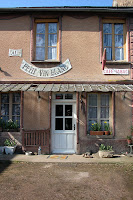
Cuppa? Change-resistance is part of the Gallic gene pool
The down-slide first: reliable fellow gourmets who scour Burgundy for great food and wine confirm that Amaryllis, the discovery of a few years back, is being spoiled by success. Michelin rewarded this unlikely candidate with a star after only a few years of operation, and crowds and crowns of laurels soon followed. So too did a precipitous move from funky quarters in an unattractive highway-side location in a nowhere village – part of the discovery experience – to fancy-dancy, flower-filled premises: the former home of stuffy-but-likeable Le Moulin de Martorey. This reconverted millhouse complex is at San Remy, near Chalon-sur-Saone. Now Amaryllis and its still-very-young chef-owner Cédric Burtin is becoming staid, in a beautiful, mainstream setting… another one-star Michelin place serving elaborately plated, microscopic portions of France’s notorious silly haute food.
|
|
David Downie: Burgundy: Grapes No Gripes
by David Downie
From Burgundy, land of emerald pastures, grapevines, giant white cows, and looping two-lane roads where tractors stop for crossing snails or lost chickens…no joke…

Somehow the wildflowers found their way into our watering can (made of plastic). We made about 10 bouquets for the house, and for friends, and put the rest in buckets and…watering cans…
|
|
News from David Downie: Paris, Paris on 3QD and The Little Book That Could
by David Downie

Writer-chef-explorer extraordinaire Elatia Harris — no relation to my wife Alison Harris — interviewed me for a great website I did not formerly know, the 3 Quarks Daily.
It’s always jarring to be on the other side of the mike — or keyboard. I’ve conducted hundreds of interviews over the last 20-odd years. I’ve given a few, too. Of them, this is outstandingly good (not because I’m such a fascinating person, but because Elatia is such a good interviewer and writer).
Here’s the opening paragraph:
In 1986, San Francisco-born David Downie, a scholar and multilingual translator, moved to Paris, into a real garret — a maid’s room, in fact — to write himself into another way of life. Fresh from Milan, his marriage to a Milanese finished, he was still young enough for years more of getting it right. A quarter century later, his authority on matters Parisian is acknowledged by Jan Morris, Diane Johnson, and Mavis Gallant, to name only a few illustrious admirers.
Happily the interview is also about Alison and includes many fine photos from Rome, Paris and elsewhere.
Photos such as this one:
Much to my surprise and delight, The New Yorker picked up the interview. The power of new media is startling.
Speaking of which, Paris, Paris is a surprise bestseller. It was released on April 5 and in under four months has gone through four print runs… This is astonishing, given the publicity budget (budget? what budget?) and the not-dumbed-down nature of the book.
Thanks to all of you for buying so many copies, and telling your friends! Merci mille fois…
|
|
The best chocolatiers in Paris: a list to keep forever
The best chocolate addresses in Paris: a list to keep forever
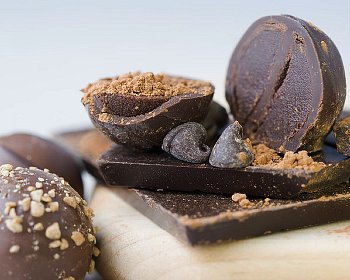
The top 20 chocolate makers in Paris, including addresses, websites and telephone numbers. A list to keep in your pocket as you wander around Paris.
|
|
The 7 Lives of Bread: Pascal Auriac, master bread baker in Laguiole, a hidden corner of France
Translated from the French and adapted by Jonell Galloway
In the food world, the name Laguiole — a tiny village tucked away in the highlands of the Aveyron Aubrac region of France — is generally associated with the brilliant, one-of-a-kind, self-taught chef Michel Bras, whose restaurant here earned its third Michelin star in 1999, and is held in the highest esteem by gourmets around the world. In the world of haute cuisine, he is considered to be an exceptionally gifted chef who works like a sorcerer in his kitchen laboratory hidden in the Puech du Suquet region, turning out dishes that resemble none other, but which are quickly dished out by a long line of copycats.
So you can just imagine how the young chefs who spend time in his kitchen walk away with a lasting impression of a single man, who didn’t quite live in sync with the times. Perhaps he was a Cistercian monk in another life, using a golden ratio to secretly slip secret formulas into his culinary compositions. If you ask Michel Bras what inspired him most in his creative progress, he says: “Photography and foot racing!” One might say asceticism and contemplation.
Pascal Auriat — master bread baker in Laguiole, who once worked in Bras’ kitchens — is still under the influence of this “ascetic aesthete”. When he speaks about the years he spent at Bras, his tone rather resembles that of a religious convert who has not slipped in his ways after all these years. What he has most retained is the veritable alchemy of fermentation.

The bonds that started to germinate between restaurants and bread baking — hardly perceptible even now — are still moving in a positive direction. It’s now difficult to imagine that there really was a time in France, not so long ago, when a 3-star menu served mediocre bread, not worthy of being placed on such high tables of gastronomy. To remedy this situation, chefs such as Michel Bras, Alain Passard (L’Arpège in Paris) and Olivier Roellinger (former Maison de Bricourt in Cancale in Brittany), as well as many others, started installing small bread ovens in their kitchens and making bread in a somewhat primitive fashion.
Restaurant pastry, which has followed its own path, quite separate from grande pâtisserie, has a similar story. Although they both followed their own separate paths, they never stopped mutually nurturing and influencing each other. Will there come a day when the ovens in the laboratory-kitchens of the great gastronomic establishments will be directly connected to bread ovens, each housing one of France’s handcrafted bread bakeries?
Another way for a chef to improve the quality of his or her bread is of course to order it from a bread baker worthy of her name. Some artisanal bread bakers, such as Jean-Luc Poujauran, have already dug a deep niche for themselves.
It was like a calling when Pascal Auriat, with a vocational training certificate in cuisine already under his belt, came to Laguiole to try to work for Bras. In 1992, Bras gave him his chance. His first job was the vegetable station, which might well be the heart of Bras’ creative “offensive”, so it was a true sign of trust on the part of Bras. After two seasons, a place opened in the team he had his heart set on: pastry and micro-bread baking. At the time, the three daily batches were “germinated” using sourdough starter made from yogurt, a recipe that Bras had perfected and that Auriat was to scrupulously replicate, while, at the same time getting acquainted with the world of pastry making, working alongside Philipe Andrieu. Andrieu later went on to Fauchon and Ladurée, where he is now Executive Pastry Chef, so Auriat didn’t learn pastry making in just any old school.
 Pascal Auriat entre Michel et Sébastien Bras au Mazuc (première implantation à Laguiole)
Restaurant pastry making inevitably calls on its counterpart. Pascal Auriat felt the need to perfect his training, so he left his mentor, a daring act indeed. So off he went to work with Pierre Hermé (now dubbed by Vogue as being “the Picasso of pastry making”) at Ladurée, which had just opened on the Champs-Elysées in Paris. Then a famous family of bread bakers, the Holders, bought out the noted Ladurée, started by Louis Ernest Ladurée, a former miller, in 1862.
Musical chairs: the miller Ladurée opened a pastry shop/tearoom, which was bought out over a hundred years later by a bread baker. A cook who learned to make pastry from another cook abandons the highland stoves of remote Aubrac to try his hand at small and big jobs on the Champs-Elysées. Gastronomic explorers have no bounds.
But Auriat did make his way back to Laguiole in 1999, when Bras asked him to become No. 2 pastry chef. The restaurant had just gotten its third Michelin star, and had to face up to the inundation of guests. There was no lack of work, and the horizons were unlimited. Michel and his son Sébastien were invited to open a branch in the Hokkaido Windsor hotel in Japan. Auriat packed his suitcases.
It just so happened that Eric Kayser, bread baker/fellow of the craft and today head of an empire including more than 60 bakeries spread out on all continents, also landed in the Windsor, where he opened a bread bakery. The three men met and talked about fermentation. Bras’ old yogurt only slightly interested Kayser, who advised him to use a liquid starter that he had patiently perfected. In the world of fermentation, Kayser had it all; Bras was convinced to change his ways.

When Auriat returned to his fold in the Aveyron, he started applying the “new school” methods of making sourdough bread using liquid starter. And just as every pastry chef puts his hands in the dough, his shoulder to the wheel, he left them there. He would have had to leave a starter in the refrigerator for six months, out of spite, to obtain what he was looking for, in vain, on his own: a good starter to incorporate into his tried and true kneading techniques.
Pascal set up shop on his own with Anne, whom he had met at Bras, and started perfecting his magic formulas using a starter made from wheat and rye from the Auvergne region, delivered straight from the moulins Antoine mill.
When he talks about himself, he says that the time he spent at Bras as cook, pastry chef and bread baker made him put taste above all else. One might call it bread baker’s aesthetics, expressed through taste. It could be his slogan.
It’s not often that a bread baker gets his training in the world of haute cuisine. And when it comes to Michel Bras’ kitchens, one might question whether a bread baker merits the attention of bread lovers.
Master bread baker in Laguiole, a hidden corner of France, cradle of creativity: it does sound good on a sign, doesn’t it?
Anne & Pascal Auriat 1 place Auguste Prat 12210 Laguiole Tel : 00 33 (0) 5 65 44 31 09 Site : http://www.maison-auriat.fr/|
|


