
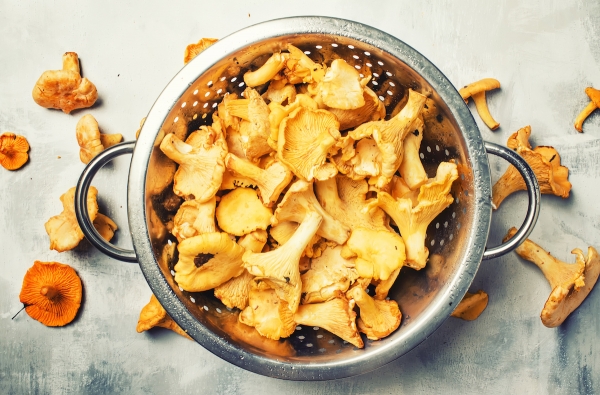
A Woodcock, Girolles, A Baguette, and a French Inn

Published by Wednesday, October 23, 2019 Permalink 0

Bécasse*, a story in two parts: A Hundred Years of Bécasse: Part I

by Dorette Snover

I wanted to fix what was wrong, here, in this – this place, this time I remembered so well. When I loved. Where I loved. And yet how ironic as here was where everything started unraveling on the first night of the Bécasse.

The drive into the setting sun from Agen made me wish we hadn’t missed our earlier train. But we had. It was my fault, but how could I leave Paris without visiting Rue Daguerre and picking up a perfect brie, rosy pears, a few chestnuts? 
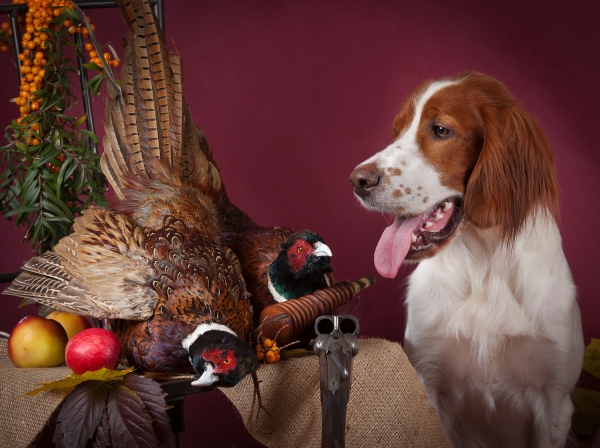
The Hunt: woodcock and hunting dog.

After the hunt: woodcock and hunting dog.

We pulled into the Auberge and barely missed hitting the stone wall. The millhouse still sat undisturbed by time, hell, it was time itself. Flanked by the millpond and the rushing river, the river Gélise coursed through it, cleansing and cooling the fires inside.

Once inside it seemed important not to disturb the shadows and gentle aura by flicking a switch and turning on a light. That would be too easy. I wanted to remember, I had to be careful. With the last little bit of sun on the kitchen, I found a white plate for the bruised tomatoes from the Paris market. The girolle mushrooms looked small and insufficient, but they had survived better than the poor tomatoes; all they needed was heat and a little butter. There was plenty of time for that in the morning. I was already relishing coming down in the morning and hearing the whoosh of the burners.

French baguette/bread.


In the shadows of the kitchen, the baguette might be a knotted tree, the baker’s slashes on the crust that birthed the ears and eyes of the bread. My husband drew the knife from the block and pressed its teeth against the curved length. I gently took it away and slid the saw-toothed beast back in its slot.

“Wait. “ I touched his arm. “Open the wine, while I light a fire?”

“I’m starving!” he said.

I was nervous to get it going, adjusting the air and the draft. The wood was damp, and my mind leaped ahead to the next day and perhaps finding cèpes or porcini in the forest. The bottle slowly emptied. Maybe she wouldn’t let the fire begin again. She being grand-mère. Had she forgiven me? I had kept her secret. I hadn’t told the tale of what happened here. Yet, that time was over now. It was safe to begin again. We sat back and raised our glasses. The flames twirled like the bird in the tapestry, the Bécasse, flying past the whispers of clouds over the moon, and the millhouse.

Cooking woodcocks or bécasse over a wood fire.

Cooking woodcocks or bécasse over a wood fire.

 The Auberge was unchanged, I breathed, wasn’t it? Twenty years was nothing in a place already hundreds of years old.

Much to his satisfaction we broke the crust, and playfully teased the heels of the baguette over the fire, turning and toasting. Smearing the hot pain with soft cheese.

I peered around the dark room, the fire reflecting our forms in the picture window.

To be continued.

***

*A bécasse in French is a woodcock.


Influenced by French heritage and traditions of the Pennsylvania Dutch country where she was born and raised, Dorette Snover graduated from the Culinary Institute of America, was a private chef to the rich and eccentric, a food stylist, NPR commentator, and now teaches les bases de la cuisine at her cooking school, C’est si Bon!

In writing, Dorette’s plat du jour is strong female characters woven from her thirty years in the world of cuisine. and her personal journey through landscapes of culinary history. Dorette also leads tours to France for adults looking for truffles in all the right places and for teens interested in exploring the world through a culinary map.


Never miss a post
Name: 
Your email address:*
Please enter all required fields
Correct invalid entries

The Revolution of French Bread Baking (part 1)

Published by Sunday, April 1, 2012 Permalink 1

by Jean-Philippe de Tonnac

Cliquez ici pour la version française.

Translated and adapted by Jonell Galloway

The reinvention of French cuisine: it’s springtime for French cuisine, and it may not all be thanks to French bread bakers, but they are playing a major role

French bread bakers are in the limelight these days, and are considered as much artists as artisans. Marie-Odile Briet recently paid homage to their creativity, unbridled by the French government’s 1993 “bread decree,” defining in very precise terms what could and couldn’t be defined as “bread.” The most illustrious advocates of the art of bread making, which in essence had to be reinvented, were Gontran Cherrier (Paris), Dominique Saibron (Paris), Christophe Vasseur (Paris), Jean-Luc Poujauran (Paris), Basile Kamir (Paris), Eric Kayser (Paris) and Benoît Fradette (Aix-en-Provence).

They merit the name of bread baker, or boulanger, as well as inventors. But we mustn’t leave out the stout-hearted artisans, working quietly in their bakeries in the wee hours of the morning, with no one tooting horns for them, who are nonetheless master bakers. And where there’s smoke, there’s fire, and this is the proof of the true renaissance of the French bread making profession — a renaissance that has spread from a few Parisian arrondissements to the entire country. It is a true phenomenon that has spread its wings far and wide; it is a movement that has started a new chapter in the history of French bread making. In this new paradigm, there is no longer any plausible excuse for bad bread, for flavorless bread, for bread that is too expensive or too anything. The movement is quietly deepening its roots, backed by a history dating back thousands of years, basking in the glow of its established nutritional qualities. But that’s not all: these master bakers are now an integral part of the whole redefinition of French cuisine. Bread is no longer considered a humble food to fill your belly or to sop up your sauce. It is clearly in the public eye.

Continue Reading…

Never miss a post
Name: 
Your email address:*
Please enter all required fields
Correct invalid entries

Book Review: Jean-Philippe de Tonnac’s “Dictionnaire Universel du Pain” or Universal Dictionary of Bread

Published by Wednesday, April 13, 2011 Permalink 0

by Jonell Galloway

Jean-Philippe de Tonnac, contributor to The Rambling Epicure, has written more than 20 books on subjects as varied as Umberto Eco, anorexia and, in October 2010, his masterpiece, the Dictionnaire Universel du Pain, or “Universal Dictionary of  Bread,” a veritable encyclopedia about every facet of  bread from all corners of the earth. The dictionary — not yet translated into English — covers the history of bread, as well as anthropological, symbolic, emotional, sexual, agricultural, botanical aspects . . . well, absolutely everything you might want to know about bread, literally from crop to crust (to borrow Dan Lepard‘s term), with every technical step in the process of bread baking covered in minute detail.

Continue Reading…

Never miss a post
Name: 
Your email address:*
Please enter all required fields
Correct invalid entries

UA-21892701-1