French Food Fact: What’s a Cromesquis?

Published by Thursday, March 29, 2012 Permalink 0


by Jonell Galloway

Cromesquis are back in fashion as an hors d’oeuvre. They are made with a salpicon wrapped in pig’s caul or slices of salt pork, then dipped in batter and deep-fried to make a croquette.
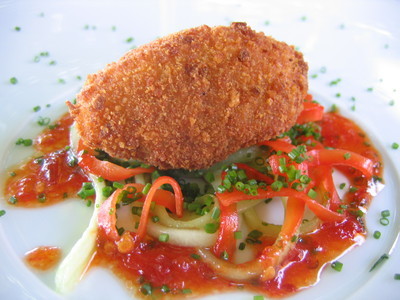
 

Photo courtesy of Patrick Chazallet.

Contemporary chefs like to make the salpicon a little runny so that when you bite into the croquette, the liquid squirts into your mouth. I first ate the contemporary version of cromesquis at Ferran Adria’s El Bulli about 12 or 13 years ago.


Note: A salpicon consists of ingredients that are diced and bound with a sauce.
Never miss a post
Name: 
Your email address:*
Please enter all required fields
Correct invalid entries

European Food Fact: What’s a “bonbon”?

Published by Monday, November 21, 2011 Permalink 0

by Jonell Galloway

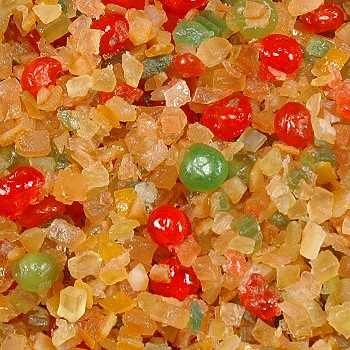
Bonbons, which we call in English sweets or candy, are a recent enough arrival on the European food scene. The Crusaders brought back sugar cane from the Orient, arriving first in Sicily, where Jewish scientists in Sicily carried out experiments on it in around 1230. Until then, Europeans made their sweets using fruit juice and honey, often flavored with cinnamon.

Candied fruit, fruit confit,
one of the first forms of bonbons or candy


Candy instantly became the rage and techniques were refined. During the Renaissance, men of means carried bonbonnières, or candy holders, in their pockets, often decorated with precious stones, and offered ladies candy from them.

Bonbonnière, traditional French
porcelain candy dish


Wikipedia notes that the  “Middle English word “candy” began to be used in the late 13th century, coming into English from the Old French çucre candi, derived in turn from Persian Qand (=قند) and Qandi (=قندی), ‘cane sugar’.”

Continue Reading…

Never miss a post
Name: 
Your email address:*
Please enter all required fields
Correct invalid entries

UA-21892701-1