A Woodcock, Girolles, A Baguette, and a French Inn

Published by Wednesday, October 23, 2019 Permalink 0

Bécasse*, a story in two parts: A Hundred Years of Bécasse: Part I

by Dorette Snover

I wanted to fix what was wrong, here, in this – this place, this time I remembered so well. When I loved. Where I loved. And yet how ironic as here was where everything started unraveling on the first night of the Bécasse.

The drive into the setting sun from Agen made me wish we hadn’t missed our earlier train. But we had. It was my fault, but how could I leave Paris without visiting Rue Daguerre and picking up a perfect brie, rosy pears, a few chestnuts? 
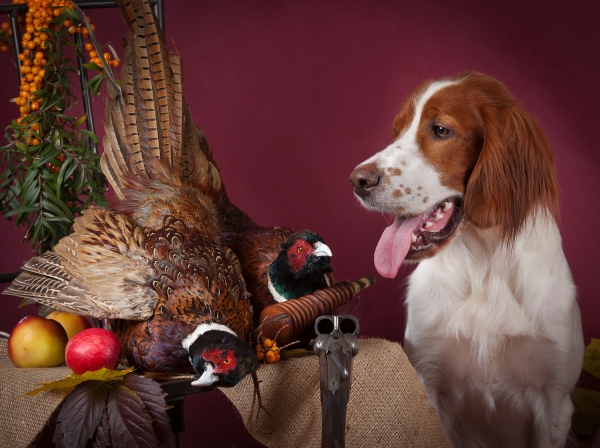
The Hunt: woodcock and hunting dog.

After the hunt: woodcock and hunting dog.

We pulled into the Auberge and barely missed hitting the stone wall. The millhouse still sat undisturbed by time, hell, it was time itself. Flanked by the millpond and the rushing river, the river Gélise coursed through it, cleansing and cooling the fires inside.

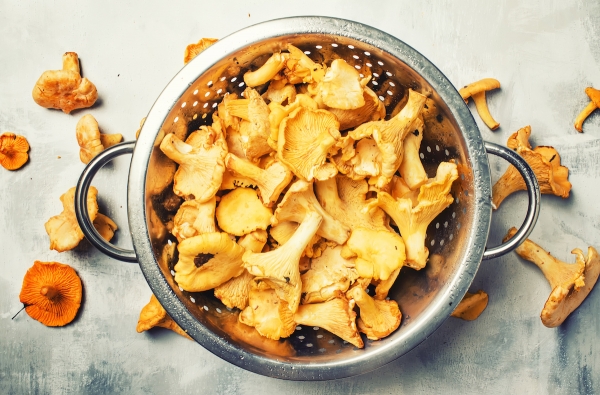
Once inside it seemed important not to disturb the shadows and gentle aura by flicking a switch and turning on a light. That would be too easy. I wanted to remember, I had to be careful. With the last little bit of sun on the kitchen, I found a white plate for the bruised tomatoes from the Paris market. The girolle mushrooms looked small and insufficient, but they had survived better than the poor tomatoes; all they needed was heat and a little butter. There was plenty of time for that in the morning. I was already relishing coming down in the morning and hearing the whoosh of the burners.

French baguette/bread.


In the shadows of the kitchen, the baguette might be a knotted tree, the baker’s slashes on the crust that birthed the ears and eyes of the bread. My husband drew the knife from the block and pressed its teeth against the curved length. I gently took it away and slid the saw-toothed beast back in its slot.

“Wait. “ I touched his arm. “Open the wine, while I light a fire?”

“I’m starving!” he said.

I was nervous to get it going, adjusting the air and the draft. The wood was damp, and my mind leaped ahead to the next day and perhaps finding cèpes or porcini in the forest. The bottle slowly emptied. Maybe she wouldn’t let the fire begin again. She being grand-mère. Had she forgiven me? I had kept her secret. I hadn’t told the tale of what happened here. Yet, that time was over now. It was safe to begin again. We sat back and raised our glasses. The flames twirled like the bird in the tapestry, the Bécasse, flying past the whispers of clouds over the moon, and the millhouse.

Cooking woodcocks or bécasse over a wood fire.

Cooking woodcocks or bécasse over a wood fire.

 The Auberge was unchanged, I breathed, wasn’t it? Twenty years was nothing in a place already hundreds of years old.

Much to his satisfaction we broke the crust, and playfully teased the heels of the baguette over the fire, turning and toasting. Smearing the hot pain with soft cheese.

I peered around the dark room, the fire reflecting our forms in the picture window.

To be continued.

***

*A bécasse in French is a woodcock.


Influenced by French heritage and traditions of the Pennsylvania Dutch country where she was born and raised, Dorette Snover graduated from the Culinary Institute of America, was a private chef to the rich and eccentric, a food stylist, NPR commentator, and now teaches les bases de la cuisine at her cooking school, C’est si Bon!

In writing, Dorette’s plat du jour is strong female characters woven from her thirty years in the world of cuisine. and her personal journey through landscapes of culinary history. Dorette also leads tours to France for adults looking for truffles in all the right places and for teens interested in exploring the world through a culinary map.


Never miss a post
Name: 
Your email address:*
Please enter all required fields
Correct invalid entries

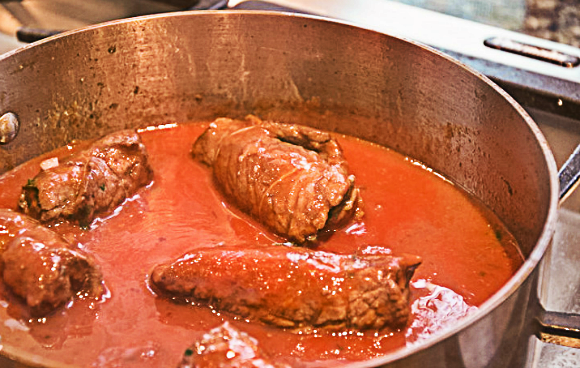
Neapolitan Ragù or Ragù Napolitano

Published by Wednesday, September 4, 2019 Permalink 0

Ragù (or Sugo) di Carne

by Marlena Spieler

Whether it’s Ragù Napolitano “Classico” or “Leggere,”  this richly flavored sauce is a perfect example of traditional, long, slow-cooked (slow, very slow) food, the sort of memory-filled dish that makes all Neapolitans, rich or poor, remember their childhood and nonnas or grandmothers with even just one bite; or even with just one sniff of the bubbling sauce.

Because it needs to be looked after, slowly cooked and attention paid that it doesn’t burn or scorch, it was given the name sugo della guardaporta, the doorkeeper’s sauce, as it needed someone to watch over it as it slowly, slowly, slowly bubbled its way to perfection.

Though now it has come to symbolize family food, it was no doubt created in the 19th-century kitchens by the chefs of aristocratic Naples — its abundance of meat and attention-demanding cooking method would have been beyond the means of the city’s poorer inhabitants, which meant most of the population. Its name came from the French ragout, or saucey stew. The Neapolitan ragù is exactly that: a large piece of meat simmered in either tomatoey or oniony (La Genovese) sauce unlike the ragù of other
regions, which include small pieces of chopped meats and vegetables.

San Marzano tomatoes

San Marzano tomatoes.

Continue Reading…

Never miss a post
Name: 
Your email address:*
Please enter all required fields
Correct invalid entries

Venetian Hours: Window into the Past

Published by Friday, December 15, 2017 Permalink 0

by Jonell Galloway

We all have to let off steam from time to time. I do it through words, sometimes harsh, sometimes sweet; Venice does it through windows and steam-pipes.

Hand-shaped bricks were laid onto this marshland over a thousand years ago and still stand, the alder wood foundation stakes digging deep to reach the bottom sands of this shallow lagoon.

This wall tells a tall story, filled in over the centuries with newer bricks and stones, later covered with plaster, itself now crumbling with age, like family stories that change tones with the times and are embellished with black or white lace as we choose. Windows were carved out, later filled in and plastered over. A small window inside the older, larger one — for ventilation? — now itself bricked in, a simple steam pipe serving the purpose of ventilation today. It reminds me of that story about my great great grandmother who was kidnapped by an Indian chief for her beauty and the posses went out to look for her. It’s changed several times during my short lifetime, and I asked my mother: “maybe it was she who ran off with the Indian chief?” My imagination could go wild.

New-green plants nestle up close to darker, old ones. A half-timber overhang at the top recalls that Venice is in so many ways the door to the East and a city where old and new, East and West, uninhibitedeness and reservedness, have always lived comfortably alongside each other despite the natural elements being against her. I could study this façade for the rest of my life, unfolding its timeworn story, imagining the joy and the agony that went on behind this wall. Venice remains a city full of mystery, even after all these years of snuggling up tight with her.


Never miss a post
Name: 
Your email address:*
Please enter all required fields
Correct invalid entries

The Rambling Epicure Book-a-Month Club

Published by Monday, September 11, 2017 Permalink 0

THE WINNER IS “WHAT SHE ATE” and we’ll start discussing it from September 15 to 30, 2017.

Click here to join.

In The Rambling Epicure threads, it’s become clear that many of us like reading about food as well as cooking it, eating it, talking about it. With that in mind, it seemed like a sort of “foodies’ book club” (with apologies to those who hate the word “foodie”) might be an interesting thing to try. Jonell has a ton on her plate right now, and I’m always looking for an excuse to avoid work, so I’ll start off by moderating, but that’s just for convenience and for the moment.

As a beginning, we thought we would suggest four books. Pick the one you’d most like to read and discuss, vote for it in the comments, and on Friday, September 1, we’ll announce a winner. We’ll give everybody time to acquire and read the book, and we’ll open things up to chat and argument on Friday, September 15 and continue until September 30. 

If there are other books you’d like to suggest, that would be great. Please note them in the comments and I’ll keep a list, then we’ll run the most popular suggestions for the next cycle.

For this opening cycle, please vote for ONE of the following:

Since this is our first attempt, please feel free to add any suggestions about dates, timing, books, and how might generally build this reading group together.

All these books are available as ebooks.

Click here to join.

Maggie Topkis

P.S. We are now taking suggestions for books for the next The Rambling Epicure Book-a-Month club in October.


Never miss a post
Name: 
Your email address:*
Please enter all required fields
Correct invalid entries

Food Writing Competition

Published by Tuesday, May 12, 2015 Permalink 0

Food Writing Contest

We are seeking food-related fiction and non-fiction entries for our First Annual Food Writing Competition. We want to highlight what can be vividly done in very few words. You have wanted to try your hand at the greatest possible concision, have you not? This is your chance to be rewarded for that. Winners will be published on Mastering the Art of Food Writing, and qualify to compete for inclusion in the first annual Food Writers to Keep an Eye On 2015 eBook we plan to publish in 2016.

Entries should be a maximum of 500 words, and may treat any food-related subject. This covers the full spectrum of food and travel writing: memoirs; short stories; reviews; poems; travelogues; essays;  guidebooks entries; lifestyle; adventure; destination features; history; and, anthropology. Not sure that’s you? Write us to ask.

Continue Reading…

Never miss a post
Name: 
Your email address:*
Please enter all required fields
Correct invalid entries

Food Art: Medieval Feast, by Ensiferrum

Published by Wednesday, January 29, 2014 Permalink 0

MedievalFeast


The Duke’s Feast, by .

Never miss a post
Name: 
Your email address:*
Please enter all required fields
Correct invalid entries

UA-21892701-1