Music as Food: Homage to Alice Herz-Sommer

Published by Thursday, March 6, 2014 Permalink 0

Music as Food: Homage to Alice Herz-SommerJonell Galloway, The Rambling Epicure

by Jonell Galloway

Alice Herz-Sommer died on Sunday, March 2, 2014, at her home in London, at the age of 110. She was the oldest known survivor of the Holocaust.

Mrs. Herz-Sommer was a concert pianist in her native Czechoslovakia before the war, and said that it was Frédéric Chopin who had “fed” both her and her audiences in over a hundred concerts she gave in her two years in the ghetto-concentration camp in Theresienstadt. She spent most of her time perfecting Chopin’s Études, a set of 27 solo pieces known for their technical innovation and sheer mechanical difficulty. Chopin became her food; it nourished her soul.

 Images from the book The Garden of Eden in Hell. Photograph: Droemer (C)

Images from the book The Garden of Eden in Hell. Photograph: Droemer (C)


In Theresienstadt, her son would often ask her, “Mother, why don’t we have anything to eat?” She believed human beings don’t need food when they have something spiritual. “The concerts, the music was our food.” But wasn’t it painful to not have food? “No, I was always laughing,” although she slept on a stone slab floor with no covers and no pillow.

If she could play the piano, she was happy. She was glad to be alive with her son; her concerts ensured that she and her son would survive. Her secret to happiness was to be thankful, thankful for everything. Thankful for seeing the sun, for seeing a smile, for a nice word from someone. Everything we experience is a gift; we have to be thankful for it all, was her philosophy.

Alice Herz-Sommer with her son


She learned Bach by heart. When she got cancer at 83, her doctor told her that knowing Bach by heart was more healing than all the pills she could take.

Sometimes she was thankful to have been at Terezin. “We all learn from mistakes.” Bad has to exist, she said with a smile, always a smile. I lived my life backwards, looking back at all the beautiful and wonderful things I have had.


And she learned from the bad, saying hatred eats the soul of the hater. Reminiscent of the Dalai Lama, she said complaining is a waste of time. “I know about the bad, but I only look at the good things.” Everything you receive is a present and arises out of how you look at the world.

Wealth is of the spirit, she told The Guardian.

She never hated, not even the Nazis, saying that we all do wrong sometimes: forgiveness of the ultimate sort.

Alice Herz-Sommer. Sheet Music Background


Until virtually the end of her life, she practiced for three hours every day, and it is what helped her survive the death of her son Raphael in 2001.

Music was the food of her soul, and her music fed the souls of so many. It kept them living when they had no food to eat. Her music continues to resonate, as does her example as a human being. She continues to nourish us, even though only in spirit.

Why don’t we have anything to eat, Mommy? Not to worry, we have music. Paraphrasing Shakespeare, “if music be the food of life, play on.”


Sources: A Few Precious Moments with Alice Herz-Sommer,Alice Herz-Sommer, 1903–2014: remembered by Ed Vulliamy, Alice Herz-Sommer, Who Found Peace in Chopin Amid Holocaust, Dies at 110, Oldest-Known Holocaust Survivor Dies; Pianist Was 110, Alice Herz-Sommer: Practice the Chopin Études, they will save you


Never miss a post
Name: 
Your email address:*
Please enter all required fields
Correct invalid entries

WEEKENDS AWAY: TRASTEVERE, ROME, AND SANTA MARIA

Published by Saturday, February 15, 2014 Permalink 0

Jonell Galloway, The Rambling Epicure, Mindful Eating, Spontaneous Cuisine, Editor of The Rambling Epicure.WEEKENDS AWAY: TRASTEVERE, ROME, AND SANTA MARIA

by Jonell Galloway

A weekend in the Trastevere neighborhood of Rome lets you live and feast like a real Roman, if only for a short time. It is rich in history and culture, and plenty of fun and good food to boot. A little hotel we’ve found near Piazza Santa Maria will let you melt into this hidden corner of Rome.

A Little History about Trastevere

This side of the Tiber was Etruscan, until the Romans claimed it around the 6th century B.C. It was incorporated into the city of Rome’s 14 quarters by the Emperor Augustus with the “Trans Tiberim.” Thus the name, which means “across the Tevere,” the Roman name for the Tiber.
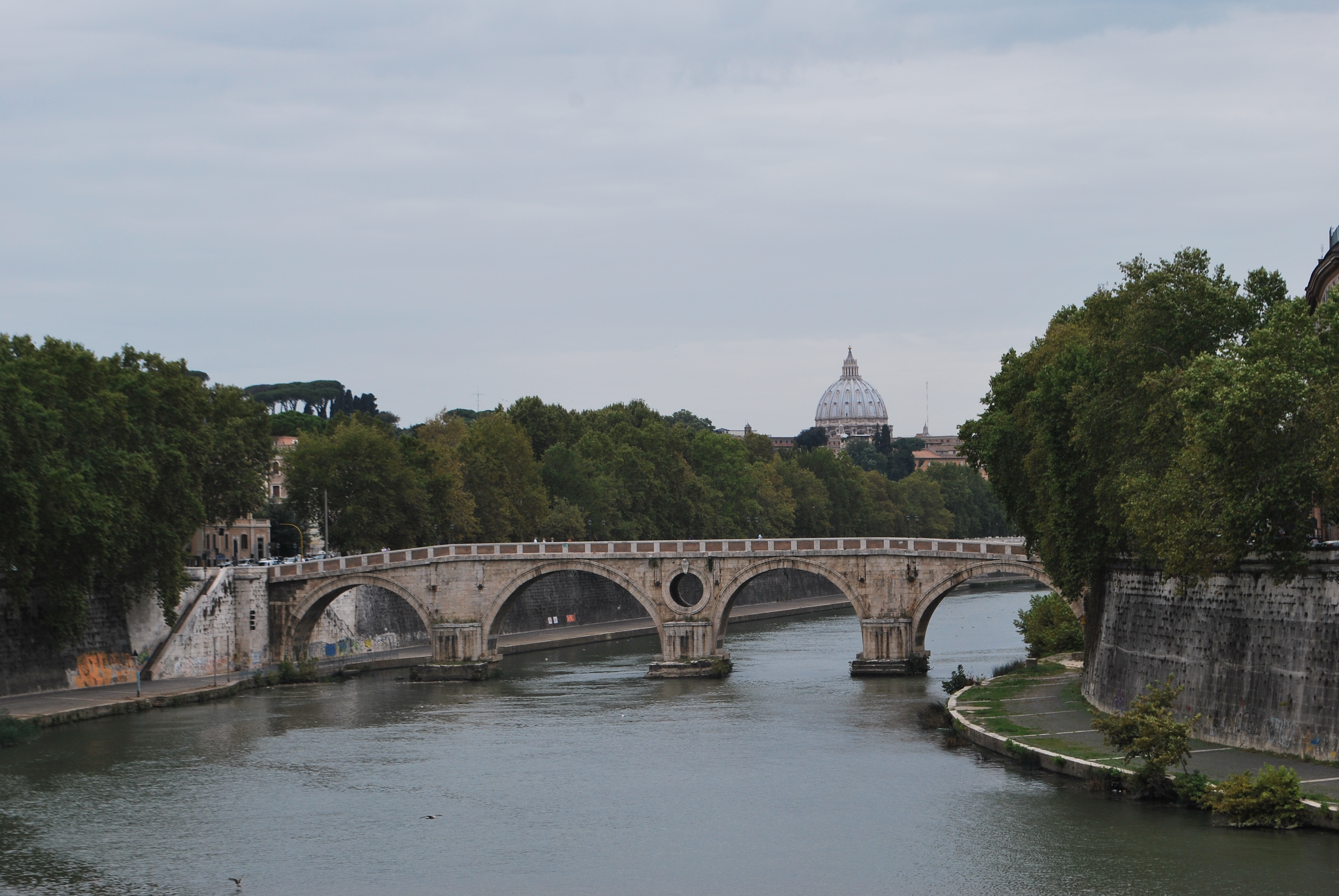
Bridge and River in Trastevere in Rome


It was a plebian quarter, where the servants and laborers and the free citizens of Rome’s as well as sailors, fishermen, Phoenicians and Jews lived. It would be the principal Jewish quarter of Rome until the end of the Middle Ages, when the Ghetto, across the river from Trastevere, became the residential area to which Jews were henceforth restricted.Rome Rione di Trastevere Logoastevere_logo


Renaissance Romans began building more noble villas around the edges of the ancient quarter, but the Trastevere of today retains its medieval, labyrinthine layout, full of narrow, winding alleys. It remains a working class neighborhood, with children playing soccer in the street, old people sitting on their stoops, and families gathering around a table in the street to visit. Trastevere lies between the western banks of the river Tiber and the Janiculum hill, one of Rome’s storied seven hills, that looms above it. It’s but a short 15-minute walk across the Tiber to the ruins of ancient Rome, the “salon” of Rome with its extravagant fountains, and only a little bit further by foot to St. Peter’s Square and the Vatican. One of the liveliest gathering places is the square in front of the church of Santa-Maria-in-Trastevere, construction of which began early in the 3rd century with the church completed in the mid-4th century, and ultimately completed in Romanesque style in the 12th century, then converted in several other centuries, giving it an unusual combination of Ancient Roman details and varied architectural features from later periods. The octagonal fountain in the piazza is an ancient Roman fountain restored and enlargened in the 17th century by Carlo Fontana.

Santa Maria Trastevere Roma Italy Carlo Fontana

Santa Maria with church, with ancient Roman foundation in center. The piazza is full of life at night.


What to See and Do in Trastevere

The Church of Santa Maria in Trastevere

Santa Maria in Trastevere is undoubtedly the oldest church in Rome, and deserves several visits if you want to appreciate its full architectural and historical depth. Most of the mosaics date from the 12th century. They are illuminated at night, and the golden light of the façade fills the piazza with a warm glow.
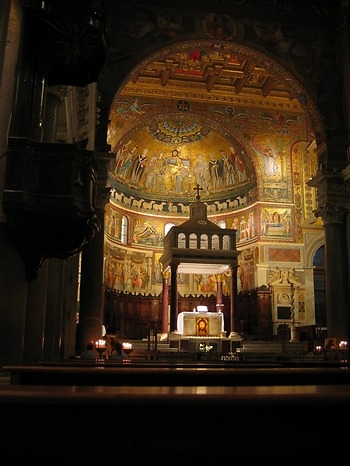
12th-century gold mosaics in Santa Maria in Trastevere, http://www.aztec-history.com/traditional-mexican-food.html

12th-century gold mosaics in Santa Maria in Trastevere


The 22 granite columns lining the nave are said to have come from the ruins of the Baths of Caracalla; the capitals are adorned with the heads of female pagan deities.
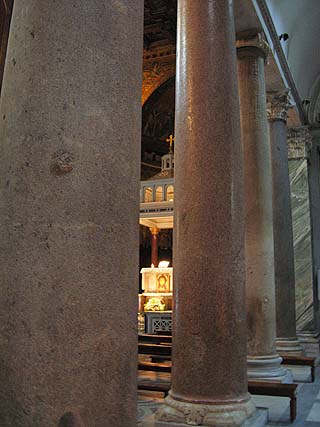
Granite columns in Santa Maria in Trastevere, from Baths of Caracalia

Numerous Roman funeral inscriptions can also be found in the church.

Ancient Roman etched gravestone in Santa Maria in Trastevere

Eating and Nightlife

There is no shortage of reasonably priced osterie, trattorie and restaurants that serve authentic Roman food in a no-frills setting. The neighborhood is timeless, with its mix of historical architectural periods and lively local residents; it remains quintessentially Roman. If you want to pretend you’re Roman for a weekend, this is the place to do it.


Old cellars and stables have been converted into bars, discos and cafés, providing a lively nightlife scene, with customers spreading out into the streets when the weather is fine.

DSC_0802


Signs like this demonstrate the colorful character of the locals, and offer contrast to our notion of contemporary, ultra-chic Italy.

Trastevere, Rugantino Trattoria Osteria Restaurant, Rome, Italy, photo by Jonell Galloway all rights reserved Jonell Galloway (R)


Sidewalk cafés and restaurants preserve the romantic character of Old Italy, spilling out onto the streets. My favorite source of restaurants in Rome is David Downie’s Food Wine Rome. David is half Roman, and sees food through the eyes of a Roman. His recommendations are all about the authentic and the unpretentious, and you’ll seldom find tourists in the places he recommends.

Hotel

While the Hotel Santa Maria is located in the very heart of the vibrant Santa Maria neighborhood just steps from the piazza, within the walls of this converted 16th-century convent, it’s so quiet and peaceful that you may think you’re staying in a remote Tuscan country house. The renovation is simple, but tasteful, with classic Roman terracotta floors and well-fitted bathrooms. Bedroom furnishings are tasteful, solid-wood reproductions. Almost all rooms are on the ground floor and give onto the courtyard. The few that do have a room above them (near the rooftop terrace) are not so quiet due to the tile floors. Otherwise, the clientele is quiet and respectful. Double Room Santa Maria Travestere, Rome, Italy


hotel-santa-maria Orange courtyard

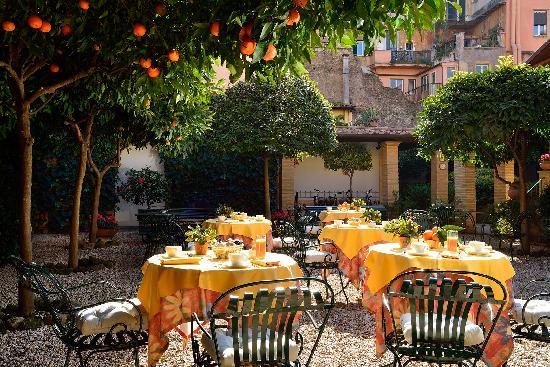
Courtyard with orange trees where you can eat breakfast or have a drink

One enters the hotel courtyard through a large, locked iron gate, so security is good. The L-shaped convent-cum-hotel with an inner courtyard enclosing a small orange grove boasts wrought-iron tables and chairs for leisurely sitting in the sun or eating breakfast when weather permits. The breakfast room is in a converted cellar, with breakfast consisting of an international and Italian buffet with something to suit everyone, offering freshly squeezed orange juice and coffee from a professional espresso machine.

The small rooftop terrace is furnished with chic wooden lounge chairs and armchairs. It’s a great place to have a drink before dinner, read in the early evening, or sunbathe during the day. The view of the surrounding rooftops and balconies of Trastevere is a photographer’s dream. All rooms have satellite television and air conditioning, as well as Wi-Fi, which can sometimes be unstable. Bikes are available for rental at the reception.

How to Get There

If you’re flying, take the train from the Fiumicino Leonoardo da Vinci airport station to the Trastevere station, about a 30-minute train ride, then take a cab, which should take about 10 minutes. This should cost around 15 Euros all-inclusive, versus approximately 50 Euros with tip for a cab direct from the airport. A cab ride from the Termini train station to the hotel should cost around 15 Euros. The hotel is lost in a winding street and difficult to access by car. Even taxi drivers get confused with all the one-way and dead-end streets. Study your map and know the names of the surrounding streets and squares, because the driver may be forced to let you off in another street around the corner from the hotel.

Practical Info

Reservations: http://www.htlsantamaria.com Address Vicolo del Piede 2 – 00153 Rome – Italy Tel. (39) 06 5894626 – Fax: (39) 06 5894815 Click here for map: Map to Hotel Santa Maria


Jonell Galloway grew up on Wendell Berry and food straight from a backyard Kentucky garden. She is a freelance writer. She attended Le Cordon Bleu and La Varenne cooking schools in Paris and the Académie du Vin, worked for the GaultMillau restaurant guide and CityGuides in France and Paris and for Gannett Company in the U.S., and collaborated on Le tour du monde en 80 pains / Around the World with 80 Breads with Jean-Philippe de Tonnac in France; André Raboud, Sculptures 2002-2009 in Switzerland; Ma Cuisine Méditerranéenne with Christophe Certain in France, At the Table: Food and Family around the World with Ken Albala, and a biography of French chef Pierre Gagnaire. She ran a cooking school in France, and owned a farm-to-table restaurant, The Three Sisters’ Café, with her two sisters in the U.S. She organizes the Taste Unlocked bespoke food and wine tasting awareness workshops with James Flewellen, is an active member of Slow Food, and runs the food writing website The Rambling Epicure. Her work has been published in numerous international publications and she has been interviewed on international public radio in France, Switzerland, and the U.S. She has just signed on at In Search of Taste, a British print publication, and is now working on two books, What to Eat in France and What to Eat in Venice.

Related articles

Never miss a post
Name: 
Your email address:*
Please enter all required fields
Correct invalid entries

Spread love everywhere you go

Published by Friday, February 14, 2014 Permalink 0

Spread love everywhere you go. Let no one ever come to you without leaving better and happier.–Mother Teresa

Mother Teresa Baby


Never miss a post
Name: 
Your email address:*
Please enter all required fields
Correct invalid entries

Food Art: Lute and Fruit, by Henri Matisse

Published by Friday, February 14, 2014 Permalink 0

Food Art: Lute and Fruit, by Henri Matisse

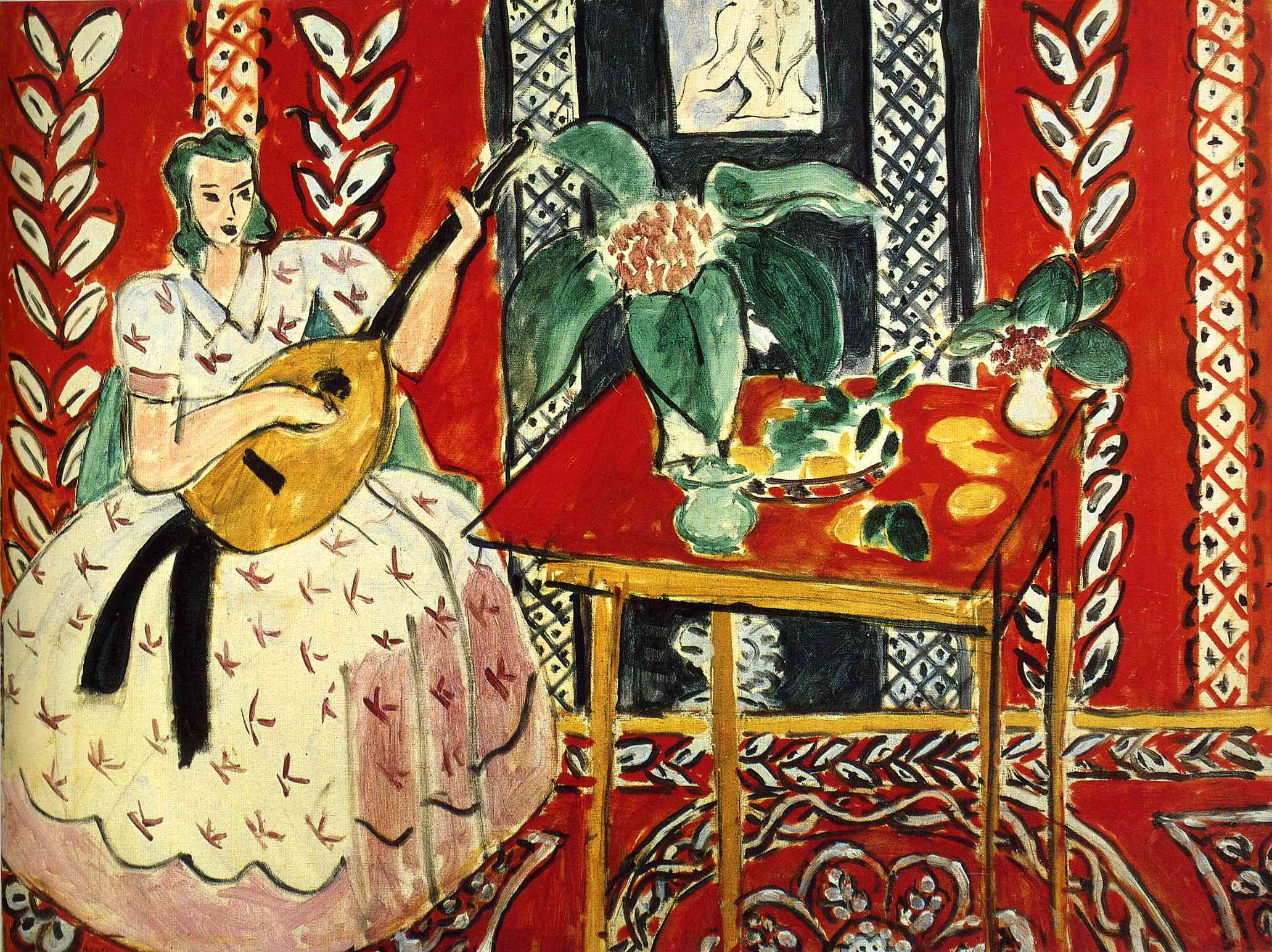
Lute and Fruit, painting by Henri Matisse


Never miss a post
Name: 
Your email address:*
Please enter all required fields
Correct invalid entries

Gareth Jones is In Search of Taste

Published by Thursday, January 30, 2014 Permalink 0

Gareth Jones is In Search of Taste

by Jonell Galloway

Gareth Jones, editor of In Search of Taste

Gareth Jones, editor of In Search of Taste


Gareth has an incredible network of people who follow his every move. His whole family – and most of his friends — share his fervor for food. His dedication to an honest cuisine is matched by few. He is the epitome of what the French call “passionné”: unfaltering in his eternal search for the best quality ingredients at a fair price; willing to go to distant places and lose countless hours of sleep to find the perfect products. Whether it’s cooking and scrubbing pans with a Nonna in a hidden corner of Italy or crossing the Channel on a Sunday morning to buy fresh shellfish in Boulogne – to be served up fresh on his lunch table in London — his devotion to his “cause” is virtually boundless.

But Gareth’s blood can run hot when it comes to food and his vision of it. He is lucid about what he likes and what he doesn’t like and his sense of ethics and justice make him look on this world like the Egyptian goddess Ma’at with her scales of justice, weighing the “hearts” of products to decide whether they are balanced and good enough to go to his version of food heaven.

Ma'at Scales of Justice, Heart

Gareth Jones’s tastes were not formed overnight. He grew up on a farm in Wales, in the middle of fragrant orchards and gardens. The surrounding woods and pastures were his playground. He is a man of the earth. The scents, tastes and sensory experiences of these days gone by make up an essential part of who he is and how he relates to the world, in particular to food: rustic yet refined, never losing sight of his roots.

Gareth lives through his senses. Proust may put some to sleep, but no one better describes the degree to which all the senses awaken when recalling taste http://www.theramblingepicure.com/full-sensory-taste-and-proust/. As Scott Horton http://harpers.org/blog/2009/06/proust-memory-and-the-foods-of-childhood/ points out, Proust explored this long before neurogastronomy even existed, and so did Gareth Jones, in the woods and fields and pastures of his happy hunting ground called Wales.

When from the distant past nothing remains, after the beings have died, after the things are destroyed and scattered, still, alone, more fragile, yet more vital, more insubstantial, more persistent, more faithful, the smell and taste of things remain poised a long time, like souls, ready to remind us, waiting and hoping for their moment, amid the ruins of everything else; and bear unfaltering, in the tiny and almost impalpable drop of their essence, the immense architecture of memory.

Yet again I had recalled the taste of a bit of madeleine dunked in a linden-flower tea which my aunt used to give me (although I did not yet know and must long await the discovery of why this memory made me so happy), immediately the old gray house on the street where her room was found, arose like a theatrical tableau…

Marcel Proust, Du côté de chez Swann (1913) in: À la recherche du temps perdu vol. 1, p. 47

Proust's face engraved on a Madeleine

Proust’s face engraved on a Madeleine


Gareth is a living temple of Proust’s perception of the sensory experience that is life, with food as its altar. His devotion is boundless, and he surrounds himself with writers who share his zeal and dedication. There’s no better recipe for editing a food magazine.

Yet, there’s a lot of country gentleman mixed into his formula, which takes him a long way from Proust’s decadence. Thus the term he coined, “Blue Collar Gastronomy,” inspired by a visit to the Leclerc supermarket in Boulogne-Outreau – “often frequented by working class people the majority of whom are below average education and a town where unemployment is in the high teens if not +20%,” says Jones. As he was filling his trolley, he noted how intelligently and carefully the locals were filling theirs. You might never have known it was a poor, run-down, even sad, place if you looked at the contents, fit for a minor Roman feast.

The smells and tastes of the world have indeed been poised for a long time in Jones’s mind, but time has not been lost. His life has been a fine weave of the senses and food, which makes for dishes that have real taste, that are authentic and lacking all pretentions. He is a master at finding the crème-de-la-crème for even the simplest food purchase, even a chicken carcass for making soup and broth. In the words of Pete Seeger, “Any darn fool can make something complex; it takes a genius to make something simple.” And this is what Gareth Jones has understood and mastered.

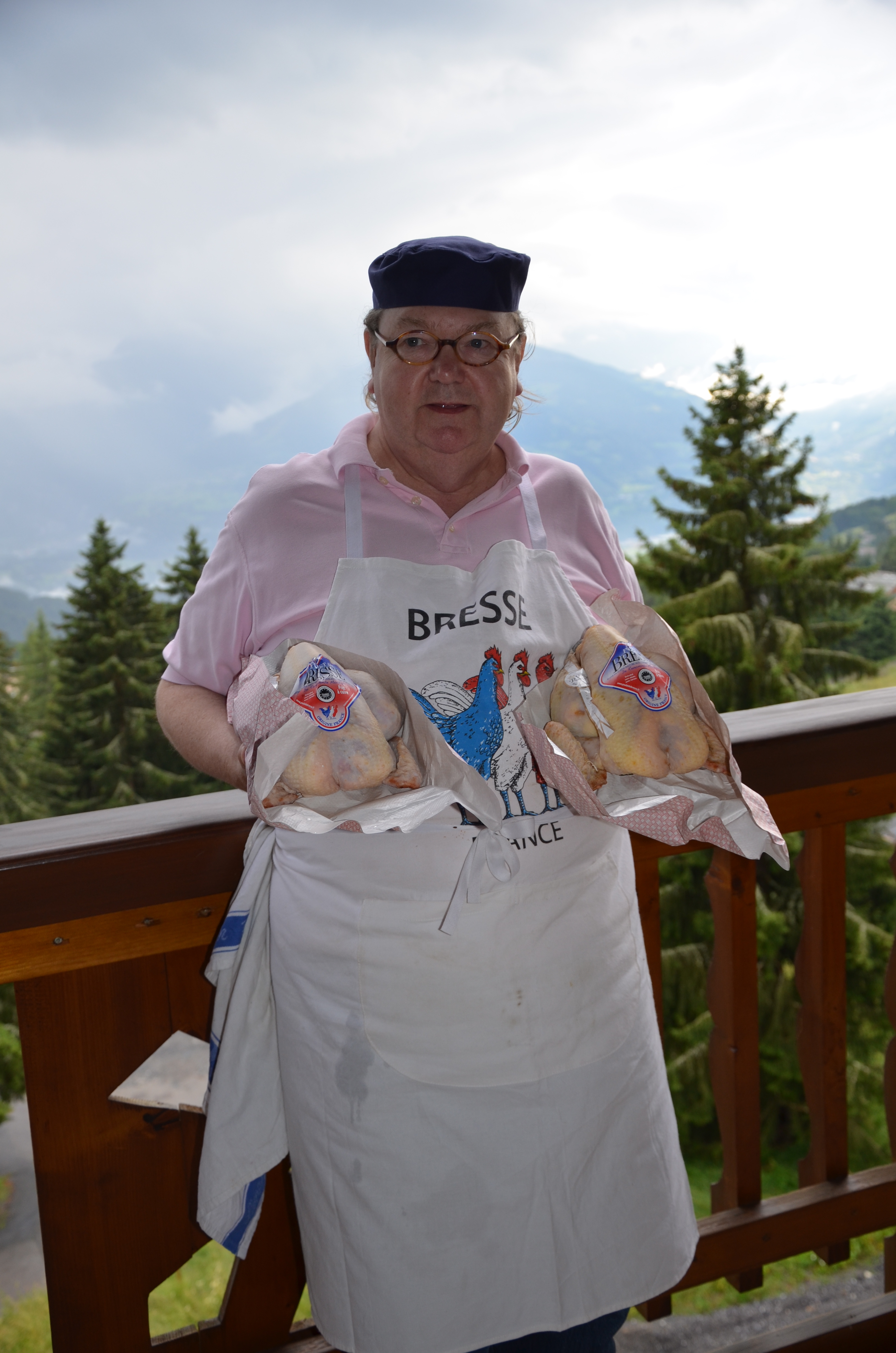
Gareth Jones Poulet de Bresse in Villars-sur-Ollon, Switzerland


On a sunny day in August, Gareth made poulets de Bresse, the prince of all chickens. He and his family had made a special detour to Bresse on their drive from London to our mountain home in Villars-sur-Ollon just to buy the chickens. To start the work, he put on his chef’s hat and apron – the one you see in all the photos — only to spend hours in the kitchen, smiling and giggling at their beauty all the while, patting them on the breast as if they were a much-loved child. His treatment of the “little princes” was itself princely and full of the respect they deserve. You would have thought it was a beast epic and that they were whispering to the chef, giving him instructions on how to proceed, but no. Gareth is the chicken whisperer and knows what they want and need. He knows the beauty of keeping it simple and letting the natural tastes come to the foreground. Bresse chickens will never be the same.

Gareth’s personal website: Gareth Jones FoodHis new glossy magazine: In Search of Taste

Never miss a post
Name: 
Your email address:*
Please enter all required fields
Correct invalid entries

Potatoes: Endless Varieties in Switzerland

Published by Sunday, September 29, 2013 Permalink 0


Potatoes: Endless Varieties in Switzerland

by Jonell Galloway

Potatoes: an essential part of the traditional Swiss diet

If there’s one thing we have plenty of in Switzerland, it’s potatoes. I didn’t even like potatoes before I came here and discovered all the subtle differences of texture, taste and all the ways of using them in cooking.

Potatoes are an essential ingredient in almost any traditional Swiss meal. This year’s crop is already starting to show up in local markets.

Large Number of Varieties of Potatoes in Switzerland

The official 2007 Swisspatat list (provided by Agridea, the Swiss agricultural research station) includes 31 different varieties, along with lists for various seasons and types of potatoes, as well as recipes for everyday use as well as for special occasions.

You can take a look at the 31 varieties in the table at the bottom right on the last page of the Swisspatat article to get an idea of which potatoes to look for at what time of the year.

Different Types of Potatoes for Different Uses

There are basically 4 types of potatoes, according to Swisspatat:

  1. Firm or “salad” potatoes. These potatoes do not burst open when cooking. They are moist, fine-grained and not mealy, and can be used in most dishes, with the exception of mashed potatoes and purées.
  2. All-purpose medium-firm potatoes. The skin on these potatoes opens only slightly on cooking. They are somewhat mealy, on the dry side, and have a fine, grainy texture. They are tasty and can be used for most all purposes.
  3. Mealy potatoes. These potatoes burst when cooked, but they are tender, mealy and rather dry. They have a large grain and strong taste and are used mostly for industrial purposes.
  4. Extra-mealy potatoes. These are basically not for cooking and are used for feeding livestock or to make starch, due to their dryness and hard texture.

Continue Reading…

Never miss a post
Name: 
Your email address:*
Please enter all required fields
Correct invalid entries

Full-Sensory Taste and Proust

Published by Tuesday, September 17, 2013 Permalink 0


Jonell Galloway, The Rambling Epicure, Mindful Eating, Spontaneous Cuisine, Editor of The Rambling Epicure.Full-Sensory Taste and Proust

by Jonell Galloway

We think of taste as something universal that we have in common with all (or most) human beings, as a mechanical and chemical process that requires no thought. If we could measure the data that goes into our final judgment about the taste of a food, we’d likely be in for a shock. Perhaps surprisingly, our subconscious also plays a major role in what we like or dislike, and we use all our senses to determine this.

Harrison Flavoring Extracts, photo by http://www.loc.gov/rr/scitech/SciRefGuides/taste.html


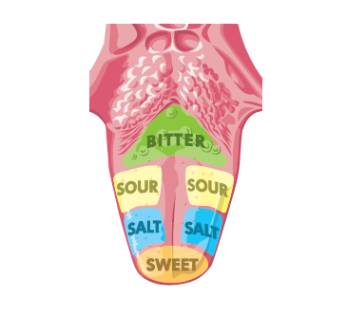
Traditionally, when we study the four elements of taste, they are presented as follows:

Tastes on Tongue, photo (R) http://leavingbio.net/the%20senses_files/the%20senses.htm


There is no need to explain these. We are all familiar with them.

Today, taste specialists have added a fifth to that list: umami. Taking its name from Japanese, umami is a pleasant savory taste occurring naturally in many foods, including meat, fish, vegetables and dairy products. It is subtle and blends well with other tastes to expand and round them out. Some researchers, such as Adam Hadhazi, think there are even more tastes to be added.

But in reality, taste or flavor involves all five senses. Yes: sight, hearing, touch, taste and smell.

5SensesSheperd


Some researchers, such as Gordon M. Shepherd, would have it that what we most often refer to as “taste” is in fact flavor, and that flavor is largely made up of what he calls “retrosmell”. It is true that in the past we were taught that primates lost touch with their sense of smell when they started holding their heads upright, far from the ground, and standing on two legs instead of four, but today, that is called into question. Shepherd is the one who challenged this long-held premise back in 1974.

Retronasal smell, also known as “retrosmell” or “mouth-smell”, is an addition to the conventional teaching about taste; it is an integral part of flavor. Retrosmell takes place while you’re chewing and swallowing, as well as while you’re breathing. When you exhale, you draw “chemicals released by the food into the nasal cavity, where they are sensed and transmitted to the brain,” says Medical Discovery News. It is what defines the aftertaste that stays in your mouth after sipping a good wine, for example.

I have lived much of my life through what I like to call “full-sensory taste.” Of course, I consider sour, sweet, bitter and salty, but the other senses also come into play. When I read a good restaurant menu, I focus on individual ingredients and can quite easily conjure up the final combination of flavors, i.e. taste, a dish will have. Just as when I shop, I first see the ingredient, then I might imagine how it sounds in my mouth (yes, I really do that). This is usually a function of whether it is crunchy, in which case it makes quite a lot of noise, or whether it is creamy, and spreads over the tongue and goes down smoothly (umami comes in here). I even like to touch certain ingredients, such as tomatoes, to see whether they are firm or mushy, or cereals, to make sure they’re still crisp.

Neurogastronomy by Gordon J. Shepherd, photo by http://www.cupblog.org/?m=201112


On principle, I always smell vegetables and fruit before buying. Though today’s strict standards and expectations on the part of customers are largely visual, looks do not tell the entire story. A tomato might well be perfectly red, round and standard in size, but I know from experience that real tomatoes that you pick from the garden are not perfect to look at, and it is not this so-called “perfection” that determines the taste. As my best friend’s mother used to say, “Art is never perfect, and don’t forget that.” And thus is nature.

Multi generation family smelling tomatoes


From my grandfather’s garden I bring in another element of taste: nostalgia. I will forever associate the chlorophyll-filled smells of the fresh vegetables and fruits from his garden with a sense of well being. I remember getting on my knees to smell the tomatoes before I picked them, like an animal with my nose close to the vines. After we’d finished harvesting for the day, with sweat on our brows, I’d sit on his lap under the shade of trees and drink ice water, his blue eyes sparkling in the sun as he laughed. I’d often hear my horse neighing in the field next door, see the horse barn in the distance. The stifling heat of the Kentucky sun would from time to time be broken up by a breeze that came suddenly out of nowhere, lasting only a few seconds, just enough to help evaporate our perspiration and bring with it a waft of horse sweat. When we finally carried our harvest into the house, my grandmother would start preparing dinner, changing those fresh scents of chlorophyll into seasoned scents of the traditional Kentucky dishes she mastered. The ensemble — all the sensory input and all the partly subconscious thoughts and feelings from these days gone by — is my definition of a perfect time and place and world, as simple as that may seem. It was a full-sensory experience, existing now in the form of subconscious associations that are totally my own, associations that form my likes and dislikes.

Lemonade stand, photo (C) common license http://maddycakesmuse.blogspot.ch/2010/04/nostalgic-memories-lemonade-stand-for.html


When I walk through the farmers market, I use all my senses and some nostalgia too. First I look, filtering out what experience tells me is not fresh or of good quality. I “create” dishes in my mind, “using” the ingredients that seem freshest and imagining the flavor of those ingredients together. It is a full-sensory experience. I imagine the crunchiness, unctuousness, aroma, the acidity, saltiness, bitterness, sweetness, umami. Associations from the past often rush in without me being conscious of them. It’s like a sentence from Proust. In one very long sentence, Proust takes you through all the senses and sometimes back again, and time is suspended, letting them all blend together to make an astonishing whole that is forever your own. This passage, quoted often, is just one example:

And soon, mechanically, weary after a dull day with the prospect of a depressing morrow, I raised to my lips a spoonful of the tea in which I had soaked a morsel of the cake. No sooner had the warm liquid, and the crumbs with it, touched my palate than a shudder ran through my whole body, and I stopped, intent upon the extraordinary changes that were taking place. . . . I was conscious that it was connected with the taste of tea and cake, but that it infinitely transcended those savors, could not, indeed, be of the same nature as theirs.

Proust is, of course, referring to the conscious pleasure that comes through the senses, to which is inevitably added subconscious associations.

To sum it up, when you bite into a potato chip, you start by looking at it to see if it looks appetizing. When you put it in your mouth, you feel the crunch with your teeth (touch) and you hear it. You taste the salt; you taste and smell the flavoring, and it may well have a retrosmell, a taste/smell that lingers in the back of your mouth, even after you’ve swallowed it. All this gives you an idea, often formed from the past, of what it should be like in your mouth. If that “historical” expectation is not met, you probably won’t like the chip.

Original flavor Popchips

From this perspective, flavor in the traditional sense of the word takes on a whole new complexity. The traditional elements of flavor are combined with signals and messages from the other senses and with nostalgia and other subconscious associations. Our likes and dislikes become, like Proust’s description, a rich, unique blend of all these elements. There are indeed objective elements, but these cannot stand alone in producing the astonishing whole that is your own, which no one in the world has perceived exactly in the same way. Tasting becomes a moment suspended in time, a moment that is yours and yours only.

In this series of articles, we will explore these elements of full-sensory taste.


References:

Retrosmell, by Pamela Bond

Medical Discovery News

Umami

Taste: Surprising Stories and Science about Why Food Tastes Good, by Barb Stuckey

The Science of Taste and Flavor, Library of Congress

Neurogastronomy: How the Brain Creates Flavor and Why It Matters, by Gordon M. Shepherd

Oxford Journal: Chemical Senses, “Odour-evoked Autobiographical Memories: Psychological Investigations of Proustian Phenomena,” by Simon Chu and John J. Downes

Yummy Umami: The 6th Basic Taste?,” by Diana Zahuranec


Never miss a post
Name: 
Your email address:*
Please enter all required fields
Correct invalid entries

The 7 Lives of Bread

Published by Wednesday, September 4, 2013 Permalink 0


The 7 Lives of Bread

by Jean-Philippe de Tonnac

Translated from the French and adapted by Jonell Galloway. Cliquez ici pour la version française.

If you ask an artisan bread baker who is passionate about his work from where he derived his passion, he or she will almost invariably reply, with no hesitation, that it arose out of the “mystery of the fermentation.” Did you know that bread is the result of an alcoholic fermentation, and the baker therefore actually manufactures alcohol? Now how does that come about, you might ask?* (If you’re interested, read the very technical footnote below.)


It’s not really surprising that a bread baker shares the wine maker’s penchant for the processes of “alteration,” “deterioration,” and “transformation,” which make them both somewhat sorcerers, metaphorically speaking. While a baker talks about bread fermentation, the wine maker continually refers to “maceration,” and the cheese maker to “maturation.” But whether it consists of alcoholic or lactic fermentation, we are still talking about transubstantiation, a sort of “sacrament,” which creates an aura without parallel around these “artists”. They are aware of this, and they know it is at the very heart of their art. Bread baker, cheese maker, wine maker: they all fight the same battle, that of transformation of food, of true metamorphosis.

When does dough become bread?

At the same time, at what point in this long sequence of processes does the product we actually consume merit the name “bread”? This is not an easy question.

In most of our minds, bread is a loaf or a baguette; it is ciabatta in Italy and pumpernickel in Germany. In Iran, they call it sangak, in Denmark, rugbrød, in Jamaica, bammy, eaten straight out of the oven.

Can we call the fat roll of dough after kneading and shaping or left to rise “bread”? Is the dough left to ferment in the dough trough not already bread?

The large sacks of flour that the miller delivers every morning, are they not, in some ways, already bread? Is a grain that we mill, or even a seed that we plant, not bread? Is leftover bread, bread we let dry, whether on purpose or not, and that we use to make croutons for a thick winter’s soup that we lap up like a Jacques Brel song, not also bread?

This 7 Lives of Bread column will explore every facet of bread, walking you through all the phases of transformation, from seed and grain to the end product you savor.

The 7 Lives of Bread will trace the life of a loaf of bread, from its “birth” to its “death”. Bread is therefore:

  1. The grain prepared for milling.
  2. The flour that results from milling.
  3. The dough that seals the coming together of flour and water, a meeting that starts the fermentation process.
  4. The dough roll that is detached from this initial bulk of dough, and then starts down its own individual path.
  5. The dough roll when it is baked in the oven.
  6. The bread we choose at the bread bakery, or the bread we make ourselves.
  7. Stale bread, that can be baked again (the term “biscuit” means literally, in French, “cooked twice”, in the spirit of Melba toast) so as to conserve it for future use.

The latter is typically the bread of sailors and nomads. The Greeks – great seafarers — are given credit for having invented the double cooking process.

The 7 paths: in the sweat of thy face shalt thou eat bread

In the 7 Lives of Bread, we will explore all seven paths of these seven “lives”. If fermentation is at the very heart of bread baking, it can also be considered that all steps – from the cultivation of wheat and milling to the actual bread making itself – are active participants in the transformation process.

This concept is aptly put in Genesis 3:19: In the sweat of thy face shalt thou eat bread, till thou return unto the ground; for out of it wast thou taken: for dust thou [art], and unto dust shalt thou return.

Bread is therefore to be taken in like mother’s milk, earned with the sweat of our brows. Symbolically, it is interesting to attempt to understand why bread has a price, the price of transformation or of conversion: the bread changes to the same degree as the man or woman who makes it.

If we look at it in this light, for ten thousand years now, it is as much bread that has shaped humankind as it is the hands of women and men who have shaped bread. The realization of this reciprocal shaping and, through it, conversion is the starting point of this column.

*The chains of starch (complex carbohydrates, which along with gluten constitute the essence of the endosperm or starchy kernel and quantitatively speaking, the essence of the wheat grain), under the action of enzymes or amylases, are broken down into simple glucose (C6 H12 O6), which is, in turn, converted by yeast or enzymes into either carbon dioxide (2CO2) and ethanol or ethyl alcohol (2C2 H5 OH) and energy.
 
Jean-Philippe de Tonnac is editor of the Dictionnaire Universel du Pain or Universal Dictionary of Bread, published in French by Éditions Laffont on October 16, 2010.
Never miss a post
Name: 
Your email address:*
Please enter all required fields
Correct invalid entries

Switzerland: Bénichon Mustard, A Fribourg Specialty to Welcome the Cows Coming Home

Published by Tuesday, September 3, 2013 Permalink 0


Switzerland: Bénichon Mustard, A Fribourg Specialty to Welcome the Descent of the Cows

by Jonell Galloway


Bénichon mustard is quintessentially Swiss. It is a specialty of the canton of Fribourg.

It is more like a spicy jam than a mustard, in the traditional sense of the word. Its ingredients give it a sweet and sour taste.

It is traditionally eaten with another Fribourg specialty, cuchaule, a light brioche-like sweet saffron bread, during an annual village fair to celebrate and “bless” the autumn harvest and bringing down the herds of cattle from the mountains. This is now held the second week in September.

There are numerous recipes, but they traditionally include mustard flour (or powder), extra-white flour, white wine, fortified wine, rock candy and water, to which cinnamon, star anise and whole cloves are added.

It’s really quite easy to make. I’ve translated the Bénichon recipe and adapted it.

Suggestion: Do this on a day when you’ll be at home all day, or soak the mustard powder over night and finish off the recipe the next day.

Continue Reading…

Never miss a post
Name: 
Your email address:*
Please enter all required fields
Correct invalid entries

The Fundamental Interconnectedness of Wine, Food and Art

Published by Monday, September 2, 2013 Permalink 0


The Fundamental Interconnectedness of Wine, Food and Art and Just About Everything Else That’s Good

Jonell Galloway, The Rambling Epicure, Mindful Eating, Spontaneous Cuisine, Editor of The Rambling Epicure.by Jonell Galloway

From the archives

As Shelly Butcher so aptly said in her article “Welcome to the Borscht Belt, exploring the ‘fundamental interconnectedness’ of all things food,” there is a fundamental interconnectedness in food and it can extend beyond the bounds of food, to things related to art de vivre, wine, aesthetics and the whole ambiance, as the French might say. I think most of us would agree that the French and Italians do it best in the Western world, and we all busy ourselves trying to imitate them. Once the bond is made through food and wine, it often remains and blooms into something bigger and more far-reaching.


My very special story is about how my husband Peter White and I met David Downie and Alison Harris.

My husband is a master at planning trips. He always chooses the perfect B&B, which often happens to be a castle or palazzo or some kind of wonder, with an idyllic view, and of course a long list of perfect restaurants to go along with it.

This summer we took the children to Burgundy for a week, and while in Beaune, where we were staying at one of his perfect B&Bs, Les Jardins de Loïs, a little paradise right in the heart of the city, I picked up a book called Wine Food Burgundy in the study. It’s a guidebook, but quite frankly, if you love good writing like we do, you can read it for the pure joy of style. Over the next few days, every time my husband put it down, I picked it up, and vice versa. I won’t say we fought over it, but we both kept our eye on it at all times, as if it were a precious gem we had to keep watch over.

When we returned home to Geneva, I promptly looked up the book and the author, David Downie, and wrote a comment on his site.

The next day, two amazing things happened. First, I realized that I had stupidly left my jewelry box at Aux Terrasses in Tournus. Secondly, the owner of Loïs telephoned my husband to say that the writer of Wine Food Burgundy wanted to contact us. He and his wife were spending the summer in their country house near Cluny (and near Tournus). And the most amazing part of it all is that since we had to drive back to Tournus to get my jewelry, we decided it was in the stars. Somebody somewhere meant for us to meet.

So Peter and I drove to Tournus, had a lovely lunch with David and Alison at Aux Terrasses, and we’ve been in contact ever since.

Here’s David’s version of our meeting.


Never miss a post
Name: 
Your email address:*
Please enter all required fields
Correct invalid entries

UA-21892701-1