Food Poetry: A Food for Everything, by T. A. Ramesh

Published by Friday, February 22, 2013 Permalink 0

A FOOD FOR EVERYTHING!

by T.A. Ramesh

Meals are the food for the body;
Knowledge is the food for the mind;
Meditation is the food for the spirit;
Music is the food for the love of heart;
Dreams are the food for the consciousness;
Prayer is the food for the Almighty;
Love is the food for the living heart;
Thoughts are the food for the brain;
Colourful ink is the food for the pen;
Ideas are the food for the stories;
Truth is the food for the will;
Sun’s energy is the food for the plants;
Plants are the food for the living beings;
But one man’s food is another man’s poison!

Never miss a post
Name: 
Your email address:*
Please enter all required fields
Correct invalid entries

Local vs. Non-local Food: The Arguments

Published by Saturday, January 12, 2013 Permalink 0

by Jonell Galloway

I think we got spoiled by eating cheap food from all over the world. That put us out of sync with nature and skewed the price of local produce and products vs. produce and products from distant places, leading us to waste what we once had held precious because it was seasonal and local and therefore rare. Slow Food USA and Josh Viertel were right in fighting for fair wages for our own farmers and trying to lead us back to a way of eating that is in line with nature, which of course means paying a little more, but improving our health and local economy.


There are many more arguments to be put forth. Let’s talk about it: the pros and cons, your experiences, your convictions, etc. We’d love to get a big discussion going here.

Click here to watch Building a Slow Food Nation, outlining the history of Slow Food in the U.S., and including Josh Viertel’s view.


Never miss a post
Name: 
Your email address:*
Please enter all required fields
Correct invalid entries

Last-minute Christmas Gift Idea: Food Styling and Photography Workshop with Meeta K. Wolff

Published by Friday, December 21, 2012 Permalink 0

by Jonell Galloway

The Perfect Last-minute Gift for the Foodies in your Life

Meeta Khurana Wolff, a professional food photographer and stylist, and ongoing contributor to this site, will be holding a Supperclub food styling and photography workshop in London in the U.K. from February 15-16, 2013, along with Sumayya Jamil, and special guest Jeanne Horak-Druiff, at the Central Street Cookery School. Click here for more details and to reserve. Only 12 places available.


Never miss a post
Name: 
Your email address:*
Please enter all required fields
Correct invalid entries

Food Art: Bread Pot, food photography by Sandeea

Published by Thursday, December 20, 2012 Permalink 0

Sandeea is our latest food photography discovery. A woman of many talents, she is also author of the Food Play column. She writes in both English and Spanish and runs the Spanish food blog La Receta de la Felicidad.

Never miss a post
Name: 
Your email address:*
Please enter all required fields
Correct invalid entries

Salone del Gusto versus Good, Clean, and Fair: Part 1

Published by Wednesday, December 12, 2012 Permalink 0


Salone del Gusto versus Good, Clean, and Fair: Part 1

by Diana Zahuranec

Salone del Gusto, an event held biannually in Turin, Italy by the organization Slow Food, gathers artisanal producers from around the world in five days of selling organic or biodynamic, high quality, artisanal, innovative and traditional products; tasting workshops; and conferences about the state of the world’s food system and what can be done to promote sustainable growth. It’s an amalgamation of the green movement and everything it could possibly stand for before such a thing as “green washing” existed.

So what were the Italian supermarket COOP, the internationally famous Italian espresso company Lavazza, and the ubiquitous road-side Italian convenience store Autogrill doing at the Salone?

A supermarket is the antithesis of Slow Food’s “good, clean, and fair” motto. Products are available at any quality, starting at “low” and often not reaching above “decent;” produce and packaged goods come from all over the world, with little thought as to what other countries deem as “safe” pesticides, and with less thought about the energy used to transport everything; and finally, it’s anyone’s guess as to how many products lining the shelves were made under unpleasant or dangerous working conditions with low wages as poor compensation.

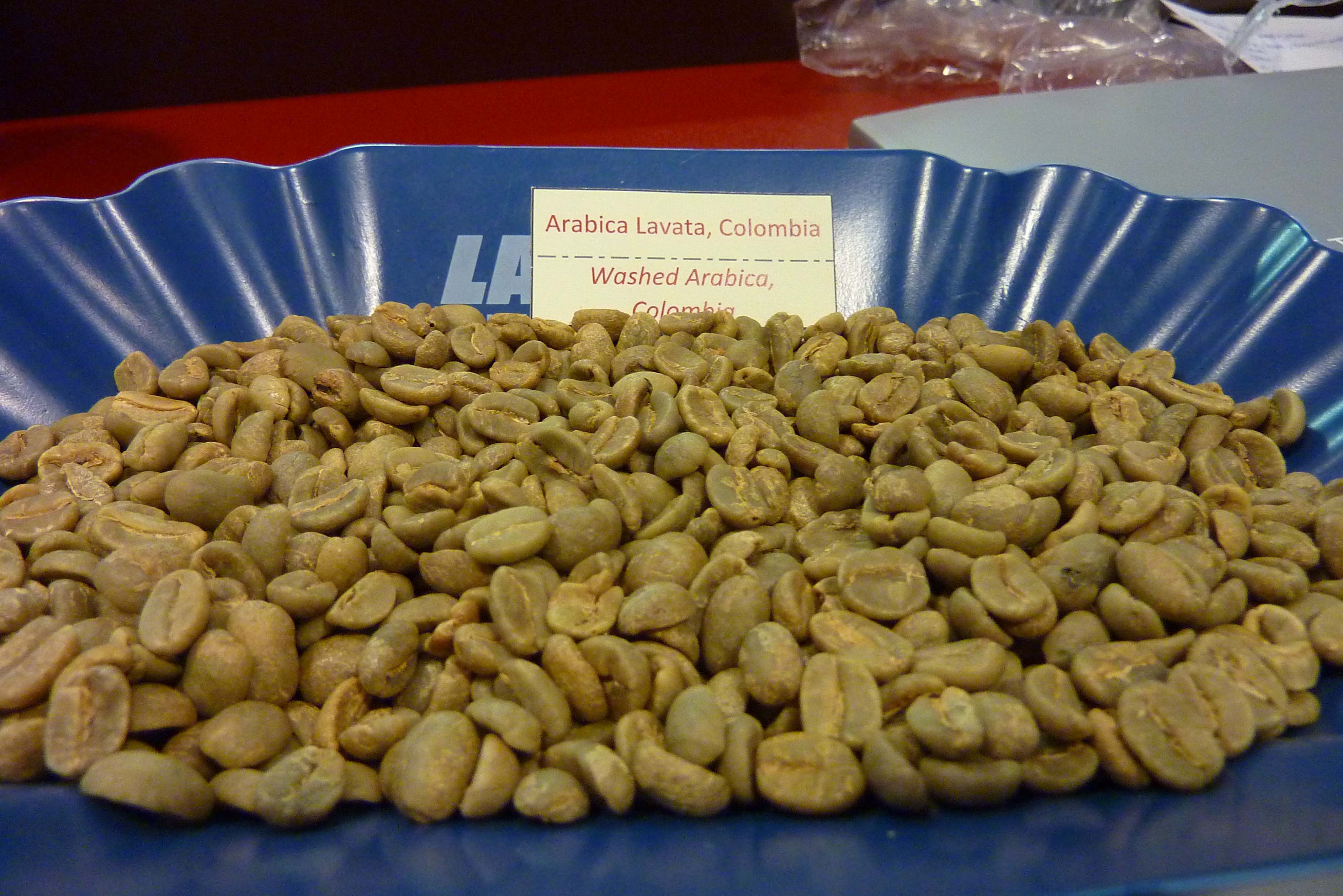
Coffee beans are notorious for their high demand pitted against their low cost, possible only through unfair working conditions and wages. Coffee plants are harvested using mono-cropping methods, which is environmentally friendly only in the interests of that particular crop.


Continue Reading…

Never miss a post
Name: 
Your email address:*
Please enter all required fields
Correct invalid entries

My Favorite Hanukkah Foods: Grandma’s Latke Recipe

Published by Saturday, December 8, 2012 Permalink 0

by Warren Bobrow

From the archives

Hanukkah recipes are passed down from generation to generation. There are hundreds of recipes floating around on the Internet, but I thought it best to consult a friend with trained taste buds. Here is what Warren Bobrow has to say.–Jonell Galloway, Editor

My Favorite Hanukkah Foods

Of all the holiday foods I look forward to, there are two dishes that clearly connect my stomach to the past. The first is a rousing bowl of matzo ball soup. The other, specifically a Hanukkah dish, is a plate of crispy potato latkes, cooked in a heavy cast iron pan.

Ur-Bubby’s Latkes

I forewarn you. This is a Jewish story, so it is repetitive and sometimes fahklumpt (a confused story, for those who are not in the know), told by a kvetch (a complainer) who secretly loves life and food and words and work, and tells a story full of fond memories.

My great-grandmother Yetta made excellent latkes. During these eight days of Hanukkah (eight chances to get it right . . . to be exact), we celebrate the past by reliving these flavors and the stories that go with them each time we bite into a steaming morsel of grated potato, egg, onion and a bit of vegetable oil, made straight from her recipe.

Generations of cooks have grated potatoes for latkes in celebration of Hanukkah. You will not be the first or the last. And every family has their own special recipe, their own special stories.

Bubby Yetta was particularly interested in not scraping her knuckles. Even so, she used to say that if you don’t catch your knuckle on the potato grater, the latkes couldn’t possibly taste good. Something about the physical act of grating potatoes already connects me to the old days when Bubby made the latkes every evening during Hanukkah.

Onions also resonate in my memory:  the tears that ran down her cheeks as she grated the onions were not tears of joy. We heard the same kvetching every year, and carry on as we make our own history.

Every day of Hanukkah, Ur-Bubby Yetta would scrape and grate until the job was done. Much hushed conversation would follow. Were the latkes going to be good?  If not, what would we do, there was no place in those days to buy frozen latkes in the supermarket!

And with each potato and onion grated, each tear fallen, each latke fried, another memory was made. Years of latke conversation would follow . . . How about the ones we made twenty years ago? Did potatoes taste differently then, or was it a specific taste that stuck in our memories?

So careful with the grater, and accept that you’ll invariably catch your knuckle at least once, and that you may well have the battle scars to prove that you made them from scratch. And stories to tell.

Recipe

Continue Reading…

Never miss a post
Name: 
Your email address:*
Please enter all required fields
Correct invalid entries

Recipe: Parsnip Gnocchi with Ruccola Cashew Pesto

Published by Thursday, November 29, 2012 Permalink 0

by Meeta Khurana Wolff

Recipe: Parsnip Gnocchi with Ruccola Cashew Pesto

From the archives

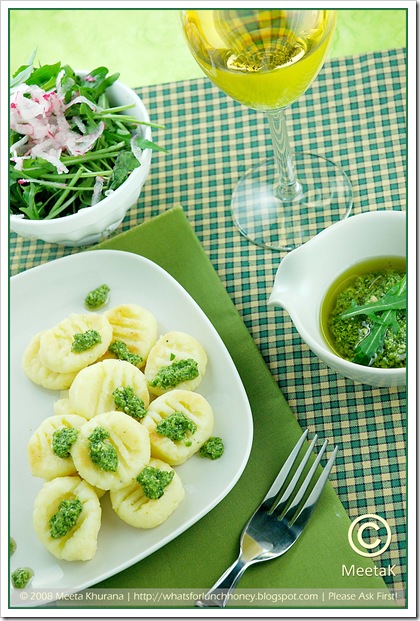
Parsnip Gnocchi (02) by MeetaK

Rock solid! That’s what the ice on my windscreen this morning was. It was so hard that here was no way my ice scraper was going to break any ice. At -5 degrees C my hands were freezing onto anything that had the slightest bit of moistness!

Winter has settled down comfortably in our parts. There was beautiful snow all through the Thanksgiving weekend and ever since, it’s been a bit dull, cold and icy.

Continue Reading…

Never miss a post
Name: 
Your email address:*
Please enter all required fields
Correct invalid entries

Arroz con Leche and Rice Pudding: Every Country has its own Version

Published by Wednesday, November 28, 2012 Permalink 0

by Marisol Murano

Small Plates: Rice Pudding

Arroz con leche in South America. Arroz Doce in Portugal. Kheer in India. Rice Pudding in the United States. What makes rice boiled in milk and sugar so irresistible? The secret may be in the grain.


The Indian version, made with basmati rice, spiced with cardamom and garnished with almonds and sultanas is exotically delicious. The Portuguese version, which calls for short-grain rice, egg yolks and cinnamon, is a creamy Iberian dream. My Venezuelan grandmother’s recipe called for long-grain rice and condensed milk.

Both the grain and the cooking method impact the creaminess of the final pudding. Whereas my grandmother’s and the recipes from Portugal boil the rice in water first, kheer is cooked in the milk. The major disadvantage of cooking the rice directly in the milk is that it tends to stick to the bottom of the pan and requires constant stirring to keep it from burning.

The recipe I have concocted after traveling the world as a Destination Chef and after experimenting with several exotic grain varieties is the best of all worlds. It includes my grandmother’s condensed milk, the Portuguese egg yolks in moderation, toasted almonds, and it is made with sushi rice. It is also true to both my eating and culinary philosophy that you can turn almost any guilty pleasure into a small plate to better savor it without the guilt.

In a final twist against the grain, I serve it warm, rather than chilled.

The Long and Short of it

Not all rice grains behave equally under pressure. Of the short grain rice varieties I tested for this recipe the sushi rice, also known as japonica, turned creamiest in the least amount of time.

The other varieties I used are listed below, along with some of their most distinctive features.

Varieties of Rice in the World

Arborio

This Italian short-grain rice is named after the town of Arborio in Italy’s Po Valley. It is often used for risotto and to make rice pudding as well. Because it is both creamy and chewy at the same time, arborio is great for rice pudding.

Arborio rice.

Arborio rice


Carnaroli

A medium-grain rice grown in the Vercelli province in the Italian Piedmont, carnaroli has a higher starch content than arborio. It is also a little firmer and the grain is a little longer than arborio’s. It worked great for the arroz con leche, but it takes about 40 minutes to cook and it is expensive.

Detalle del Grano del Arroz Carnaroli

Carnaroli rice


Sushi Rice

The Japanese short-grain rice used for sushi is oftentimes called japonica. It takes years of practice and patience to make sushi rice that is suitable for a sushi roll. After taking a class with a master sushi chef and realizing I could not wait 10 years to make the perfect rice, I decided on a shortcut: Why not use sushi rice to make rice pudding? The grain is very short and it absorbs the milk beautifully. You may also use a sushi rice variety grown in California, known as calrose.


Bamboo Rice

This isn’t a variety of rice, but rather a short-grain rice which has been infused with bamboo juice. This exotic grain has a lovely hue of jade and a slightly grassy taste reminiscent of green tea. It is also moist. I really hoped this would be my finalist because the color of the grain is lovey, the taste is subtle and the rice is full of nutrients. In the end, though, I found that to better appreciate its flavor subtleties this rice is better steamed or boiled. But if you want to indulge your inner panda, try it with white fish, sea scallops or chirashi (Edo-style scattered sushi).


Basmati

Of the long-grain varieties, basmati remained the crunchiest, even after boiling it in 10 cups of milk. I was aiming for creamy, so this wasn’t the rice for me.

Grown in north central India and Pakistan, basmati is a variety of long-grain rice. It is often used to make biryani, pulao and kheer. It has a sweet aroma reminiscent of pandanus leaves.

Basmati Rice

Basmati rice

Jasmine

Originally from Thailand, jasmine rice has a nutty taste and fragrant aroma. The grains will stick together when cooked, though it isn’t as starchy as the short-grain varieties. Of the two long-grain varieties jasmine made for the creamiest arroz con leche, but not as creamy as sushi rice.

Close-up of grains of jasmine rice

Close-up of grains of jasmine rice


The two secrets to this recipe are boiling the rice in water first and using sushi rice. Boiling the rice first also substantially reduces the overall cooking time. Because some of the starch is removed during boiling, I find this method keeps the rice from sticking to the bottom of the pan as well.

To download and print a PDF copy of my Arroz con Leche Condensada y Canela recipe, click here.

Recipe

Arroz con Leche Condensada y Canela

INGREDIENTS

For the Arroz con Leche:
 
2/3 cup sushi rice (4 ½ oz/125 grams)
6 cups water (48 fl oz/1.5 liters)
1/8 tsp salt4 cups milk (32 fl oz/1 liter)
1 tablespoon ghee, or clarified butter
1 cinnamon stick
1/3 cup sugar (2.5 oz/67 grams)
1 tsp vanilla extract
1 egg yolk, lightly beaten
½ cup sweetened condensed milk (4 fl oz/125 ml)

For the garnish:

1/3 cup blanched almonds (1.3 oz/ 36 grams)
1 teaspoon ghee, or clarified butter
Ground cinnamon

METHOD

Arroz con leche:

  1. Bring water to a boil in a saucepan. Add the rice and salt. Reduce to a simmer and cook, stirring occasionally for 20 minutes. Drain.
  2. Warm the milk in a saucepan. Add the ghee, cinnamon stick, sugar and vanilla extract and cook over medium heat until sugar is dissolved. Add the drained rice, lower the heat and cook for 25 minutes, stirring occasionally to keep the rice from sticking.
  3. Beat the egg yolk in a small bowl and add the sweetened condensed milk until combined. Gently stir condensed milk mixture into the rice and cook over very low heat, stirring constantly, for five minutes. Remove from the heat.
  4. Spoon arroz con leche into small serving cups and sprinkle with cinnamon. Garnish with toasted almonds. Serve warm.

Garnish:

  1. In a small non-stick pan toast the almonds in ghee over medium heat, stirring with a wooden spoon until almonds turn a light golden color, about 4 minutes.
  2. Set aside to cool.
__________________
Chef Marisol Murano is an international destination chef, writer and show host. Her latest book, Deliciously Doable Small Plates from Around the World, is an engaging travel adventure featuring 60 world classics in small plate format and glorious photographs from every corner of the world where she has worked as a destination chef.  For more information, visit her site Marisol Murano.



  • , is an engaging travel adventure featuring 60 world classics in small plate format and glorious photographs from every corner of the world where she has worked as a destination chef.  For more information, visit her site Marisol Murano.


  • From Tokyo: Quirk of Fate after the Quake, is an engaging travel adventure featuring 60 world classics in small plate format and glorious photographs from every corner of the world where she has worked as a destination chef.  For more information, visit her site Marisol Murano.


Never miss a post
Name: 
Your email address:*
Please enter all required fields
Correct invalid entries

Simon Says: Daily Food Quote, November 27, 2012

Published by Tuesday, November 27, 2012 Permalink 0

by Simón de Swaan

From morning till night, sounds drift from the kitchen, most of them familiar and comforting….On days when warmth is the most important need of the human heart, the kitchen is the place you can find it; it dries the wet sock, it cools the hot little brain.–E.B.White  (1899-1985)

Elwyn Brooks White was an American writer. He was a contributor to The New Yorker magazine and a co-author of the English language style guide The Elements of Style, which is commonly known as “Strunk & White.” He also wrote books for children, including Stuart Little and Stuart Little.


Never miss a post
Name: 
Your email address:*
Please enter all required fields
Correct invalid entries

The Art of Tasting Wine with James Flewellen: Wine Tasting in a Nutshell

Published by Tuesday, November 27, 2012 Permalink 0

by James Flewellen 


Over the last few posts I’ve covered various aspects of wine tasting in some detail. We’ve looked at the appearance of wine, the aromas we find in white and red wines, the structure of the wine on the palate and how to begin to assess the quality of the wine. This post summarises these ideas in a concise ‘checklist’, which I hope you find a useful prompt as you explore new tastes and new wines.

Step 1: Appearance

What is the colour of the wine? Can you see through it? Tilt the glass and examine the wine against a white background. Is there a change in colour, or ‘gradient’ along the wine?

Step 2: Nose

Tempranillo varietal wine bottle and glass, sh...

Tempranillo varietal wine bottle and glass, showing colour


The nose is the aroma of the wine. Is it powerful or subtle? Complex or easy to describe? Does the aroma change after swirling the wine? Does it evolve over time as the wine aerates or warms up? What can you smell? Is the wine primarily a fruity wine? What sort of fruits, and are they fresh, cooked or dried? Perhaps there are also other aromas: spices, grassy notes, herbs, wood, nuts, savoury/meaty aromas? Do any of these aromas remind you of other wines you’ve had before, or maybe indicate some age on the wine?

Step 3: Palate

We look for up to eight components of a wine when we taste. Firstly, the flavours: are these the same as the aromas you can smell? All wines have perceptible acidity and alcohol, which give structure to the wine. Alcohol is a major component of the body of a wine, which is how heavy or viscous the wine feels in the mouth. Red wines also have tannins, which provide additional structure. Some wines have perceptible residual sugar. The evidence of maturation in oak may also be present in many white and red styles. Finally, the finish is how long the flavours and sensations of the wine linger in your mouth after swallowing.

sundowner

Step 4: The Conclusion

Wine tasting is a very personal thing. No-one else can tell you whether you like or dislike a particular wine, or why you do. That said, there are certain features a professional wine taster looks for in assessing the quality of a wine (whether it suits their personal tastes or not). These include:

  • Balance: is the overall perception of the wine flavours and structure in harmony?
  • Length: do the flavours persist for a long time or do they fall flat and short?
  • Intensity: are the flavours and aromas intense or a bit weak? Perhaps they are too intense and overwhelming.
  • Complexity: is there a lot going on in the wine, or is it a bit simple and ‘one-dimensional’.

Other things to think about are: When would you drink this wine – by itself or would it be better with food? What sort of food? Is it good value for money? Is it ready to drink now? Or perhaps it will be better in a few years. It might seem  like a lot to take in but ultimately enjoying wine comes down to two things: Do you like this wine? and more importantly: Why is that?

__________________

James Flewellen is The Rambling Epicure wine columnist. James is a biophysicist at the University of Oxford. Originally from New Zealand, the huge range of wine James discovered in Europe spurred his interest in all things vinous. He became involved in the University’s Blind Wine Tasting Society and has recently completed a two-year term as its President. During this time he represented the University in a number of domestic and international wine tasting competitions, winning several awards. He is currently completing the WSET Diploma in Wine and Spirits. James has a passion for wine communication and education and runs the Oxford Wine Blog and the Oxford Wine Academy.

Never miss a post
Name: 
Your email address:*
Please enter all required fields
Correct invalid entries

UA-21892701-1