David Downie: The Tale of the Two Labyrinths of Chartres

Published by Thursday, July 11, 2013 Permalink 0


David Downie: The Tale of the Two Labyrinths of Chartres

David Downie, The Rambling Epicureby David Downie

Introduction by Jonell Galloway

Chartres is not only my home, but remains one of the most mystical places on earth, even after years of living there. It has everything I need in a city: a spiritual atmosphere, good food, good wine, beautiful stained glass, a beautiful cathedral and 128 or so other beautiful churches, and honest people who, being from the bread basket of France, have never lost their work ethic and healthy attitude. People were already making pilgrimages to Chartres long before the Christianized Romans appeared on the scene, and they continue to do so in droves today.
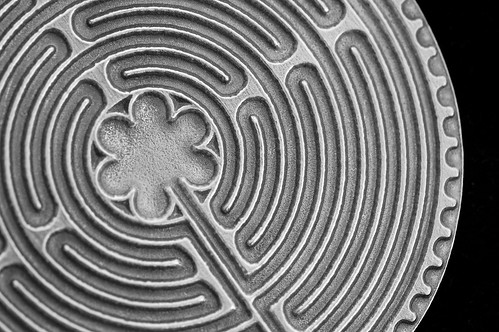
Chartres Labyrinth

Chartres labyrinth (Photo credit: Steve Snodgrass)


I was pleased to see Rambling Epicure contributor David Downie’s article on Gadling about the labyrinths of Chartres, the city that may just have more history than any in Europe, and about how its sacred sites continue to inspire people of many denominations and beliefs who travel from all over the world to soak up its telluric energy.
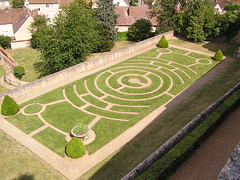
France, Chartres, Labyrinth

Labyrinth reproduction in the garden below the cathedral (Photo credit: hdes.copeland)

Outdoors in a panoramic park behind the famous cathedral of Chartres a teenage girl skipped along the concentric pathways of a grassy labyrinth. Other kids shouted and kicked a soccer ball. Young lovers simultaneously pecked at each other and the touchpads of their handheld devices, observed by curious onlookers.  

Most such onlookers in Chartres are day-trippers from nearby Paris: The capital is an hour’s ride east on a commuter train.

Click here to read rest of article.


vitrail de la cathédrale de Chartres

Stained glass in Chartres Cathedral


Never miss a post
Name: 
Your email address:*
Please enter all required fields
Correct invalid entries

The Many Colors of Corn: A Photo Essay

Published by Friday, July 5, 2013 Permalink 0


//

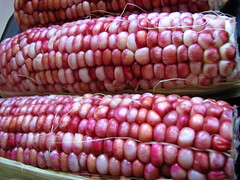
English: Black corn Español: Maíz morado

English: Black corn Español: Maíz morado (Photo credit: Wikipedia)

English: Cobs of corn

English: Cobs of corn (Photo credit: Wikipedia)

English: Green Oaxaca corn Français : Maïs ver...

English: Green Oaxaca corn Français : Maïs vert d’Oaxaca (Photo credit: Wikipedia)

red corn on the cob

red corn on the cob (Photo credit: MelanieAnneMarie)

Red corn, blue corn and cucumber seeds for sal...

Red corn, blue corn and cucumber seeds for sale in Fresno, California… (Photo credit: Nate Gray: A Culinary (Photo) Journal)

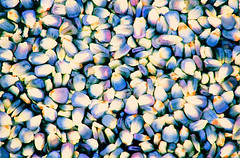
Blue Corn

Blue Corn (Photo credit: Big Grey Mare)

English: From left to right, haba beans, haba ...

English: From left to right, haba beans, haba beans, blue corn and white corn for sale at a tianguis market in Metepec, Mexico State. (Photo credit: Wikipedia)

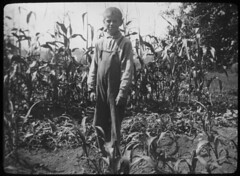
Boy in corn field, Woodbine, New Jersey

Boy in corn field, Woodbine, New Jersey (Photo credit: Center for Jewish History, NYC)

Public relations of high-fructose corn syrup

Public relations of high-fructose corn syrup (Photo credit: Wikipedia)

English: A display of six ears of field corn w...

English: A display of six ears of field corn with dented yellow kernels (Zea mays var. indentata) which won ribbons for “best of show” at the Steele County Fair in Owatonna, Minnesota (Photo credit: Wikipedia)


Never miss a post
Name: 
Your email address:*
Please enter all required fields
Correct invalid entries

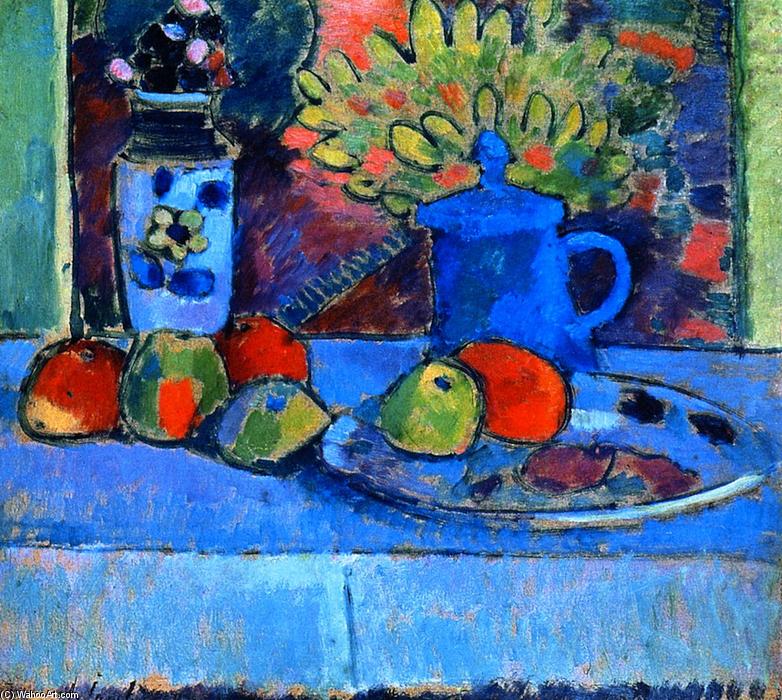
Food Art: Still Life with Flowers and Fruit, food painting by Alexej Georgewitsch Von Jawlensky

Published by Thursday, June 20, 2013 Permalink 0

Food Art: Still Life with Flowers and Fruit, food painting by Alexej Georgewitsch Von Jawlensky

Still Life with Flowers and Fruit, by by Alexej Georgewitsch Von Jawlensky (1864-1941, Russia), http://en.wahooart.com/@@/8YE2G9-Alexej-Georgewitsch-Von-Jawlensky-Still-LIfe-with-Flowers-and-Fruit


Alexej Georgewitsch von Jawlensky was a Russian expressionist who lived from 1864 to 1941. “He was a key member of the New Munich Artist’s Association (Neue Künstlervereinigung München), Der Blaue Reiter (The Blue Rider) group and later the Die Blaue Vier (The Blue Four),” says Wikipedia. There is very little biographical information about him in Western literature.

Every artist works within a tradition. I am a native of Russia. My Russian soul has always been close to the art of old Russia, the Russian icons, Byzantine art, the mosaics in Ravenna, Venice, Rome, and to Romanesque art. All these artworks produced a religious vibration in my soul, as I sensed in them a deep spiritual language. This art was my tradition.Alexej Georgewitsch Von Jawlensky


Never miss a post
Name: 
Your email address:*
Please enter all required fields
Correct invalid entries

Food Photography: Still Life with Lemon, by Nawfal Johnson Nur

Published by Wednesday, June 19, 2013 Permalink 0


Never miss a post
Name: 
Your email address:*
Please enter all required fields
Correct invalid entries

David Downie: Artful Parisian Pastry, Part 2: Paris Present

Published by Wednesday, June 19, 2013 Permalink 0

Parisian Artful Pastry, Part 2: Paris Present

by David Downie

The minimalism of contemporary pastry art can be spectacular. A Paris-trained American pastry chef friend of mine from New York came to dinner carrying a hatbox. She lifted the lid and everyone gasped. “It’s a pastry radiator,” I couldn’t help exclaiming. The “radiator’s” buttery pastry fins were filled with ethereal cream, shielded by dark chocolate plates and mounted on a hard nougatine U-shaped base reminiscent of Bakelite.

Classic chocolates from Jean-Paul Hévin ©Alison Harris

“Actually it’s a vertical millefeuille,” my friend explained as she heated the blade of a long knife—the only way to slice this incredible, gorgeous delicacy without destroying it.

The “radiator” turned out to be the conceptual-art brainchild of culinary designer Marc Brétillot, whose creations have often been spotted in the pastry department at the Bon Marché’s Grande Épicerie.

“Pastry is art,” Philippe Muzé, for a decade the wonder-worker at Paris’s bastion of traditionalism, Dalloyau, told me (he has since moved on and on and won many awards). “It’s poetry,” he added. “You can turn sugar, chocolate, herbs, spices and fruit into a million flavors and colors.” I hesitated before deconstructing his green Gâteau Vert, discovering a raspberry-colored biscuit, pear mousse, hot Szechwan pepper, cardamom, thyme and paprika.

Continue Reading…

Never miss a post
Name: 
Your email address:*
Please enter all required fields
Correct invalid entries

Jonell Eats her Way through Provence: A Photo Essay

Published by Tuesday, June 18, 2013 Permalink 0

Jonell Eats her Way through Provence: A Photo Essay

by Jonell Galloway

Tourettes-sur-Loup in France is the world capital of violets, and yes, you can eat violets. Candied, as you’ll see on my dessert in the photos; syrup; as jam (the stacked tins); and they even make violet pasta.

Never miss a post
Name: 
Your email address:*
Please enter all required fields
Correct invalid entries

Food Art: Rolling in the Beets, food photography by SandeeA

Published by Friday, June 14, 2013 Permalink 0

Food Art: Rolling in the Beets, food photography by SandeeA

SandeeA does original, exciting food photography, always in a playful manner. A woman of many talents, she is also author of our Food Play column. She writes in both English and Spanish and runs the popular food blog La Receta de la Felicidad, where you can find the recipes for these beautiful creations.

Continue Reading…

Never miss a post
Name: 
Your email address:*
Please enter all required fields
Correct invalid entries

Food Art: White Chocolate & Speculoos Mousse, food photography by Meeta Khurana Wolff

Published by Wednesday, June 12, 2013 Permalink 0

Food Art: White Chocolate & Speculoos Mousse, food photography by Meeta Khurana Wolff

See more food photo compositions at Meeta K. Wolff or in our Food Art category.

Bio of Meeta Khurana Wolff

Meeta, that’s my name given to me by my dad. I was born back in the summer of 1972, one beautiful day in Bombay, India. I was practically delivered in a hotel. That’s where my father has worked for most of his life and it’s what injected the hotelier’s blood into my veins. This hotel lifestyle enabled me to travel the world, get close to many cultures, learn a few languages, and experience many great adventures.

Knowing only a hotel life, I decided to follow my dad’s footsteps and studied Hotel Management, specializing in Marketing and Guest Relations. I trained in one of the finest luxury hotels of this world in Doha, Qatar. That is when a tiny spark for food was ignited in my soul.

I now have settled down in Germany, with the two men I adore, Tom, my loving partner for almost 10 years, and Soeren my adorable son of 5 6 7 years.

Hotels are not a part of my life in Germany. After graduating I came to Germany and worked in an advertising firm, an architecture and design firm and a couple of software firms. Don’t ask how that came about – it just happened. Glad it did too because along this path I bumped into and fell in love with Tom.

We are now in Weimar and you’ll laugh when I tell you this my traveling feet have begun to itch again! Let’s see where life takes us.

I love photography, always have, but it was with the start of this blog that I discovered the world of Foodography. Since then the passion for photography I developed has taken a complete new angle and opened so many exciting doors. I try to capture shots that speak a thousand words, that makes one feel as if they were a part of the scene and experience the photo with their senses. You tell me if I am succeeding!

You can see more of Meeta’s work at What’s For Lunch Honey.


Never miss a post
Name: 
Your email address:*
Please enter all required fields
Correct invalid entries

Culinary Travel: Jonell Eats her Way through Paris in June, a Photo Essay

Published by Friday, June 7, 2013 Permalink 0


There’s no better time to eat your way through Paris than in June. It is abundant with local fresh fruits and vegetables, sunshine and flowers. It’s a sensual experience that one must experience at least once in a lifetime.

This slide show gives you a glimpse of just how beautiful and sensual it is. Enjoy.


Never miss a post
Name: 
Your email address:*
Please enter all required fields
Correct invalid entries

Food Art: The Incredible Sensuality of Lemons and Pomegranates, painting by Gerard van Honsthorst

Published by Thursday, June 6, 2013 Permalink 1


Gerard van Honsthorst was born in Utrecht in the Netherlands in 1590, the son of a textile painter and tapestry cartoonist. Like many Dutch painters of his day, he studied in Italy, where he became known as Gherardo delle Notti, or “Gerard of the Night Scenes,” because his figures often depicted dark figures in the night.

Van Honsthorst was apprenticed to Abraham Bloemaert, the most celebrated master in Utrecht, with whom he probably made the trip to Italy between 1610 and 1615. During his stay in Italy, Van Honthorst was influenced by Caravaggio, who was at his height. He copied his technique and spread it in the Netherlands. His school is referred to as the Utrecht caravaggists.

The main body of his work consists of commissions for religious paintings, many from his Italian period, such as The Beheading of St. John the Baptist (S. Maria delle Scala, Rome), Christ Before the High Priest (c. 1617, National Gallery, London), and the Supper Party (1620, Uffizi, Florence), all nocturnal scenes.

Van Honsthorst was appointed dean of the Utrecht painter’s guild in 1625 and remained in office for many years. Van Honthorst’s fame soon spread, and in 1628 he was invited to work in London at the court of King Charles I, but returned in less than a year.

He married Sophia Coopmans in 1622 and died a rich man in 1656.


Never miss a post
Name: 
Your email address:*
Please enter all required fields
Correct invalid entries

UA-21892701-1