
Maria Vos was a Dutch still life and landscape painter who lived from 1824 to 1906.
Related articles
|
|

A Literary Culinary Journal
Maria Vos was a Dutch still life and landscape painter who lived from 1824 to 1906.
|
|

Cecco del Caravaggio (1571-1592) was born in Milan, from which he fled in 1596 to avoid the plague. He worked as apprentice for the Lombard painter Simone Peterzano for four years. His contract there listed that he was a pupil of Titian. He lived in Rome from 1592 to 1600, forging many great artists. The realism and dramatic intensity of many of his paintings was thought to be vulgar by many Romans, and even painters were divided by its distinct nature which opposed that of most other Roman artists. Nevertheless, between 1600 and 1606, he was considered Rome’s most famous painter.
Caravaggio was known for getting into scuffs, even in a time where this was commonplace. On May 29, 1606, “he killed, possibly unintentionally, a young man named Ranuccio Tomassoni. Previously his high-placed patrons had protected him from the consequences of his escapades, but this time they could do nothing. Caravaggio, outlawed, fled to Naples.” He went from becoming the most highly regarded painter in Rome to being the most highly regarded painter in Naples. Soon after, he left for Malta. The rest of his life was darkened by brawls and scrapes with the law.
A wonderful biography of Caravaggio’s life can be read here.
|
|

The artist Caravaggio had a profound influence on figurative painting. He was a rebel who shocked the established art world with every painting. His use of prostitutes for models of Mary and his depiction of saints in common dress outraged the church. He even killed a man over a tennis match. His life was short and he died in exile. After his death, his detractors attributed lesser paintings to him and many of his greatest works were claimed by other artists. Even today, mystery and controversy surround him and his work but there is no denying his amazing talent.–Sharon Weaver
|
|
//

 by Renu Chhabra
“Salt is born of the purest of parents: the sun and the sea.” –– Pythagoras

Pass the salt please.
We hear this often while eating meals. I sometimes think what life in the kitchen would be without salt. Nature’s pure offering and staple of any pantry! It’s one ingredient that can put life in any recipe. Just a pinch of it does wonders. But it’s the right amount of it, according to one’s taste buds that makes a recipe sing….. not too much or too little. Hence the term, “salt to taste.”
Some overly salty feta cheese was the center to make this dip. It was too salty for our taste buds. Really salty. And wasting it seemed unnecessary. To give it a new life, I combined it with a few ingredients on hand. A can of unsalted garbanzo beans worked well to mellow the saltiness of the feta. Parsley added color and freshness, and dill enhanced it with its delicate flavor. Lemon juice and garlic brought all the flavors together. I finished it with olive oil and a sprinkle of sumac.
|
|
ilian began his career in photography as a news photographer before moving to London and starting a new career in commercial photography, developing his own unique style, balancing commercial appeal with an acutely artistic eye.
He has over 15 years’ experience working in editorial and commercial projects, specialising in food and drink, still life and product photography, both locally and internationally. He shoots from his Cheshire-based kitchen studio. His clients are magazines, hotels, restaurants and food companies such Mornflakes, Felicini Restaurants, Metropolitan Hotel, Casino Flamingo, AstraZeneca, Manchester University, Sofia airport, etc.
His work appears in BBC GoodFood, Olive, Professional Photographer, Digital Photographer and The Rock magazines. His style is simple, clean and graphic, based on natural light. A passionate and talented cook himself, the enjoyment ilian takes from food and drink shines through in his images.
Click to see more of ilian’s outstanding work.
ilian has had more than ten solo photo exhibitions, the most successful ones being:
1998 ”Old Houses” – Sofia and 1999 Los Angeles
1999 “War in Kosovo” – Sofia
2000 “Mount ATHOS” – Sofia, London, Vienna, Thessaloniki, Warsaw, Bratislava and Plovdiv
2004 ‘Ballet Portraits’ – Sofia
2012 “Edible Art” – London, Moscow, Manchester, St. Petersburg, Sofia
|
|

For Lail Hossain, cooking is an explosion of creativity. As a busy working mom, she is enthusiastic about modifying a laborious step of an old recipe, and experimenting with different ethnic recipes by adding her own spin to it, yet keeping the recipes simple, healthy, and delicious. Originally from Bangladesh, a committed lover of family, food and creativity, Lail shares her journey in her blog With A Spin. She is also very passionate about introducing Bangladeshi cooking to the international culinary scene.
|
|
by Renu Chhabra
Food is capable of feeding far more than a rumbling stomach.–Anthony Beal

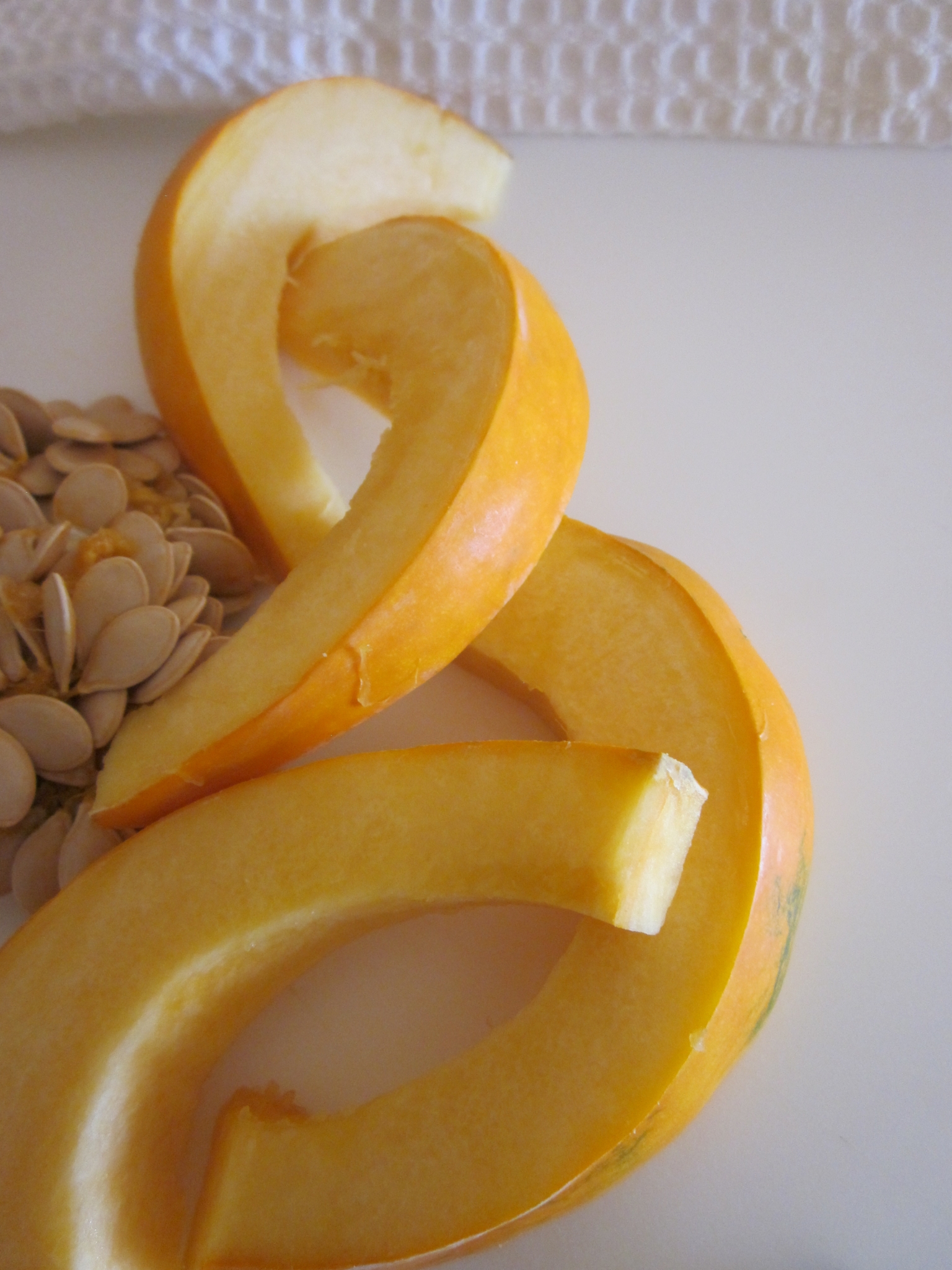
I have seen this acorn squash change from deep green to light golden on my kitchen counter over the last two weeks. Waiting for my much needed attention, it endured the neglect. I had a new idea about how to cook it every time I looked at it, so I would set it aside for yet another day. I loved seeing it sitting there turning into this beautiful objet d’art with a new stroke of color every day.
I enjoyed the the entire process, from start to finish, just as Monet enjoyed painting the same haystacks and façades day after day, in different lights.
Who would have thought a simple experience like this could also bring such curiosity? Every time I looked at it, I wondered if it would survive another day. Or would another stroke of green be lost. I touched it, inspected it, and set it aside, saying to myself, “I will make something tomorrow. Definitely.”
And it waited patiently for me, just like the Rouen Cathedral waited for Monet, looking more beautiful each day, and maintaining its freshness!

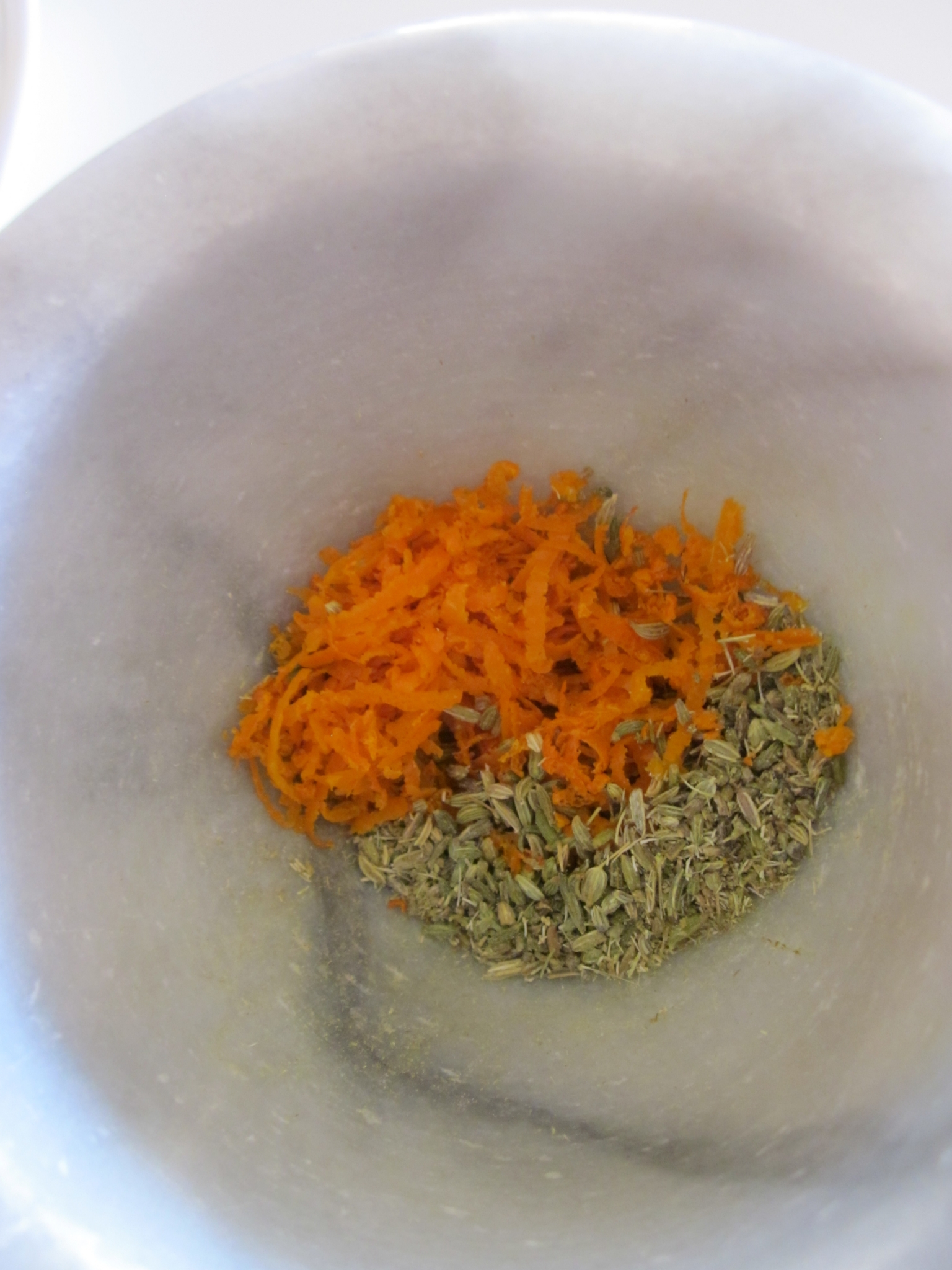
With half a dozen ideas in my mind about how to cook it, I settled for a simple recipe of roasting it and flavoring with some sweet and fragrant flavors like orange zest and toasted fennel seeds. I then combined the two with sweet paprika and sea salt to make a spice blend to toss into after roasting. Another wonderful spice blend with citrus! My new year started with spice blends.
After tossing the roasted squash, I finished it with a garnish of freshly ground cumin and parsley and a squeeze of lemon (optional). Simple and flavorful, this recipe takes very little time to make. If you have any left over, use it in your favorite grain or salad.
Herbs and spices are good for our health. Fennel seeds have wonderful healing qualities. They help digestion and have antioxidant properties. Fennel is also chewed as mouth freshener. I sometimes make fennel tea that is quite relaxing. Have it with a little honey. It’s delicious and calming.




|
|

Frida Kahlo’s Casa Azul is filled with Mexican folk art and crafts, like the pottery she used to make this mosaic in the kitchen:

English: Museo Frida Kahlo in the Casa Azul (Photo credit: Wikipedia)
|
|
I have been passionate about food for a long, long time now. The creative door was pushed wide open for me in the 1970’s – working as a young commis chef at the Carlton Tower Hotel in London. An inspirational chef, Bernard Gaume, at the forefront of UK Cuisine Nouvelle – in its correct context as taught by Fernand Point and further developed by Michel Gérard, Roger Vergé and the Troisgros brothers; not the misunderstood object of derision it later became. But oh, the ingredients! Live langoustine and crayfish every week, baskets of wild mushrooms in season, direct from France and the fish! So fresh and always whole and untouched until we got our hands on them. And the herbs, boxes of intensely fragrant basil and tarragon and my own favourite chervil whose subtlety belies a very happy marriage with eggs and cream. Ingredients that are sirens to the soul, how could one not fall in love with cooking? I should mention foie gras too – for which (and I make no apology) I have developed a life-long passion. I never thanked M. Gaume – and I should like to, I owe him a lot; he got me started.
A new chef joined us – Ian McAndrew – a brilliant chef of his generation, who was kind enough to introduce me to Anton Mosimann at the Dorchester Hotel and the journey began again, lifting me to new heights and experiences. This quietly charismatic chef had incredible vision and a passion for the best ingredients that was so infectious. Special moments were travelling with Hr Mosimann to the Dracula Club in St Moritz to cook a special dinner for 50 people, and competing in the Culinary Olympics in Frankfurt (and winning gold) as part of the Dorchester Hotel team. There is a picture of me (with others) in The Essential Mosimann; I didn’t know this when the book was first published and only saw it years later. It brought back many happy memories!
On my return from a season at the Hotel Kulm in St Moritz, I applied for, and got, a position at the Connaught Hotel in London. Michel Bourdin was only the 4th Head Chef there in 80 years and the kitchen was steeped in history, tradition, experience and…truffles! These have since been added to my list that includes foie gras – nothing, and I mean absolutely nothing, compares to the aroma of a wicker basket full of fresh truffles. Almost impossible to describe flavour or aroma – and I have been asked many times. Holder of two Michelin stars, the passion M. Bourdin held was so tangible and visible – Hr Mosimann and M. Gaume had this too, but it was quieter, controlled. With M. Bourdin it was always bubbling on the surface in a way that was exciting and very Gallic!
I worked at the Carlton Tower and Connaught twice, the Dorchester only once, but for a longer period. Although there were other good kitchens, it is these three brilliant and great chefs that nurtured my love of food.
And so on to photography. A passion developed later in life, and one I wished I’d started much earlier. So much thought goes into the way a chef wants to present a dish and yet it is eaten so quickly! A photograph preserves that moment in time, yet if the food is to be eaten as well, the opportunity to get the shot is as fleeting as a landscape photographer catching the dying rays of the setting sun. Food ingredients themselves also offer endless scope for photography, whether a macro shot of mushroom gills or a beautifully back-lit rhubarb leaf or colourful stems of rainbow chard. The photograph gives us the opportunity to show our appreciation and respect for fine ingredients in a way that presents them at their best and stimulates our senses.
Whether a finished dish, a beautiful ingredient or the people that inspire, food photography should seek to convey that passion and make us hungry for more!
You can see more of Rob’s work at Real Food Photography.
|
|
 Meet Jonell Galloway, a freelance writer and editor specialized in French cuisine.


