Simple Sustenance: For Breakfast or Dessert — Yogurt with Sweet Spices and Rose Petals

Published by Monday, April 29, 2013 Permalink 0

by Renu Chhabra

Food is art and magic; it evokes emotion and colors memory, and in skilled hands, meals become greater than the sum of their ingredients. Anthony Beal

IMG_7347

Sweet spices like cardamom and fennel, rose petals and rose water, pistachios and golden raisins

I am loving it already.

Flavors and scents I can taste and sense just by the mention of their names! They are very close to my heart. I grew up around them, or I can say I was often surrounded by them.

Cardamom and fennel used in sweet and savory dishes perfumed our kitchen with their intoxicating aroma. Rice pudding, pilaf, spiced tea, rich sauces, and several sweets are just a few to name. Rose petals and rose water to greet guests on special occasions, or simply to flavor sweets and drinks, made every experience memorable.  Nuts and dried fruits in creamy sauces or in decadent desserts stamped food tastes forever in my mind.

Do I need say that I cherish these scents and flavors? We all have experiences from childhood, interwoven with lots of love and memories close to our hearts.

1 cup plain yogurt (Greek or regular)

1 green cardamom

Continue Reading…

Never miss a post
Name: 
Your email address:*
Please enter all required fields
Correct invalid entries

Simple Sustenance: Flavors of the Mediterranean — Parsley, Dill, and Bean Dip with Feta

Published by Wednesday, March 13, 2013 Permalink 0


//


by Renu Chhabra

“Salt is born of the purest of parents: the sun and the sea.”Pythagoras

IMG_6898

Pass the salt please.

We hear this often while eating meals. I sometimes think what life in the kitchen would be without salt. Nature’s pure offering and staple of any pantry!  It’s one ingredient that can put life in any recipe. Just a pinch of it does wonders. But it’s the right amount of it, according to one’s taste buds that makes a recipe sing….. not too much or too little. Hence the term, “salt to taste.”

Some overly salty feta cheese was the center to make this dip. It was too salty for our taste buds. Really salty. And wasting it seemed unnecessary. To give it a new life, I combined it with a few ingredients on hand. A can of unsalted garbanzo beans worked well to mellow the saltiness of the feta. Parsley added color and freshness, and dill enhanced it with its delicate flavor. Lemon juice and garlic brought all the flavors together.  I finished it with olive oil and a sprinkle of sumac.

Continue Reading…

Never miss a post
Name: 
Your email address:*
Please enter all required fields
Correct invalid entries

Simple Sustenance: Roasted Acorn Squash with Fennel Seeds

Published by Tuesday, March 5, 2013 Permalink 0

by Renu Chhabra


Food is capable of feeding far more than a rumbling stomach.–Anthony Beal

IMG_6838

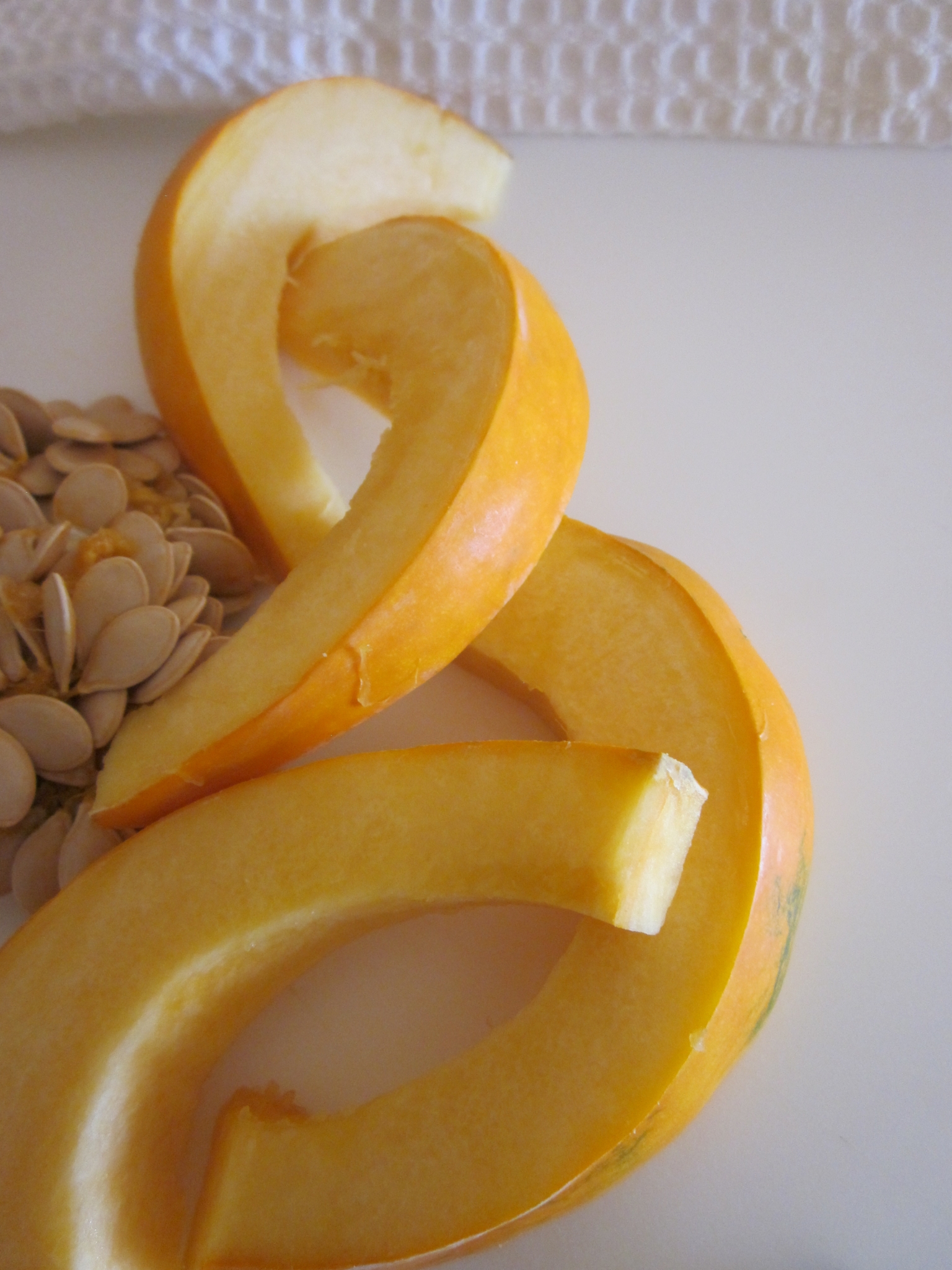
I have seen this acorn squash change from deep green to light golden on my kitchen counter over the last two weeks. Waiting for my much needed attention, it endured the neglect. I had a new idea about how to cook it every time I looked at it, so I would set it aside for yet another day. I loved seeing it sitting there turning into this beautiful objet d’art with a new stroke of color every day.

I enjoyed the the entire process, from start to finish, just as Monet enjoyed painting the same haystacks and façades day after day, in different lights.

Who would have thought a simple experience like this could also bring such curiosity? Every time I looked at it, I wondered if it would survive another day. Or would another stroke of green be lost. I touched it, inspected it, and set it aside, saying to myself, “I will make something tomorrow. Definitely.”

And it waited patiently for me, just like the Rouen Cathedral waited for Monet, looking more beautiful each day, and maintaining its freshness!

IMG_6751

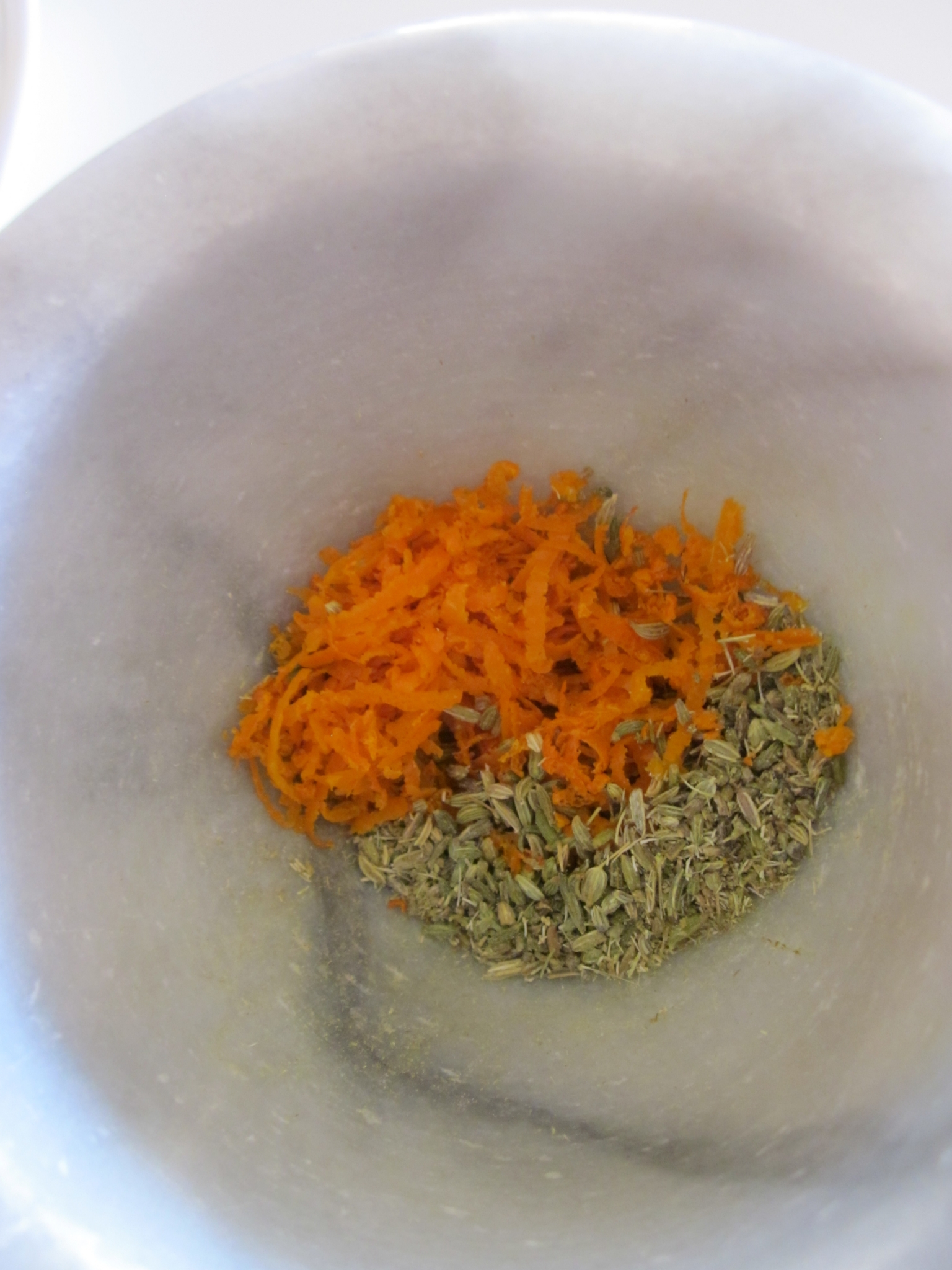
With half a dozen ideas in my mind about how to cook it, I settled for a simple recipe of roasting it and flavoring with some sweet and fragrant flavors like orange zest and toasted fennel seeds. I then combined the two with sweet paprika and sea salt to make a spice blend to toss into after roasting. Another wonderful spice blend with citrus!  My new year started with spice blends.

After tossing the roasted squash, I finished it with a garnish of freshly ground cumin and parsley and a squeeze of lemon (optional). Simple and flavorful, this recipe takes very little time to make. If you have any left over, use it in your favorite grain or salad.

Herbs and spices are good for our health. Fennel seeds have wonderful healing qualities. They help digestion and have antioxidant properties. Fennel is also chewed as mouth freshener. I sometimes make fennel tea that is quite relaxing. Have it with a little honey. It’s delicious and calming.

IMG_6768IMG_6781

IMG_6794IMG_6805

IMG_6808IMG_6811

Continue Reading…

Never miss a post
Name: 
Your email address:*
Please enter all required fields
Correct invalid entries

Simple Sustenance: Quick and Easy Recipe — Goat Cheese and Avocado Toast with Pumpkin Seeds

Published by Wednesday, February 27, 2013 Permalink 0

by Serrano chilli, seeds removed and minced (optional)
Sea salt to taste
2 large slices of rustic whole wheat bread or of your choice
1 large clove of garlic, sliced in half
Extra virgin olive oil
2-3 oz. goat cheese or to taste
2-3 tablespoons yellow peppers, diced small
1 tablespoon unsalted roasted pumpkin seeds
Few mint leaves

In a bowl, mix avocado and lime, Add serrano chilli if you want a little heat. Add salt and set aside.

Instructions

Toast the bread slices and rub garlic on them while they are warm. Spread goat cheese to taste. Top with avocado mixture. Drizzle a little olive oil. Adjust salt to taste.

Garnish with orange peppers and pumpkin seeds.

Finish with mint leaves.

Eating is really one of your indoor sports. You play three times a day, and it’s well worth while to make the game as pleasant as possible.– Dorothy Draper

  • A warm toast with creamy goat cheese

    Two ingredients that create magic for our taste buds. I know they create for me!

    Goat cheese pizza or goat cheese panini, paired with some vegetables or fruits, they complement each other well. A drizzle of fruity extra virgin olive oil or a drizzle of aged balsamic, they add another dimension to the duo. Garnish of fragrant herbs add more flavor to them.

    I have been enjoying warm toast with a generous spread of goat cheese topped with a healthy dose of avocado. The two together with rustic bread are a perfect combination of rich creaminess and a hearty bite. For this recipe, I topped it with some orange peppers and roasted pumpkin seeds.  A little color and a little crunch. Mint added fresh flavors to this recipe.

    It is a quick and easy lunch with some salad greens.

    There are no set measurements for this recipe. Make it to your taste. Use as much or as little goat cheese or avocado. I have been on a joyride of enjoying the two generously. One large toast loaded with all the goodness was my lunch. You make it a meal or a small bite. Savor it slowly, a nibble at a time.

    Recipe

    Ingredients

    1 large avocado, mashed chunky
    Squeeze of lime to taste
    ½ Serrano chilli, seeds removed and minced (optional)
    Sea salt to taste
    2 large slices of rustic whole wheat bread or of your choice
    1 large clove of garlic, sliced in half
    Extra virgin olive oil
    2-3 oz. goat cheese or to taste
    2-3 tablespoons yellow peppers, diced small
    1 tablespoon unsalted roasted pumpkin seeds
    Few mint leaves

    In a bowl, mix avocado and lime, Add serrano chilli if you want a little heat. Add salt and set aside.

    Instructions

    Toast the bread slices and rub garlic on them while they are warm. Spread goat cheese to taste. Top with avocado mixture. Drizzle a little olive oil. Adjust salt to taste.

    Garnish with orange peppers and pumpkin seeds.

    Finish with mint leaves.

    , seeds removed and minced (optional)
    Sea salt to taste
    2 large slices of rustic whole wheat bread or of your choice
    1 large clove of garlic, sliced in half
    Extra virgin olive oil
    2-3 oz. goat cheese or to taste
    2-3 tablespoons yellow peppers, diced small
    1 tablespoon unsalted roasted pumpkin seeds
    Few mint leaves

    In a bowl, mix avocado and lime, Add serrano chilli if you want a little heat. Add salt and set aside.

    Instructions

    Toast the bread slices and rub garlic on them while they are warm. Spread goat cheese to taste. Top with avocado mixture. Drizzle a little olive oil. Adjust salt to taste.

    Garnish with orange peppers and pumpkin seeds.

    Finish with mint leaves.


    • Never miss a post
      Name: 
      Your email address:*
      Please enter all required fields
      Correct invalid entries

A Summary of All the Top 10 Cookbook 2012 lists in the U.S.

Published by Saturday, December 22, 2012 Permalink 0

Kathleen Finn pointed out this roundup of 2012’s Best Cookbooks: A Meta List of Listicles. It’s a nice, brief overview, so I thought I’d share it.

Kathleen Flinn

Kathleen Flinn (Photo credit: NCBrian)


Never miss a post
Name: 
Your email address:*
Please enter all required fields
Correct invalid entries

What to Eat in Switzerland: A Geneva Christmas: Longeole Sausage

Published by Friday, December 21, 2012 Permalink 0

by Jonell Galloway

From the archives

Christmas traditions in Switzerland

One should never think that everybody in Switzerland eats the same thing for Christmas dinner. With four languages and a multitude of “mini-cultures” tucked away its various mountain niches, and with a huge international population, Switzerland may well have more Christmas menus than any other country in the world.

In the French-speaking part of Switzerland, Geneva’s traditions are quite apart from the Vaud, for example, due to the late date Geneva finally decided to become part of Switzerland. Geneva traditions are often more influenced by their Savoyard and French neighbors, since they share about 100 km of border with them and only 5 km with canton Vaud.

What’s so special about a Longeole?

Many Genevois eat a sausage specific to Geneva called longeole. Every region and many villages have their own sausage recipes, but the longeole is quite apart from the others for several reasons.


Longeole sausage and potatoes cooked in
white wine, a Geneva Christmas specialty.


For one thing, it contains not only ground pork but also ground pork rind. This keeps it from drying out and gives it fuller flavor. The other, and quite major, difference is that that it is speckled with fennel seeds, probably a Savoyard influence.

Any good local butcher makes his own longeole. If not, it is advisable to find one who does. It’s Christmas, so you want to be certain it’s of good quality.

Cooking Longeole

Longeole is easy to cook, but you must allow yourself enough time. It takes longer to cook than other cooking sausages because of the addition of the pork rind, which is harder than simple ground pork.

Use a soup pot tall enough to hold your sausage. Fill with water and bring water to boil. Add a touch of salt. Drop in sausage, lower heat, and let it simmer for 2 hours 45 minutes or 3 hours. The water should be just on the verge of boiling during the whole cooking time. It is then ready to slice and eat.

Some cooks prick the Longeole with a fork before cooking, but purist that I am, I think you risk losing some of the juices, which would take away from the flavor and make the sausage less succulent in the mouth. It is also important not to let it boil, because this too will dry it out.

What do Genevois eat with Longeole?

Like everywhere, different families have different traditions, different favorites, but the most common accompaniments are potatoes cooked in white wine, lentil stew and cardoon gratin, all Geneva specialties as well.

Continue Reading…

Never miss a post
Name: 
Your email address:*
Please enter all required fields
Correct invalid entries

What to Eat in Switzerland: A Geneva Christmas: White Wine Potatoes

Published by Friday, December 21, 2012 Permalink 0

A Geneva Christmas: White Wine Potatoes Recipe

by Jonell Galloway

From the archives

English: Jet d'Eau, Geneva

In A Geneva Christmas: Longeole sausage, I think I got your mouth watering talking about longeole, or fennel seed sausage. But did you see the potatoes in the photo? That’s THE essential side dish: potatoes cooked in broth and white wine.

I translated and adapted this recipe from A la mode de chez nous, Plaisirs de la table romande, a book on cooking in French-speaking Switzerland, by M. Vidoudez and J. Grangier.

Recipe

A Geneva Christmas-white wine potatoes-Longeole-recipe-Switzerland-the rambling epicure-jonell galloway-genevalunch-traditional dish

Longeole sausage served with
potatoes cooked in white wine and broth

Ingredients

1 kg / 2.2 lbs type 2 all-purpose potatoes
Olive oil, just enough to lightly coat potatoes
1 tablespoon spelt flour (farine d’épeautre), or otherwise whole wheat
240 ml / 1 cup chicken broth
1 onion, diced
1 laurel leaf
3 whole cloves
300 ml / 1 1/4 cup dry white wine
1 bouquet garni
Fresh parsley, chopped
Salt and pepper to taste

Instructions

Fennel-flavored Longeole sausages for Christmas, made by Jacky Bula butcher in Geneva


  1. Scrub potatoes. If you really don’t like potato peels, or your potatoes have lots of black spots on them, peel them. Just remember: all the fiber and vitamins are in the peel.
  2. Chop potatoes into large cubes. Put potatoes in a large saucepan. Coat lightly with olive oil and mix well.
  3. Sautée for 2 or 3 minutes, stirring constantly.
  4. Heat broth. Pour hot broth over potatoes. Add chopped onion, laurel, cloves, salt, pepper and bouquet garni. Bring to a boil. Cover, then lower heat and let it boil gently.
  5. Cook until potatoes are soft, about 15 or 20 minutes, depending on the kind of potato and the kind of pan.
  6. While the potatoes are cooking, mix flour and olive oil in a small utility bowl, until it becomes a smooth paste. Add a couple tablespoons of the hot broth from the potatoes to paste, and beat with wire whip until smooth.
  7. Add paste to potatoes, and beat gently with a wire whip. When smooth, add white wine.
  8. Continue cooking, stirring often so that it doesn’t stick, and gently boiling until the sauce starts to thicken.
  9. Taste. Add salt and pepper if required.
  10. Sprinkle with chopped parsley when serving. Traditionally, in Geneva this is served with longeole sausage at Christmas, but it goes well with many dishes, for example a smoked cooking sausage from the canton of Vaud.

Cooking notes:  I use a Kuhn Rikon Durotherm to maintain the vitamins and decrease cooking time. This also allows you to use less liquid, which gives a more intense flavor. In this case, you would use just enough broth to cover the potatoes.

Continue Reading…

Never miss a post
Name: 
Your email address:*
Please enter all required fields
Correct invalid entries

What to Eat in Switzerland: A Geneva Christmas: Cardoon Gratin Recipe

Published by Wednesday, December 19, 2012 Permalink 0

by Jonell Galloway

From the archives


Cardoon gratin is a classic Geneva Christmas dish, but only brave souls should try to prepare them because they are prickly, and the preparation can be long and tedious. Many farmers markets in Switzerland now sell them prepared sous vide, in plastic vacuum-packed packages, which is probably the best option for those who don’t get a thrill out of getting a few pricks. In any case, it is important to schedule it carefully into your meal preparations, because it is time-consuming any way you go about it.

Cardoon Gratin Recipe

Preparation of Cardoons for Gratin

  1. Throw out any hard stems and any that are wilted.
  2. Peel the cardoons by removing leaves, spines and stringy parts. The exterior will then be covered with a fuzzy layer. Use a cloth to rub stalks gently to remove fuzz.
  3. Cut stems into 8 cm (3 cm) slices. Rub with lemon, or if you intend to use them later, put slices into lemon water so they won’t turn dark.
  4. You now have two choices: you can either cook them in a white vegetable broth you’ve made ahead of time, or you can cook them in the lemon water you soaked them in.
  5. Bring to a boil and boil until tender. It should take about 30 minutes for them to become tender, but if they are larger in diameter it can take up to 2 hours, so allow plenty of time.

Recipe


All these steps can be carried out while the cardoons are cooking. There are actually several ways of doing this. You can either make a Béchamel (white) sauce and sprinkle cheese on the cardoons before you put them in the oven, or you can make a Mornay (cheese) sauce and pour it on the cooked cardoons before putting in the oven to brown. I think it’s tastier to make a Mornay sauce, and then sprinkle a bit of cheese on the top before putting it in the oven. Here’s my recipe.

Ingredients

Click here for British/American/metric recipe converter

Approximately 1 kg of cardoons
30 g of butter
1 tablespoon of flour
2.5 dl of whole milk
1 dl of cream
50 g of cheese, type Gruyère or Swiss (see photo below), grated
Lemon juice, freshly squeezed
Salt and pepper to taste
 

Emmentaler (also known as Swiss Cheese), while...


DIRECTIONS

  1. Make a Béchamel sauce, using the proportions of ingredients above.
  2. When finished and seasoned, add cream and cheese, setting aside a tablespoon of cheese. Set aside.
  3. Preheat oven to 250° C.
  4. Once cardoons are tender, drain, making sure all water is drained off.
  5. In a large bowl, mix cooked cardoons and Mornay sauce.
  6. Pour into a baking dish of the appropriate size, so that there is a layer of about 3 cm high.
  7. Sprinkle evenly with remaining grated cheese and a few knobs of butter.
  8. Put in hot oven for 15 to 20 minutes, or until golden brown.

Notes: It is important to use a hard, Swiss-type cheese. Cheddar cheese would have too strong of a taste. If you can’t find cardoons, the same recipe can be made with Swiss chard, thus eliminating the long, meticulous preparation. Simply cut them as for the cardoons and cook in chicken broth until tender, then follow the other steps in the recipe for making the gratin. Its texture is quite similar to that of cardoons.

Related articles


Never miss a post
Name: 
Your email address:*
Please enter all required fields
Correct invalid entries

Food Art from Simple Sustenance: Brussels Sprouts, a food photography exhibit

Published by Monday, December 17, 2012 Permalink 0

by Renu Chhabra

All the gifts are nothing. Money gets used up. Clothes you rip up. Toys get broken up. But a good meal, that stays in your memory. From there it doesn’t get lost like other gifts. The body it leaves fast, but the memory slow.–Meir Shalev

IMG_6405

Brussels sprouts, the tiny cabbage-like vegetable!

We all  know what  they are. Right? The ones that show up at the holiday table among other delicious and indulgent dishes. Some of us wonder why are they here when we have so many other goodies to enjoy.

Yes, it’s our love hate relationship with brussels sprouts.

But they come to us with good intentions and mean well for our health.

Brussels sprouts are from cruciferous family of vegetables like cauliflower, broccoli, cabbage, and bok choy, known for several health benefitsThese vegetables are big players in cancer prevention and lowering cardiovascular risks. And brussels sprouts are the proud members of this respectable family.

Give them a little love and they will treat you well.

IMG_6360IMG_6366

IMG_6361IMG_6405

IMG_6408IMG_6411

IMG_6420IMG_6440

IMG_6439IMG_6437

IMG_6434IMG_6442

IMG_6440

Enjoy this simple recipe with choice of your favorite flavors and garnish.


Never miss a post
Name: 
Your email address:*
Please enter all required fields
Correct invalid entries

My Favorite Hanukkah Foods: Grandma’s Latke Recipe

Published by Saturday, December 8, 2012 Permalink 0

by Warren Bobrow

From the archives

Hanukkah recipes are passed down from generation to generation. There are hundreds of recipes floating around on the Internet, but I thought it best to consult a friend with trained taste buds. Here is what Warren Bobrow has to say.–Jonell Galloway, Editor

My Favorite Hanukkah Foods

Of all the holiday foods I look forward to, there are two dishes that clearly connect my stomach to the past. The first is a rousing bowl of matzo ball soup. The other, specifically a Hanukkah dish, is a plate of crispy potato latkes, cooked in a heavy cast iron pan.

Ur-Bubby’s Latkes

I forewarn you. This is a Jewish story, so it is repetitive and sometimes fahklumpt (a confused story, for those who are not in the know), told by a kvetch (a complainer) who secretly loves life and food and words and work, and tells a story full of fond memories.

My great-grandmother Yetta made excellent latkes. During these eight days of Hanukkah (eight chances to get it right . . . to be exact), we celebrate the past by reliving these flavors and the stories that go with them each time we bite into a steaming morsel of grated potato, egg, onion and a bit of vegetable oil, made straight from her recipe.

Generations of cooks have grated potatoes for latkes in celebration of Hanukkah. You will not be the first or the last. And every family has their own special recipe, their own special stories.

Bubby Yetta was particularly interested in not scraping her knuckles. Even so, she used to say that if you don’t catch your knuckle on the potato grater, the latkes couldn’t possibly taste good. Something about the physical act of grating potatoes already connects me to the old days when Bubby made the latkes every evening during Hanukkah.

Onions also resonate in my memory:  the tears that ran down her cheeks as she grated the onions were not tears of joy. We heard the same kvetching every year, and carry on as we make our own history.

Every day of Hanukkah, Ur-Bubby Yetta would scrape and grate until the job was done. Much hushed conversation would follow. Were the latkes going to be good?  If not, what would we do, there was no place in those days to buy frozen latkes in the supermarket!

And with each potato and onion grated, each tear fallen, each latke fried, another memory was made. Years of latke conversation would follow . . . How about the ones we made twenty years ago? Did potatoes taste differently then, or was it a specific taste that stuck in our memories?

So careful with the grater, and accept that you’ll invariably catch your knuckle at least once, and that you may well have the battle scars to prove that you made them from scratch. And stories to tell.

Recipe

Continue Reading…

Never miss a post
Name: 
Your email address:*
Please enter all required fields
Correct invalid entries

UA-21892701-1