On The Marcella Hazan Trail

Published by Monday, June 13, 2016 Permalink 0

On The Marcella Hazan Trail: Paschal Lamb or Abbacchio alla Cacciatora

Publication of Marcella’s last book, Ingredienti, on July 12, 2016, translated and edited by Victor Hazan

by Madeleine Morrow

At Easter Rome is bursting with pilgrims. They gather from across the Catholic globe and descend on the Eternal City like flocks of birds returning from their wintering grounds. Nuns cluster like crows, standing in line for the wonderful gelato, then swish down the narrow streets, rosaries jostling against coni.

I too visited Rome at Easter on a pilgrimage and, while my quest was corporeal, it was no less spiritual, for I had come in search of the Paschal Lamb. I wanted to cook Abbacchio alla Cacciatora. This dish of early spring lamb can only be prepared during a few short weeks as the lamb required is but one month old. The Italian sheep are a smaller breed to those farmed in the UK and, consequently, the lambs are smaller too. At their tender age, the lambs have only drunk milk. The thigh bone is no longer than that of a chicken drumstick. The meat is tender beyond description.

I discovered this dish while searching for recipes to prepare on a family holiday in Rome — as the old adage suggests, “when in Rome do as the Romans do.” My chosen recipe was from Marcella Hazan’s The Classic Italian Cookbook, a treasure trove of Italian cuisine. She describes the dish as a celebrated Rome speciality, which suggested to me that to cook it in Rome was imperative.

the classic italian cookbook marcella hazan italian cooking recipe book food Victor Hazan Ingredienti


On the morning of our anticipated feast, my family set out early for the Campo de’ Fiori where I expected to find the full list of my ingredients, as the market stalls and small shops surrounding the square sell every culinary delight one could need for a happy life. On arriving at the Campo, my young sons were immediately intent on securing football shirts before my attention was diverted. For the princely sum of 10 Euros apiece, they each walked off in a “fake” footie shirt bearing the name of Totti, Roma’s favourite son. Their attire had a magical effect as they were soon patted on the head and smiled at by every man we passed, from the local stall owner to the guards in the Vatican! The universal language of football and the passion it evokes is at least equal to the glories of cuisine amongst Italian men. Perhaps the food served up at the Stada di Roma is an improvement on the hotdog and chips ubiquitously sold to English football fans attending a game on home turf.

But what of the lamb? The Campo hosted a butchery stall where I explained my mission. The butcher set about chopping up the meat of tiny carcasses, not a sight for the squeamish or sentimental nor for vegetarians or the virtuous. The meat was delicately wrapped in greaseproof paper and settled in my shopping bag. I set off for the Salumeria in search of salted anchovies. The Italian delicatessen was an Aladdin’s cave filled with oils, vinegars and relishes of every kind. Huge hams formed a sculptural installation on the ceiling. Tiny tins contained exotic ingredients. There was an array of pancetta, prosciutto and other meats, fresh pasta of every hue and flavour, pesto and parmesan wheels, an endless store of delights to bring a rush of excitement to the most jaded palate.

cesaro eating abbacchio romana


The customers discussed their requirements with the shop assistants who acknowledged the importance of every purchase and handled the food courteously, each item wrapped with care. My request for salted anchovies led to a debate between two assistants as to which anchovy would be better suited to Abbacchio. A third joined in and asked to see my recipe which I had removed from my bag to check on whether any guidance was offered by Ms. Hazan herself. He shook his head gravely and announced to my fellow customers that he had never prepared Abbacchio in this way and that, in his opinion, the anchovies had no place in the dish. I decided to have the casting vote and soon 10 anchovies were laid out. My shopping trip gave slow food a new meaning. Every ingredient was deliberated over, the assistants presented as specialists in their field who contribute their knowledge to enhance the food that will end up later on your plate.

salt-packed anchovy creative commons photo serious eats


Although described as a dish that is slowly pot roasted, the cooking time was surprisingly short due to the tenderness of the meat. The lamb was browned in batches. Then salt, pepper, chopped garlic, rosemary and dried sage were added before the meat was dusted with flour. Once the meat had been turned and it had darkened, the vinegar was added. The recipe does not specify what sort of vinegar to use but I think that balsamic adds great value to meat and so in went more vinegar than seemed sensible. The aroma that filled the kitchen at that moment was exquisite and the gathering guests were drawn to the tiny galley to discover the source. The anchovies were mashed and added at the end of cooking, giving the sauce a salty punch.

Within an hour we sat to eat on a terrace up above the city, the weather warm enough, even on an April evening, for al fresco dining. The Chianti flowed and the conversation was convivial but it was the lamb that stole the show. Meltingly tender, the meat was basted in its sauce which married the sweet balsamic and salty anchovies with the garlicky back note of herbs. A simple accompaniment of fave alla romana was served. It is true that food is best enjoyed when much anticipated and I had been waiting all day. It was declared by many as the best lamb they had ever eaten and who am I to disagree? Even the football shirts proudly bore the stains of a meal well savoured.

The Abbacchio grows ever more delicious in my memory as the years go by, tormenting me with the knowledge that I cannot recreate it in my own kitchen. Perhaps I too will have to make an annual Easter pilgrimage to Rome. As for the football shirts, they unravelled on their first wash and Totti will someday be sold to a rival team. In a world where everything is transient and football heroes are fickle, my sons are learning that when it comes to food, some things don’t change and old traditions can always be relied on to provide enduring pleasure

__________________________

Madeleine Morrow is a freelance food and travel writer based in London and writes for several newspapers based in the U.S. and in South Africa. She also has two blogs. Kitchen Journeys (www.kitchenjourneys.net) has a focus on travelling with family in search of culinary adventure. It also covers restaurants reviews in London. From The Healthy Heart (www.fromthehealthyheart.com) has a focus on lowering cholesterol through eating delicious food. 

***

From the publisher Simon and Schuster’s website:

When Marcella Hazan died in 2013, the world mourned the passing of the “Godmother of Italian cooking.” But her legacy lives on, through her cookbooks and recipes, and in the handwritten notebooks filled with her thoughts on how to select the best ingredients—Ingredienti, coming out on July 12. Her husband and longtime collaborator Victor Hazan has translated and transcribed these vignettes on how to buy and what to do with the fresh produce used in Italian cooking, the elements of an essential pantry, and salumi, resulting in this new book.

Before you know how to cook, you must know how to shop. From Artichokes to Zucchini, Anchovies to Ziti, Ingredienti offers succinct and compelling advice on how to choose vegetables, pasta, olive oil, Parmigiano Reggiano, prosciutto, and all of the key elements of Marcella’s classic meals. Organic isn’t necessarily best, boxed pasta can be better than fresh. Marcella’s authoritative wisdom and surprising tips will change the way you cook. Her clear, practical guidance in acquiring the components of good cooking is helpful wherever you choose to shop—in supermarkets, farmers’ markets, specialty food stores, or online.

Based on sixty years of almost daily visits to the market to choose the ingredients of that day’s meal, Ingredienti is a life’s work, distilled—an expression of Marcella’s judgments, advice, and suggestions. Uncomplicated and precise, this volume will be essential to home cooks eager to produce meals in the same delicious style Marcella was the first to introduce to America.


Never miss a post
Name: 
Your email address:*
Please enter all required fields
Correct invalid entries

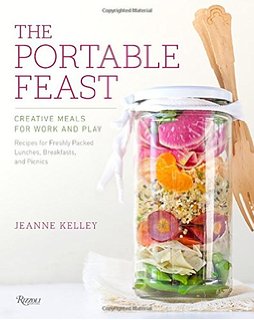
Book Review: The Portable Feast

Published by Tuesday, April 26, 2016 Permalink 0

Book Review: The Portable Feast, by Jeanne Kelley

by Jonell Galloway

The Portable Feast: Creative Meals for Work and Play is the first cookbook I’ve read by Jeanne Kelley and I’m already a fan. It’s rare to find a cookbook that is both doable and in pace with the times. We all buy more pre-prepared food than we’d ideally like to. It is undoubtedly less healthy and more expensive, but in a fast-moving, do-too-much society it suits our needs. Carryout food also produces an inordinate amount of waste in terms of packaging. These recipes encourage wholesome eating for people on the go, dishes we can make ahead and take to work or school, on an airplane or a picnic, without producing waste, because Kelley also explains how we can equip our kitchens with reusable containers and gives us the names of manufacturers, making it all easy. The recipes are easy to follow and when she lists ingredients that might not be available all over the country, she takes care to suggest substitutes. This is the perfect gift for millennials or for anybody who is health-conscious, a bit taste-adventurous, and on the move. No more need to buy carryout, nor to feel guilty about not cooking. You’ll tantalize your taste buds, be healthier, and pollute less.

The Portable Feast: Creative Meals for Work and Play, cookbook by Jeanne Kelley, published by Rizzoli, April 12, 2016.

Never miss a post
Name: 
Your email address:*
Please enter all required fields
Correct invalid entries

What to Eat in France: Poulet de Bresse

Published by Saturday, November 14, 2015 Permalink 0

What to Eat in France: Poulet de Bresse, or Chicken from Bresse with Cream and Mushrooms

by Jonell Galloway

J’ai la chair de poule. / I have goose bumps.

Quand les poules auront des dents. / Literally, “when chickens have teeth,” meaning that will never happen.

Bresse chicken or poulet de Bresse has had an A.O.C. since 1957, which defines the way in which they are raised as well as the geographic zone in which they can be raised.

It is a French breed known as Bresse-Gauloise. The feathers are generally white, and they have a red, crenelated comb. They have blue feet and a white beard. About a million chickens are sent to market every year.

Poulet de Bresse and other poultry from Bresse — including guinea fowl, capon, hen and even turkey — is raised under strictly defined conditions, but it is not organic. They are free range and have a grass-based diet, but also eat worms and mollusks. Final fattening is with cereals and milk products in wooden cages. Bresse poultry cannot be slaughtered under 5 months of age if they are to bear the A.O.C.

Continue Reading…

Never miss a post
Name: 
Your email address:*
Please enter all required fields
Correct invalid entries

What to Eat in France: Anchoyade Languedocienne

Published by Friday, August 21, 2015 Permalink 0

What to Eat in France: Anchoyade Languedocienne or Anchovies from the Ancient Province of Languedoc

by Jonell Galloway

Quand se garnis uno ensalado,
Fau qu’aquéu que met la sau fugue un sage;
Aquéu que met lou vinaigre, un avare;
Aquéu que met l’òli, un proudigue.–Popular minstrel rhyme

“When dressing a salad, the person who adds the salt has to be careful; the person who adds the vinegar wise, and the person who adds the oil generous,” said the wandering minstrels in Langue d’Oc.

Anchoyade is the langue d’oc spelling. In French (and in the Provençal dialect), it is written anchoïade. In English, anchoiade.

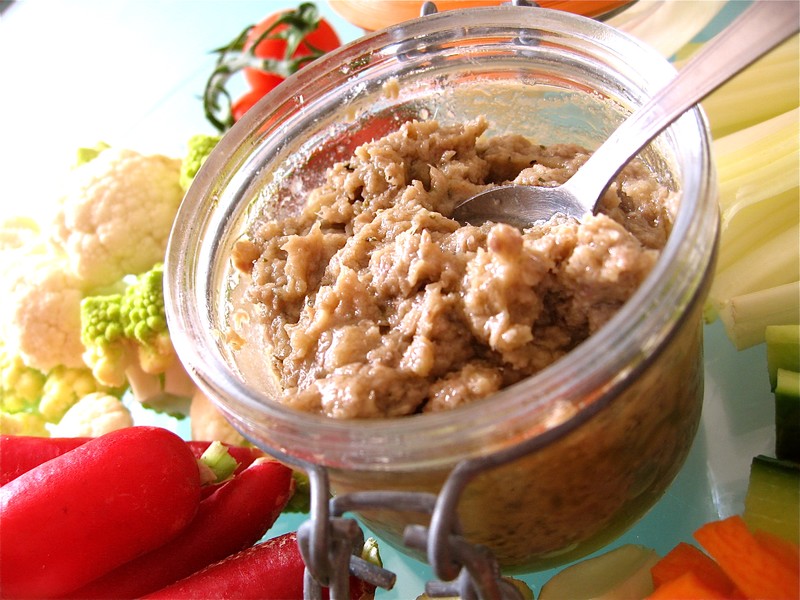
The former province of Languedoc bordered Provence, where anchoïde is king, but in Languedoc, anchovies are mashed into a paste. Anchoïade is to Provence what fondue is to the Savoy. When the anchovy mixture is pounded in a mortar, as it is in Provence, it is actually anchovy paste. Anchoyade Languedocienne differs in that the anchovies are fried and served whole.

Technically, anchoïade is considered a sauce in France, although it is eaten as we would eat dip, called bagna cauda, or banha cauda in Provençal, with fresh raw vegetables into which it is dipped, or as a spread on toast. It is also used to make Fougasse aux Anchois and on salads.

In the region, anchoïade is most often accompanied by a dry white Cassis wine.

This is a traditional recipe and is perfect for topping a salad. Today, it is almost always ground into a paste like in Provence before serving as a dip. If you wish to do this, see the instructions following the traditional recipe.

Continue Reading…

Never miss a post
Name: 
Your email address:*
Please enter all required fields
Correct invalid entries

Tradition deserves respects, but art demands sincerity, and cooking is, above all else, an art.–Marcella Hazan, “Gremolada,” The Classic Italian Cookbook

Never miss a post
Name: 
Your email address:*
Please enter all required fields
Correct invalid entries

Recipe: Chicken-Fried Steak

Published by Wednesday, December 17, 2014 Permalink 0

Recipe: Chicken-Fried Steak

by Jonell Galloway


Ingredients

4 cube steaks
1  1/2 cups plain flour, more if necessary
2 eggs
Olive oil or lard for frying
Salt
Pepper
Large cast iron skillet

Gravy:
1  1/2 cups milk
1  1/2 T. plain flour

Continue Reading…

Never miss a post
Name: 
Your email address:*
Please enter all required fields
Correct invalid entries

Tackling Obesity through Food Relationships

Published by Thursday, April 10, 2014 Permalink 0

Jonell Galloway, Writer, Editor and Translator

Swiss Food


by Jonell Galloway

I was recently interviewed for a Swiss Info documentary called “Finding the Right Food Formula.” In the context of recent childhood obesity figures in Switzerland, Veronica De Vore is exploring the Swiss relationship to food and how that might have changed, how it might be related to the rise in childhood obesity.

Click here to listen to the show. I cooked a Kentucky Fried Chicken feast for Veronica, while discussing the more serious matter of relationships to food in the context of my work in mindful eating. (The article also includes an abridged recipe for my grandmothers’ traditional Kentucky Fried Chicken.)

Continue Reading…

Never miss a post
Name: 
Your email address:*
Please enter all required fields
Correct invalid entries

A Swiss Reader’s Tale of Knepfle

Published by Wednesday, April 2, 2014 Permalink 0

A Swiss Reader’s Tale of Knepfle

by Dee Rintoul

I grew up with “cheater” knepfle. I learned from my Oma, who had a Southern German background, but was Romanian-born. She made all kinds of noodles and pasta dishes — spatzle, real egg noodles that were dried and stored, but for everyday use. Knepfle were child’s play. In our own home, we made them for lunch and threw them into Lipton chicken noodle soup (which was not something we’d ever find in Oma’s kitchen!). God. That woman could cook…

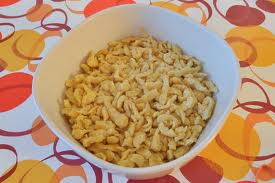
Knepfles, Alsacian and Swiss pasta, photo by http://www.tribugourmande.com/recette_76618_knepfle


Anyway. The way we did it was to beat an egg or two (depending on how greedy we felt at the time), add a pinch of salt and some dried parsley if we thought of it or wanted to impress schoolmates, then beat in all-purpose flour until it was so stiff it wouldn’t take any more and/or became too difficult to stir. Then we’d drop pieces in a pot of boiling water with a fork and a teaspoon, dipping both implements into the simmering soup in between to help the stiff dough drop. Once they were all in, we put the lid on, turned down the heat, and kept it covered for a few minutes.

When we finally lifted  the lid, we found gorgeous, fluffy-looking, but very chewy little dumplings, all floating together on top of the soup. We loved these so much that as kids we used to scorn dumplings as being “too soft”. To our minds, dumplings, or anything that remotely resembled knepfle, ought to be quite al dente.

I still make these for chicken soup (and I try not to rely on Lipton but make my own as often as possible!).

Never miss a post
Name: 
Your email address:*
Please enter all required fields
Correct invalid entries

Swiss Food: Tarte à la Raisinée – Apple & Pear Syrup Pie

Published by Sunday, March 30, 2014 Permalink 0

Swiss Food: Tarte à la Raisinée – Apple and Pear Molasses Pie

What is Swiss Raisinée?

The French-Vaudois word raisinée refers to a syrup or molasses made of the must of apples and pears. It was originally cooked in grape juice, thus the name — raisin means grape in French. Often called vin cuit, or “cooked wine,” it is in the form of a dark brown, viscous liquid. In still other parts of Switzerland, another concoction similar in consistency to jam and using the same ingredients is called cougnarde and probably dates back to at least the Middle Ages. Raisinée was used as a sweetener in many regions in Europe, and the tradition has lingered in Switzerland, especially in the cantons of Vaud, Fribourg and Neuchâtel. Today, it is mainly used for cakes and pies, and is not fermented, so it not technically a wine.

The tart itself has numerous names — raisinée, vin cuit (literally cooked wine), cougnarde and Biresaassa, depending on the location.

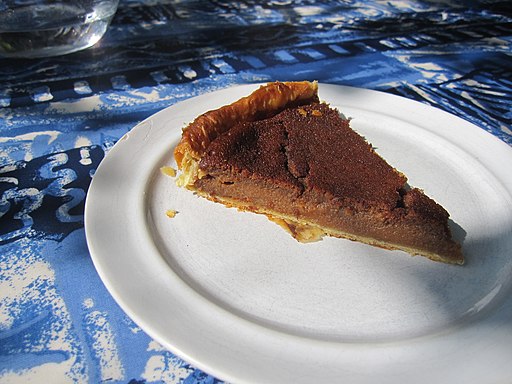
Recipe: Tarte à la Raisinée – Apple and Pear Syrup Pie

This recipe is inspired by Concert des Casseroles and translated with their authorization

Use a pie ring or pie tin 24 cm in diameter
Sweet Pie Crust
  • 200 g of flour
  • 100 g butter
  • 3 g of fine salt
  • 15 g walnut or hazelnut nillon* (here a mixture in equal parts)
  • 1 small egg (less than 60 g)
  • 60 g white sugar
Filling
  • 3 eggs
  • 2 egg yolks
  • 200 g double cream
  • 150 g pear raisinée (click on link to see our recipe for making raisinée)
  1. Dough: Combine the butter and sugar. Add the beaten egg and walnut/hazelnut nillon, then flour, mix and form into a ball, then roll out or pat down to flatten. Wrap in plastic and chill for 30 minutes.
  2. Spread the dough on a sheet of baking paper and place it along with the sheet in a pie ring or pie pan. Shape the edges by pinching the dough between your thumb and forefinger. Prick the bottom and edges with a fork. Cool for 30 minutes to firm up and avoid sagging when cooking.
  3. Preheat oven to 180° C. Place baking paper and beans or ceramic beads on the dough to prevent it from swelling. Bake for 20 minutes: the dough should barely brown.
  4. Meanwhile, prepare the filling by mixing the eggs and yolks, the double cream and the raisinée.
  5. Remove dough from oven. Remove weights and parchment paper. Lower thermostat to 150°C.
  6. Pour the filling into the dough and cook for about 30 to 40 minutes. The filling must be taken when it is not too firm and must have a slightly caramelized smell. It will probably still appear liquid when it comes out of the oven, but do not prolong the cooking, as it gets much firmer while it is cooling.

*Nillon: Nillon (or nion), is a local product used in French-speaking Switzerland. It is the residue from pressing of nuts. It is found in sheets, grated or powdered form. There are walnut and hazelnut nillons packaged in small 160-gram bags. In the canton of Vaud (Switzerland), nillon is used to make a walnut cake and apple pie. In France, it is known as walnut flour or walnut meal.


Never miss a post
Name: 
Your email address:*
Please enter all required fields
Correct invalid entries

Swiss Food: Fribourg-style Saffron Bread

Published by Friday, January 24, 2014 Permalink 0


Swiss Food: Fribourg-style Cuchaule: Saffron Bread to Eat with Your Bénichon Mustard

by Jonell Galloway

From the archives

In my article, Bénichon Mustard, A Fribourg Specialty to Welcome the Cows Coming Home a few days ago, I talked about the brioche-like saffron bread cuchaule which is traditionally eaten with Bénichon mustard during the Bénichon fall fair in Fribourg, Switzerland.

I translated this recipe from the Delimoon site from the French and adapted it.

Photo courtesy of Moja Kuchnia with authorization.

Continue Reading…

Never miss a post
Name: 
Your email address:*
Please enter all required fields
Correct invalid entries

UA-21892701-1