Elatia Harris’s Top 10 Food Books 2013

Published by Wednesday, January 15, 2014 Permalink 0

Elatia Harris’s Top 10 Books 2013, on Cooking, Food History & Food Politics

by Elatia Harris

For this list to be coherent, I have to have actually read and truly admired the books on it. Check! If they are cookbooks, I have to have cooked from them with great results. Check! I want to hear what your entries would be – it was a great year for books about food and cooking, and I’ve had to leave many good ones out.

ElatiaBooks ElatiaBooks

1. Cuisine and Empire, by Rachel Laudan

20,000 years of the great movements of history, written with the kitchen at the center. If you want to take a very long view, and think hard about power – getting it, keeping it, getting it back – then the intimate and often surprising relationship between food and power, in Laudan’s telling, will astonish you. The historical counterpart to Harold McGee’s On Food and Cooking, this is a supremely important book that is a great pleasure to read. Don’t be afraid of its bigness, for it’s a truly manageable length. Read it fast, think about it forever.

2. Three Squares, by Abigail Carroll

How did the American Diet evolve? We’re not eating like they did at Plimouth Plantation, or like Thomas Jefferson ate – what ARE we eating like? For a fresh view of what’s uniquely American about our foodways, this book is a treasure.

3. Foodopoly, by Wenonah Hauter

The activist Wenonah Hauter has written Foodopoly to take on, and urge readers to take on, the dark side of our food systems, and it’s a very dark side indeed. Can there be reclamation? Can the trend towards domination by fewer and bigger companies ever be reversed? “Yes, but…” Hauter tells us, and then she tells us what that would take.

4. Behind the Kitchen Door, by Saru Jayaraman

The author is a labor organizer who believes that the maltreatment of food service workers need not be the ugly secret of the US restaurant industry. But right now, it is. What would have to happen, for food service workers to be paid a living wage and given paid sick days? One in every twelve people in the USA works in food service – how should they be treated? In its way, this is a companion volume to Foodopoly, asking all the right questions, answering not a few.

5. Raising Dough, by Elizabeth U

A guide to using other people’s money to finance your socially responsible food business, this is a hard-headed book for mostly young idealists. Brilliantly thorough, if you are on a mission but lack for practical knowledge of the business world. Especially valuable are the ideas for working around a financier’s natural unwillingness to lend money to anyone hoping to do good.

6. Arribes: Everything Else is Noise, by Zev Robinson

Film maker and painter Zev Robinson could turn Arribes, a DVD, into a commanding book, so I’m counting it in. Arribes is a rural area in northwestern Spain where people are 80% self-sufficient. One of those places where life is both simple and difficult – and movingly sustainable. Robinson’s eye for Spanish classical painting serves beautifully here. If by magic Zurbaran and Murillo could see Arribes, they would recognize their own lineages instantly and with pleasure.

7. Mushroom, by Cynthia D. Bertelsen

Confused about the world history of mushrooms? Wondering about foraging for them or choosing them or storing them? And what about a few recipes? Culinary historian Cynthia D. Bertelsen has solved all your problems in this tiny, indispensible book, a delight from beginning to end. You will read it in a snowy evening, you will consult it forever after. And if you’re still not satisfied with the mushrooms in your life, you’ll have instructions for growing your own.

8. Celebraciones Mexicanas, by Andrea Lawson Gray and Adriana Almazan Lahl

Andrea Gray and Adriana Lahl have a winner in this charmingly beautiful cookbook that focuses on the food of Mexico’s festivals. As well as recipes, there is abundant material about history and folklore, much of it highly visual and appealing to children – it’s a perfect family gift. Professional cooks as well as writers, Gray and Lahl know their way around the Mexican kitchen. It’s a labor-intensive cuisine, and the streamlining here is as intelligent as any I have ever seen – no false notes, some truly helpful simplifications. If you want the best ever recipe for Nogada Sauce, one of the signature paradisal items in Like Water for Chocolate, buy the book and turn to page 257.

9. Spice and Kosher, by Dr. Essie Sassoon, Bala Menon, and Kenny Salem

The Jewish community in Cochin, in the South Indian state of Kerala, was intensely lively for 2000 years. It has dwindled now to a few souls, but its culinary traditions belong to the world, many having partaken of, and been absorbed into, mainstream Indian cooking. Knowing that, soon, the cuisine will have outlived its people, the three authors, all originally Jews of Cochin, wrote this excellent cookbook — full of fascinating history, good recipes and directions for good practice — as a testament.

10. Paris to the Pyrenees, by David Downie, with photos by Alison Harris

Travel and food writer nonpareil, David Downie, mounts an interior and a physical struggle against middle age and fading health by walking 750 miles across France – the famous Way of St. James. Well, it’s no saunter. Even the companionship of his wife, the wonderful photographer Alison Harris, whose photos here are a revelation, cannot inure him to the hardships of the pilgrimage route. Readers will ponder how much in this volume is deeply spiritual – to my reading, seeking something you cannot define, yet seeking it body and soul, is a spiritual journey. One that is intermitted, David Downie being David Downie, by some of the most gorgeous repasts I’ve heard tell of.


Never miss a post
Name: 
Your email address:*
Please enter all required fields
Correct invalid entries

Food Art: Apple in a Cage, food photography by SandeeA

Published by Tuesday, January 14, 2014 Permalink 0

SandeeA is a top-notch food photographer and she runs the popular blog La Receta de la Felicidad, where you can find many of the recipes appearing in these photos.

Never miss a post
Name: 
Your email address:*
Please enter all required fields
Correct invalid entries

Potatoes: Endless Varieties in Switzerland

Published by Sunday, September 29, 2013 Permalink 0


Potatoes: Endless Varieties in Switzerland

by Jonell Galloway

Potatoes: an essential part of the traditional Swiss diet

If there’s one thing we have plenty of in Switzerland, it’s potatoes. I didn’t even like potatoes before I came here and discovered all the subtle differences of texture, taste and all the ways of using them in cooking.

Potatoes are an essential ingredient in almost any traditional Swiss meal. This year’s crop is already starting to show up in local markets.

Large Number of Varieties of Potatoes in Switzerland

The official 2007 Swisspatat list (provided by Agridea, the Swiss agricultural research station) includes 31 different varieties, along with lists for various seasons and types of potatoes, as well as recipes for everyday use as well as for special occasions.

You can take a look at the 31 varieties in the table at the bottom right on the last page of the Swisspatat article to get an idea of which potatoes to look for at what time of the year.

Different Types of Potatoes for Different Uses

There are basically 4 types of potatoes, according to Swisspatat:

  1. Firm or “salad” potatoes. These potatoes do not burst open when cooking. They are moist, fine-grained and not mealy, and can be used in most dishes, with the exception of mashed potatoes and purées.
  2. All-purpose medium-firm potatoes. The skin on these potatoes opens only slightly on cooking. They are somewhat mealy, on the dry side, and have a fine, grainy texture. They are tasty and can be used for most all purposes.
  3. Mealy potatoes. These potatoes burst when cooked, but they are tender, mealy and rather dry. They have a large grain and strong taste and are used mostly for industrial purposes.
  4. Extra-mealy potatoes. These are basically not for cooking and are used for feeding livestock or to make starch, due to their dryness and hard texture.

Continue Reading…

Never miss a post
Name: 
Your email address:*
Please enter all required fields
Correct invalid entries

Rosa’s Musings: There is more to a sandwich than two slices of bread, a brief history of the sandwich

Published by Sunday, September 22, 2013 Permalink 0

by Rosa Mayland

A Brief History of the Sandwich


In this brief history of the sandwich, you’ll learn that a sandwich is an extremely versatile and universal food item consisting of two slices of bread in the middle of which is encased a filling, or of a single slice of bread garnished with a topping (tartines/bruschetta, smørrebrød, canapés, etc.). In both cases they come in an infinite number of varieties that differ in flavour, style, texture and size.

The origin of the term dates back to 1762 and saw the light of day in East Kent, England. According to legend, John Montagu aka the Fourth Earl of Sandwich was so busy gambling that he did not want to stop his activities in order to dine, so he ordered the waiter to bring him slices of roast beef enclosed in two wedges of bread. In this way, he could continue playing while eating and would in no manner dirty his fingers. That is how this quick and improvised snack became known as “sandwich”.

Even if the Earl gave his name to this popular “speciality,” it is to be said that bread has been served with meat and/or vegetables for centuries before this “invention” and that its forefather probably already existed in Neolithic times with the advent of the domestication of wheat. The first form of sandwich is attributed to the ancient Jewish wise man Hillel the Elder (~1st century B.C.) from Babylon who apparently put meat from the lamb sacrificed for Passover and bitter herbs (horseradish, chicory, sow thistle, eryngo, and lettuce) between pieces of matzo (kosher cracker-like, unleavened bread). Another genre of sandwich was common during the Middle Ages: thick slabs of stale bread called “trenchers” were used as plates and can be regarded as the precursors to the open-faced sandwich.

At the beginning, sandwiches represented a humble and simple lower-class meal, but by the middle of the 18th century, the aristocracy started serving them as a late-night collation, and they were considered very chic. Then with the breakthrough of the Industrial Revolution in the 19th century and its hordes of restless workers slaving away in factories, sandwiches became a working-class luncheon, since they were practical, easily accessible, nourishing (calorific), inexpensive, portable and could be eaten in a rush.

After having first appeared in England as well as Spain, the sandwich rapidly spread through the rest of Europe and the United States, where it was first promoted as an elaborate main dish. The 20th century saw the rise of the sandwich in the U.S. and the Mediterranean when bread became an indispensable component of people’s diet and started being consumed in much larger quantities than in the past.

Continue Reading…

Never miss a post
Name: 
Your email address:*
Please enter all required fields
Correct invalid entries

Israel-India: Food Wanderings: Jewish-Indian Fusion?

Published by Tuesday, September 17, 2013 Permalink 0

by Shulie Madnick

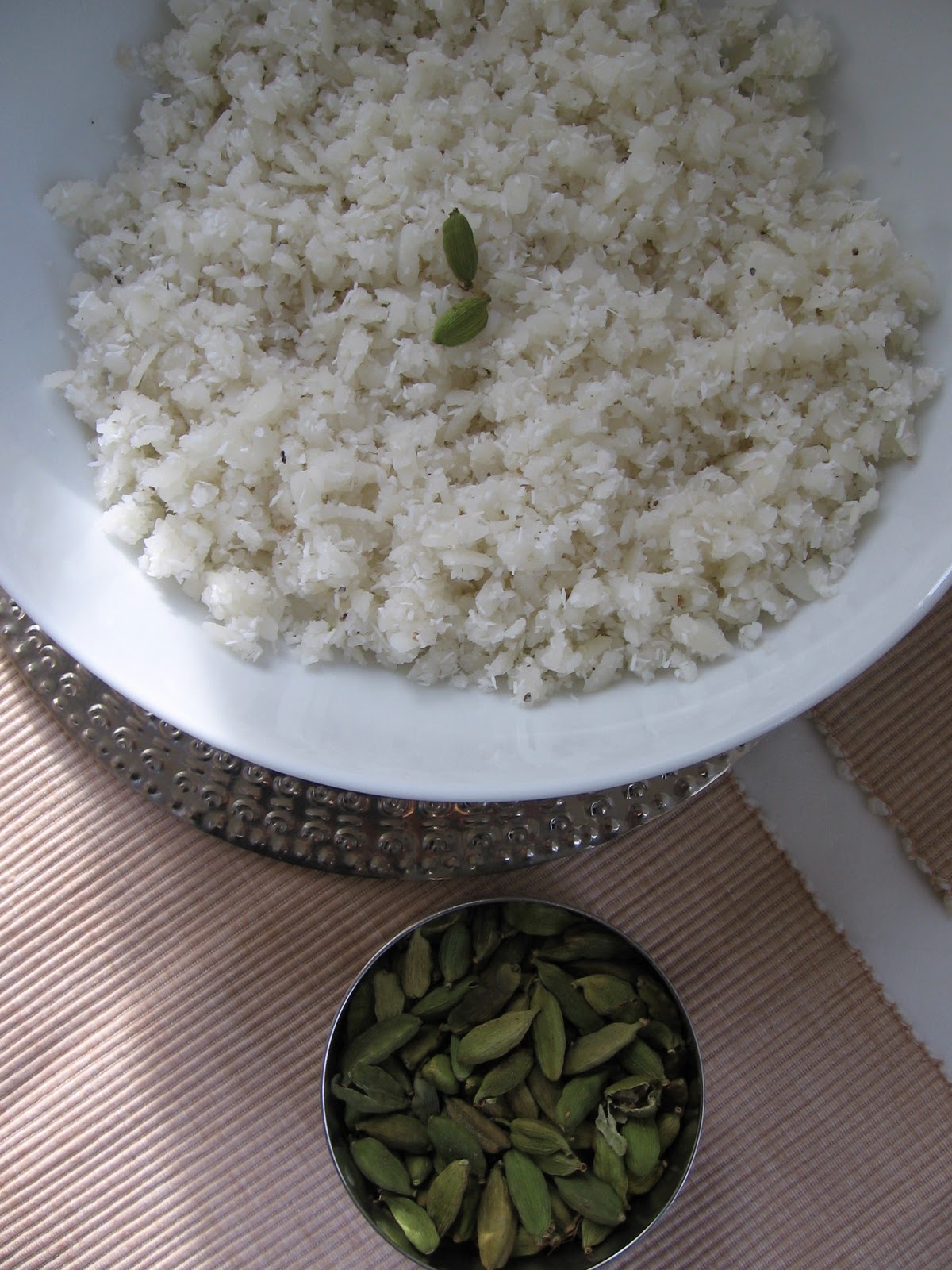
Malida, Sweetened Poha: Breakfast Cereal or Ceremonial Offering?

Introductions, please

Shulie: I am so pleased to be featured on The Rambling Epicure, this international, thought-provoking culinary site based in Switzerland. I love the multicultural content, which explores the world of food in depth and in all its facets, and brings us together as a community so that we better understand each other. Thank you, Jonell, I am honored to be a part of this wonderful journey. This post gives you a glimpse into my very mixed background.

Jonell: It’s unusual to find someone with such a rich and varied background as Shulie, yet still so close to her roots, who creatively weaves it all together to produce her very own Jewish-Indian fusion cuisine. This article is like an introductory culinary tour of the world, with a big dose of little-known Jewish history and culture thrown in. Got your bags packed? Here we go!

I was agonizing over what my first post should be. I could have written about how I’d won the battle of the great macaron, which was in fact a double challenge, as I had to replace the almonds with another pantry ingredient. Or about the elusive, and as I once thought glorified, meringue. The sheer challenge is fascinating, but macarons are French, or better yet Italian, and meringue is Swiss, and my ancestral roots are deep in the East. So I will start from home, so to speak.

Continue Reading…

Never miss a post
Name: 
Your email address:*
Please enter all required fields
Correct invalid entries

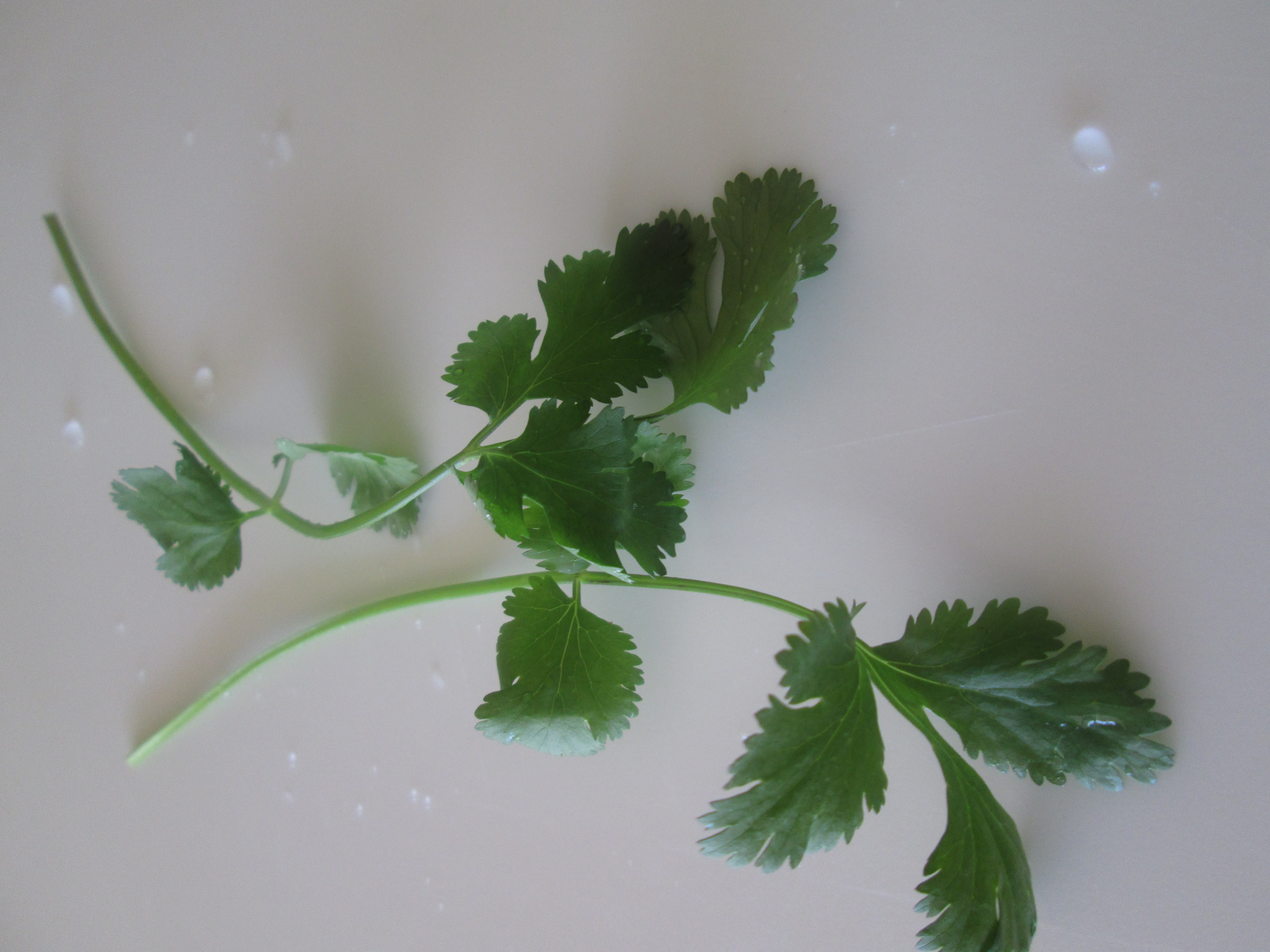
Simple Sustenance: Herb Magic — Creamy Cilantro-Lime and Cannellini Bean Spread
Published by Monday, September 16, 2013 Permalink 0

Simple Sustenance: Herb Magic — Creamy Cilantro-Lime and Cannellini Bean Spread

by Renu Chhabra

The more you eat, the less flavor; the less you eat, the more flavor.–Chinese Proverb

It is amazing how herbs can completely transform a recipe, giving it a whole new personality. Pureed with beans to make flavorful spread, processed with nuts for hearty pesto, or blended with oil or herb oil are just a few ways to taste the magic of herbs. Other blander dishes such as salads, grains, soups, stews, and breads also get fresh and delicious makeovers when they are in the company of herbs. And we can’t forget lavender cookies or basil ice cream, which add a few stars to the dessert category. It doesn’t take a lot to infuse their flavors to any recipe — sweet or savory. They always play their magic.

Continue Reading…

Never miss a post
Name: 
Your email address:*
Please enter all required fields
Correct invalid entries

Easy Late Summer Seville-style Gazpacho

Published by Thursday, September 12, 2013 Permalink 0

Spontaneous Cuisine: Easy late summer Seville-style gazpacho

by Jonell Galloway

Take 4 thick dry or toasted  slices of hearty whole grain bread and tear it into bite-size pieces. Drizzle olive oil over it and add 2 to 4 cloves of crushed garlic, depending on how much you like garlic.

Mix and let it sit for a few minutes.

Take 8 large, extra-ripe red tomatoes. Cut into large chunks, and save all the juice. Mix into the bread and garlic.

Put into blender, with salt and pepper. Refrigerate and let it sit for a half hour or so, or several hours or overnight if possible.

Before serving, taste and then season with more salt, pepper and olive oil if necessary. Add ice cubes if you want it to be colder or thinner.

If you want to give the dish a bit of color or enhance it, add fresh coriander or basil, or a dollop of cream.

This batch will easily feed 4 or 5, and is better the second day, once it has marinated in the refrigerator.

This recipe is my version of a friend’s recipe for Seville-style gazpacho. The friend has chosen to remain incognito for reasons unknown to this writer.


This article was originally published on Geneva Lunch.

 
Never miss a post
Name: 
Your email address:*
Please enter all required fields
Correct invalid entries

Switzerland: Bénichon Mustard, A Fribourg Specialty to Welcome the Cows Coming Home

Published by Tuesday, September 3, 2013 Permalink 0


Switzerland: Bénichon Mustard, A Fribourg Specialty to Welcome the Descent of the Cows

by Jonell Galloway


Bénichon mustard is quintessentially Swiss. It is a specialty of the canton of Fribourg.

It is more like a spicy jam than a mustard, in the traditional sense of the word. Its ingredients give it a sweet and sour taste.

It is traditionally eaten with another Fribourg specialty, cuchaule, a light brioche-like sweet saffron bread, during an annual village fair to celebrate and “bless” the autumn harvest and bringing down the herds of cattle from the mountains. This is now held the second week in September.

There are numerous recipes, but they traditionally include mustard flour (or powder), extra-white flour, white wine, fortified wine, rock candy and water, to which cinnamon, star anise and whole cloves are added.

It’s really quite easy to make. I’ve translated the Bénichon recipe and adapted it.

Suggestion: Do this on a day when you’ll be at home all day, or soak the mustard powder over night and finish off the recipe the next day.

Continue Reading…

Never miss a post
Name: 
Your email address:*
Please enter all required fields
Correct invalid entries

Bollywood Cooking: Mutter Paneer

Published by Monday, September 2, 2013 Permalink 0


Bollywood Cooking: Mutter Paneer

by Meeta Khurana Wolff

Mutter paneer is an all-time favorite of mine. This popular North Indian dish is often found in Indian restaurants around the world, but nothing compares to the way my mother would make it.

Mutter paneer is basically a flavorful vegetarian dish made of soft homemade Indian cheese called “paneer”, which is lightly pan-fried, then added to a spiced gravy with peas and tomatoes.

I’ve adapted my mother’s recipe over the years and instead of a thin gravy, I have created a creamier version, with an intense, fruity-flavored tomato sauce which coats the soft homemade paneer.

Continue Reading…

Never miss a post
Name: 
Your email address:*
Please enter all required fields
Correct invalid entries

Mediterranean Food Connection: “Cocas à la Frita”, or Sweet Pepper & Tomato Compote Turnovers

Published by Tuesday, August 27, 2013 Permalink 0


Recette de Christophe Certain

This recipe is currently being translated into English.

Les cocas à la frita recette facile en images, chaussons de pâte brisée fourrés d’oignons, tomates et poivrons revenus

Voila ma recette de cocas, testée à de nombreuses reprises, elle est infaillible, même si elle n’est pas traditionnelle.

Ne pas mettre trop de farce (2 C.A.S.) sinon les cocas risquent d’exploser à la cuisson.

Si vous utilisez de la frita, veillez à ce qu’elle ne soit pas trop liquide pour les mêmes raisons. Otez le jus s’il y en a. Le blanc d’oeuf permet de bien stabiliser la fermeture de la pâte à la cuisson, le jaune d’avoir une belle couleur dorée.

La recette traditionnelle de la pâte à coca se compose de 50% farine, 50% saindoux, avec un peu de sel. Comme ça vous pourrez comparer !

Continue Reading…

Never miss a post
Name: 
Your email address:*
Please enter all required fields
Correct invalid entries

UA-21892701-1