Simple Sustenance: Chat and Chai — Nigella Seed Crackers

Published by Wednesday, July 4, 2012 Permalink 0


//

by Renu Chhabra

Remember the tea kettle — it is always up to its neck in hot water, yet it still sings!  ~Author Unknown

Last Saturday, I was invited to a fundraiser over Chat and Chai. A room full of lovely women, some dressed in Indian attire, were there to raise money for this noble cause in southern India. Colorful sarees and scarves were the stars of the show. They were displayed elegantly on a table for silent auction, creating a very exotic ambiance. A few guests were somewhat familiar with the Indian culture; whereas, others were inquisitive to learn about it. From food to draping of a saree, it was an enriching experience for many.

After viewing a short film about the cause, it was time to indulge in some Indian-inspired food — curried deviled eggs, lentil salad, tea sandwiches, and a variety of sweets and snacks. The table was full of mouth-watering choices, making it difficult to resist the temptation. Finding my way through this delicious spread was one big challenge. And I knew I wasn’t the only one facing this dilemma. Finally, a warm cup of fragrant chai completed the feast.

On my way back I kept thinking about mathri or mathi, a savory Indian snack. This salty and flaky cracker is laced with herbs and spices. Carom or nigella seeds add a flavorful punch, and black peppercorns give it a spicy bite. Traditionally, it is deep fried. The size and thickness can vary — large discs or bite size. It is a perfect tea-time snack paired with a cup of sweetened chai.

I have fond memories of making mathri with my great grandma. Sitting at the kitchen table, she used to flatten the dough balls with the heel of her palm. She did not use measurements, rolling pins, or fancy cutters. Just a pinch of this and a handful of that was the way to go for her. Her best tools were her hands to measure, knead, and flatten the dough — quite amazing. At the same time, the wisdom and stories that she shared while making this snack made the experience even more special. These are the moments most of us remember for years to come — rustic and soulful. And they linger in my memories as well, even decades later.

Inspired by my memories, I decided to make mathri today with a few of my own twists. Keeping them healthy, I used whole wheat pastry flour instead of regular white flour. Another detour from the original method was to bake them instead of frying – -a guilt-free indulgence. And they turned out quite delicious!

Recipe

2 cups whole wheat pastry flour
1 teaspoon baking powder
11/2   teaspoon salt
1/2 teaspoon nigella seeds
1/4 teaspoon carom seeds
Coarsely ground black pepper to taste
1/2 cup canola oil
1 /2-3/4 cups water
 

Click here for metric converter.

1. In a stand mixer with paddle attachment, add flour, baking powder, salt, nigella seeds, carom seeds, black pepper, and oil. Mix on low speed. Slowly add water to make firm dough.

2. If needed, bring the dough together with hands and knead to form a smooth ball. Cover with plastic wrap and set aside for 30 minutes. You can also make the dough in a food processor or by hand.

3. Line two baking sheets with parchment paper.
4. Roll the dough to 1/8 -inch thickness.
5. Cut the rolled dough into desired shapes.
6. Transfer them to the baking sheets, and prick with a fork.
7. Bake at 325° F for 20-25  minutes or until bottom is golden brown.
8. Re-roll the leftover dough and cut into shapes.

9. Cool completely on a wire rack. Store in an airtight container.
10. Serve with a hot cup of chai.

Makes approximately 3-3 1/ 2 dozen small crackers.

Please follow my next post about chai.

Never miss a post
Name: 
Your email address:*
Please enter all required fields
Correct invalid entries

Tasting Australia: The Internationally Recognised Aussie Food Fest

Published by Tuesday, July 3, 2012 Permalink 0

by Amanda McInerney

The stands have been taken down from the riverbanks in Elder Park; the visiting journalists and food writers have packed up their loot bags and flown home; PR bods are splinting their Tweeting/texting fingers, and exhausted, hardworking chefs, waiters, dishies and sommeliers all around Adelaide are breathing a huge sigh of relief as they slip into a restorative beverage or two. The Battle of the Chefs has been fought and won; celebrity dinners have been cooked and eaten; the master classes, kids cooking classes and celebrity demonstrations have been enjoyed, pearls of culinary literary wisdom have been dropped and retrieved at the Word of Mouth sessions, and the food-related exhibitions, workshops and competitions are done. The massive 8-day food and wine binge that is Tasting Australia is over for another two years.

A product of the fertile imagination of Western Australian chef and television personality Ian Parmenter, Tasting Australia has developed and grown since its very successful beginnings in 1997 to become one of the nation’s most influential and best attended culinary events. This year’s event has built upon this reputation and not only attracted more than 40,000 happy eaters to the two-day “Bank SA Feast of the Senses,” where the public can pick and choose food and wine from some of the state’s very best producers and chefs, but the informed eye would also have been able to spot flocks of interstate and international chefs, journalists and food writers. More than 150 high-profile gastronomic guests were being carefully herded about the state in manageable groups (not so simple a task as it might sound) as producers from Port Lincoln in the west, all the way down to the Coonawarra in the south-east took the opportunity to show off the culinary cachet for which this state has become noted.


Tasting Australia attracts an exceptional amount of international interest and food professionals from all areas of the culinary sphere, as well as journalists from all corners of the globe, who congregate in Adelaide for this time period.  I helped Mark Gleeson of the Providore conduct the very first formal event of Tasting Australia – a (very) quick walking tour of our prime food gem, Adelaide Central Market, followed by a cheese workshop conducted by Valerie Henbest of the Smelly Cheese Shop – with a group which included, among others, journalists from Singapore, Hong Kong, Italy and Sweden, author Matthew Fort and chef Mark Hix from London and Dublin-based food, wine and restaurant critic Ernie Whalley.  They were just one part of the international contingent which was here expressly to get to know South Australian and Australian food.

The kind of exposure this generates for us simply cannot be underestimated and I have heard it stated that this festival has generated in excess of $100 million worth of editorial PR for South Australia and Australia. The overseas guests who enjoy our hospitality are ushered around to some of our most talented and respected food producers – both in and around Adelaide and regionally. They get the chance to meet and engage with nationally and internationally recognised brands like Maggie Beer and Jacobs Creek, but also many of the smaller producers and food/wine businesses whose goods merit equal attention, but whose advertising budgets are more modest and thus are less well known. There are trips out to the oyster leases in the pristine waters off the Eyre Peninsula, visits to the free-range home of Minribbie Farm Berkshire pork and (no doubt happy) time spent at South Australia’s first boutique distillery on beautiful Kangaroo Island – all aimed at showing off what we enjoy here in the hopes it will be shared with the rest of the world.

Photo (C) Amanda McInenry, for The Rambling Epicure, Switzerland. Editor, Jonell Galloway.


The dust is settling on this year’s celebration and within a surprisingly short amount of time the planning for the next festival will begin.  Under fresh, new leadership things will change and the celebration may take on a different look, as it should after 16 years of much the same sort of format.  What won’t change is the remarkable wealth of great food and wine products which we enjoy in South Australia, and the enormous dedication, expertise and passion of the people who are behind the production and promotion of it. It is our local skills which make Tasting Australia the tremendous success it is today, so – South Australia, take a bow!

Never miss a post
Name: 
Your email address:*
Please enter all required fields
Correct invalid entries

Lost in Translation: Brown Sugar

Published by Friday, June 15, 2012 Permalink 0

Brown sugar and molasses can be made from both cane and sugar beets

Over more dinners with friends than I can remember, chocolate chip cookies have become synonymous with coming to my house. While my dorm neighbors were making tartiflettes and curries to plant little seeds of home in campus life, I was either making apple crumbles in a roasting pan, or trying to beat butter and sugar until fluffy with a wooden spoon. This is really not as sophisticated or even as homey as it sounds, considering that our 50-year-old kitchens had a decorating scheme typical of a detention centre, and faulty wiring that’s led the university to demolish the buildings. Still, the sentiment was there.


Neglecting the brownie, the chocolate chip cookie might be the greatest American delicacy that is almost untraceable on this side of the ocean — apart from some pretty pathetic, grey-looking supermarket things and the greasy mondo version from Millie’s Cookies branches in shopping centres. No matter which recipe I use, the chocolate chip cookie is one I’m asked for more than anything else by friends from all over the place (and is the main reason some called me “Monica” for being anal enough to write “226 grams of butter”).

In those beginning days in university halls, the oven was so temperamental that it was okay to make sweeping substitutions with whatever you had on hand, because you never knew what would come of it. (Seriously – there was always a poor and hungry Frenchie willing to vacuum up the disasters.) It wasn’t until I moved kitchens that I realized my “randomize” approach just wasn’t cutting it. I needed to test several recipes, and I needed to know which one was the best…and so began the Great Chocolate Chip Cookie Quest!

A chocolate-chip cookie.

A chocolate-chip cookie.


One thing that stood out immediately was the small but obvious difference in taste and texture between the light brown sugars found in North America and the UK  — an ingredient essential to the success of a good chocolate chip cookie recipe. Inspired by fellow expat David Lebovitz, I set about finding out the difference, and here’s what I found.

Disclaimer: I researched general processes — not those of specific companies — and I am no food scientist. The further I dug into the subject, the more I wanted to learn (and I’d heartily welcome any corrections).

3 TYPES OF COMMONLY USED BROWN SUGAR

To figure out what kind of product I’m actually trying to reproduce, I looked at light, dark, and muscovado (or “regular”) brown sugars. Light brown sugar consists of a small proportion of molasses at 3.5%; dark brown sugar at 6.5%; and muscovado sugar at nearer 10%.


Brown sugar examples: Muscovado (top), dark br...

Brown sugar examples: Muscovado (top), dark brown (left), golden brown (right).


SUGAR CANE vs. SUGAR BEETS


Sugar is made from a variety of plants, but most of the sugar that we reach for in the baking aisle comes from either sugarcane or sugar beets; which one you use is all about climate. Sugar cane grows exclusively in tropical climates like in Hawaii. Brazil and Indonesia, making it the main import in the US market. Sugar beet grows exclusively in “temperate” climates like parts of Russia, the American Midwest, and East Anglia in the UK, making it the standard in Britain and the surrounding European countries.

It seems that sugar beet in the UK has a greater consumer loyalty (than the non-loyalty of North Americans to a specific plant), due to sugar beet being viewed as a more “green, local, British” product. This is also true for the parts of the States that grow sugar beet, but because we’re a huge country with such varied climates, branding a ‘national’ sugar source presents some problems.

English: Sugar beet Sugar beet at Blue Barn Farm

English: Sugar beet Sugar beet at Blue Barn Farm


Fun fact: it takes about 6-9 kg (or 4-6 bulbs) of sugar beet to produce a kilogram of refined white sugar, and about 8 kg (or 5-6 stalks) of sugar cane to produce a kilogram of brown sugar. (Brown and refined white sugars have surprisingly similar densities.)

Cane sugar is often touted as being more beneficial for health, due to its roots reaching further into the ground beyond topsoil that may have had many of its nutrients washed away. But this appears to be true only of unrefined — and not refined white — sugars. White sugars are refined by stripping all flavorful minerals and “impurities” from plant juice by centrifuging out the syrup by-products from the crystallized sugar, the only slight and indiscernible difference between cane and beet sugars being that during the treating and whitening of beet juice, a few more natural agents are used due to its different chemical composition. This difference in processing has absolutely no effect on the flavor and little effect on the natural composition of the final product in white sugars. (Recent studies have shown that it is possible to ‘fingerprint’ a beet or cane sugar particle and reveal trace elements leeched from the soil where it was produced, and lock down regional connections, but any elements found are in such small quantities that differences are pretty negligible to nutrition. Pretty cool, eh?)

Venezuelan sugar cane (Saccharum) harvested fo...

Venezuelan sugar cane (Saccharum) harvested for processing.


But I’m getting sidetracked: the principal difference between cane and beet brown sugars is in the nature of the syrupy by-products from each plant.

English: Ox-wagons transporting harvested suga...

English: Ox-wagons transporting harvested sugar cane to the sugar factory in the Netherlands.


In sugarcane processing, the molasses syrup that results from removing sugar after each stage of boiling can be categorized as either sulphured or unsulphured. Sulphur dioxide is added in the first case to preserve sugarcane which has been picked ‘young’, and unsulphured molasses is derived from fully mature stalks which have sun-ripened over 12-15 months. Regardless of whether sulphur dioxide has been added or not, the first boiling of juice yields ‘mild’ molasses and the second yields ‘dark’. ‘Blackstrap’ molasses is obtained from the third and final round of boiling, after which the proportion of sugar in the syrup is too small to be extracted economically. This makes blackstrap molasses the lowest in sugar content and the most rich in “impurities” (like B6, calcium, magnesium, potassium and iron). That’s why it’s promoted for good health, providing the most concentrated dosage of all of those minerals and accounting for up to 20% of their recommended daily amounts!
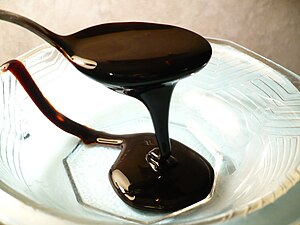
English: Organically produced blackstrap molas...

Refiners’ syrup, used widely in the commonwealth countries under the name golden syrup, is made by refining and filtering the pre-boil, concentrated cane juice through bone charcoal. It’s similar to molasses, but consists of only certain sugars and moisture – and does not include any of the minerals and other “impurities” in molasses that cause its distinct flavors.
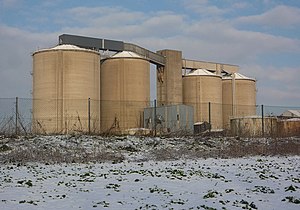
English: Old sugar beet factory A landmark on ...

English: Old sugar beet factory A landmark on this side of Ipswich, in view from the A14 but seen here at close hand from the Gipping footpath.


On the other hand, sugar beet processing yields different results. Molasses can be produced from beet sugar, but it only appears after the second round of boiling (because of this, the first and second boils are called the ‘high’ and ‘low’ greens, or raws). Sugar beet molasses, obtained from the second or third boil, contains a lot of salts and compounds which don’t make it very tasty for humans, so it’s used predominantly in the production of cattle feed. In the Low Countries, sugar beet molasses is sold as “sirop de candi“, in a normal version branded as ‘sweet’ — due to a higher proportion of remaining sugars — and also the third boil, very dark version. Sirop de candi is used as an ingredient in traditional treats like speculoos biscuits (cookies), or as a topping for toast or waffles. Beet molasses is also used as a coating for road salt, due to its low melting point and de-icing properties (which actually ends up attracting deer to road networks in cold weather, but that’s a tangent for the transportation engineer in me!). Refiners’ syrup can also be made from beet sugars by a different process than that used to obtain it from cane.
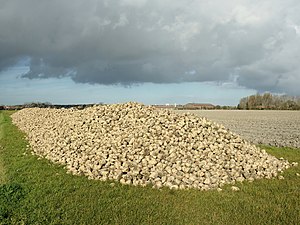
Sugar beet clamp at Vlissegem, Belgium

Sugar beet farm at Vlissegem, Belgium.


It’s important to note here that some of the products we know as molasses in North America (such as Grandma’s Own Original Molasses) are, in fact, reduced cane syrup: molasses which has been gently heated, but not boiled, and had none of its sugars removed. This is sometimes referred to as ‘high-test’ molasses, and is not a by-product of sugar production. As a result, what most people recognize as normal pantry molasses is much less bitter than black treacle here in the UK, which is a 50/50 mixture of blackstrap molasses and golden syrup. Bottom line: unless your North American recipe calls for ‘dark’ molasses, don’t use black treacle as a substitute and expect exact results!

THE BIG DIFFERENCE ACROSS THE POND

Essentially, all of this means that most standard brown sugars in the UK have to have the less palatable beet molasses completely extracted, and then add in ‘dark’ sugar cane molasses to the refined white beet sugars. (So that package of “British” brown sugar actually has a pretty large carbon footprint!) This alone doesn’t cause any variations — even most brown cane sugar producers totally refine their sugar and then re-add the extracted molasses, in order to control variations in the harvest and make a uniform product with a standard molasses content. It’s the processes commonly used for re-adding the cane molasses to either kind of white sugar which makes a difference. While the molasses added to the cane sugar is combined via a stage of re-boiling, the molasses added to beet sugar is always sprayed over the granules. This coating of the white sugar creates coarser and less saturated particles, and totally explains why North American light brown sugars are softer and more compactable than the relatively free-flowing light brown sugars in the UK — like the difference between slightly moist and just-drying sand.

So after all of that technical mumbo jumbo — now what? To make your own brown sugar at home, molasses can be re-added to white sugar at a recommended proportion of 1 tablespoon to 200 grams. But which grade of molasses to add is never mentioned! This is because the syrup that is said to be re-added into white sugars at the factory is always a blend of molasses and/or treacle varieties produced and sold differently to companies in different parts of the world. Whichever blend is used contributes to the different flavors found in every country.

Now that I’m itching for a factory tour, I want to reproduce this in my own kitchen. The homemade method means that the molasses content is roughly 7.5% if using the ‘blackstrap’ variety.  Using my highly developed engineering skills, I calculated that in order to get a 3.5% molasses content, one tablespoon of molasses must be at around 60% sucrose content; dark second-boil molasses contains about 55% sucrose, as does black treacle. Like most things worth doing in baking, I might play mad scientist, go try some British-made cane sugars, or even make my own, and see what happens. All in the name of chocolate chip glory!


This post has previously appeared on Rowth an’ Scowth, where Melissa writes about baking and expatriation from Edinburgh, Scotland.



Never miss a post
Name: 
Your email address:*
Please enter all required fields
Correct invalid entries

‘Nduja: The Spicy and Spreadable Calabrian Treat

Published by Tuesday, March 13, 2012 Permalink 0

by Diana Zahuranec

‘Nduja (n-due-yah) is a spreadable, spicy, red pork meat that can be found everywhere in Calabria. Calabria is the southern Italian region that is the “toe” of the boot, so to speak. Nduja Nduja is used for sauces, bruschetta, or on anything that spreadable meat – spalmabile – would be tasty, including a spoon.

‘Nduja is produced from the throat of a pig, called the guanciale meat, and also the guanciale – stomach meat – and the back lardo, or fat. The lardo, when mixed with salt and added to the meat, takes on another name that has no exact English translation, called sugna. This meat and fat mix is ground with salt, local peperoncino (the Italian chili pepper), and absolutely nothing else. Not even nitrates, a common preservative added to most sausages and cured meats (linked to a higher risk in cancer), adulterate this all-natural ‘nduja. Salt, the extended maturation, and the fact that 30% of ‘nduja is peperoncino, which acts as a natural preservative, defy the need for synthetic additives.


Luigi Caccamo, left

Continue Reading…

Never miss a post
Name: 
Your email address:*
Please enter all required fields
Correct invalid entries

The Rambling Epicure is Looking for International Culinary Ambassadors

Published by Thursday, March 1, 2012 Permalink 0

As a global real-food site, we regularly seek to widen our coverage. We already cover at least 20 countries and have articles in 6 languages (always translated into our common language, English). Our ambitious aim is to have Culinary Ambassadors from countries all over the globe.

If you’re a food writer, blogger or photographer and you’re interested in working with our team, I suggest you read closely our aim and purpose and browse through our tabs and categories to see if you think you fit in. Your job would be to cover both traditional and new food and wine trends in your country.

Click on word scramble to see details. The Rambling Epicure Voices and our Food/wine Coverage


If you’re interested, please contact us by clicking the blue Contact Us button at the top right of our site.

We hope to hear from you!

Jonell Galloway, Editor, and The Rambling Epicure Voices

Never miss a post
Name: 
Your email address:*
Please enter all required fields
Correct invalid entries

Stalking the Black-Eyed Villnösser Brillenschaf Sheep

Published by Tuesday, February 28, 2012 Permalink 0

by Diana Zahuranec

The most terrifying ride of my life was up a slick, steep mountain road in Alto Adige. Alto Adige is the northernmost region of Italy that touches Austria and melds with its language, architecture, and mountainous geography. This little-known region to the usual American tourist is prosperous, picturesque, and culturally stimulating. Before its annexation from Austria-Hungary as part of the Treaty of Saint-Germain in 1919, Alto Adige had been part of the Austrian Empire and the Holy Roman Empire for centuries. The identity of the region has been tugged between Austria and Italy ever since its annexation, a dual identity that is seen on everything from road signs to cultural heritage sites.

The charming architecture of Alto Adige


Alto Adige itself is divided into two other regions, Südtirol, or South Tyrol in the north, and Trentino in the south. The closer one gets to Austria, the stronger the Germanic influence is. In the northernmost parts of Alto Adige, the Austrian culture can be seen as the primary one, while the language and culture of Italy is definitely secondary.

The field trip that took a class of 26 and I to the Dolomite Mountains of the region was part of the curriculum of the University of Gastronomic Sciences, a school in Piemonte, Italy. Our journey was to begin with a monster of a man at odds with his traditional wear of embroidered, tan leather lederhosen, and end with the rare Villnösser Brillenschaf sheep breed with black fur “glasses” framing their dark eyes and black-dipped ears.

The man was burly, tall, straight out of a German-Austrian fairy-tale that could involve lumberjacks fighting giants, and he was our driver. We stood huddled in a damp group at the bottom of a hill, ready to be transported to the top of the mountain to see the sheep and learn about them. The charter bus we usually took could not go up the mountain, because it was too big. We were ushered into two large vans. The driver of mine was Herr Lumberjack (he was not a lumberjack, that I know of; but for lack of a name, this is it). I regret that I didn’t take a photograph of him, but he was a bit intimidating even with embroidered lederhosen. I felt – we all felt – we were in sure hands up this mountain road that grew steeper every ten feet, and which a charter bus could not hope to climb.


View from above: the Dolomites as seen from the bus


The road was much like other frightening mountain roads: unpaved, steep, narrow, and sans guardrail. I was not nervous at first, but the road was longer and steeper than we thought. The rain came down heavier and our breaths fogged the windows as we climbed in altitude into cold clouds. The hairpin turns were stomach-churning when Herr Lumberjack stopped, backed up a few inches towards the cliff – and a few more for room to turn – and looked back, grinning widely through the hand-wiped back windows to determine how much further he could go (answer: not another inch).

Looking over the edge from up high in a large van, my stomach dropped. It seemed from the high vantage point that the road’s edge was exactly at the tire’s edge. The trees were cut back at intervals, and the cliff of the mountainside fell away to reveal beautiful, jewel-toned landscapes, wet and saturated with color. I snapped a few hurried photos when I wasn’t gripping the headrest in front of me, because it was safer than closing my eyes and less frightening to look through a lens. All the photos turned out blurry; and talk about a photo not doing the real thing justice.

When the last switchback was so narrow that the inching, maneuvering wheels were too close even for our driver; when there was actually not enough room to turn at all; when Herr Lumberjack’s face was serious in concentration and not grinning manically; and when we were all sweating and silent from nerves was when we stopped to walk the rest of the way to the top. My legs were shaky, and the gravel slippery when I climbed down to solid ground from the steamy van. The air was cold, colder on the top of the mountain, and our breath came out in foggy, hot puffs. We hiked to the top.

Mountain top with Villnösser Brillenschaf sheep


We were greeted with a beautiful pastoral scene. In the dipping center of two hilltops was a small, wet wood cabin. Scattered between and up the vibrantly green hills was a small flock of sweet, white sheep, all with black glasses patterns circling their eyes. We walked with restraint, eager to see the peaceful scene with the stormy backdrop while not frightening the animals. Threatening, grey clouds opened to a steady, cold drizzle as the shepherds told us the history of the sheep. We huddled under shared umbrellas.

The Furchetta company, named after the mountain chain, tends to one of only two flocks of this breed of sheep, which is the oldest race in Alto Adige. It is seemingly a mixed breed with its black markings on white fur, and so had a tough time surviving during the Second World War when Hitler was bent on eliminating anything not of “pure” race. The Villnösser Brillenschaf was nearly eliminated, and about 400 survive today thanks to the shepherds and farmers of companies like Furchetta. The particular breed is also a Slow Food Presidia, which both protects and promotes it.

Villnösser Brillenschaf sheep are a Slow Food Presidia


Furchetta’s main product is cooked lamb prosciutto, which we had the pleasure of eating at lunch only an hour later at a restaurant in the foothills; but the farmers also realized that the high-quality wool was often going to waste. The price of wool has dropped significantly in recent decades and producing wool products is expensive. Furchetta strives to capitalize on the fact that, because the Villnösser Brillenschaf breed has extra-oily wool, its heat-retention and water-wicking properties are superior. The high quality and excellent taste of the prosciutto and various lamb salumi have encouraged chefs of Michelin star restaurants of the area to purchase the meat.

Cooked lamb salame


I would like to experience a little adventure like this for every food I eat. The harrowing ride into the clouds and the perfect scene at the end, offset to biting cold and wet weather with the promise of a full, hot meal at the end, were stimulating. The memories of the Villnösser Brillenschaf sheep and how we arrived to see them in their mountain environment connect to the meal we ate later, a meal whose memory would have already faded had it not been for all the elements of the experience.

Related articles
Never miss a post
Name: 
Your email address:*
Please enter all required fields
Correct invalid entries

1.3 kg black truffle for sale in Perigord, France

Published by Thursday, February 23, 2012 Permalink 0

The Daily Mail in the U.K. says what is possibly the world’s biggest black truffle went on sale in the Sarlat truffle market last week.

Black truffles are the most sought-after and expensive mushrooms in existence, and are said to be an aphrodisiac, due to a “compound within the truffle similar to androstenol, the sex pheromone of boar saliva, to which the sow is keenly attracted.”

Click here to read more.

Truffle 3


Continue Reading…

Never miss a post
Name: 
Your email address:*
Please enter all required fields
Correct invalid entries

David Downie: Truffles in Black and White: Part Two, Truffle Hunting in Piedmont

Published by Thursday, February 23, 2012 Permalink 0

//
by David Downie

Truffles in Black and White: Part Two, Truffle Hunting in Piedmont, Italy

The scent of truffles is what draws trained dogs and pigs to them. Wild or cultivated, truffles grow at random around host trees and must be hunted out and carefully removed using a small pick or trowel.

Eighth-generation truffle hunter and dog trainer Renato Agnello, a wiry dynamo in his late 60s, teaches truffle hunting at Alba’s Centro Nazionale Studi Tartufi (CNST) and leads simulated hunts. In Alba’s main square, Piazza Risorgimento, Agnello opened the back hatch of a muddy FIAT Panda and introduced me to his aging truffle hound, Diana. We drove at breakneck speed into vineyards bordering the Tanaro River south of town. The smell of Diana, dirt and truffles was dizzying.

Photo courtesy of Alison HarrisIn Italy, truffle hunters must be registered, trained and licensed. Piedmont’s 10,000 are reputed to be secretive. Agnello was expansive. “I’ve been at it 61 years,” he laughed. “With people and dogs it’s genetic.”

Italian law states that truffles on public or private land belong to their finder. To keep truffle hunters out, private property must be fenced and posted “no trespassing.” Trespassing is common, however, particularly in central Italy’s commercial black truffle plantations (there are no white truffle plantations).

Continue Reading…

Never miss a post
Name: 
Your email address:*
Please enter all required fields
Correct invalid entries

Is Focaccia Pizza’s Rival?

Published by Thursday, February 16, 2012 Permalink 0

by Diana Zahuranic

“It’s the most dangerous competitor of pizza,” said the president of Recco’s Consorzio near Genova. What could possibly pose a risk to the hallowed Italian dish? The risk lies in a similar bread known as focaccia, an olive-oily, salt-crunchy, inch-thick fluffy white dough often cut into squares in the piazza’s panetteria, or bakery. Tomato sauce and ciliegini cherry tomatoes, may be dropped on top, as well as anchovies, thin potato slices with rosemary sprigs, zucchini, eggplant, olives and tomato – basically any ingredient that goes on a pizza sits comfortably on its fluffy focaccia pillow, too. And like pizza, mozzarella cheese is basically a given.


If focaccia is pizza’s most serious contender, then Focaccia di Recco is the Achilles of this battle – but Recco’s focaccia has no weak spot.

I went with my class from the University of Gastronomic Sciences, a Slow Food-founded school based in Piemonte, Italy, to the 150-year old Ristorante Vitturin. The owner applied for the IGP label for his focaccia, and is now waiting for it to pass. If the bread earns this Indicazione di Geografica Protetta, or Protected Geographic Indication, that will make it the first restaurant product with that label. Naples’ pizza likely regrets not applying for one every time a new “Napoletano style” pizzeria erects its greasy walls in small suburbs and big cities. If it gains the IGP label, then that’s Point One for Focaccia di Recco.

We walked down a flight of steps into a moodier section of the restaurant and the kitchen, open with a line of windows framing the working chefs who flip paper-thin focaccia dough in the air and mix potions of ingredients to create pestos and sauces. The bustle of a restaurant kitchen was unapparent, non-existent, at 2:30 in the afternoon. The chef had time to show us how to make Focaccia di Recco.

Three long tables were set up in a U at the end of the room, set with dough, flour and long, thin rolling pins that were more like sticks. The chef was cheerful and energetic and even a bit cheeky to the very sincere Consorzio leader/ restaurant owner, who explained to us why the Focaccia di Recco deserved the IGP label.

“We use a farina di forza,” he explained. This “flour of strength” is 100% Manitoba flour, its forza derived from the high gluten content. The chef let us feel the fine, fine flour. He began to roll out soft, warm piles of dough very quickly into a thin layer on the table.

“The cheese must be this kind,” he said, showing us the Formaggio fresco latte ligurie tracciato. It was a big, white, squishy brick. The chef laid out the first layer over the tray, and then pinched off chunks with his hands of this fresh goat’s cheese from Liguria and plopped them evenly onto the pie.

“We’ve used the same recipe since 1800,” said the owner. The recipe is also written on the brochure of the restaurant (although the cheese is described as crescenza, an Italian-style Philadelphia cream cheese, because few people will ever get their hands on the crucial ligurie tracciato cheese). We were pinching off moist bits of this rich, creamy cheese and popping them into our mouths as we watched the chef toss his next piece of dough high into the air until it was so thin it was transparent.

Formaggio fresco di latte ligurie tracciato

The chef gently laid the fragile dough over the cheesy bottom layer. Some cheese chunks broke through, which would burst through in an exquisite, oily sizzle when in the oven. He drizzled it with extra virgin olive oil, cut off the excess dough in one deft motion using the rolling pin, and smashed the leftovers into another dough ball. “We don’t waste anything,” he said. In fact, we ate hand-rolled corkscrew-shaped pasta later, called trofie or trofiette, made out of that very dough ball.

The focaccia was carefully cooked on hot coals, the traditional method, especially for us. When it was ready, it was sent up to the ground level by a veritable focaccia carousel – a large wheel with level platforms where focaccia was placed, sent up, up, up and lifted off by the waiter to be served, pizza-style, at the table. The place is known as the “restaurant of the wheel.”

The cheesy Focaccia di Recco was crunchy in all the right places, soft and gooey where you wanted it, and underlined by the wholesome nuttiness and vegetal taste of the extra virgin olive oil. My preference was the Focaccia di Recco covered in zesty, herby, house-made pesto. Interestingly, they proudly deemed this una ricetta nuova, a new recipe. Tradition runs strong in Italy, where changes are tested slowly and considered seriously.

The pesto version of focaccia

Perhaps this answers the questionable “difference” between a focaccia and pizza. Focaccia is often thicker, and it is sometimes sold as “pizza a taglio,” “pizza by the slice,” even though everyone knows it is focaccia. In Italy, pizza is never one slice – it is a pie per person. And in Recco, the focaccia is thin and served on a round dish, one per person. These qualifications bring it dangerously close to pizza. When I asked the question, I was told that the ingredients in the dough are different than that of pizza dough.

And so it seems that pizza will remain pizza, focaccia will remain focaccia, and they will continue to be sold alongside one another for a long, long time as they always have. Don’t worry, pizza. Focaccia isn’t out to get you. Just don’t set up shop in Recco.

Related articles
Never miss a post
Name: 
Your email address:*
Please enter all required fields
Correct invalid entries

Switzerland: Coop’s Pro Montagna Label: 5 Years of Protecting Traditional Swiss Food Products

Published by Wednesday, February 1, 2012 Permalink 0

Switzerland: Coop’s Pro Montagna Label: 5 Years of Protecting Traditional Swiss Food Products

by Jonell Galloway

In 2005, Andy Imfeld, a montagnard and organic food producer, started discussing the possibility of selling Swiss mountain products directly in Coop supermarkets. After long negotiations as to how it should work, it was decided that for each mountain product sold, a certain amount of the payment would go directly to the families of farmers or projects in mountain regions.


Coop labeled the products Pro Montagna, and the project has been a great success, with some 200 products to date, from yogurt to bread, and including meat products and wooden toys.

Continue Reading…

Never miss a post
Name: 
Your email address:*
Please enter all required fields
Correct invalid entries

UA-21892701-1