Click here to keep up with the latest in world food and wine news.

Related articles
|
|

A Literary Culinary Journal
The 2012 Salone Internazionale de Gusto food fair started in Torino, Italy, today October 25, 2012, and will continue until Monday, October 29, 2012. Hope to see you there!

|
|
Zev Robinson is a Canadian-British artist and filmmaker currently living in Valencia in Spain. After finishing his B.F.A. in Montreal in 1983, he completed his M.F.A. in New York and subsequently moved to Italy and traveled around Europe, before settling in Spain in 1991. In Spain, he married Albertina Torres. The couple moved to London in 1995, where this series of chile peppers was created.
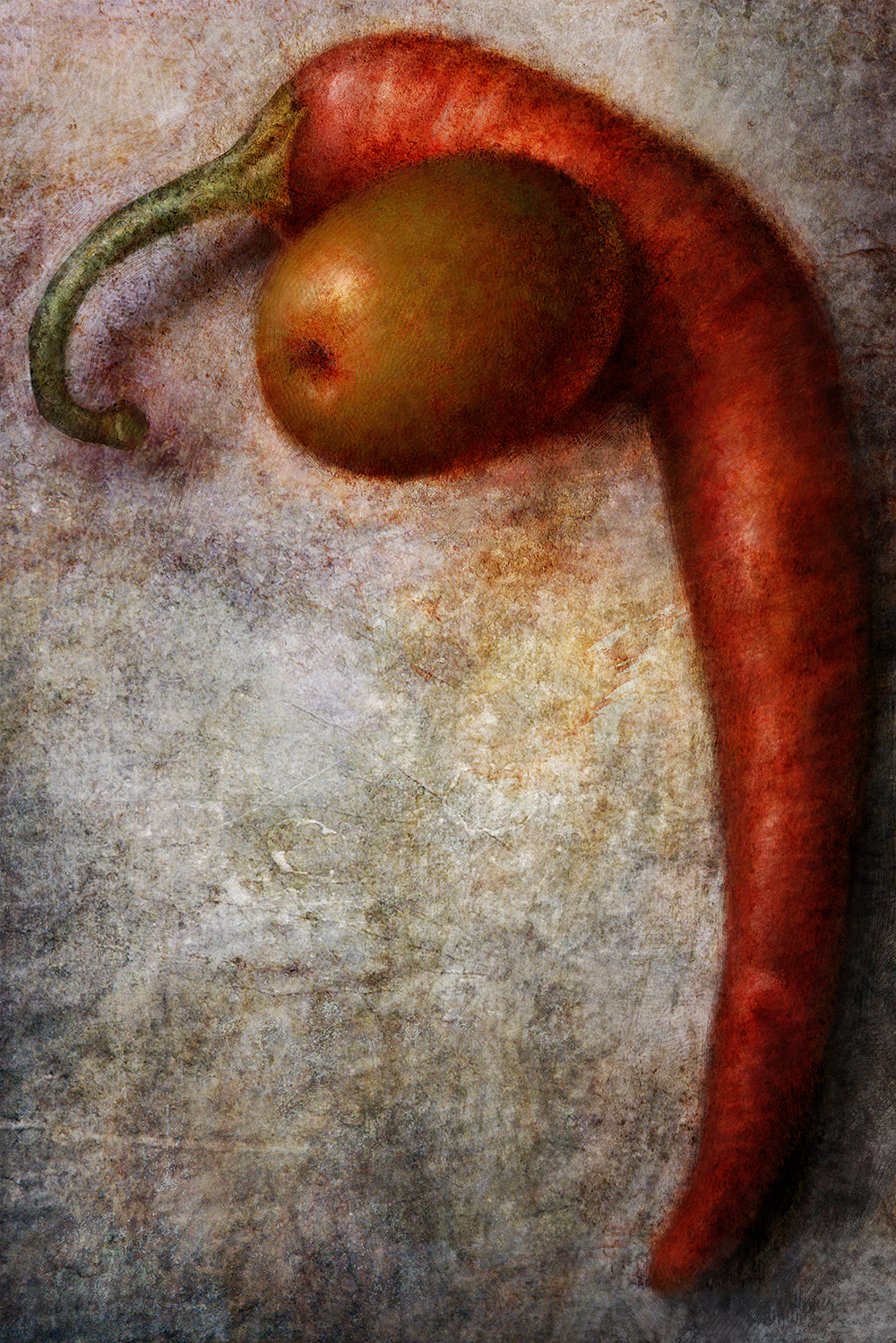


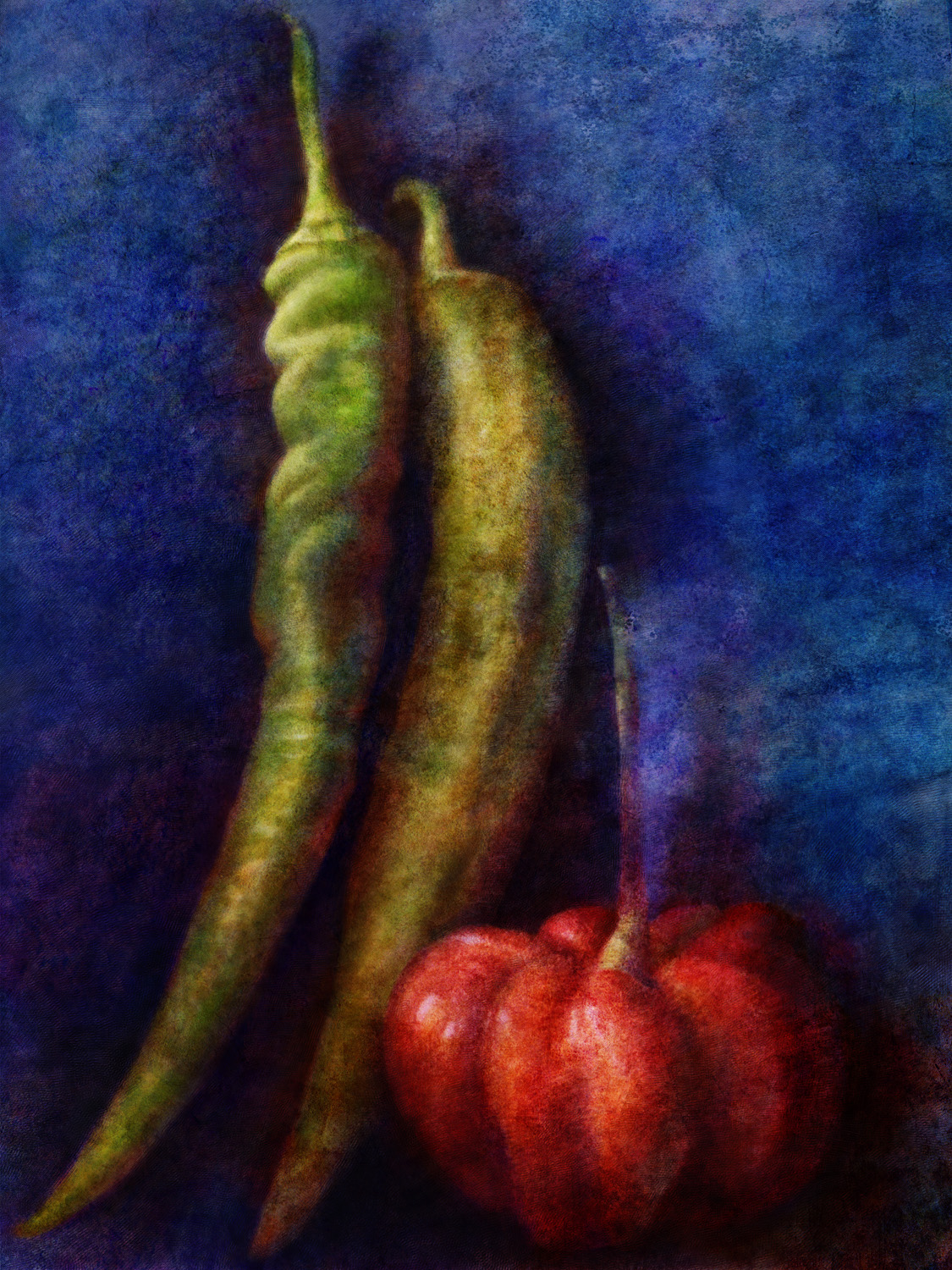


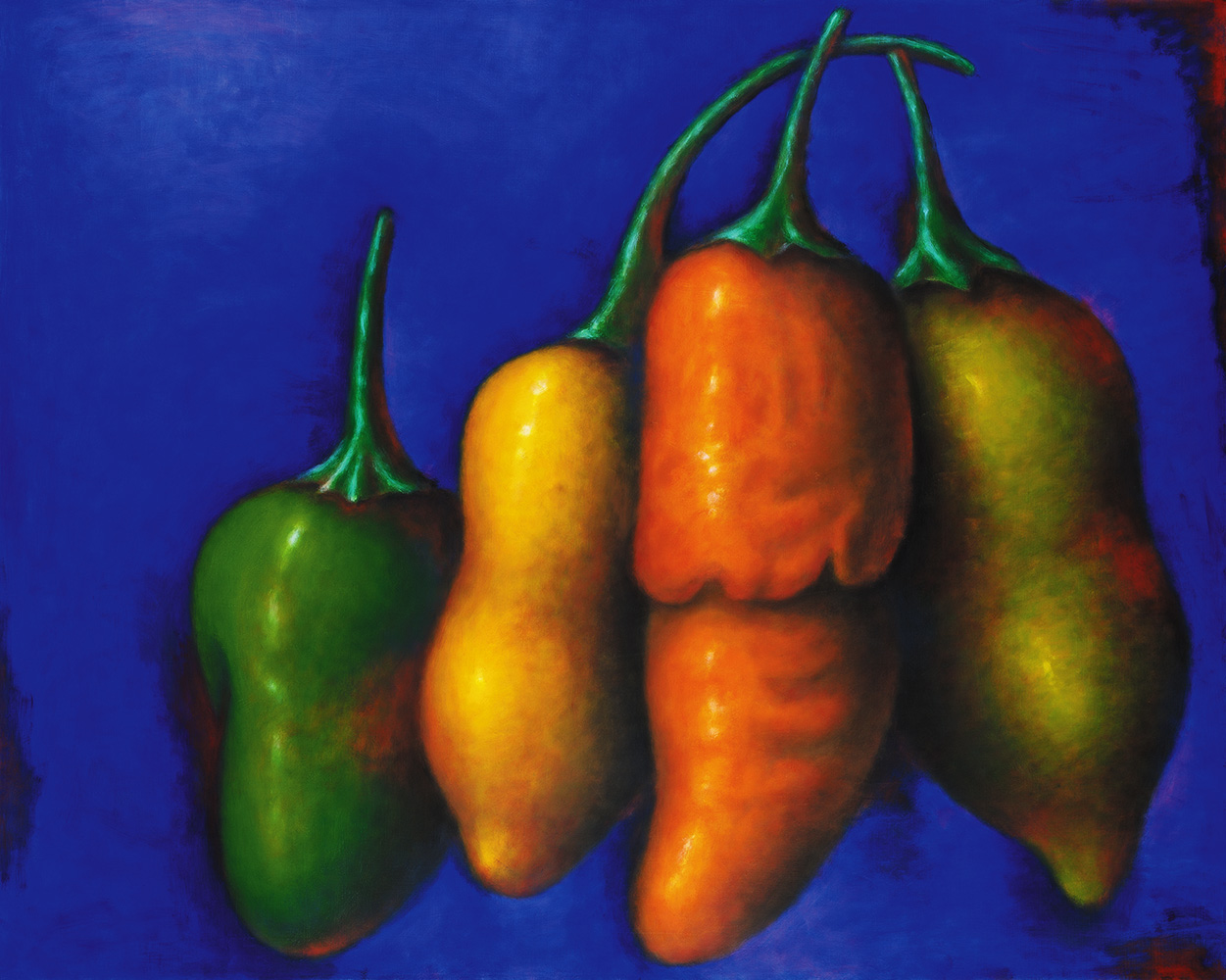


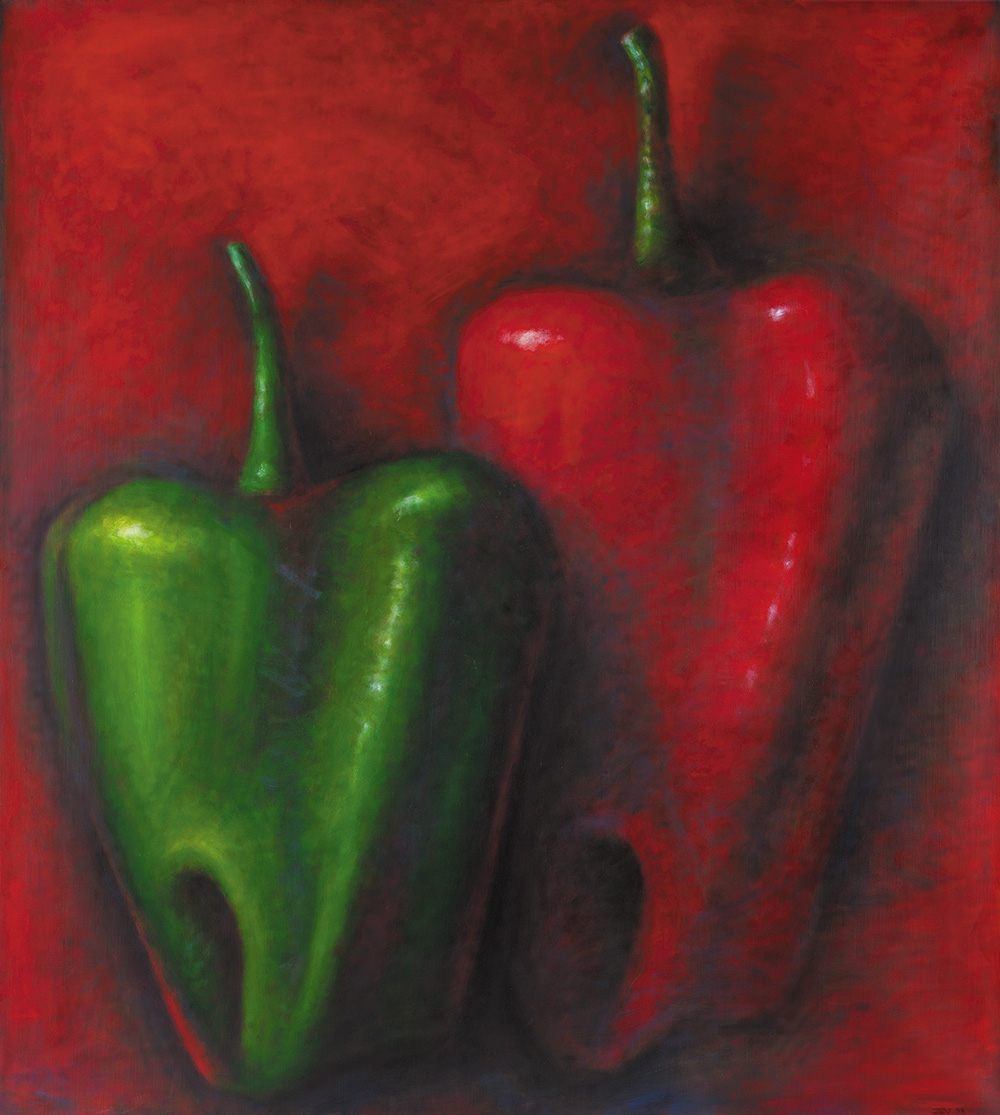
While in London, he also started working on videos and digital art projects as part of Art After Science, formed with Adrian Marshall, creating a variety of works that have been exhibited widely, including at ARCO in Madrid, the Venice Video Art Fair, and the LOOP Video Fair in Barcelona.
Robinson returned with his family to Spain in 2005, where his video work led to a series of documentaries on wine, food and rural life in Spain. That left him with little time to paint, but in 2012 he showed a series of newly created works of Amphorae at the Dinastia Vivanco Museum. Since then, he has restarted a series of images based on film noir and pulp fiction covers.
|
|
Click here to keep up with the latest in world food and wine news.

|
|
 by Jonell Galloway
Click to see the Tasting Week program for the entire country. Tasting week runs from 13 to 23 September 2012.
This year many of the events are sponsored by Savoring a week of ‘slow food’ across the country.
|
|
 by Jonell Galloway
Discover the various wine grape varieties and wines of Mont-sur-Rolle at the Caveau de Mont-sur-Rolle on September 1st, 2012. This is a great introductory wine course to Vaud wine.
The walk makes for a lovely daytime family outing. The 5-kilometer walk through the vineyards includes 9 stops at different grand cru wineries. Wine tastings are given by the actual wine maker, with explanations about the method and technique used. It is an easy walk, so children can even come along. The discovery tour starts every 15 minutes, from 10:30 a.m. to 2:00 p.m.

If you’d like to reserve a traditional Swiss dinner and make it a gourmet walk, you must reserve ahead. Adults 60 CHF, children 25 CHF.
From 10.30 a.m. in front of the Caveau des Vignerons
Address: Route du Coeur de la Côte, 1185 Mont-sur-Rolle
From 12 p.m. at Domaine de Bellevue
Musical entertainment
Snacks and refreshments
Wine tasted on sale
Contact Tania de Wateville by email at montbenay@gmail.com or by phone 41 (0)79 363 48 59.
|
|
 by Diana Zahuranec
As I stood in the crisp air and bright sun of a Portuguese farm with the other Slow Food University of Gastronomic Sciences students, a single question popped into my mind. We were learning about the Churra da Terra Quente sheep breed, an indigenous and endangered animal with tangled wool and long, dirty tails. They were a rough-looking lot, but watched us curiously and weren’t as shy as other sheep I’ve unwittingly terrified just by standing by them. Some scratched their dirty wool on dry tree trunks, and others flopped down onto the dry soil that was bereft of rain for 4 ½ months, unconsciously dirtying themselves even more. They had curly horns like trofiette pasta. I got the impression that they were happy, or content, to be out in the sun watching us watching them.
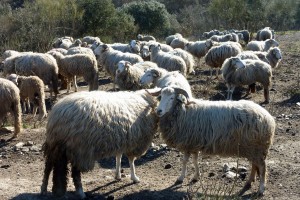
Churra da Terra Quente sheep in the dry Douro
In an indigenous flock – or group, or pack, or what-have-you – the purity of the breed is kept by inbreeding. In dogs, I know this leads to some odd character traits: Dalmations, for example, can be suddenly temperamental; my family’s Vizsla at times suffered anxiety and, strangely for a dog, psychological problems – and was also, of course, the most intelligent dog on earth.
|
|
by Amanda McInerney
Whenever anyone asks me what were the high points of our recent trip to Europe I always answer with two simple words: the food. We happily indulged ourselves whenever possible, knowing we would be walking it all off within days, and I was pleased to note that I came home carrying no extra baggage except for my shopping.

I was having a conversation about our foodie finds with my friend Kris Lloyd, the cheese-making talent behind South Australia’s multi-award winning Woodside Cheese Wrights, not long after we got back and was waxing lyrical about some butter made from clotted cream (cultured butter) which we had bought on our last day in London. It was part of a significant haul that we took home from London’s Borough Markets for a final feeding frenzy before we flew home and had made quite an impression. Kris commented that she had recently been “playing around” (her words) with cultured butter, including one which she had washed in whiskey. With the taste of the delicious, golden London lipids still lingering, to say I was eager to try Kris’ efforts would be something of an understatement.
Cultured butter is something of a recent discovery for many Australians, but has been in use for hundreds of years in Europe. The butter we are used to is what Europeans refer to as “sweet cream butter” — delicious, but lacking the depth of flavour of cultured butter. Cultured butter is made in exactly the same way as ordinary butter, but a live culture is added to the cream which is allowed to ripen for some time before being churned, salted (or not) and rinsed. Kris adds the culture to her cream 24 hours before she uses it to make butter, giving the cream time to “clot”. Cultured butter has a richer, deeper flavour, which some find somewhat tangy, and also comes with a little probiotic boost from the addition of the live culture.

Kris gave me three different batches to play around with — an almost unsalted butter, salted butter and the remarkable whiskey-washed version — and I’ve had a very happy day or two getting to know them. They are all truly delicious and definitely add an extra facet to the dishes I used them in: a Mushroom and Almond Bruschetta with Chèvre and Vanilla-Poached Oranges with Pikelets. I kept these recipes fairly simple in order to let the ingredients do the talking. There’s no point in using outstanding produce and then smothering it with other flavours and fancy techniques; good food doesn’t need to be tricky. The mushrooms I used came from Marco the Mushroom Man in the Adelaide Central Market and the sublime oranges were in our CSA box from Jupiter Creek Farm, all fresh, local and fabulous. I couldn’t help adding some wonderful Beerenberg Caramelised Onions to the mushroom dish. They finished it off perfectly.

Prep time: 5 mins
Cooking time: 10 mins
Total time: 15 mins
Serves: 2
This made a good lunch for 2, but would also make an entrée for 4.
Click here for metric-Imperial conversions.
The whiskey-washed butter was used in an even simpler dish of pikelets (small bite-sized pancakes) with vanilla-poached oranges, but the combination was absolutely stunning and much appreciated by the guests to whom I served it yesterday for afternoon tea. My good friend Meg is very partial to a wee dram or two of whiskey and her eyes glazed over just a little while eating these.

I’m sure everyone can work out how to make basic pikelets.
As for the vanilla-poached oranges: the oranges were simply peeled, making sure all of the pith was removed, sliced about 10mm thick and gently poached for ten minutes in a syrup made of 1 1/2 cups of white sugar, 1/2 cup of water and one vanilla bean, split open and scraped – hardly a recipe at all! I cooled them slightly in the syrup, buttered the hot pikelets with the whiskey-washed butter and layered the oranges and pikelets, topping with a dab of the precious butter. Eat, then swoon.
|
|
by Diana Zahuranec
This is too exciting not to share.
I have discovered an entire, legally downloadable Encyclopedia of Pasta by Oretta Zanini de Vita, translated by Maureen B. Fant, with hand-drawn sketches of over 300 traditional types of pasta. A description and production method, origins and with what recipe each kind is used are included for every pasta shape. Plus, there’s a lovely introduction about pasta.
Next to see if it is downloadable on a Kindle.
|
|
 Meet Jonell Galloway, a freelance writer and editor specialized in French cuisine.


 by Vendange