Click here to keep up with the latest in world food and wine news.

Related articles
|
|

A Literary Culinary Journal
What I love about cooking is that after a hard day, there is something comforting about the fact that if you melt butter and add flour and then hot stock, it will get thick! It’s a sure thing! It’s a sure thing in a world where nothing is sure; it has a mathematical certainty in a world where those of us who long for some kind of certainty are forced to settle for crossword puzzles.–Nora Ephron
Academy Award for Best Writing was an American journalist, essayist, playwright, screenwriter, novelist, producer, director, and blogger. She is best known for her romantic comedies and was nominated three times for the Academy Award for Best Writing (Original Screenplay): for Academy Award for Best Writing, Silkwood…, and When Harry Met Sally.
|
|

On a hot day in Virginia, I know nothing more comforting than a fine spiced pickle, brought up trout-like from the sparkling depths of the aromatic jar below the stairs of Aunt Sally’s cellar.–Thomas Jefferson
Thomas Jefferson was an American Founding Father, the principal author of the Declaration of Independence (1776) and the third President of the United States (1801–1809). See more about this great statesman on the White House website.

|
|
The joys of the table belong equally to all ages, conditions, countries and times; they mix with all other pleasures, and remain the last to console us for their loss.—The Physiology of Taste (1825) by Jean-Anthelme Brillat-Savarin
Jean Anthelme Brillat-Savarin was a French lawyer and politician, and gained fame as an epicure and gastronome. His famous work, Physiologie du goût (Physiology of Taste), was published in December 1825. The full title is Physiologie du Goût, ou Méditations de Gastronomie Transcendante; ouvrage théorique, historique et à l’ordre du jour, dédié aux Gastronomes parisiens, par un Professeur, membre de plusieurs sociétés littéraires et savantes. The book has never been out of print since it first appeared, two months before Brillat-Savarin’s death. Its most notable English translation was done by food writer and critic Physiology of Taste, who remarked, “I hold myself blessed among translators.” Her translation was first published in 1949.
|
|
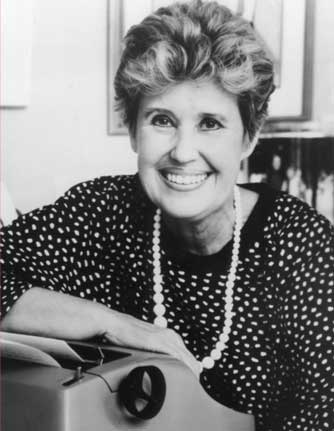
The age of your children is a key factor in how quickly you are served in a restaurant. We once had a waiter in Canada who said, “Could I get you your check?” and we answered, ‘How about the menu first?”–Erma Bombeck
Erma Louise Bombeck (1927-1996) was an American humorist who achieved great popularity for her newspaper column that described suburban home life from the mid-1960s until the late 1990s. Bombeck also published 15 books, most of which became best-sellers. Click here to see more about the Erma Museum.
|
|
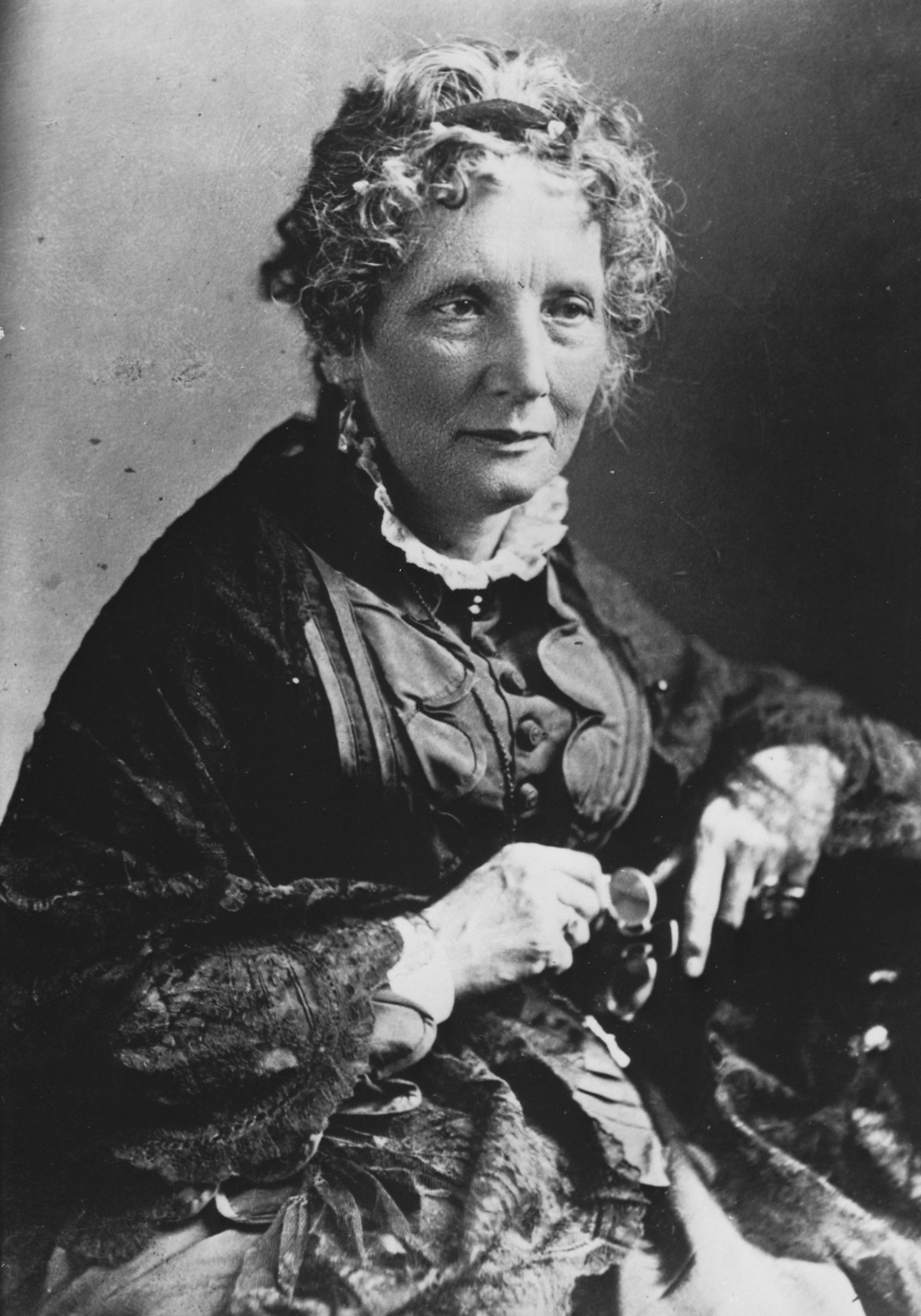
The king and high priest of all the festivals was the autumn Thanksgiving. When the apples were all gathered and the cider was all made, and the yellow pumpkins were rolled in from many a hill in billows of gold, and the corn was husked, and the labors of the season were done, and the warm, late days of Indian Summer came in, dreamy, and calm, and still, with just enough frost to crisp the ground of a morning, but with warm traces of benignant, sunny hours at noon, there came over the community a sort of genial repose of spirit — a sense of something accomplished.–Harriet Beecher Stowe
Harriet Beecher Stowe was an American abolitionist and author. Her novel Uncle Tom’s Cabin was a depiction of life for African-Americans under slavery. It reached millions as a novel and play, and became influential in the United States and United Kingdom. It energized anti-slavery forces in the American North, while provoking widespread anger in the South.
|
|
Bad cooks — and the utter lack of reason in the kitchen – have delayed human development longest and impaired it most.–Friedrich Nietzsche, Beyond Good and Evil, 1886

Friedrich Wilhelm Nietzsche was a German philosopher, poet, composer, cultural critic, and classical philologist. He is best known for saying, in his famous work Thus Spoke Zarathustra: A Book for All and None, that “God is dead” and declaring that man, no longer “the image of God,” is a “chance product of a nature uninterested in purpose or value”.
|
|
The belly is the reason why man does not mistake himself for a god.–Friedrich Nietzsche, 1886
Friedrich Nietzsche (1844–1900) was a German philosopher of the late 19th century who challenged the foundations of Christianity and traditional morality. Central to his philosophy is the idea of “life-affirmation,” which involves an honest questioning of all doctrines that drain life’s expansive energies, however socially prevalent those views might be.

|
|
 by Jonell Galloway
Click here to keep up with the latest in world food and wine news.

Photo by Prerna Singh
|
|
The whole of nature is a conjugation of the verb to eat, in the active and the passive.–William Ralph Inge, 1920
William Ralph Inge was an English author, Anglican priest, professor of divinity at Cambridge, and Dean of St Paul’s Cathedral, which provided the appellation by which he was widely known, “Dean Inge.” Author of thirty-five books, he is best known of for his works on Plotinus and Christian Neoplatonic philosophy, and Christian mysticism.

|
|
 Meet Jonell Galloway, a freelance writer and editor specialized in French cuisine.