Local vs. Non-local Food: The Arguments

Published by Saturday, January 12, 2013 Permalink 0

by Jonell Galloway

I think we got spoiled by eating cheap food from all over the world. That put us out of sync with nature and skewed the price of local produce and products vs. produce and products from distant places, leading us to waste what we once had held precious because it was seasonal and local and therefore rare. Slow Food USA and Josh Viertel were right in fighting for fair wages for our own farmers and trying to lead us back to a way of eating that is in line with nature, which of course means paying a little more, but improving our health and local economy.


There are many more arguments to be put forth. Let’s talk about it: the pros and cons, your experiences, your convictions, etc. We’d love to get a big discussion going here.

Click here to watch Building a Slow Food Nation, outlining the history of Slow Food in the U.S., and including Josh Viertel’s view.


Never miss a post
Name: 
Your email address:*
Please enter all required fields
Correct invalid entries

What we’re reading: bread pots, bad cooking myths, how the French Revolution changed food history, gourmet vegetarian

Published by Thursday, December 20, 2012 Permalink 0

by Jonell Galloway

Click here to find the best in current food news and trends in the world of real food, Slow Food and mindful eating.


Never miss a post
Name: 
Your email address:*
Please enter all required fields
Correct invalid entries

Salone del Gusto versus Good, Clean, and Fair: Part 1

Published by Wednesday, December 12, 2012 Permalink 0


Salone del Gusto versus Good, Clean, and Fair: Part 1

by Diana Zahuranec

Salone del Gusto, an event held biannually in Turin, Italy by the organization Slow Food, gathers artisanal producers from around the world in five days of selling organic or biodynamic, high quality, artisanal, innovative and traditional products; tasting workshops; and conferences about the state of the world’s food system and what can be done to promote sustainable growth. It’s an amalgamation of the green movement and everything it could possibly stand for before such a thing as “green washing” existed.

So what were the Italian supermarket COOP, the internationally famous Italian espresso company Lavazza, and the ubiquitous road-side Italian convenience store Autogrill doing at the Salone?

A supermarket is the antithesis of Slow Food’s “good, clean, and fair” motto. Products are available at any quality, starting at “low” and often not reaching above “decent;” produce and packaged goods come from all over the world, with little thought as to what other countries deem as “safe” pesticides, and with less thought about the energy used to transport everything; and finally, it’s anyone’s guess as to how many products lining the shelves were made under unpleasant or dangerous working conditions with low wages as poor compensation.

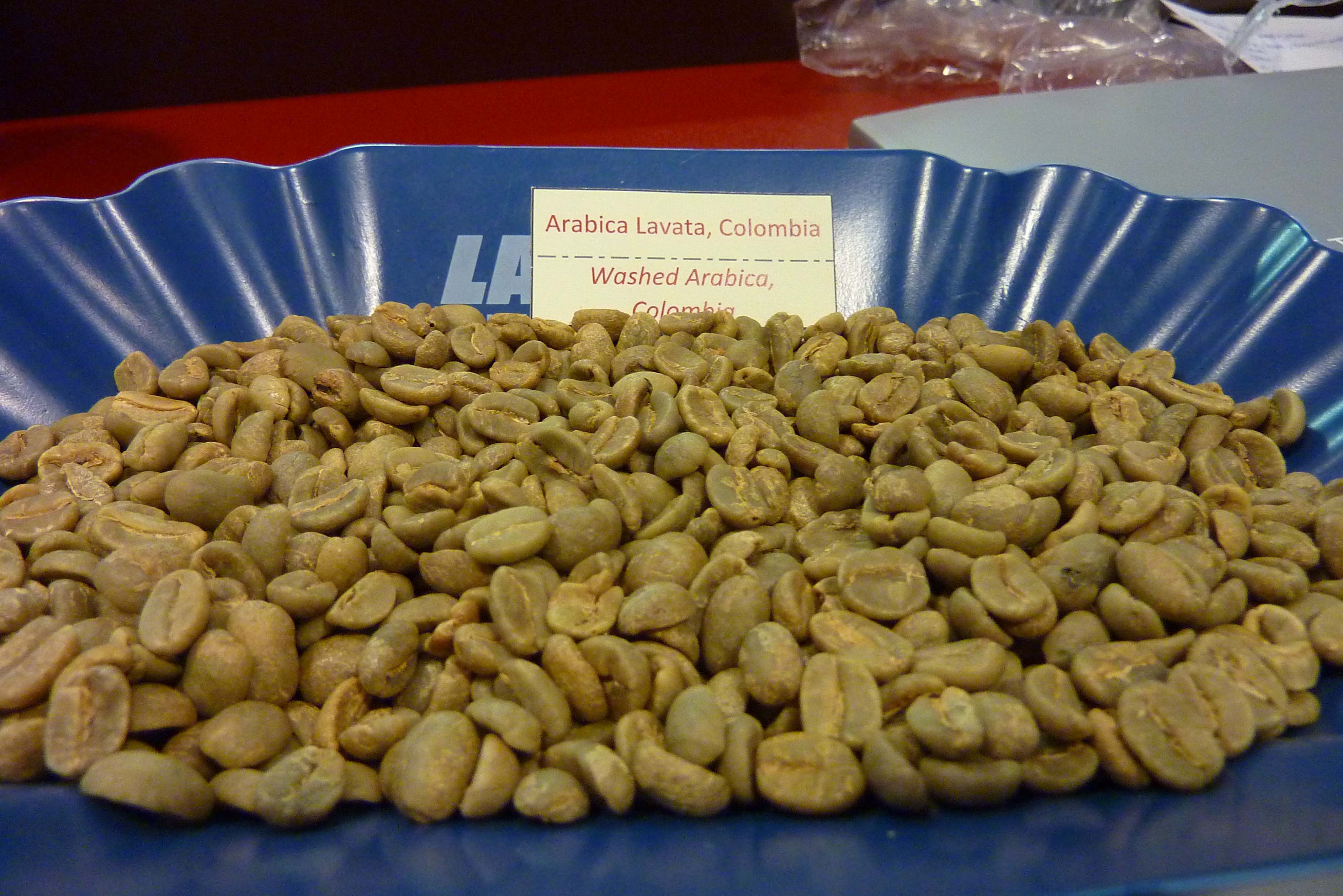
Coffee beans are notorious for their high demand pitted against their low cost, possible only through unfair working conditions and wages. Coffee plants are harvested using mono-cropping methods, which is environmentally friendly only in the interests of that particular crop.


Continue Reading…

Never miss a post
Name: 
Your email address:*
Please enter all required fields
Correct invalid entries

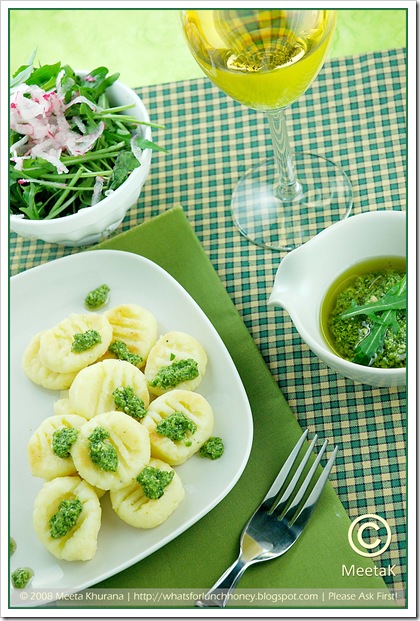
Recipe: Parsnip Gnocchi with Ruccola Cashew Pesto

Published by Thursday, November 29, 2012 Permalink 0

by Meeta Khurana Wolff

Recipe: Parsnip Gnocchi with Ruccola Cashew Pesto

From the archives

Parsnip Gnocchi (02) by MeetaK

Rock solid! That’s what the ice on my windscreen this morning was. It was so hard that here was no way my ice scraper was going to break any ice. At -5 degrees C my hands were freezing onto anything that had the slightest bit of moistness!

Winter has settled down comfortably in our parts. There was beautiful snow all through the Thanksgiving weekend and ever since, it’s been a bit dull, cold and icy.

Continue Reading…

Never miss a post
Name: 
Your email address:*
Please enter all required fields
Correct invalid entries

What we’re reading: Persian chicken stew, Yam’Tcha Chinese fusion in Paris, anti-inflammatory recipes, Slow Down Diet

Published by Tuesday, November 27, 2012 Permalink 0

by Jonell Galloway

Click here to keep up with the latest in world food and wine news.


Never miss a post
Name: 
Your email address:*
Please enter all required fields
Correct invalid entries

Salone del Gusto versus Good, Clean, and Fair: Part 2

Published by Monday, November 26, 2012 Permalink 0

by Diana Zahuranec

In Salone del Gusto versus Good, Clean, and Fair: Part 1, I’ve already mentioned some healthy skepticism about the presence of two big Italian names at Salone del Gusto: Lavazza Italian coffee, and the supermarket Coop.

Lavazza takes on the responsibility of Fair Trade coffee, but wearing a label doesn’t necessarily prove honest actions behind it. There are loopholes to be jumped in any policy. Without venturing beyond the comfort of online research to the plantations in South America, however, I couldn’t say with utter certainty how good, clean, and fair they are. My main conclusions? Don’t check off the Good Deed Done for the Day box just by buying Fair Trade, without knowing all the facts behind it.

It just doesn’t look Slow Food-y

As for Coop, I was very surprised to see this popular Italian supermarket in a haven of small-time producers at the Salone. Coop is no WalMart nor, on this side of the Atlantic, EuroSpin; shopping in my local Coop store, I’ve noticed very high quality, Alpine mountain cheeses, for example, alongside the added-preservatives-colors-skim-milk-binder, generic salumi; and I suppose I notice more organic produce overall. As far as the realm of supermarkets is concerned, my limited observations earn Coop a dull gold star. But a place at Salone del Gusto? Hardly, I thought.

Asking fellow Slow Food members what they thought, a Swiss friend informed me that it was in large part thanks to Coop, a charter member of Slow Food, that Slow Food Switzerland was initiated and is running strong today. Polish that gold star!

In fact, Slow Food and Coop have a partnership, with Coop supporting and promoting Slow Food values through selling local products as well as over 100 Presidia products (a Presidia labeled food being the equivalent of a protected or endangered animal in the food world).

Coop’s powerful, positive presence in the world of local producers and Presidia was brought home when I sat in for a tasting of some products during Salone del Gusto. Not that I wanted to taste anything. By the end of one of Salone’s last days, I had done as much tasting as my belly and buds could bear. But my legs were tired, and Coop had set up a booth lined with dangling Prosciutto legs, plastic chairs in rows, and a tasting of jam and juice. I didn’t resist.

The tasting was introduced by a Coop Quality Control employee and a representative of a Bosnian company based in Bratunac called Frutti di Pace, or “Peace Fruits.” Together, they told a story of how the Coop employee traveled to Bosnia for this product, met with the Bosnian woman, and formed an instant friendship that was strengthened, as in all cultures, over an abundant welcoming meal.

The employee found that the hardworking spirit and community of the women of Frutti di Pace were as charming as the incredible, all-natural flavors of their products were delicious.

Frutti di Pace was established after the Bosnia and Herzegovina War in 1992-1995. The members of this cooperative, mostly widowed women or women with husbands injured from the war, wanted to spur growth: of the local economy, of a long-held tradition ground to a halt from the war (raspberry production), and of a sense of community and confidence.

The first product we tasted was a thick raspberry juice. No colors, sugars, or conservatives were added – just water and red raspberry. It was exactly like plucking a handful of raspberries from a bush, squishing them all into your mouth, and squeezing out the juices with your tongue. The jams were next, and equally impressive in their bright, strong raspberry flavors. It lacked seeds, but that’s a personal preference of mine for raspberry jams.

Frutti di Pace spent ten years trying to get into the European market. The speaker was overwhelmed almost to tears when she recalled how happy they had been when Coop began selling their products. “’To hope’ is still difficult after everything we’ve been through,” she said.

My knee-jerk reaction to “supermarket” is “too much fluorescent light!” and then, “against all things Slow Food.” But this is not true (well, the second one). Today’s food market is pulled in two directions: one towards a global system made of imports, exports, and oil, the other towards local, small production, trends, and being organic. It’s important to consider the possibility that, between these two polar opposites, not everything is black and white. The grey areas will be necessary to marry two things that won’t go away for better or for worse: supermarkets in many parts of the world, and the importance of strong, local economies and good, clean, and fair food in all parts of the world.

Selling local food (or organic, or from a small producer, etc.) through a medium that everyone uses and will continue to use as long as it exists is ethically responsible and also quite genius.

The question remains: Does Coop Italia earn the good, clean, and fair award? It is still a supermarket that sells items ranging from low to high quality, from all parts of the world, and at prices too low to actually be profitable for the producer. But the answer is nevertheless yes – just, in a rather grey way.

Never miss a post
Name: 
Your email address:*
Please enter all required fields
Correct invalid entries

What we’re reading: how food replaced art, history of coffee, heirloom apples and pie, 5 misconceptions about Port wine

Published by Friday, November 16, 2012 Permalink 0

by Jonell Galloway

Click here to keep up with the latest in world food and wine news.

Photo by Jonell Galloway ALL RIGHTS RESERVED (C)


Never miss a post
Name: 
Your email address:*
Please enter all required fields
Correct invalid entries

From Tokyo: Quirk of Fate after the Quake

Published by Wednesday, November 14, 2012 Permalink 0

by Nancy Singleton Hachisu

From the archives, in celebration of Nancy Singleton Hachisu’s new book Japanese Farm Food, already on its way to becoming a classic

My Surreal Dinner at Les Créations de Narisawa Restaurant after the Quake in Tokyo

Just moments before the Great East Japan Earthquake began to shake I was thinking about food.

While making my way towards Tokyo Station to catch the bullet train back to my local area 100 kilometers northwest of Tokyo, I was toying with dropping by my regular sushi shop near Tokyo Station for a palate cleanser (to chase away a disappointing sushi lunch earlier). Though really, I was wishing I could stay in town for dinner. Alas, I knew this would not sit well with my husband as I had just gotten back a couple days earlier from a quick trip to the U.S. And I had been gone way too much this last year.

Nonetheless, the idea took hold.

That morning I had sat in on a brain storming session exploring logistics of bringing the next edition of Cook It Raw to Japan. As the talk flowed around me, my nascent desire to “experience” Yoshihiro Narisawa’s provocative Japanese-influenced French “food” swelled into an obsessive urge to eat at his Minami Aoyama restaurant, Les Créations de Narisawa that night. Impractical, crazy, costly…impossible. Or so I thought.

When the ground of the massive station building where I stood stopped rippling and the initial terror had passed, the other passengers and I all waited quietly with backs leaning against the station walls. All eyes were fixed on our cell phones in hand, trying unsuccessfully to get a signal. No one said a word.

I emailed my 14-year-old son, home sick from school that day, and got a return email immediately. The house and family were fine.

At that point I still thought the trains would be running again, because the JR announcements were telling us there had been a “big earthquake,” and to wait as they checked the train lines. I dutifully waited for 45 minutes before realizing it was pointless. And so I made my way through underground walkways to Tokyo Station and began to realize the enormity of what had just happened.

Student groups trapped on their way through Tokyo for the annual School Trip were seated on the floor as teachers gave instructions. The bullet train would not be running that day (or the next).

My first thought was getting a hotel (and that I could stay for dinner). I had already squandered a crucial hour waiting for the trains to run, so the streets had swollen with commuters by the time I surfaced outside of Tokyo Station. I only knew of a few hotels and was not sure which side of the station they were located. Tokyo Station is a massive behemoth spanning multiple city blocks. When I finally got my bearings, it was getting on towards 5pm, already 2 hours after the earthquake. The hotels were full, so I lined up for the payphone to call Les Créations de Narisawa. My iPhone battery was dying, I was getting cold, and I knew I needed to get to a safe haven to recoup my energy before the night ahead of me. I needed food and I needed good food.

It was now about 6pm. I glanced over at the hoards waiting for taxis and optimistically told the restaurant I would try to get there by 7:30, but gave them my email for contact.

I now had a destination and nothing would deter me from getting there. Nothing.

The line for taxis looked insanely long and seemed to feed in from different directions. I dithered. I stood in line for a while, still unable to commit: wait it out or find another way. I tried to gauge how long it would take by talking to others around me in line—I’m not sure what we were thinking. We somehow believed that if we stood there long enough, the taxi would take us where we wanted to go. But what exactly was, “long enough?” One hour…five?

The alternative was unthinkable. Walk.

But I didn’t have all night to passively wait. I had less than 2 hours to get to my asylum away from the massive surge of humanity that had filled the sidewalks and streets. I knew I could handle a night on the floor of Tokyo Station, but desperately needed something to ground me in the chaos. And the only thing that does that for me is a quiet room and thoughtful food.

So I set off walking. Power walking, that is.

Thanks to a fellow “traveler” met early on in my trek, I got to Minami Aoyama in about an hour and a half. We stopped one time on a pedestrian bridge over Aoyama Dori (a main thoroughfare). The vast sea of lights before us was from the cars that barely inched forward. No taxis were getting through that night. Walking had been a good decision.

A flute of champagne in hand, my iPhone charging, I heaved a huge sigh of relief. I was “home.”

For the next two hours, a surreal dinner like I had never had before unfolded. It almost seems obscene in retrospect: tree bark, tree sap…bread baked before my eyes in a small stone capsule. Unusual and whimsical morsels from land and sea played together on the equally fanciful “plates.” I was the only customer that night. Perhaps I was the only one crazy enough to take refuge in such a place. Shut off from the outside world, none of us in that hushed room of Les Créations de Narisawa really knew or understood the gravity of the earthquake and all the horror and devastation it had brought. Nor had any of us imagined the unthinkable happening as it has happened at Fukushima Daiichi.

That night at Les Créations de Narisawa, I was caught in a soft little bubble, coddled by the staff. All of us unaware of what awaited us when the bubble burst.

At 10 o’clock, I stepped back out into the brisk night and started my return voyage. Long (useless) waits for trains, a night spent shivering on the marble floor of Tokyo Station, and more endless lines later, I finally got home late the following day. And for now we are safe, though 215 kilometers does not seem far enough from Fukushima Daiichi. But hundreds of thousands of Japanese are still in shelters and many will not be able to go home for many years to come.

And in the aftermath, we try to pick up our lives. I am planting seeds for the summer and looking towards the future. I am trying to organize food for a shelter in our prefecture and to offer a family the vacant teacher apartment at our school, but the wheels grind slowly here and accepting help from outside sources means someone has to manage that. There seems to be an absence of organization to deal with donations and the shelter contacts prefer money or instant ramen over real food like a big pot of stew from farm chickens and local (non-irradiated) vegetables. But that’s Japan, it’s all about the face-to-face meeting, not phone arrangements. I suppose a road trip is in order.

 

Never miss a post
Name: 
Your email address:*
Please enter all required fields
Correct invalid entries

Pumpkin “Museum”, Salone del Gusto 2012, Slow Food Italia

Published by Tuesday, November 13, 2012 Permalink 0

All the Pumpkins Varieties in the World: A Photo Essay

by Jonell Galloway

Pumpkin varieties of the world, Salone del Gusto 2012

Image 1 of 6


Never miss a post
Name: 
Your email address:*
Please enter all required fields
Correct invalid entries

A Look at Slow Food’s Salone del Gusto, October 2012, in Turin, Italy

Published by Saturday, November 3, 2012 Permalink 0

by Diana Zahuranec

Salone del Gusto ended on Monday 29, but I can’t stop thinking about it.

Salone del Gusto, held in Turin, Italy, is a Slow Food biannual food fair and conference. To sum it up in these few words undermines everything else it is, too, and its importance as an event that brings together producers from all over the world. These are producers that grow ancient varieties of grain to save genetic biodiversity, that make Slow Food Presidia cheeses or salumi, that pipe their cannoli full of the freshest organic ricotta you’ve ever tasted, and whose principles and values align with your own and, it goes without saying, Slow Food’s – good, clean, and fair food for all.

The Slow Food mascot

For all things Slow Food, here are some links courtesy of Scoop.it and Slow Food. To understand a few of those words in the paragraph above, just look at the end of the article.

This year, Salone del Gusto was a marriage of the original Salone del Gusto, first held in 2006, and Terra Madre, first held in 2004. While both events had food artisans and producers from all over the world, different activities were held at each and were not all accessible to the public. Salone del Gusto focused more on the exposition and sale of high quality foods and products, while Terra Madre was a gathering of a network of food producers from around the world. Having never been to either of these before, I can’t offer judgment on the differences of before and after. What I would love to do is share my first-time impressions of this year’s.

To say Salone is a food fair means that, like your down-home county fair, the place is jumping with activity – with a few notable differences. The funnel cakes are replaced with French butter cookies in 20 different flavors, the groundhog whacking game is replaced with the foodie’s (divisive word, I know) form of fun, that is vertical Barolo wine tastings, and that feeling of riding the Zipper right after you eat your funnel cake is replaced by the feeling of pressing up against crowds right after you drink your Barolo wines.

Continue Reading…

Never miss a post
Name: 
Your email address:*
Please enter all required fields
Correct invalid entries

UA-21892701-1