Switzerland: A Documentary Slide Show of the 1st Salon du Chocolat in Zurich

Published by Sunday, April 1, 2012 Permalink 0

Switzerland: A Documentary Slide Show of the 1st Salon du Chocolat in Zurich

by Jonell Galloway

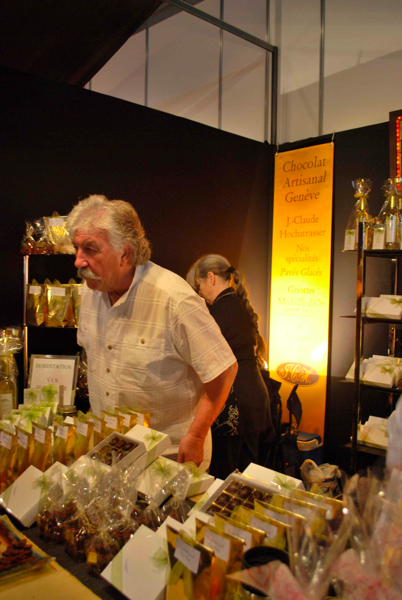
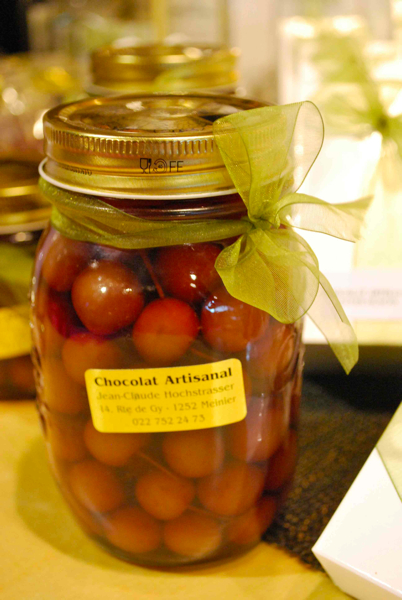
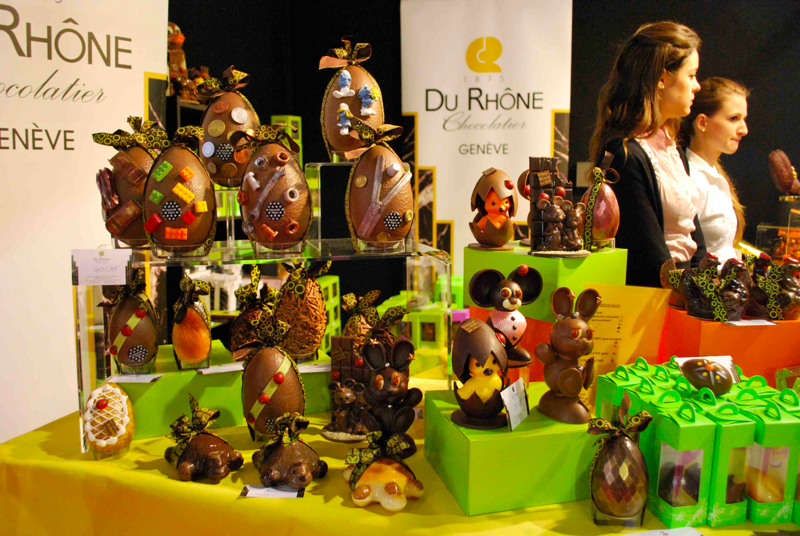
Here’s a quick, unfiltered overview of the photos I took at the first Salon du Chocolat Zurich.

These are here to help you get an idea of what was on offer at the show. They are not professional photos, yet they are mine. If you want to use them commercially or copy them, please be so kind as to contact me beforehand by clicking on the blue Contact Us button at the top right of our home page.

I’ll be adding more tonight or tomorrow morning, so stay in touch!


Continue Reading…

Never miss a post
Name: 
Your email address:*
Please enter all required fields
Correct invalid entries

Swiss Supermarket Discoveries Part II: Culture Shock

Published by Wednesday, August 31, 2011 Permalink 0

by Sonja Holverson


“Gourmet” bread with sunflower seeds outside and inside, along with nuts

Discovering Swiss grocery stores was eye-opening, at least to my American eyes. On the surface, the supermarkets look very similar, but once you delve in, it’s another whole ‘nother world.

Continue Reading…

Never miss a post
Name: 
Your email address:*
Please enter all required fields
Correct invalid entries

Switzerland: Tomatoes and Swiss Chard, and it’s in Season!

Published by Tuesday, August 16, 2011 Permalink 0

by Jonell Galloway

Swiss chard, along with kale, mustard greens and collard greens, is one of several leafy green vegetables often referred to as “greens”. It is a tall leafy green vegetable with a thick, crunchy stalk that comes in white, red or yellow with wide fan-like green leaves.

The Swiss variety tends to have whitish stems not dissimilar to green celery but wider and somewhat fan-shaped, while the varieties found in North America can be red, purpose or yellow. Some say chard is second only to spinach in terms of nutrients, and it is certainly full of fiber and phytonutrients.

When choosing chard, make sure the leaves are not wilted and the stems look fresh and crisp. If it looks limp in any way, pass it up.

It is one of the few vegetables that probably shouldn’t be eaten raw, due to its high acid content.

Although it is referred to as “Swiss” chard, it isn’t actually native to Switzerland. It is a Mediterranean vegetable. Already in the fourth century B.C., Aristotle wrote about “chard”, the common name used in the Mediterranean region. It probably got its name from a vegetable that it resembles, the cardoon. It is thought that the French confused the two and ended up calling them both “charde”.

In modern times, the French call Swiss chard blettes, the Swiss call them côtes de bettes, and, funnily enough, the English-speaking world has kept the name closest to the original used in ancient times: chard.


Swiss chard (Beta vulgaris) with variously col...


Its actual homeland lies farther south, in the Mediterranean region; in fact, the Greek philosopher Aristotle wrote about chard in the fourth century B.C. This is not surprising given the fact that the ancient Greeks, and later the Romans, honored chard for its medicinal properties. Chard got its common name from another Mediterranean vegetable, cardoon, a celery-like plant with thick stalks that resemble those of chard. The French got the two confused and called them both “carde.”

Swiss chard is in season for a good deal of the year in Switzerland, but this recipe takes advantage of summer to use some of those divine tomatoes that embellish the farmers markets.

In winter, it can be mixed with potatoes to make a lovely purée or soup.

Recipe

Tomatoes and Swiss Chard

Ingredients

Click here for recipe measurement converter

1 Tbsp. cooking oil

1 kg Swiss chard

500 g ripe tomatoes

1 tsp. sea salt
Pepper to taste
  1. Heat oil to medium low in a Dutch oven.
  2. In the meantime, bring a large soup pan of water to boil.
  3. Scrape any mud or black spots off Swiss chard. Wash carefully.
  4. Cut stems into 2 cm long chunks.
  5. Add Swiss chard to warm oil.
  6. Sautée for 2 minutes, stirring all the time.
  7. Wash tomatoes.
  8. Drop tomatoes into boiling water for 30 seconds or until skin starts to crack.
  9. Remove tomatoes from boiling water, and run under cold water, carefully removing the skins with fingers.
  10. Squeeze to remove seeds or scrape out seeds with end of a knife.
  11. Chop finely.
  12. Add tomatoes to Swiss chard. Mix well.
  13. Add sea salt and pepper to taste. Continue mixing.
  14. Turn heat down to low and cover Dutch oven. Cook slowly for 20 to 40 minutes, depending on whether you prefer it crunchy or less crunchy.
  15. Serve hot.

Suggestion: For a livelier version, add garlic and garam masala.

Suggestion: To make this in to a vegetarian meal, add borlotti, cannellini beans  or garbanzo beans and sprinkle with grated cheese.

Related articles

A chocolate school, and guess where? Switzerland

Published by Wednesday, August 3, 2011 Permalink 0

You can go to chocolate-making school at the Chocolaterie Rapp in Prangins, between Geneva and Lausanne, even if you don’t want to be a professional chocolatier.

The introductory course lasts one hour and a half and consists of:

  • visit of chocolate school
  • presentation and history of chocolate
  • introduction to chocolate making
  • chocolate tasting and drink at the chocolate school
  • issue of a tasting diploma from the Compagnie des fins becs, a Swiss gourmet tasting society

Classes are given on Monday, Tuesday and Thursday, and on reservation only.

Price: 15 CHF per person, with a minimum of 10 people per class.

The school can be visited on Saturday for 25 CHF per head.

The full course lasts 5 hours, and consists of:

  • visit of chocolate school
  • presentation and history of chocolate
  • handling of chocolate
  • chocolate moulding and tempering, depending on the season
  • chocolate desserts
  • praline and truffles
  • chocolate tasting and drink at the chocolate school
  • issue of a Chocolate Know-How diploma and notebook of recipes

Price: 160 CHF per person.

Unfortunately, all classes are fully booked until the end of August 2011. September dates will be announced soon.

If you want classes in English, please request well ahead of time.

For more information, call (41) (0)22 361 92 12 or contact the school by e-mail at  rapp-confiserie@bluewin.ch.


Never miss a post
Name: 
Your email address:*
Please enter all required fields
Correct invalid entries

Jonell Galloway: The many colors of summer tomatoes

Published by Monday, July 18, 2011 Permalink 0

by Jonell Galloway

Red, yellow, green, and orange tomatoes now available in Lake Geneva region

Tomato season is well under way, and here are a few suggestions for using them.

How to choose a tomato

Remember you can’t judge a tomato by its cover. By that I mean, the best tomatoes may well be the ugliest. They have not been sorted to meet some regulation as to size, shape and color. They can even be marked “Geneva,” “Lausanne” or “Vevey”, and never have had a root in the earth. Tomatoes can be grown hydroponically just about anywhere, so the fact that it’s marked with a local name is not absolute assurance that it will be full of flavor like a summer tomato should be and that it has been grown using traditional methods.

There are a lot of resellers in farmers markets, and then there are direct producers. Don’t hesitate to ask the vendors in your farmers market if they grew their tomatoes in a field or if they were grown hydroponically or in a greenhouse (often referred to as sous tunnel or en serre). “Field” tomatoes are obviously likely to have more taste.

The best way to be sure is of course to grow them yourself, but we do not all have the possibility, of course.

The appearance is just one factor. Smell is just as important. A natural, ripe tomato smells fragrant when you put it to your nose. A small tomato can have as much taste as a big one. Tomatoes should be soft, but not blemished or split open. If they are hard and are not aromatic, they are probably not field tomatoes.

A tomato can have hard black “calluses” on it, but that has no effect on its flavor. Simply trim them off.

In general the darker the color, the stronger the taste and the more acidic. Yellow and orange tomatoes are sweet, rather like fruit. Red tomatoes have more pizzazz. The darker, purplish ones are strong-flavored and not to everyone’s taste.

Green tomatoes tend to be more acidic. Most people prefer them cooked rather than raw, but this is a matter of taste.

How to eat a summer tomato

There are million ways to eat tomatoes, but ripe summer tomatoes need very little.

My favorite way of eating them is simply with salt and pepper, and perhaps a drizzle of olive oil. A beautiful addition to any summer lunch is a large plate of sliced tomatoes of different colors, served in this way. It is always a hit, both aesthetically and as a dish.

Tomatoes are also good grilled over the coals. For this, choose medium-size tomatoes, so they won’t fall through the grille. Simply cut them in half and grill for about 3 minutes on each side. This intensifies the flavor, giving it what the French call a confit flavor. What it really does is evaporate most of the water, leaving behind the most flavorful part, the flesh. The natural sugar in the tomato also caramelizes, making it taste sweet rather than acidic.

Tomatoes, courgette (zucchini), and aubergines (eggplant) — the classic Mediterranean vegetables — are all in season at about the same time. There are endless recipes one can think up, but one of my favorite is to mix finely diced tomatoes, zucchini and chopped onions marinated in a generous helping of vinaigrette made with Balsamic vinegar, Chardonnay vinegar and olive oil.

And then there’s the all-time favorite: mozzarella served with tomatoes and fresh basil. This too can be livened up by using tomatoes of different colors.

This article was originally published by Geneva Lunch.

Never miss a post
Name: 
Your email address:*
Please enter all required fields
Correct invalid entries

UA-21892701-1