A Life Worth Living

Published by Wednesday, June 29, 2016 Permalink 0

Herding the Sheep Down the Mountain in Villars-sur-Ollon

by Jonell Galloway

A tapestry-covered armchair worn thin from hours of sitting book in hand; a rickety wooden table with chipped red paint that matched your first kitchen; a yellow cat, plump with age, sits in your lap, All the Pretty Horses balanced over its head so you can continue reading: these are the things that make up a life worth living, not frantically running in your Jimmy Choo high heels to catch an airplane and dining in restaurants with spotless white tablecloths and silver so shiny you see a reflection of your red lipstick in it. Unfeigned life is simple joys: counting your babies’ toes after they come out of the womb, or feeling warm tears of love when you walk up the mountain behind your dearlings, or listening to cowbells and watching the shepherds drive their flocks over the pass and down, or discovering the first gentle rosebud of the year. It’s when your mother takes your hand and squeezes it with every ounce of energy she has left, no words necessary. It’s when you serve breakfast in bed to your husband, with a kiss thrown in. You’ll never forget that kiss, how his dark eyes, weak and tired, looked tenderly into yours, saying everything you ever needed to know. But even more, much more, the time he hired the little boy down the street to deliver a single red rose to you on your birthday because he didn’t have enough money to pay for a dozen roses to be delivered. That was the most special rose ever. When it’s all over, these moments will have been your life, transparent and whole: The roses at the weddings and baptisms and communions and bar mitzvahs and funerals, the red and the yellow and the pink, the rosebuds and the dried blooms and the fresh, all come together to form mountains and valleys of flowers that make a life worth living.

Never miss a post
Name: 
Your email address:*
Please enter all required fields
Correct invalid entries

What to Eat in France: Gratin Dauphinois

Published by Thursday, November 19, 2015 Permalink 0

What to Eat in France: Authentic Gratin Dauphinois, or Real Gratin Potatoes with Cream and Garlic

by Jonell Galloway

Gratin dauphinois, which consists of thinly sliced potatoes cooked slowly with cream and garlic, seems a simple enough dish. Purists and traditionalists say there’s no cheese and no egg, despite the fact that Escoffier himself used them, and that’s what makes it difficult to achieve.

Michelin star chef Michel Rostang, who was born and raised in the region, doesn’t use them and claims that’s the only authentic way to make it. In fact, if you add cheese and nutmeg, it becomes a gratin savoyard. The real secret is in the choice of ingredients and the patience it takes to make it. A good gratin should melt in the mouth, yet the top should be crunchy.

The Dauphiné was an ancient province of France, located in the southeast, corresponding roughly to the départements of Isère, Drôme, and Hautes-Alpes plus a bit of the Rhône and the Italian Alps.

Continue Reading…

Never miss a post
Name: 
Your email address:*
Please enter all required fields
Correct invalid entries

Switzerland: Speculoos, Quark and Summer Fruit Pie

Published by Wednesday, June 24, 2015 Permalink 1

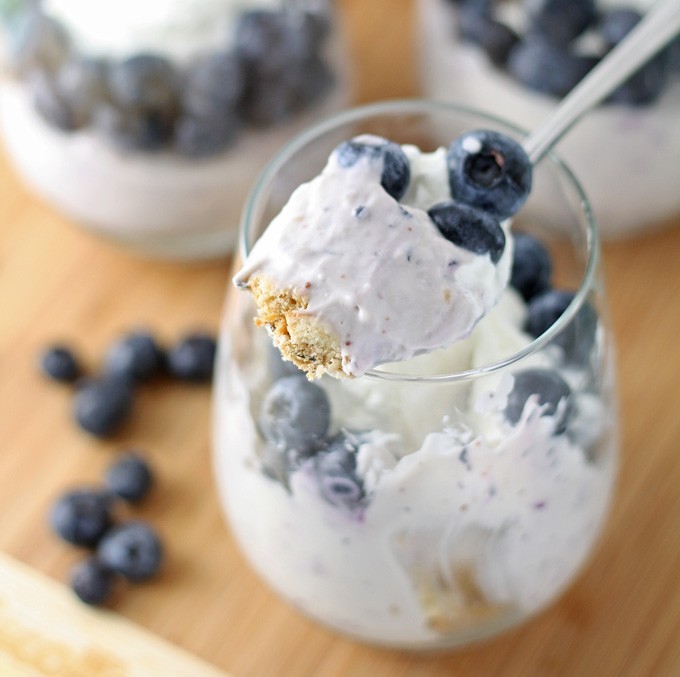
Swiss Recipe: Quick, No-bake Summer Fruit Cheesecake

by Jonell Galloway

Ingredients

11 x 7 x 2 in. (28 x 18 x 5 cm) baking dish or deep pie tin
1 box Speculoos ginger cookies
Mixed summer fruit, washed and chopped into fat chunks such as apricots and blueberries + banana
Cinnamon to taste
1 1/2T – 2 T. dark brown cane sugar
1 1/2 – 2 T. maple syrup, depending on sweetness of fruit
Dried chili pepper flakes
500 g Quark* or Séré cheese

Line baking dish with Speculoos to form a crust, covering sides as well as bottom of pan.


coop organic quark séré


Chop apricots, blueberries and banana into large bite-size pieces. Place in a bowl. Sprinkle generously with cinnamon. Add 1 1/2 – 2 T. of dark brown sugar, 1 1/2 – 2 T. of maple syrup and a sprinkle of dried chili peppers. Mix well. Marinate for 30 minutes, stirring from time to time.

Mix fruit with one large yogurt-size tub Quark (500 g). Leave to marinate for 30 minutes, stirring from time to time.

coop organic quark séré


Pour quark and fruit mixture into pie pan. Refrigerate for at least 2 hours before serving.


*Quark is a fresh cheese made in the Germanic countries. It is not the same as cottage cheese or cream cheese, since it is made by warming soured milk fermented with mesophile bacteria until it coagulates. It can be replaced by labneh, ricotta, mascarpone, thick fromage blanc or strained yogurt, although the flavor and texture will not be exactly the same.

Never miss a post
Name: 
Your email address:*
Please enter all required fields
Correct invalid entries

ITALIAN-STYLE CINNAMON & RAISIN BISCOTTI

Published by Wednesday, April 15, 2015 Permalink 0

Biscotti Picnik collage 1 bis

by Rosa Jeanne Mayland

“Biscotti” (pronounced “bee-scoat-tee”) are relatively new to me. Actually, a few years ago (about 6 years ago) I had no clue what they were. That is quite understandable if you consider the fact that I’ve lived all my life in Switzerland and never travelled to Italy (I passed through that country when going to Greece, but I doubt that this can qualify for holidays) nor to America where this speciality is widespread…

I was introduced to these Italian cookies when I received James McNair and Andrew Moore’s “Afternoon Delights” for my birthday in 2003. It was love at first sight. The very second I lay my eyes on the picture that illustrated their “Almond Biscotti” recipe I knew that I had to bake them immediately in order to satisfy my curiosity. Since then I have not seized being a big fan of this crispy treat.

Before I moved away from home and started cooking for myself, I had never really tasted any Italian pastry apart from “Amaretti Macaroons” and knew absolutely nothing about “Biscotti”. Here in Switzerland, the only biscuits that can be compared to them are oven-dried brioche slices called “Zwiebacks”. Although they taste more like sweet bread than cookies and are far from being as sweet or having an identical shape, I always enjoyed eating those delicious rusks.

Continue Reading…

Never miss a post
Name: 
Your email address:*
Please enter all required fields
Correct invalid entries

Tackling Obesity through Food Relationships

Published by Thursday, April 10, 2014 Permalink 0

Jonell Galloway, Writer, Editor and Translator

Swiss Food


by Jonell Galloway

I was recently interviewed for a Swiss Info documentary called “Finding the Right Food Formula.” In the context of recent childhood obesity figures in Switzerland, Veronica De Vore is exploring the Swiss relationship to food and how that might have changed, how it might be related to the rise in childhood obesity.

Click here to listen to the show. I cooked a Kentucky Fried Chicken feast for Veronica, while discussing the more serious matter of relationships to food in the context of my work in mindful eating. (The article also includes an abridged recipe for my grandmothers’ traditional Kentucky Fried Chicken.)

Continue Reading…

Never miss a post
Name: 
Your email address:*
Please enter all required fields
Correct invalid entries

A Swiss Reader’s Tale of Knepfle

Published by Wednesday, April 2, 2014 Permalink 0

A Swiss Reader’s Tale of Knepfle

by Dee Rintoul

I grew up with “cheater” knepfle. I learned from my Oma, who had a Southern German background, but was Romanian-born. She made all kinds of noodles and pasta dishes — spatzle, real egg noodles that were dried and stored, but for everyday use. Knepfle were child’s play. In our own home, we made them for lunch and threw them into Lipton chicken noodle soup (which was not something we’d ever find in Oma’s kitchen!). God. That woman could cook…

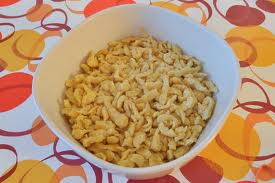
Knepfles, Alsacian and Swiss pasta, photo by http://www.tribugourmande.com/recette_76618_knepfle


Anyway. The way we did it was to beat an egg or two (depending on how greedy we felt at the time), add a pinch of salt and some dried parsley if we thought of it or wanted to impress schoolmates, then beat in all-purpose flour until it was so stiff it wouldn’t take any more and/or became too difficult to stir. Then we’d drop pieces in a pot of boiling water with a fork and a teaspoon, dipping both implements into the simmering soup in between to help the stiff dough drop. Once they were all in, we put the lid on, turned down the heat, and kept it covered for a few minutes.

When we finally lifted  the lid, we found gorgeous, fluffy-looking, but very chewy little dumplings, all floating together on top of the soup. We loved these so much that as kids we used to scorn dumplings as being “too soft”. To our minds, dumplings, or anything that remotely resembled knepfle, ought to be quite al dente.

I still make these for chicken soup (and I try not to rely on Lipton but make my own as often as possible!).

Never miss a post
Name: 
Your email address:*
Please enter all required fields
Correct invalid entries

Swiss Food: Tarte à la Raisinée – Apple & Pear Syrup Pie

Published by Sunday, March 30, 2014 Permalink 0

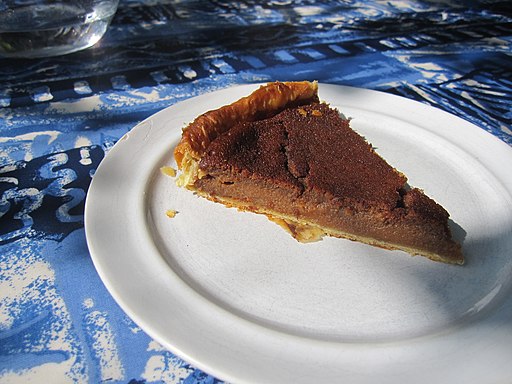
Swiss Food: Tarte à la Raisinée – Apple and Pear Molasses Pie

What is Swiss Raisinée?

The French-Vaudois word raisinée refers to a syrup or molasses made of the must of apples and pears. It was originally cooked in grape juice, thus the name — raisin means grape in French. Often called vin cuit, or “cooked wine,” it is in the form of a dark brown, viscous liquid. In still other parts of Switzerland, another concoction similar in consistency to jam and using the same ingredients is called cougnarde and probably dates back to at least the Middle Ages. Raisinée was used as a sweetener in many regions in Europe, and the tradition has lingered in Switzerland, especially in the cantons of Vaud, Fribourg and Neuchâtel. Today, it is mainly used for cakes and pies, and is not fermented, so it not technically a wine.

The tart itself has numerous names — raisinée, vin cuit (literally cooked wine), cougnarde and Biresaassa, depending on the location.

Recipe: Tarte à la Raisinée – Apple and Pear Syrup Pie

This recipe is inspired by Concert des Casseroles and translated with their authorization

Use a pie ring or pie tin 24 cm in diameter
Sweet Pie Crust
  • 200 g of flour
  • 100 g butter
  • 3 g of fine salt
  • 15 g walnut or hazelnut nillon* (here a mixture in equal parts)
  • 1 small egg (less than 60 g)
  • 60 g white sugar
Filling
  • 3 eggs
  • 2 egg yolks
  • 200 g double cream
  • 150 g pear raisinée (click on link to see our recipe for making raisinée)
  1. Dough: Combine the butter and sugar. Add the beaten egg and walnut/hazelnut nillon, then flour, mix and form into a ball, then roll out or pat down to flatten. Wrap in plastic and chill for 30 minutes.
  2. Spread the dough on a sheet of baking paper and place it along with the sheet in a pie ring or pie pan. Shape the edges by pinching the dough between your thumb and forefinger. Prick the bottom and edges with a fork. Cool for 30 minutes to firm up and avoid sagging when cooking.
  3. Preheat oven to 180° C. Place baking paper and beans or ceramic beads on the dough to prevent it from swelling. Bake for 20 minutes: the dough should barely brown.
  4. Meanwhile, prepare the filling by mixing the eggs and yolks, the double cream and the raisinée.
  5. Remove dough from oven. Remove weights and parchment paper. Lower thermostat to 150°C.
  6. Pour the filling into the dough and cook for about 30 to 40 minutes. The filling must be taken when it is not too firm and must have a slightly caramelized smell. It will probably still appear liquid when it comes out of the oven, but do not prolong the cooking, as it gets much firmer while it is cooling.

*Nillon: Nillon (or nion), is a local product used in French-speaking Switzerland. It is the residue from pressing of nuts. It is found in sheets, grated or powdered form. There are walnut and hazelnut nillons packaged in small 160-gram bags. In the canton of Vaud (Switzerland), nillon is used to make a walnut cake and apple pie. In France, it is known as walnut flour or walnut meal.


Never miss a post
Name: 
Your email address:*
Please enter all required fields
Correct invalid entries

About

Published by Tuesday, March 11, 2014 Permalink 0

Jonell Galloway, Food Writer, Editor and Translator, about, résuméI’m Jonell Galloway, a freelance food and travel writer, editor and consultant.

I created The Rambling Epicure in 2011. It is a daily international food ezine, joining the voices of professional food and travel writers from around the world who talk about the art of mindful and sustainable eating, drinking, traveling and living, with an emphasis on good writing and spectacular photos by some of the best in the business.

Based in Switzerland, The Rambling Epicure food writers and artists promote a mindful, responsible approach to real food shopping, cooking, and eating, as well as food politics, safety, history, art, literature and philosophy.

We sponsor this non-profit project through freelance writing, editing and publishing; custom-tailored culinary tours, cooking classes, and tasting events; recipe development and testing; book reviews and sales of recommended books and products, and seminars and workshops on the various subjects we cover. Thank you for supporting us by clicking the Sponsor Us button in the right-hand sidebar.

My Personal Profile

You can learn more about my personal career path in my LinkedIn profile. I’ve been rambling around the world eating food and writing about it for over 30 years now, so there’s a lot to tell.

I ramble mainly in Switzerland and Europe, looking for good food and restaurants. My articles are available on TheRamblingEpicure.com, 10Best.com/USAToday, GenevaLunch.com, Paris Voice and TheRamblingEpicure.tumblr.com.

I studied cooking at the Cordon Bleu and La Varenne in Paris, and wine tasting here, there and everywhere in France and at CAVE S.A. in Geneva and Gland. In France, I worked for some years as a contributing editor for the English edition of the GaultMillau guide and as a food translator, while I ran a small cooking school in a château near Paris. I now live in Switzerland, where I have learned to love the earthy Swiss food and wine. One of my many interests is promoting Les Artisanes de la Vigne et du Vin as an ambassadress for this Swiss women wine producers association and Slow Food, of which I am an active member.

Apart from various restaurant guides for France and Switzerland recently  published books include: Ma Cuisine Méditerranéenne in collaboration with Christophe Certain (in France) and Le tour du monde en 80 pains / Around the World with 80 Breads published by Orphie, in collaboration with Jean-Philippe de Tonnac (part of the French and all of the English) (covers history of bread around the world), André Raboud (Swiss sculptor), Edipresse.

My cooking method is “spontaneous cuisine.” Lessons consist of writing out a tentative menu based on seasonal, local products; going shopping for the products, and adapting the menu according to what is available and fresh; going to the wine seller to select a wine to go with the menu, then going home and cooking all afternoon with my students. The day ends with a candlelight dinner at the château (in the past), and now, at my chapel converted into a house in Chartres or in your home.

I give Mindful Eating seminars and therapy for those who have problem relationships with food and eating in general, helping them reconstruct their lifestyle and relationship to food and eating.

Specialties: French, Swiss and Italian cuisine with a bit of American influence. I believe in healthy, natural, sustainable cooking in the spirit of Slow Food, so all my articles, recipes and classes have this emphasis.

Never miss a post
Name: 
Your email address:*
Please enter all required fields
Correct invalid entries

Swiss Food: Fribourg-style Saffron Bread

Published by Friday, January 24, 2014 Permalink 0


Swiss Food: Fribourg-style Cuchaule: Saffron Bread to Eat with Your Bénichon Mustard

by Jonell Galloway

From the archives

In my article, Bénichon Mustard, A Fribourg Specialty to Welcome the Cows Coming Home a few days ago, I talked about the brioche-like saffron bread cuchaule which is traditionally eaten with Bénichon mustard during the Bénichon fall fair in Fribourg, Switzerland.

I translated this recipe from the Delimoon site from the French and adapted it.

Photo courtesy of Moja Kuchnia with authorization.

Continue Reading…

Never miss a post
Name: 
Your email address:*
Please enter all required fields
Correct invalid entries

Swiss Food: How to Make Raisinée

Published by Thursday, January 16, 2014 Permalink 0

Swiss Food: Raisinée: The History and the Recipe

by Jonell Galloway

The French Vaudois word raisinée refers to a syrup made of the must of apples and pears. It was originally cooked in grape juice, thus the name — raisin means grape in French. Often called vin cuit, or “cooked wine”, it is in the form of a dark brown, viscous liquid. In still other parts of Switzerland, another concoction similar in consistency to jam and using the same ingredients is called cougnarde and probably dates back to at least the Middle Ages. Raisinée was used as a sweetener in many regions in Europe, and the tradition has lingered in Switzerland, especially in the cantons of Vaud, Fribourg and Neuchâtel. Today, it is mainly used for cakes and pies, and is not fermented, so it not technically a wine.

History

In the 17th century, raisinée meant a thick fruit jam, generally made of apples and pears, and slow-cooked in concentrated grape juice. According to the Encyclopédie d’Yverdon, published in the 1770s, raisinée was made from the must of very ripe green grapes cooked until reduced by two thirds, then kept in barrels. Drinking it was said to give energy to people of a frail nature.

Raisinée is no longer drunk as a cooked or fortified wine, although in the 18th century one finds recipes for fruit must syrup made from apples and pears (dropping the use of grape juice) and used to replace sugar. Like today, the apple and pear juice was cooked until thick, until a drop on a plate didn’t run anymore. During periods of scarcity and hardship — for example, during and after World War II when sugar was low or not available — it was and still is used as a sweetener.

Cantons like Fribourg and the Vaud have kept up the tradition more than elsewhere, partially because they have a history of orchards. Recipes had been maintained and they were brought back to life in the 1980s.

Traditions similar to this were to be found in Mesopotamia and Ancient Rome.

Recipe

Use apples and pears not suitable for eating. The fruit shouldn’t be overly ripe. You should be able to crush it and press it, but it mustn’t turn into a purée. The juice is filtered to get rid of hard bits. It is then decanted overnight (no more).

Unlike industrial fruit concentrates, the juice is not clarified. It is simply brought to a boil in a large copper kettle over a wood fire. Try to use up any bits of wood not suitable for a regular fire. A coil-type steam burner can be used to prevent risk of overheating, especially when making large quantities.


Never miss a post
Name: 
Your email address:*
Please enter all required fields
Correct invalid entries

UA-21892701-1