Exploring the Food and Wine of the Beauce and the Loire Valley
Award-winning wine writer, James Flewellen, and Cordon Bleu-educated cook and food journalist, Jonell Galloway, present wine and food tasting masterclasses in the historic French city of Chartres. Comprising dedicated wine tastings, sumptuous meals made from local ingredients paired with regional Loire Valley wines and a unique, “sense-awakening” taste experience, our food and wine holiday courses will help unlock your taste buds and introduce the richness of aromas, flavors and textures present in food and wine.
Courses conducted in English
All lunches, dinners, and wine included
We use only the highest quality, locally-sourced produce and ingredients
Over 10 hours of professional food and wine tasting instruction
Taste over 20 (4-day course) different wines from the Loire Valley
Learn the art of food and wine pairing
Dine and learn in a 1,000-year-old converted chapel
Socialize with like-minded wine- and food-lovers
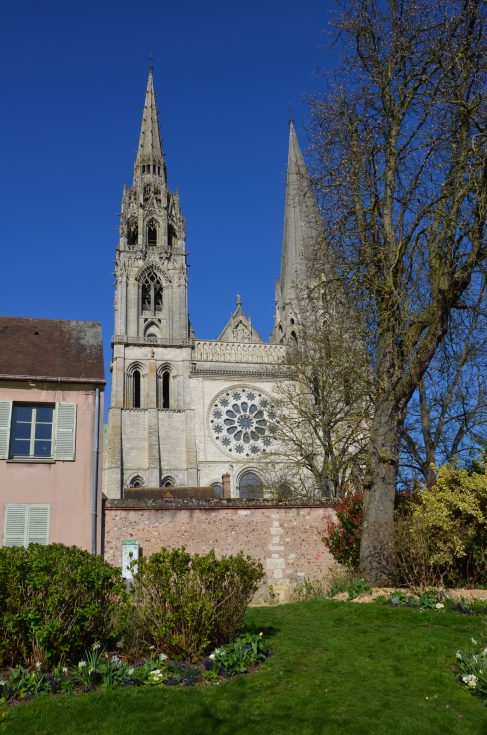
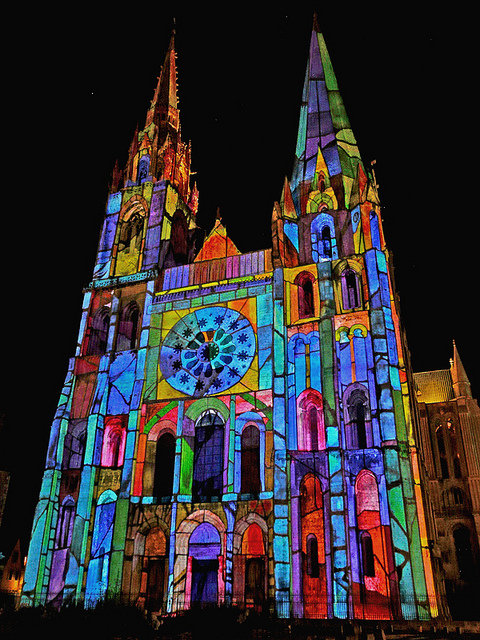
Experience the atmosphere of the Chartres Festival of Lights in a UNESCO World Heritage site
Guided city tour & collection from the station included
Our signature 4-day Taste Unlocked masterclass costs €695pp and runs from 14–17 September, coinciding with the world-famous Chartres Fête de la Lumière.
James and Jonell are also available for bespoke tasting courses and events throughout the year for groups of 4 or more. Please contact us for more information.
Food and Wine Tasting Masterclass in Chartres, France
18 – 21 SEPTEMBER 2014
Exploring the Food and Wine of the Beauce and the Loire Valley
with James Flewellen and Jonell Galloway
Through a series of tutored workshops, this 4-day weekend workshop will help unlock your tastebuds and introduce the richness of aromas, flavors and textures present in food and wine. Our exploration is enabled through local food from the Beauce and wine from the Loire Valley and coincides with the Chartres Festival of Lights and the Autumnal Equinox.
For course details click here and to make your reservation click here.
I’m Jonell Galloway, a freelance food and travel writer, editor and consultant.
I created The Rambling Epicure in 2011. It is a daily international food ezine, joining the voices of professional food and travel writers from around the world who talk about the art of mindful and sustainable eating, drinking, traveling and living, with an emphasis on good writing and spectacular photos by some of the best in the business.
Based in Switzerland, The Rambling Epicure food writers and artists promote a mindful, responsible approach to real food shopping, cooking, and eating, as well as food politics, safety, history, art, literature and philosophy.
We sponsor this non-profit project through freelance writing, editing and publishing; custom-tailored culinary tours, cooking classes, and tasting events; recipe development and testing; book reviews and sales of recommended books and products, and seminars and workshops on the various subjects we cover. Thank you for supporting us by clicking the Sponsor Us button in the right-hand sidebar.
My Personal Profile
You can learn more about my personal career path in my LinkedIn profile. I’ve been rambling around the world eating food and writing about it for over 30 years now, so there’s a lot to tell.
I ramble mainly in Switzerland and Europe, looking for good food and restaurants. My articles are available on TheRamblingEpicure.com, 10Best.com/USAToday, GenevaLunch.com, Paris Voice and TheRamblingEpicure.tumblr.com.
I studied cooking at the Cordon Bleu and La Varenne in Paris, and wine tasting here, there and everywhere in France and at CAVE S.A. in Geneva and Gland. In France, I worked for some years as a contributing editor for the English edition of the GaultMillau guide and as a food translator, while I ran a small cooking school in a château near Paris. I now live in Switzerland, where I have learned to love the earthy Swiss food and wine. One of my many interests is promoting Les Artisanes de la Vigne et du Vin as an ambassadress for this Swiss women wine producers association and Slow Food, of which I am an active member.
Apart from various restaurant guides for France and Switzerland recently published books include: Ma Cuisine Méditerranéenne in collaboration with Christophe Certain (in France) and Le tour du monde en 80 pains / Around the World with 80 Breads published by Orphie, in collaboration with Jean-Philippe de Tonnac (part of the French and all of the English) (covers history of bread around the world), André Raboud (Swiss sculptor), Edipresse.
My cooking method is “spontaneous cuisine.” Lessons consist of writing out a tentative menu based on seasonal, local products; going shopping for the products, and adapting the menu according to what is available and fresh; going to the wine seller to select a wine to go with the menu, then going home and cooking all afternoon with my students. The day ends with a candlelight dinner at the château (in the past), and now, at my chapel converted into a house in Chartres or in your home.
I give Mindful Eating seminars and therapy for those who have problem relationships with food and eating in general, helping them reconstruct their lifestyle and relationship to food and eating.
Specialties: French, Swiss and Italian cuisine with a bit of American influence. I believe in healthy, natural, sustainable cooking in the spirit of Slow Food, so all my articles, recipes and classes have this emphasis.
A weekend in the Trastevere neighborhood of Rome lets you live and feast like a real Roman, if only for a short time. It is rich in history and culture, and plenty of fun and good food to boot. A little hotel we’ve found near Piazza Santa Maria will let you melt into this hidden corner of Rome.
A Little History about Trastevere
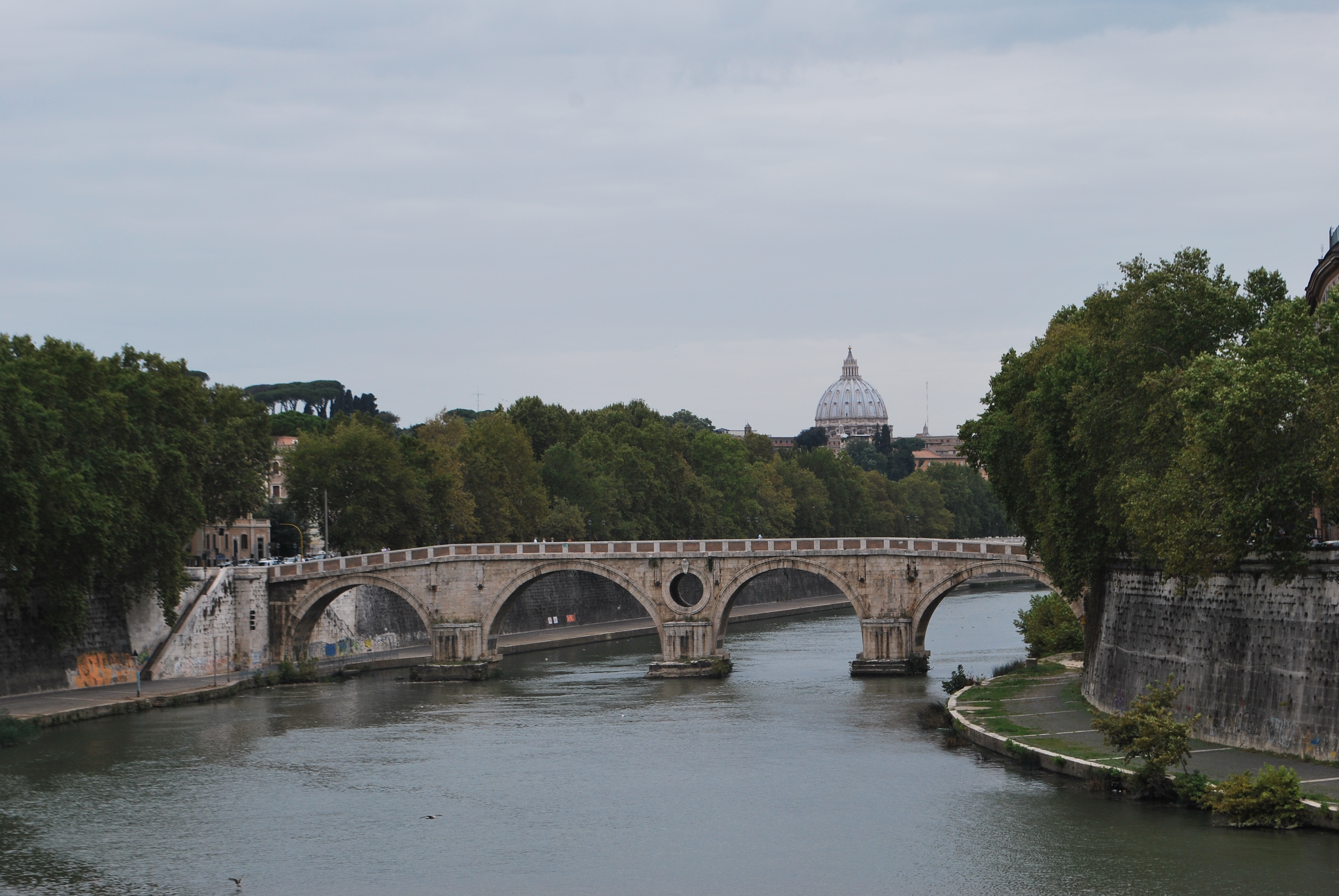
This side of the Tiber was Etruscan, until the Romans claimed it around the 6th century B.C. It was incorporated into the city of Rome’s 14 quarters by the Emperor Augustus with the “Trans Tiberim.” Thus the name, which means “across the Tevere,” the Roman name for the Tiber.
It was a plebian quarter, where the servants and laborers and the free citizens of Rome’s as well as sailors, fishermen, Phoenicians and Jews lived. It would be the principal Jewish quarter of Rome until the end of the Middle Ages, when the Ghetto, across the river from Trastevere, became the residential area to which Jews were henceforth restricted.
Renaissance Romans began building more noble villas around the edges of the ancient quarter, but the Trastevere of today retains its medieval, labyrinthine layout, full of narrow, winding alleys. It remains a working class neighborhood, with children playing soccer in the street, old people sitting on their stoops, and families gathering around a table in the street to visit. Trastevere lies between the western banks of the river Tiber and the Janiculum hill, one of Rome’s storied seven hills, that looms above it. It’s but a short 15-minute walk across the Tiber to the ruins of ancient Rome, the “salon” of Rome with its extravagant fountains, and only a little bit further by foot to St. Peter’s Square and the Vatican. One of the liveliest gathering places is the square in front of the church of Santa-Maria-in-Trastevere, construction of which began early in the 3rd century with the church completed in the mid-4th century, and ultimately completed in Romanesque style in the 12th century, then converted in several other centuries, giving it an unusual combination of Ancient Roman details and varied architectural features from later periods. The octagonal fountain in the piazza is an ancient Roman fountain restored and enlargened in the 17th century by Carlo Fontana.
Santa Maria with church, with ancient Roman foundation in center. The piazza is full of life at night.
What to See and Do in Trastevere
The Church of Santa Maria in Trastevere
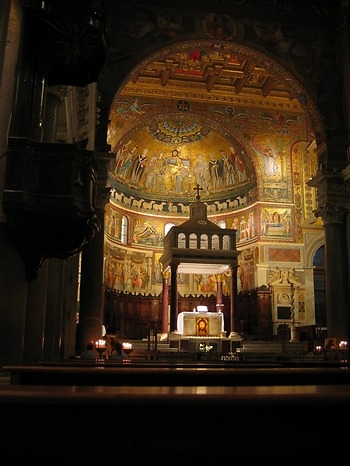
Santa Maria in Trastevere is undoubtedly the oldest church in Rome, and deserves several visits if you want to appreciate its full architectural and historical depth. Most of the mosaics date from the 12th century. They are illuminated at night, and the golden light of the façade fills the piazza with a warm glow.
12th-century gold mosaics in Santa Maria in Trastevere
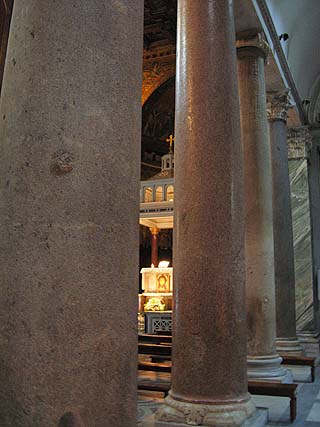
The 22 granite columns lining the nave are said to have come from the ruins of the Baths of Caracalla; the capitals are adorned with the heads of female pagan deities.
Numerous Roman funeral inscriptions can also be found in the church.
Eating and Nightlife
There is no shortage of reasonably priced osterie, trattorie and restaurants that serve authentic Roman food in a no-frills setting. The neighborhood is timeless, with its mix of historical architectural periods and lively local residents; it remains quintessentially Roman. If you want to pretend you’re Roman for a weekend, this is the place to do it.
Old cellars and stables have been converted into bars, discos and cafés, providing a lively nightlife scene, with customers spreading out into the streets when the weather is fine.
Signs like this demonstrate the colorful character of the locals, and offer contrast to our notion of contemporary, ultra-chic Italy.
Sidewalk cafés and restaurants preserve the romantic character of Old Italy, spilling out onto the streets. My favorite source of restaurants in Rome is David Downie’s Food Wine Rome. David is half Roman, and sees food through the eyes of a Roman. His recommendations are all about the authentic and the unpretentious, and you’ll seldom find tourists in the places he recommends.
Hotel
While the Hotel Santa Maria is located in the very heart of the vibrant Santa Maria neighborhood just steps from the piazza, within the walls of this converted 16th-century convent, it’s so quiet and peaceful that you may think you’re staying in a remote Tuscan country house. The renovation is simple, but tasteful, with classic Roman terracotta floors and well-fitted bathrooms. Bedroom furnishings are tasteful, solid-wood reproductions. Almost all rooms are on the ground floor and give onto the courtyard. The few that do have a room above them (near the rooftop terrace) are not so quiet due to the tile floors. Otherwise, the clientele is quiet and respectful.
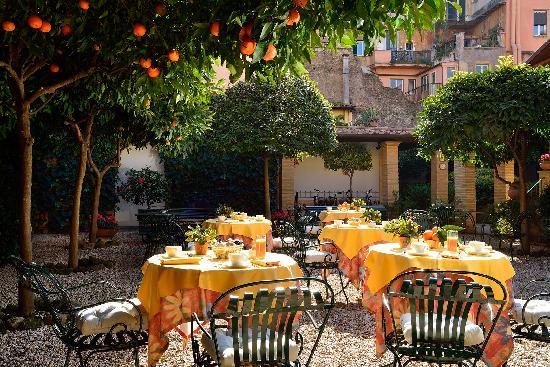
Courtyard with orange trees where you can eat breakfast or have a drink
One enters the hotel courtyard through a large, locked iron gate, so security is good. The L-shaped convent-cum-hotel with an inner courtyard enclosing a small orange grove boasts wrought-iron tables and chairs for leisurely sitting in the sun or eating breakfast when weather permits. The breakfast room is in a converted cellar, with breakfast consisting of an international and Italian buffet with something to suit everyone, offering freshly squeezed orange juice and coffee from a professional espresso machine.
The small rooftop terrace is furnished with chic wooden lounge chairs and armchairs. It’s a great place to have a drink before dinner, read in the early evening, or sunbathe during the day. The view of the surrounding rooftops and balconies of Trastevere is a photographer’s dream. All rooms have satellite television and air conditioning, as well as Wi-Fi, which can sometimes be unstable. Bikes are available for rental at the reception.
How to Get There
If you’re flying, take the train from the Fiumicino Leonoardo da Vinci airport station to the Trastevere station, about a 30-minute train ride, then take a cab, which should take about 10 minutes. This should cost around 15 Euros all-inclusive, versus approximately 50 Euros with tip for a cab direct from the airport. A cab ride from the Termini train station to the hotel should cost around 15 Euros. The hotel is lost in a winding street and difficult to access by car. Even taxi drivers get confused with all the one-way and dead-end streets. Study your map and know the names of the surrounding streets and squares, because the driver may be forced to let you off in another street around the corner from the hotel.
Practical Info
Reservations: http://www.htlsantamaria.com Address Vicolo del Piede 2 – 00153 Rome – Italy Tel. (39) 06 5894626 – Fax: (39) 06 5894815 Click here for map: Map to Hotel Santa Maria
Jonell Galloway grew up on Wendell Berry and food straight from a backyard Kentucky garden. She is a freelance writer. She attended Le Cordon Bleu and La Varenne cooking schools in Paris and the Académie du Vin, worked for the GaultMillau restaurant guide and CityGuides in France and Paris and for Gannett Company in the U.S., and collaborated on Le tour du monde en 80 pains / Around the World with 80 Breads with Jean-Philippe de Tonnac in France; André Raboud, Sculptures 2002-2009 in Switzerland; Ma Cuisine Méditerranéenne with Christophe Certain in France, At the Table: Food and Family around the World with Ken Albala, and a biography of French chef Pierre Gagnaire. She ran a cooking school in France, and owned a farm-to-table restaurant, The Three Sisters’ Café, with her two sisters in the U.S. She organizes the Taste Unlocked bespoke food and wine tasting awareness workshops with James Flewellen, is an active member of Slow Food, and runs the food writing website The Rambling Epicure. Her work has been published in numerous international publications and she has been interviewed on international public radio in France, Switzerland, and the U.S. She has just signed on at In Search of Taste, a British print publication, and is now working on two books, What to Eat in France and What to Eat in Venice.
A tradition so richly experienced on the festival eve of San Giovanni, better known as “St. John’s,” in Spilamberto (near Modena – Emilia-Romagna) had me transported me back to innocent childhood days in Wales. Straying across the fields from the parental home I’d live more in my grandmother’s old cottage – hers was once an inn on a long forgotten village green and was built using the village stocks as a door lintel into her dining room. So the story goes, mature hardwood had been short for building and everything was saved – including timbers from broken ships, recognised even then by their Lloyd’s number carved or burnt into the side. Grandma had one of those too – and stirring tales of bravery at sea to go with it.
Around this time (end-June/early-July), yet knowing nothing then of the Saint’s Day, we would pick ‘green’ walnuts – green skinned and soft before their hard shells formed below the fleshy outer casing.
These we would wash, dry and prick with a pin several times per nut. They would then be cooked in salted water, dried and let to cool before being set to cure in a vinegar sweetened with brown sugar – or perhaps it was molasses given the rich, dark colour. There are recipes going back through the ages – even Hannah Glasse in her The Art of Cookery wrote three. One each for ‘green’, ‘white’ and ‘black’ walnuts.
There would surely have been mace and nutmeg in Grandma’s recipe as there were her two favourite spices – she wore a whole nutmeg about her person, swearing it would ward off arthritis. At over 86 years when she died, arthritis was never one of her ailments.
SERENDIPITY: MEUS CAMINHOS NA COZINHA E NAS VIAGENS…
Translation coming soon in English – Introduction to Betina Mariante Cardoso’s new Brazilian food column
Olá!
Sou Betina Mariante Cardoso, brasileira, trinta e poucos anos. Nasci e moro em Porto Alegre, no Sul do Brasil, cidade que amo de coração e onde vivencio o apego, o calor da família e a constância, virtudes necessárias na minha vida. Paradoxo, tenho encantos por viajar, romper a linearidade rotineira, esquecer o mapa no hotel e perder-me pelas ruas dos lugares que visito. Por quê? Para ter a chance de conhecer aquela confeitaria antiga na rua lateral, coisa que só o acaso permite. Tenho uma ligação forte com o conforto do cotidiano mas, quando me torno viajante, parto em busca das descobertas, do desconhecido. É quando me entrego à Serendipity que as viagens propiciam.
E é com este mesmo estado anímico que venho para a cozinha: trazendo comigo a aventura, a curiosidade, o ímpeto pelo novo. Gosto de criar minhas receitas, mas sou também fã dos cadernos culinários, escritos à mão e com manchas de vida em suas páginas. Outro paradoxo.
We love: Top 10 Free Luxury Experiences in London – Best Budget Hotels
We love A Luxury Travel Blog, and they often have tips for budget travels. Since we all seem to be on a budget these days, here’s a great link: Top 10 luxury London freebies.
And while on the subject of budget, here’s The Guardian’s list of the 10 best budget hotels in London.
Jonell Eats her Way through Provence: A Photo Essay
by Jonell Galloway
Tourettes-sur-Loup in France is the world capital of violets, and yes, you can eat violets. Candied, as you’ll see on my dessert in the photos; syrup; as jam (the stacked tins); and they even make violet pasta.
Their 50th birthdays in sight, the acclaimed travel and food writer David Downie, and his wife, the photographer Alison Harris, decided that trekking from Paris to Spain, would be just the thing. They are based in Paris, so the Way of St. James, for a millennium one of the world’s most celebrated pilgrimage routes, was right at their back door. Neither Alison nor David is religious — the classical pilgrimage experience was not what they were seeking. What were they seeking? Renewal, changed perspectives. Perhaps to test themselves, over 72 days and 1100 km of — at times — very rough terrain. And thereby hangs a tale.
Paris to the Pyrenees: A Skeptic Pilgrim Walks the Way of St. James, launches this week. Scroll to the end to see book tour information. Permission to post on TRE the superb photos from the book was granted by Alison Harris.
ELATIA HARRIS: There has been a lot in the news lately on pilgrimage, however one understands the phenomenon. People who do it talk about needing to lose their routine and find themselves. Most set out alone, meeting others en route. You and Alison started together.
DAVID DOWNIE: Our choice to walk together happened organically. I had planned to do this on my own. Alison came along to keep me out of trouble. If you ask her, she’s likely to say it was her idea about 25 years ago, when she suggested we do something similar.
EH: Readers cannot but wonder how they would hold up, in these circumstances. I pictured a long leisurely walk through a French countryside movie. Cows, chateaux…oh, perhaps a few mildly strenuous stints. I was so wrong. This was a test of all your combined resources. It would be for any couple. 72 days of togetherness and real physical hardship. And you had already spent years collaborating on your books.
DD: Like some old couples, we have merged in mind and spirit — if such a thing exists — while remaining very different people, and very pig-headedly independent. So, while we were together on the pilgrimage, we were often apart both in our mental spheres and physically. Alison stopped constantly, ran ahead, took detours, disappeared, got lost—often, though not always, in pursuit of a photograph. She probably walked twice as many miles as I did. By the end of the pilgrimage, my regard for her had only deepened. I can’t speak for her, of course.
About 45 minutes drive north of my hometown of Christchurch, NZ, lies the North Canterbury wine region of the Waipara Valley. The valley is nestled between the Teviotdale Hills, which shelter the region from the cool Pacific, and the foothills of the Southern Alps. The everchanging interplay of light and shadow on these surrounding hills and the immense Cantabrian skies make this one of my favourite places to visit.
Hills in the Waipara wine region
New Zealand’s wine industry is still very young (about 30 years) by global standards, yet the Waipara region has been recognised for less than half of that. While there are some well-established names in the area (Pegasus Bay, for instance), many of the wineries have only been around a decade or so, and a whole host have sprung up in the last two or three years. I’ve long been impressed with the quality of wine issuing from Waipara’s small-scale, boutique wineries. A recent visit over the New Year reconfirmed for me why this spectacular region is receiving a surge of interest and that the future looks stellar for quality wine production.
Inasmuch as such a young region can be ‘known’ for a particular style of wine, Waipara is fast becoming a home to Riesling in New Zealand, an alternative base for Pinot Noir, and a lighter, less pungent style of Sauvignon Blanc. Chardonnay is also planted and there are small plantings of other reds including Syrah, Cabernet Sauvignon and Malbec.
Unfortunately, my visit coincided with a public holiday, so I was unable to see many of the region’s top wineries on this trip; however, we had a lovely tasting and lunch at well-established winery Waipara Springs, newcomer Black Estate wines opened their doors up especially for us, and a trip to a family friend’s farm at Limestone Hills resulted in a tasting of their very small-scale (and delicious) Syrah and seeing a champion truffle-sniffing dog in action!
Waipara Springs
Waipara Springs is one of the more established wineries in the region. They have a well-equipped tasting room and a charming garden restaurant serving delicious food designed to match with their own wines. Waipara Springs produces a wide variety of styles. I was most impressed with their 2012 Sauvignon Blanc, which was very smartly-made, melding fresh gooseberry and passion fruit flavours with a high-acid, dry palate and a long, lemony finish.
Their ‘Premo’ series wines all showed great character and were a significant step up in quality from the house wines. The Premo Riesling, 2008, showed toffee notes of bottle age, zesty lime fruit, and was medium-sweet. Quite a full, luscious body for a lowish alcohol wine and a refreshing tartness to the finish. The Premo Chardonnay, 2011, I found to be a rather light, elegant wine. Perhaps not one for those who like their Chardonnays to be bold and assertive, but a very pleasing wine nonetheless. The Premo Pinot Noir, 2010, seemed to me to have a bit much oak on the nose; the wine is aged in French oak for about 15 months, 20% of the barrels are new wood. But this is something that will resolve with time. Otherwise, the wine showed lovely concentration of dark plum fruit on the nose, an appealing sour cherry palate with green, herbal notes, crisp acidity and finely-etched tannins.
You can find a list of their overseas distributors here.
A delicious light lunch at Waipara Springs
Black Estate
While the Black Estate winery and cellar door is reasonably new, the site was planted back in 1993 with Chardonnay and Pinot Noir. The purchase by the Naish family in 2007 has seen the estate extend its plantings, with a constant eye on terroir and what the soil and mesoclimate bring to the wine. Their first Riesling release was in 2008, and I tried their 2011 incarnation. A beautiful nose with lime blossom, cream, mint leaf and sage was followed up by a rather intense lime sorbet palate. Crisp acidity was balanced nicely by the off-dry sweetness; medium alcohol (11%) and a medium length, but very pleasant finish.
Interestingly, the winery releases two different Chardonnays and Pinot Noirs: Black Estate and Omihi Series. Each comes from separate plantings with artisanal winemaking techniques (such as foot treading, and avoiding pumping) designed to bring out the terroir character in each wine. I enjoyed all of the wines and it was fascinating to see the difference the vineyards made. The Omihi Series Chardonnay, 2011, was a lean, delicate and very well-balanced wine. I discerned lighter, floral notes, with apple, cream and some truffle hints on the nose. By contrast, the Black Estate Chardonnay, 2011, had more apricot and peach notes on the nose and a heavier, more rounded body.
The Omihi Series Pinot Noir, 2010, was very aromatic, with a bright slightly estery, raspberry note along with hints of mushroom. The palate began with this bright fruit character and evolved savoury, stemmy notes all the way through to a crunchy, firm yet quite finely-etched tannic finish. Delicious, though my one criticism was the finish came through a bit hot. The Black Estate Pinot Noir, 2010, had more boysenberry on the nose, was less estery, with appealingly Burgundian ‘cooked carrot’ and white pepper hints. The palate showed a riper entry than the Omihi, with less of a progression to savoury (at least at this stage in its evolution); however, a slightly fuller, ‘gutsier’ body I felt balanced the alcohol on the finish more.
Black Estate wines are imported to the UK by Lea & Sandeman.
Limestone Hills
A highlight of the day was seeing Rosie the truffle-snuffler unearth an enormous truffle at the Limestone Hills farm. Well, I thought it was enormous, though Gareth Renowden, our host, assured me it was probably only a about 200 grams and therefore just a ‘medium sized one’! Gareth also grows Pinot Noir and Syrah grapes for his own wine made in vanishingly small quantities. I tasted the 2011 Limestone Hills Syrah and found a very interesting complex nose: black plum and berry fruit with medicinal, peppery hints alongside lavender and manuka honey. The palate showed only a medium body – a far cry from the full-bodied Shiraz of much of Australia, and even lighter than many Northern Rhone examples. Green, herbal flavours came through on the palate with a rich concentration of spicy strawberry and peppery plum. The wine had moderate acid, well-integrated alcohol and the classic, ‘ragged’-textured tannin profile I associate with Syrah. Overall a fascinating and very palatable wine.
Rosie the champion truffle-snuffler unearths some black gold at Limestone Hills farm
Waipara certainly is a region to watch in the very near future. One of the risks with hyped-up new regions is that many people can flock to invest there, resulting in huge increases in quantity and a dramatic decrease in average quality. However, as Bob Campbell MW suggests in this article, the difficulty of securing reliable yields in Waipara means that viticulturists and winemakers really do need to focus on quality to bring about a return. Long may this continue!










 The Art of Tasting Wine with James Flewellen: The Waipara Wine Region

 Limestone Hills


