Simple Sustenance: Roasted Acorn Squash with Fennel Seeds

Published by Tuesday, March 5, 2013 Permalink 0

by Renu Chhabra


Food is capable of feeding far more than a rumbling stomach.–Anthony Beal

IMG_6838

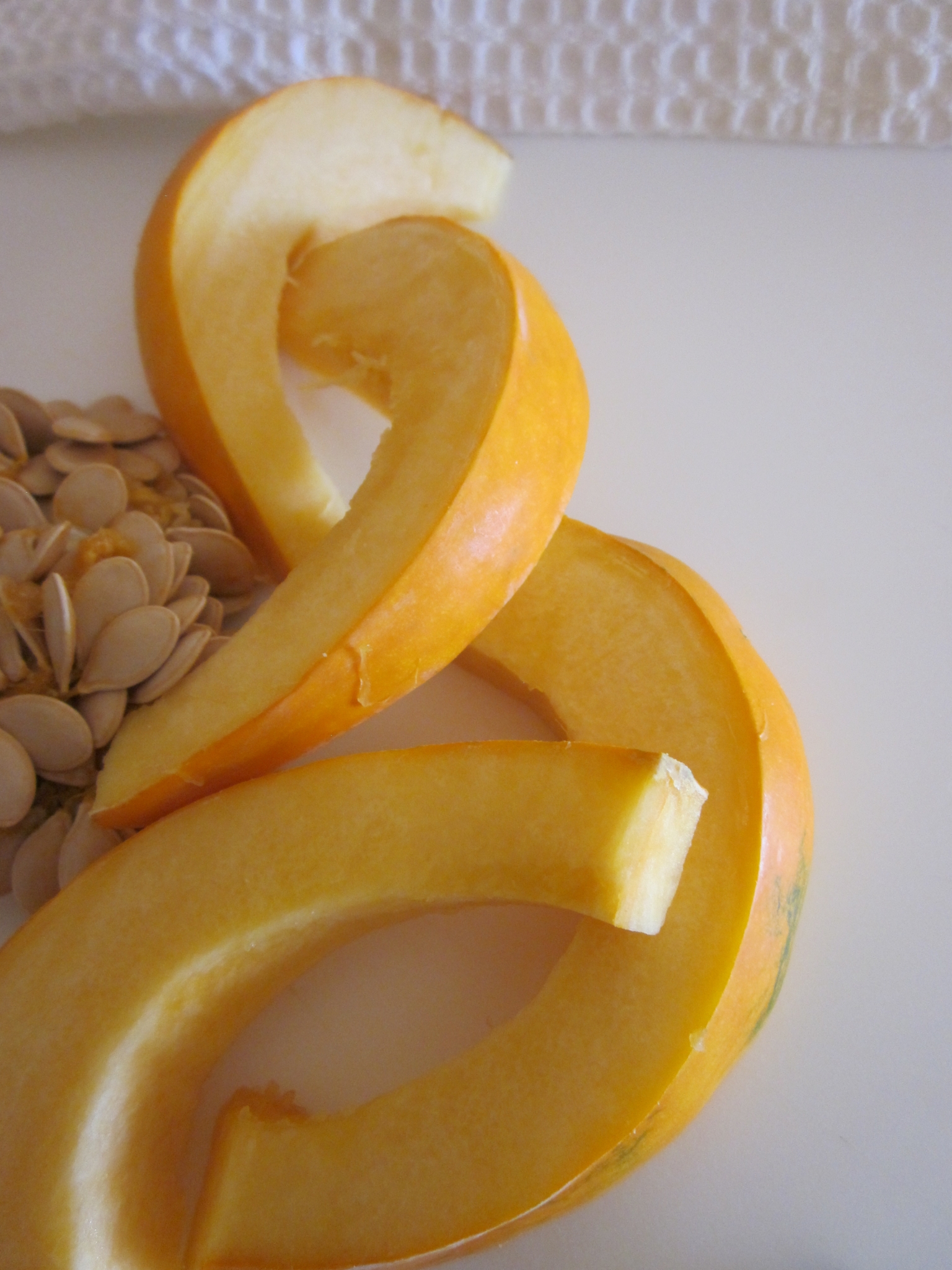
I have seen this acorn squash change from deep green to light golden on my kitchen counter over the last two weeks. Waiting for my much needed attention, it endured the neglect. I had a new idea about how to cook it every time I looked at it, so I would set it aside for yet another day. I loved seeing it sitting there turning into this beautiful objet d’art with a new stroke of color every day.

I enjoyed the the entire process, from start to finish, just as Monet enjoyed painting the same haystacks and façades day after day, in different lights.

Who would have thought a simple experience like this could also bring such curiosity? Every time I looked at it, I wondered if it would survive another day. Or would another stroke of green be lost. I touched it, inspected it, and set it aside, saying to myself, “I will make something tomorrow. Definitely.”

And it waited patiently for me, just like the Rouen Cathedral waited for Monet, looking more beautiful each day, and maintaining its freshness!

IMG_6751

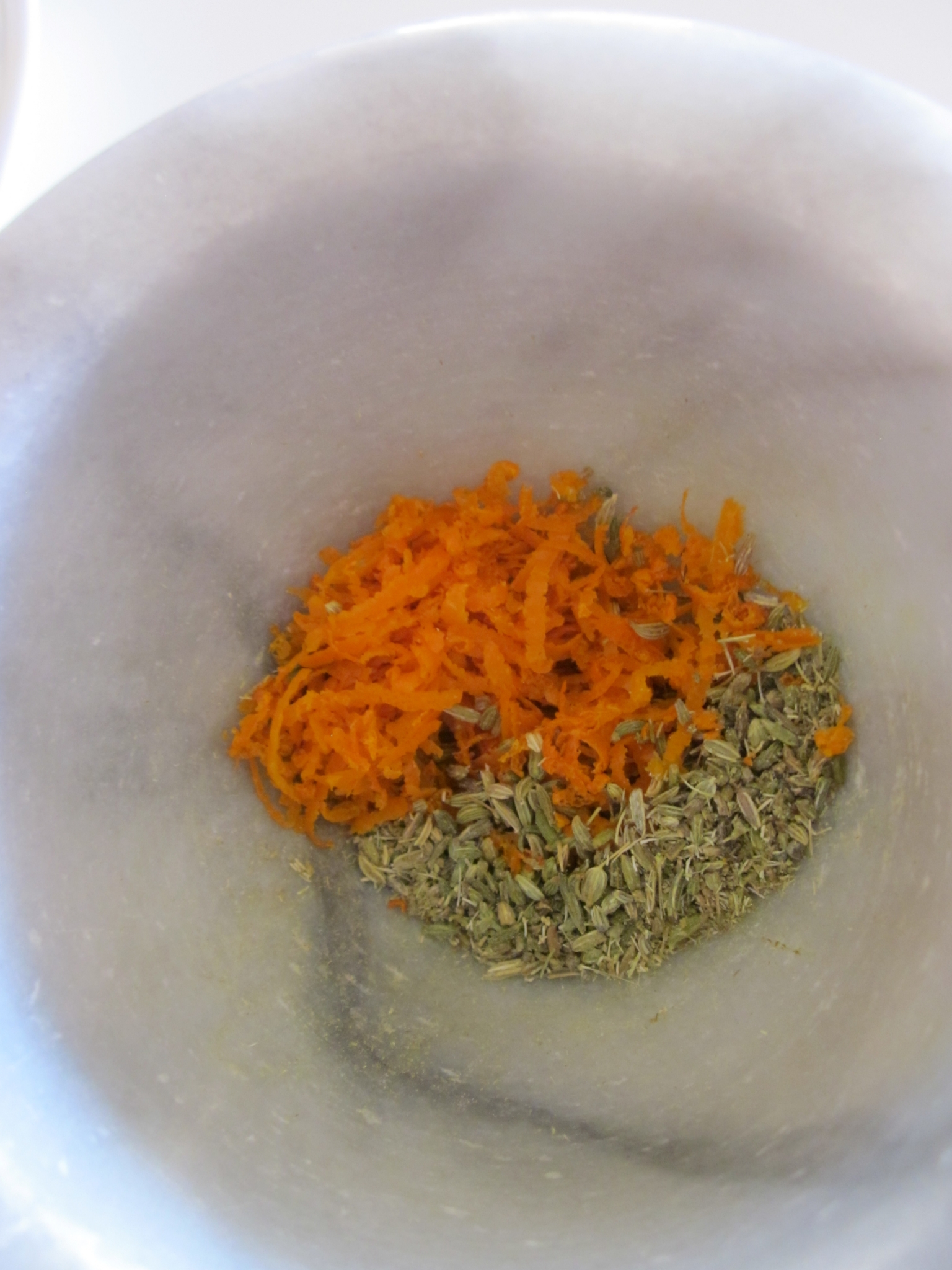
With half a dozen ideas in my mind about how to cook it, I settled for a simple recipe of roasting it and flavoring with some sweet and fragrant flavors like orange zest and toasted fennel seeds. I then combined the two with sweet paprika and sea salt to make a spice blend to toss into after roasting. Another wonderful spice blend with citrus!  My new year started with spice blends.

After tossing the roasted squash, I finished it with a garnish of freshly ground cumin and parsley and a squeeze of lemon (optional). Simple and flavorful, this recipe takes very little time to make. If you have any left over, use it in your favorite grain or salad.

Herbs and spices are good for our health. Fennel seeds have wonderful healing qualities. They help digestion and have antioxidant properties. Fennel is also chewed as mouth freshener. I sometimes make fennel tea that is quite relaxing. Have it with a little honey. It’s delicious and calming.

IMG_6768IMG_6781

IMG_6794IMG_6805

IMG_6808IMG_6811

Continue Reading…

Never miss a post
Name: 
Your email address:*
Please enter all required fields
Correct invalid entries

Local vs. Non-local Food: The Arguments

Published by Saturday, January 12, 2013 Permalink 0

by Jonell Galloway

I think we got spoiled by eating cheap food from all over the world. That put us out of sync with nature and skewed the price of local produce and products vs. produce and products from distant places, leading us to waste what we once had held precious because it was seasonal and local and therefore rare. Slow Food USA and Josh Viertel were right in fighting for fair wages for our own farmers and trying to lead us back to a way of eating that is in line with nature, which of course means paying a little more, but improving our health and local economy.


There are many more arguments to be put forth. Let’s talk about it: the pros and cons, your experiences, your convictions, etc. We’d love to get a big discussion going here.

Click here to watch Building a Slow Food Nation, outlining the history of Slow Food in the U.S., and including Josh Viertel’s view.


Never miss a post
Name: 
Your email address:*
Please enter all required fields
Correct invalid entries

Food Art from Simple Sustenance: Brussels Sprouts, a food photography exhibit

Published by Monday, December 17, 2012 Permalink 0

by Renu Chhabra

All the gifts are nothing. Money gets used up. Clothes you rip up. Toys get broken up. But a good meal, that stays in your memory. From there it doesn’t get lost like other gifts. The body it leaves fast, but the memory slow.–Meir Shalev

IMG_6405

Brussels sprouts, the tiny cabbage-like vegetable!

We all  know what  they are. Right? The ones that show up at the holiday table among other delicious and indulgent dishes. Some of us wonder why are they here when we have so many other goodies to enjoy.

Yes, it’s our love hate relationship with brussels sprouts.

But they come to us with good intentions and mean well for our health.

Brussels sprouts are from cruciferous family of vegetables like cauliflower, broccoli, cabbage, and bok choy, known for several health benefitsThese vegetables are big players in cancer prevention and lowering cardiovascular risks. And brussels sprouts are the proud members of this respectable family.

Give them a little love and they will treat you well.

IMG_6360IMG_6366

IMG_6361IMG_6405

IMG_6408IMG_6411

IMG_6420IMG_6440

IMG_6439IMG_6437

IMG_6434IMG_6442

IMG_6440

Enjoy this simple recipe with choice of your favorite flavors and garnish.


Never miss a post
Name: 
Your email address:*
Please enter all required fields
Correct invalid entries

My Favorite Hanukkah Foods: Grandma’s Latke Recipe

Published by Saturday, December 8, 2012 Permalink 0

by Warren Bobrow

From the archives

Hanukkah recipes are passed down from generation to generation. There are hundreds of recipes floating around on the Internet, but I thought it best to consult a friend with trained taste buds. Here is what Warren Bobrow has to say.–Jonell Galloway, Editor

My Favorite Hanukkah Foods

Of all the holiday foods I look forward to, there are two dishes that clearly connect my stomach to the past. The first is a rousing bowl of matzo ball soup. The other, specifically a Hanukkah dish, is a plate of crispy potato latkes, cooked in a heavy cast iron pan.

Ur-Bubby’s Latkes

I forewarn you. This is a Jewish story, so it is repetitive and sometimes fahklumpt (a confused story, for those who are not in the know), told by a kvetch (a complainer) who secretly loves life and food and words and work, and tells a story full of fond memories.

My great-grandmother Yetta made excellent latkes. During these eight days of Hanukkah (eight chances to get it right . . . to be exact), we celebrate the past by reliving these flavors and the stories that go with them each time we bite into a steaming morsel of grated potato, egg, onion and a bit of vegetable oil, made straight from her recipe.

Generations of cooks have grated potatoes for latkes in celebration of Hanukkah. You will not be the first or the last. And every family has their own special recipe, their own special stories.

Bubby Yetta was particularly interested in not scraping her knuckles. Even so, she used to say that if you don’t catch your knuckle on the potato grater, the latkes couldn’t possibly taste good. Something about the physical act of grating potatoes already connects me to the old days when Bubby made the latkes every evening during Hanukkah.

Onions also resonate in my memory:  the tears that ran down her cheeks as she grated the onions were not tears of joy. We heard the same kvetching every year, and carry on as we make our own history.

Every day of Hanukkah, Ur-Bubby Yetta would scrape and grate until the job was done. Much hushed conversation would follow. Were the latkes going to be good?  If not, what would we do, there was no place in those days to buy frozen latkes in the supermarket!

And with each potato and onion grated, each tear fallen, each latke fried, another memory was made. Years of latke conversation would follow . . . How about the ones we made twenty years ago? Did potatoes taste differently then, or was it a specific taste that stuck in our memories?

So careful with the grater, and accept that you’ll invariably catch your knuckle at least once, and that you may well have the battle scars to prove that you made them from scratch. And stories to tell.

Recipe

Continue Reading…

Never miss a post
Name: 
Your email address:*
Please enter all required fields
Correct invalid entries

Simple Sustenance: Herbal Warmth — Rosemary Potato Soup with Paprika Oil Recipe

Published by Wednesday, December 5, 2012 Permalink 0

Simple Sustenance: Herbal Warmth — Rosemary Potato Soup with Paprika Oil Recipe

by Renu Chhabra

Herbal Warmth — Rosemary Potato Soup with Paprika Oil

As for rosemary, I let it run all over my garden walls, not only because my bees love it but because it is the herb sacred to remembrance and to friendship, whence a sprig of it hath a dumb language.” — Sir Thomas More

Rosemary potatoes are my favorite all year long.

I always find myself circling around the oven when potatoes are roasting. Is it the intoxicating aroma of rosemary, or the anticipation of a warm bite of the potatoes?

I think it is both.

Hot from the oven on cool nights or at room temperature on warm days, they are always delicious. A cold nibble from the fridge does not disappoint me either. It is a classic combination that is very satisfying.

And who needs chips or french fries when oven-roasted spuds can treat our taste buds guilt free?

But today it’s about soup. My first pot of warm soup this season. And it’s rosemary potato soup.

A pot of familiar flavors simmered on stove top.

This soup has the same foundation of flavors. Fragrant rosemary perfumes the soup and garlic gives it pungency. In addition, I added  sauteéed onions and fresh scallions to it. Sautèed onions also used as garnish in this recipe, give a deep flavorful bite. A drizzle of paprika oil adds color and warmth to this soup.

This recipe is vegan, but you can add a little milk for creaminess. Also garnish with your favorite cheese, if you wish.

The basic soup can be dressed several ways with your choice of garnish. I have enjoyed a few combinations.

  • Kalamata olives, sun dried tomatoes, Pecorino cheese, and a drizzle of rosemary oil or plain extra virgin olive oil
  • Sauted or oven-roasted mushrooms with paprika oil
  • Basil pesto and bits of sun dried tomatoes
  • Caramelized onions, Parmesan cheese, and roasted hazelnuts.

Be creative and let your palate guide you. A basic soup with so many options to dress it with, See what you have in your pantry and fridge to brighten it to your liking.

I would love to hear your ideas.

Recipe

Paprika Oil

¼ cup olive oil
½ teaspoon paprika

  1. Warm olive oil in a small pot. Remove from heat. Stir in paprika. Whisk lightly to dissolve well. Set aside.
  2. If you like spicy, make chili oil instead.

Soup

3 tablespoons olive oil
2 cups onion, diced small
6 cups potatoes (3 large), diced small
5-6 large cloves of garlic, minced
1 teaspoon dried or 2 teaspoon fresh rosemary (or to taste)
Sea salt to taste
Pepper to taste
4-5 green scallions, chopped plus for garnish, chopped fine
3 cups water or vegetable stock

  1. Heat oil in a heavy-bottom pot and add onions. Sauté on medium-high heat for 8-10 minutes or until golden. You want some color, but be careful not to burn the onions.
  2. Set aside a tablespoon or so for garnish.
  3. Stir in garlic, potatoes, rosemary, salt, and pepper.
  4. Cook for a minute and add scallions and water or vegetable stock.
  5. Bring it to boil and cover the pot with a lid. Simmer for 25-30 minutes or until potatoes are cooked.
  6. Let it cool a little.
  7. Puree with immersion blender or in a blender to desired consistency according to your taste — smooth and creamy or rustic and chunky.
  8. Add a little water or stock if it is too thick. Adjust seasonings. Set aside.


To serve, heat the soup and ladle into bowls. Garnish with browned onions. scallions, and a drizzle of paprika oil. Serve hot.

Note: I used water but if you wish, you can use vegetable stock. Potatoes absorb a lot of flavors, so adjust flavors to your taste. Add as much or as little garlic, salt, pepper. Rosemary can be overpowering, if used in excess. Garnish to your taste. If you like spicy food, make chili oil instead of paprika oil.

Never miss a post
Name: 
Your email address:*
Please enter all required fields
Correct invalid entries

Sicilian Orange and Fennel Salad

Published by Thursday, November 15, 2012 Permalink 0


//

Sicilian Orange and Fennel Salad Recipe

by Diana Zahuranec

As fall slips into winter, the open air markets in Turin, Italy push nature’s seasonal fruits and vegetables to make early appearances in the crates and boxes stacked inside each bancarella, or stand. Oranges, grapefruits, and clementines from Calabria and Sicily showed their waxy globes in the middle of October; bitter turnip tops called cime di rapa were available by the end of September; spiky artichokes, still not technically in season, have been around for weeks.

The sweet, crispy finocchio, or fennel, one of my newly-discovered favorites, entered the scene two weeks ago at the beginning of November. Last year’s discovery that I’ve waited impatiently for since the end of September is the sweet, soft kaki vaniglia, the persimmon, which has a designated corner in my refrigerator. These bombs of juicy, fruity sugar are an after dinner treat that could almost replace autumn pies. Almost.

According to the illustrated and finely detailed wheel of seasonal fruits and vegetables that I bought at Eataly, citrus fruits have just begun their yearly cycle in November. I pat myself on the back, since I resisted buying these until a few days ago. There was one mysterious exception in the form of yellow-green skinned citrus fruits, easy to peel and sour-sweet inside. They came from Calabria, and the hulking, big man that sold them ensured me they were sweet and ripe, never mind their greenness. The man who sold them seemed to have been plucked from another time and place, where people can and still do pick oranges in the fields all day for decent wages, the weakening winter sun warm on their backs. His nails were dirty and his accent thick (presumably Calabrian).

Once at a food photographer’s studio in Emilia-Romagna, the chefs and food stylists there prepared a tangy, salty, sweet salad from the South. It had been inspired by the chef’s Sicilian roots. It’s now one of my favorite meals, and I have to wait for these seasonal fruits and vegetables before I can enjoy it. It evokes flavors from a land where the sun shines across fields with rows and rows of citrus trees, bright orbs decorating the branches in a warm Christmastime.

The traditional olives to pair with this are black ones, but I had green, which I might actually prefer. Being the salt queen that I am, a shot of capers hits the spot, but I don’t know how “traditional” that is. Also, blood oranges knock the pretty factor up a notch for this already aesthetically-pleasing plate.

Recipe

Sicilian Orange and Fennel Salad

For 2-4 people (depending on if using as a light lunch or as a side dish)


Ingredients

1 large fennel
1 medium orange
¼ red onion, sliced finely (or less)
¼ cup black or green olives, pitted and sliced thinly
Salt and pepper to taste
Extra virgin olive oil
Optional: 1-2 Tbsp capers, hot pepper
  1. Slice the fennel in half, and then core each half by cutting out the tough triangular sections at the bottom.
  2. Trim the ends, reserving green fennel leaves for garnish. Trim any bruised parts. Slice finely and set aside. Note: I also slice the very end green stems, because they’re strong in flavor and very crunchy. They may be too astringent for some tastes.
  3. Peel the orange. Setting it on its side, slice it very thinly so that each piece is divided into segments. Keep them as full round slices, or break them into halves or double segments.
  4. Layer the fennel, orange, and onion, then scatter the sliced olives over the top. Sprinkle with salt and pepper, drizzle with olive oil, and garnish with the fennel leaves. Add a dash of hot pepper and a sprinkling of capers if you so choose.
Never miss a post
Name: 
Your email address:*
Please enter all required fields
Correct invalid entries

Pumpkin “Museum”, Salone del Gusto 2012, Slow Food Italia

Published by Tuesday, November 13, 2012 Permalink 0

All the Pumpkins Varieties in the World: A Photo Essay

by Jonell Galloway

Pumpkin varieties of the world, Salone del Gusto 2012

Image 1 of 6


Never miss a post
Name: 
Your email address:*
Please enter all required fields
Correct invalid entries

Simple Sustenance: Pumpkins, When the Beauty is in the Imperfections, a photo essay by Renu Chhabra

Published by Wednesday, October 24, 2012 Permalink 0

by Renu Chhabra

The harvest moon hangs round and high
It dodges clouds high in the sky,
The stars wink down their love and mirth
The Autumn season is giving birth.
Oh, it must be October
The leaves of red bright gold and brown,
To Mother Earth come tumbling down,
The breezy nights the ghostly sights,
The eerie spooky far off sounds
Are signs that it’s October.
The pumpkins yellow, big and round
Are carried by costumed clumsy clowns
It’s Halloween – let’s celebrate.
–   
Pearl N. Sorrels, It Must be October

Color and rusticity are the characters of autumn

Warm tones and ­­rustic gifts from nature fill our hearts with a sense of wholeness. It’­­­­s a feeling that reminds us of our connection with the earth and our humble existence.­­

Orange, yellow, red, and amber are the colors of fall, visible in landscapes and farms alike. Pumpkins, gourds, and squashes add soul to this season. Greeting us on the front porch or displayed inside the house, they adorn our spaces with fall bounty; they are festive and inviting. They bring with them a certain positive energy.

And what’s fall without pumpkin pie, pumpkin bread, and  pumpkin soup? It’s the pumpkin heaven that embraces us, at home or anywhere else. We all want to savor the season’s bounty to its fullest.

I am intrigued as much by the great pumpkin’s beauty as by its imperfections. Some of the very deformed ones are the most intriguing of all. But who said nature is perfect? Nature is beautiful, yet free-spirited when we see it in its natural and organic form. And we see its beauty in these colorful gourds that exude their individual characteristics in their own special ways.

They have different colors, shapes, sizes, and personalities. Yet they are beautiful and unique, despite their imperfections. They all bring something special to our tables in terms of taste, texture, and quality.

Just like us, human beings.

What do you think?

Celebrate the season!
Never miss a post
Name: 
Your email address:*
Please enter all required fields
Correct invalid entries

Carrot Crazy: A Recipe for Pickled Carrots

Published by Thursday, October 18, 2012 Permalink 0

by Diana Zahuranec

Why did I eat half a pound of carrots before tearing myself away from the refrigerator? It is not a Vitamin A deficiency. Nor was I hungry. It was this magic “pickled” carrot recipe with drugs in the ingredients – just kidding, of course, about that last part. I am not kidding about the magic part.

These carrots aren’t exactly pickled. I suppose they could be if the water-to-vinegar ratio was double-checked for optimum bacteria inhibition, and of course if all canning and preserving steps were followed. But there’s no point in actually canning these if they’re eaten in under a week (ahem, sometimes under 4 days). Anyway, they should keep for 4 weeks refrigerated – provided they last that long.


I first tasted these crunchy, addicting snackies during a University of Gastronomic Sciences potluck dinner. A jar of carrot sticks amidst homemade quince tart, cinnamon sticky bread, cheesy focaccia, and endive leaves filled with oniony salsa – who had time for carrot sticks? But all it took was two or three unsuspecting students to reach into the jar, get hooked, and munch through 2/3 of the supplies before they kindly, reluctantly, let me in on the secret. I tried two, glanced the other way, and the carrots were gone. My friend told me they were simple to make: “Just blanch the carrots and soak them in boiled water with vinegar for a while. And I add some sugar and spices.” How long do you soak them? What spices? How much sugar? I wanted to know. My friend shrugged.

Four months later, I googled “pickled carrots” and then created my own recipe based on a mix of the ones I saw. My friend’s casually imprecise directions are pretty much the whole idea behind making these, because if you’re not pickling them, just loosely follow these instructions with your ingredients at hand or of choice. There’s little reason to actually be precise. Here it is.

Continue Reading…

Never miss a post
Name: 
Your email address:*
Please enter all required fields
Correct invalid entries

Simple Sustenance: Fall Greetings — Pumpkin Sage and Sunflower Seed Spread

Published by Tuesday, October 16, 2012 Permalink 0

by Renu Chhabra

Crunchy leaves; a coolness in the air; 
Rich deep colors and branches so bare.
Clear starry skies; a harvest moon bright; 
Pumpkins, haystacks and scarecrow’s delight! — Teri Anderson

The calendar says fall has arrived.

Pumpkins greeting you at every store front. I can almost hear them sing  joyous notes of fall’s arrival, but the weather here in California is in a different mood.

It is reluctant to let summer go. It is still holding on to its one wing.

Continue Reading…

Never miss a post
Name: 
Your email address:*
Please enter all required fields
Correct invalid entries

UA-21892701-1