Bookings for Celebrate the Chartres Festival of Lights & Autumnal Equinox with a Food & Wine Tasting Masterclass

Published by Tuesday, July 23, 2013 Permalink 0

We are having technical difficulties with the booking system for the Chartres Festival of Lights & Autumnal Equinox with a Food & Wine Tasting Masterclass. If you want to reserve, simply click on the Paypal button at the top right of  the sidebar to pay by Paypal, or the  blue Contact Us button at the top right of the home page to pay by bank transfer. We’ll send you all the necessary details. Sorry for the inconvenience!


Chartres Cathedral Lighted, creative common license, photographer unknown


Never miss a post
Name: 
Your email address:*
Please enter all required fields
Correct invalid entries

Elements of Wine 1: Acidity

Published by Friday, July 19, 2013 Permalink 0


James Flewellen photo, wine tasting expert, The Art of Tasting Wine: James FlewellenElements of Wine 1: Acidity

by James Flewellen

Acid in wine, photo by http://www.google.fr/imgres?client=firefox-a&sa=X&rls=org.mozilla:en-US:official&biw=1280&bih=527&tbm=isch&tbnid=0zJCNLOa8IHTHM:&imgrefurl=http://www.winesandwinemaking.com/acidity_wine.php&docid=lU-Yh-q_nn94CM&imgurl=http://www.winesandwinemaking.com/images/wine_acid.jpg&w=300&h=240&ei=la7pUYacEo7E4gSelYHYBA&zoom=1&iact=hc&vpx=768&vpy=131&dur=2051&hovh=192&hovw=240&tx=72&ty=94&page=1&tbnh=145&tbnw=178&start=0&ndsp=20&ved=1t:429,r:5,s:0,i:97 (CC)


Naturally occurring acids are present in all fruits. The major acids found in grapes are malic and tartaric. When the grape juice is fermented to become wine, these acids survive the fermentation process to end up in the bottle you’re about to open.

Acidity in wine plays a very important role in the overall structural harmony of the drink. Acid is required to balance residual sugar and alcohol. It also cuts through oils and fats present in food, providing the ideal palate cleanser between mouthfuls. An ideal wine will have a balanced acidity. Too much acid and the wine can be unpleasantly tart or sharp tasting; too little and it can taste ‘flabby’ or not as refreshing as it should.

Acids in Wine, photo by http://www.google.fr/imgres?client=firefox-a&hs=dae&sa=X&rls=org.mozilla:en-US:official&biw=1280&bih=527&tbm=isch&tbnid=m1IjwTmnK6CrlM:&imgrefurl=http://www.internationalwineguild.com/ask-iwg-acidity-and-organic-pairings&docid=foKo3uUC8dXDiM&imgurl=http://www.internationalwineguild.com/uploads/Image/AcidsinWine.jpg&w=669&h=1000&ei=f7LpUavBI-Sg4gTb9ICoBw&zoom=1&iact=hc&vpx=1057&vpy=4&dur=12309&hovh=275&hovw=184&tx=133&ty=143&page=1&tbnh=143&tbnw=103&start=0&ndsp=21&ved=1t:429,r:20,s:0,i:145 (CC)


The way in which we perceive acidity varies according to a number of factors. Different grape varieties will have different concentrations of acids, thus can taste more or less ‘acidic’. The climatic conditions throughout the growing season are also important – insufficient warmth or sunlight will mean the acids in the grapes do not ‘soften’ enough before harvest and the resulting wine may be tart and unpleasant. Other organic chemicals in the wine will also influence how we perceive acidity. Two wines may have the same pH, yet a wine with residual sugar that masks the immediate effect of the acid will come across as less acidic initially.

English: Diagram of the wine grape berry.

Diagram of the wine grape berry.


Practices in the winery can also change the acidity in the final wine from that we might expect in the initial grape juice. Malic acid can be converted to lactic acid, which comes across as a ‘softer’ acid on the palate, through a malolactic conversion by certain species of bacteria. Most red wines undergo a malolactic conversion (sometimes called a ‘fermentation’, though this is not strictly correct), which is why red wines often taste softer than whites.

In general we can register acidity by a tingling sensation on the sides of our tongue. Another approach is the ‘saliva response test’ – how quickly saliva returns to our mouth immediately after spitting or swallowing the wine. This can give us clues as to the grape variety, the growing conditions and the sorts of food the wine might pair well with.


Join James Flewellen and Jonell Galloway at “Celebrate the Chartres Festival of Lights & Autumnal Equinox with a Food & Wine Tasting Masterclass” in France from September 19 to 22, 2013.

_________________________

Dr James Flewellen is a biophysicist at the University of Oxford. James learned his trade in taste through the Oxford Blind Wine Tasting Society, of which he was the President from 2010-2012. During his term, he represented Oxford at many international blind tasting competitions – twice winning the prestigious ‘Top Taster’ Award in the annual Varsity blind tasting match against Cambridge University and captaining winning teams in competitions throughout Europe.

One of James’s goals is to clarify the complex and hard-to-navigate world of wine for both novice and experienced tasters. He applies his scientific training to wine education, illuminating concepts of taste, tannin and terroir in an approachable, entertaining manner. James runs wine education courses in Oxford through the Oxford Wine Academy and is completing the WSET Professional Diploma in Wine and Spirits. He is the regular wine writer for The Rambling Epicure and is the founder of The Oxford Wine Blog. He is also currently co-authoring The Concise Guide to Wine and Blind Tasting – a book surveying the wine regions of the world and how to blind taste.


Never miss a post
Name: 
Your email address:*
Please enter all required fields
Correct invalid entries

Wine and Food Pairing: Trofie alle Castagne Pasta with Pesto, Potatoes and Green Beans

Published by Monday, July 15, 2013 Permalink 0


//

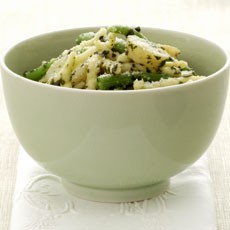
Wine and Food Pairing with James Flewellen: Trofie alle Castagne Pasta with Pesto, Potatoes and Green Beans

Trofie alle Castagne with Pesto, Potatoes and Green Bean recipe

Trofie alle Castagne with Pesto, Potatoes and Green Bean

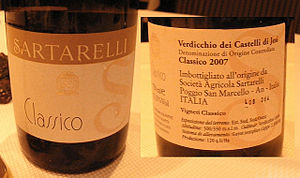
Try a Verdicchio wine from central Italy with this dish. This white wine has a complex, subtle, more vegetal flavour profile, as opposed to bright fruit and floral notes. This herbaceous quality will go very well with the similar flavours found in the green beans, while the acid in the wine will cut through the fats in the cheese and the oil in the pesto leaving your palate refreshed.

English: Bottle of Verdicchio dei Castelli di ...


If you like your fruity wines, try a decent Pinot Grigio, whose acid will play a similar role to the Verdicchio. But be warned – many of the mass market Pinot Grigios out there have an overly fruity flavour profile and a touch of sweetness, which won’t complement the pesto as well.

On the red side and staying true to the Italian theme, a lighter red will do the job. You want something savoury on the whole and not overly tannic or alcoholic – which can be hard to find in Italy! A lighter-bodied Chianti Classico could work well, but you may want to have extra Parmesan on hand to round out the tannins!


Join James Flewellen and Jonell Galloway at “Celebrate the Chartres Festival of Lights & Autumnal Equinox with a Food & Wine Tasting Masterclass” in France from September 19 to 22, 2013.


___________________________

Dr James Flewellen is a biophysicist at the University of Oxford. James learned his trade in taste through the Oxford Blind Wine Tasting Society, of which he was the President from 2010-2012. During his term, he represented Oxford at many international blind tasting competitions – twice winning the prestigious ‘Top Taster’ Award in the annual Varsity blind tasting match against Cambridge University and captaining winning teams in competitions throughout Europe.

One of James’s goals is to clarify the complex and hard-to-navigate world of wine for both novice and experienced tasters. He applies his scientific training to wine education, illuminating concepts of taste, tannin and terroir in an approachable, entertaining manner. James runs wine education courses in Oxford through the Oxford Wine Academy and is completing the WSET Professional Diploma in Wine and Spirits. He is the regular wine writer for The Rambling Epicure and is the founder of The Oxford Wine Blog. He is also currently co-authoring The Concise Guide to Wine and Blind Tasting – a book surveying the wine regions of the world and how to blind taste.


Never miss a post
Name: 
Your email address:*
Please enter all required fields
Correct invalid entries

Recipe: Trofie alle Castagne: Chestnut Pasta with Pesto, Potatoes and Green Beans

Published by Monday, July 15, 2013 Permalink 0

by Rosario Indelicato

Recipe: Trofie alle Castagne: Chestnut Pasta with Pesto, Potatoes and Green Beans

Serves 4 people

Ingredients

2 jars of Genoese pesto for 500 g of chestnut Trofie pasta
3 potatoes, peeled and cut into thin Julienne strips
75 g of French-style green beans, ends cut off and cut in half
Fresh Parmesan cheese to taste

Continue Reading…

Never miss a post
Name: 
Your email address:*
Please enter all required fields
Correct invalid entries

Wine and Food Pairing for Beginners, an Infographic

Published by Monday, July 8, 2013 Permalink 0


Wine and Food Pairing for Beginners, an Infographic

Wine Pairing Chart


Jonell Galloway and James Flewellen will be giving a food and wine tasting Masterclass in Chartres from September 19 to 22. Here is a thorough description: Celebrate the Chartres Festival of Lights & Autumnal Equinox with a Food & Wine Tasting Masterclass. Click here to reserve your place!


Never miss a post
Name: 
Your email address:*
Please enter all required fields
Correct invalid entries

The Art of Tasting Wine with James Flewellen: Spotlight on Chardonnay Grapes

Published by Monday, June 24, 2013 Permalink 0

The Art of Tasting Wine with James Flewellen: Spotlight on Chardonnay Grapes

by James Flewellen

Just as Pinot Noir is Burgundy’s queen of red grapes, so Chardonnay is Burgundy’s king of whites. Although originating from Burgundy, Chardonnay is so widely grown around the world it is now considered to be an ‘international variety’. 

Chardonnay is often described as a ‘winemaker’s grape’ in that the primary qualities of the grape are overwhelmed by the winemaking procedure, meaning the winemaker has an essentially blank canvas upon which to work. I take exception to this somewhat in that there is certainly something about Chardonnay that makes it ‘Chardonnay’, it’s just that this quality may vary depending on location and climate.

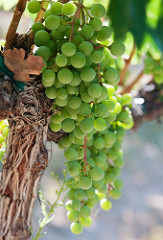
Chardonnay grapes close up, creative commons photo by  Dan Random / Foter.com /
Close-up view of Chardonnay grapes


The typical flavour profile of the grape is green apple and lemon if grown in cool places like Chablis in France, moving through to ripe red apple, peach and melon in warmer climes and eventually to tropical pineapple, mango and even banana notes in hot climates such as California and parts of Australia. Wines from hotter places tend to have a fatter, heavier texture, lower acidity and higher alcohol, whereas those from cold climates can be lean, austere and steely.

Chardonnay and oak go together like a hand in glove. Although there are many ways of integrating oak flavours with those of the grape, some winemakers in the past have chosen to overwhelm the natural expression of the grape with an unsubtle whack of oak. This has led to the association in many people’s minds that Chardonnay “tastes like wood.” Judicious use of new French oak adds butter, toast, nutty aromas and flavours to the wine, while new American oak brings a slightly ‘sweeter’ coconut or white chocolate profile. While some very fine wines can be profoundly ‘oaky’, to my mind this should always work with the available fruit flavours rather than overwhelm them. There is a recent movement in new world countries such as Australia and New Zealand to produce leaner, more mineral Chardonnays with very little new oak influence, while this has been practised as the norm in Chablis, in particular, for decades.

Continue Reading…

Never miss a post
Name: 
Your email address:*
Please enter all required fields
Correct invalid entries

The Art of Tasting Wine with James Flewellen: Top 10 White Wine Grapes

Published by Sunday, June 23, 2013 Permalink 0

The Art of Tasting Wine with James Flewellen: Top 10 White Wine Grapes

by James Flewellen

With over 1,300(!) vine varieties out there making commercial wine, it’s a tough task to narrow down to only 10. Nevertheless, here are my ‘top 10’ white wine producing grapes. The order is my own preference, based on commercial importance, potential quality of the grape and whether it produces a ‘classic style’.

10. Albariño

Deutsch: Albariño-Weingut. Weingut Granbazan. ...

Bodega Granbazán en las Rías Baixas, producer of Albariño


Perhaps a controversial start to the list, Albariño is a rising star in my book. The grape can produce well-balanced aromatic, peachy wines with fresh acidity, suitable as an aperitif or with fish and vegetarian dishes. It’s not yet grown much outside its native Galicia in Spain (and parts of Portugal), yet its stature is certainly on the up and much interest is being shown in growing the grape in a number of new world countries.

9. Gewurztraminer

Tramin - Gewurztraminer Grapes

Tramin – Gewurztraminer Grapes (Photo credit: Lynne Hand)


A very distinctive grape producing ‘love-em or hate-em’ wines. Gewurztraminer has its spiritual home in Alsace, France, though can be found throughout Central Europe and in many new world countries. The grape is typically pink-skinned and produces an abundance of sugars in the right growing conditions. This leads to deeply-coloured, rich, full-bodied wines – many of which are off-dry, or even sweet. Gewurztraminer wines are flamboyantly fragrant with unmistakable notes of lychee, pot pourri and sometimes cloves.

8. Viognier

English: Viognier grapes ripening on a vine in...

Viognier grapes ripening on a vine in Amador county, California.


Another full-bodied, distinctively aromatic wine. Viognier brings forth characteristic notes of peach, apricot and ginger. The very best examples come from the tiny appellation of Condrieu, in the Rhône Valley in France. However, it is found in the blended white wines of southern France, and increasingly in the new world. A single producer in the Barossa, South Australia — Yalumba — could be credited with re-popularising this grape and bringing it to a new audience in the modern era.

Continue Reading…

Never miss a post
Name: 
Your email address:*
Please enter all required fields
Correct invalid entries

The Art of Tasting Wine with James Flewellen: The Birth of a Wine Glossary

Published by Wednesday, June 12, 2013 Permalink 0

The Art of Tasting Wine with James Flewellen: The Birth of a Wine Glossary


We are proud to announce that James Flewellen has started a wine glossary. It’s just the beginning, but we will be building on it soon.

Click here to see it.


Never miss a post
Name: 
Your email address:*
Please enter all required fields
Correct invalid entries

The Art of Tasting Wine with James Flewellen: Wine Diamonds in White Wine

Published by Tuesday, May 28, 2013 Permalink 0

by James Flewellen

Wine Diamonds in White Wine

There are a number of legitimate reasons for sending a wine back at a restaurant: the wine could be oxidised, be contaminated by ‘cork taint’, suffer from excess volatile acidity, or have unpleasant Brettanomyces aromas. One common cause for complaint, however, is the presence of tartrate crystals or ‘wine diamonds’. Wine diamonds in white wine are a natural occurrence.

These are clear crystalline deposits found usually in certain white wines, especially Riesling. They are either potassium bitartrate (a.k.a. cream of tartar) or calcium tartrate — both found naturally in grapes, and which follow through to the final bottle in the winemaking process. They are certainly not tartaric acid, sugar, or bits of glass! These wine diamonds are perfectly natural and completely harmless. In the glass, they sink to the bottom and will barely impose on your enjoyment of the wine. Or, the wine can simply be decanted, with the crystals remaining in the bottle.

Wine diamonds in white wine left over from a glass of excellent Austrian Gruner Veltliner.

These crystals can be removed before bottling, however it is an involved process involving chilling the wine and passing it through filters. This is energetically expensive and the filtration process can remove flavour compounds that give the wine its complexity and character. Producers of fine wines prefer to mess with the wine as minimally as possible to deliver the best possible quality to the consumer.

So if you do see some wine diamonds in your wine, this is not a cause for complaint. Rather, be assured that the winemaker cares about his wine so much that he has chosen not to remove them to deliver the best possible wine to you!

__________________

James Flewellen is The Rambling Epicure wine columnist. James is a biophysicist at the University of Oxford. Originally from New Zealand, the huge range of wine James discovered in Europe spurred his interest in all things vinous. He became involved in the University’s Blind Wine Tasting Society and has recently completed a two-year term as its President. During this time he represented the University in a number of domestic and international wine tasting competitions, winning several awards. He is currently completing the WSET Diploma in Wine and Spirits. James has a passion for wine communication and education and runs the Oxford Wine Blog and wine tasting courses through the Oxford Wine Academy.


Never miss a post
Name: 
Your email address:*
Please enter all required fields
Correct invalid entries

The Art of Tasting Wine with James Flewellen: Top 10 Red Wine Grapes

Published by Thursday, May 23, 2013 Permalink 0

The Art of Tasting Wine with James Flewellen: Top 10 Red Wine Grapes

by James Flewellen

My last post covered what I consider the ‘top 10’ white wine producing grapes. Finding a similar list for the top 10 red wine grapes is no less difficult — perhaps even more so with the propensity for red wines to be a blend of a number of different grapes. Again, the order is my own preference, based on commercial importance, potential quality of the grape, and whether it produces a ‘classic style’.

TOP 10 RED WINE GRAPES

10. Malbec

Malbec is one of the six permitted red wine grapes in Bordeaux, although few producers take advantage of its rich, plummy flavours. You are more likely to find Malbec predominating in blends of southern French appellations, such as Cahors, where the grape is called ‘Cot’. These wines are typically full-bodied, deep in colour, with plum flavours alongside ferric, inky notes too. Malbec has found a second home in Argentina, where it is the country’s signature red grape. In Argentina, the mineral notes subside somewhat, and a purer fruit note comes to the fore. The tannins, plentiful in Cahors, are softer in the Argentinian expression.


8. Sangiovese

This rather romantically named grape (‘Blood of Jupiter’) is the key component of wines from the Chianti region in Tuscany — arguably Italy’s most famous red wine export. The grape produces ruby-coloured wines with notes of cherries and almond. The palate can show high acid with tart cherry flavours, medium to high levels of alcohol and drying, austere tannins. The best examples develop savoury, tea-like notes with age and undeniable complexity. Brunello di Montalcino is perhaps the most interesting expression of Sangiovese, from a wine-lover’s perspective. Best served with food on account of the fierce tannins though! Sangiovese is also a component in many of the so-called ‘Super-Tuscan’ blends, along with Cabernet Sauvignon and Merlot.

Sangiovese ready to harvest


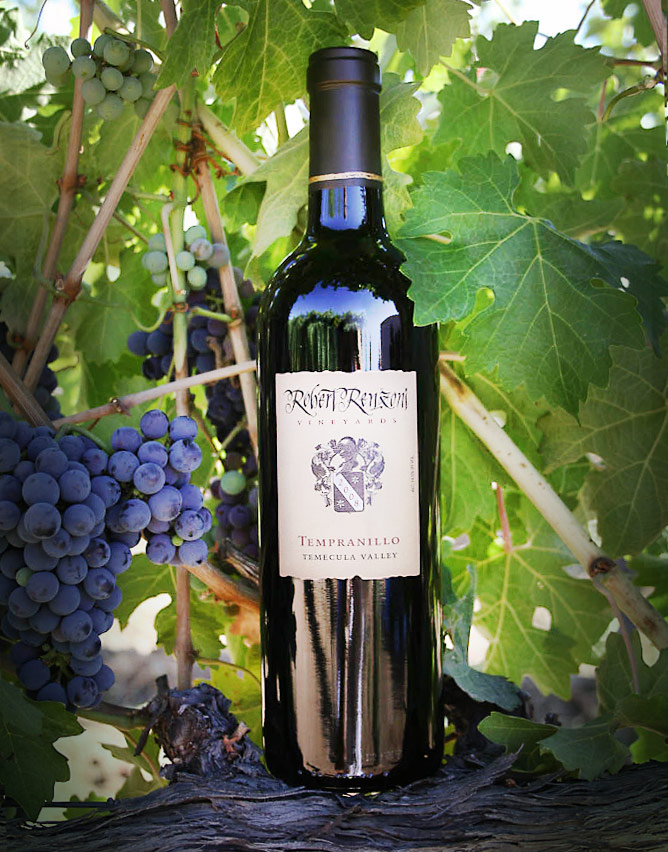
7. Tempranillo

As Sangiovese is to Tuscany, Tempranillo is to the Rioja region — and indeed to many parts of Spain. Rioja is now perhaps Spain’s most famous wine export after Cava and within this region the Tempranillo grape has found a plethora of styles. The traditional style of Rioja saw ageing in mostly American oak barrels, complementing the strawberry notes from the grape with a sweet vanilla and coconut aroma from the oak. The balance between oak and fruit notes depends on the length of time the wine is aged in the barrels. With age, these wines develop pleasant grassy and ‘farmyardy’ aromas. A ‘new’ style of Rioja has emerged in recent years, favouring French oak and pushing fruit notes to the fore. Tempranillo is also a key component in many other regions of Spain, such as Ribera del Duero, and in Portugal too, where it is known as Tinto Roriz.


6. Cabernet Franc

The second Bordeaux grape on the list, although in Bordeaux, Cabernet Franc usually plays second or third fiddle to Cabernet Sauvignon and/or Merlot. This by no means diminishes its importance for the region, however. For a classic expression of a varietal wine we head north to the Loire valley — to classic regions such as Saumur, Chinon and Bourgueil. Here, the grapes produce a medium-bodied purple wine with high acidity and fine, powdery tannins. Due to the cooler climate in the Loire, these wines have leafy, herbaceous notes to go with blackcurrant, blackberry and a distinctive mineral note many describe as ‘pencil shavings’!


5. Grenache

Grenache is the stalwart of the Southern Rhône, where it makes up the dominant component of blended wines along with Syrah, Mourvèdre and many others. This grape is a the heart of famous appellations such as Châteauneuf-du-Pape, Gigondas and Vaqueyras. Unusual among grape vines, it can tolerate heat and drought remarkably well with its ability to close its stomata to minimise water loss through evaporation. This feature also explains its success in South Australia — another hot, dry part of the world. The Aussies have followed the Southern Rhône model and produce similar blended wines — typically called ‘GSM’ after the three major grape components. Grenache is also to be found in Priorato and other parts of Spain, where it is known as ‘Garnacha’ and typically blended with Cariñena (a.k.a. Carignan). Grenache produces wines with high alcohol, low acidity and fine, dry tannins. The flavour profile is usually of strawberry with a characteristic white pepper spiciness.

Photo courtesy of WineFolly.com


4. Merlot

Merlot was much maligned by Paul Giamatti’s character in the film Sideways – although in an ironic twist, his prized bottle of 1961 Cheval Blanc contains a major component of Merlot. Perhaps Merlot’s unfairly poor image comes from the many mass-produced French and New World wines where the grape is used to make soft, undemanding, plummy, easy drinking wines. However, at its best, Merlot produces elegant wines with savoury flavours combining with juicy plum and fruitcake spice notes. While the grape does not lend to the most structured wines, there can still be relatively firm, drying tannins, allowing the best examples of Merlot to age very well. The most famous examples of Merlot come from the Right Bank of Bordeaux in appellations such as St Emilion and Pomerol. Here, Merlot is typically blended with Cabernet Franc to produce some of the finest wines in the world. Merlot is, of course, a component of the Left Bank Bordeaux wines, although here it comes in second to Cabernet Sauvignon. Merlot can also be found in Bordeaux-imitation blends around the world and as a varietal wine in parts of the New World – especially California, New Zealand and Chile.


3. Syrah/Shiraz

Whereas the Southern Rhône follows the model of blending many grapes to create Grenache-dominated wines, the Northern Rhône sticks to a single grape: Syrah. Historically, Syrah has produced the most revered wines in France — emanating from Hermitage, Côte-Rotie, St Joseph and Cornas — and it has only been relatively recently that the focus has shifted to Bordeaux and to Burgundy. The best examples are very long-lived and offer very good value to the fine wine connoisseur. Syrah from the Rhône is medium- to full-bodied, with firm, slightly coarse tannins, crisp acidity and complex notes of plum, blackcurrant, black pepper, roasted meat, liquorice, treacle, herbs, among others. Syrah is, of course, equally famous in Australia, where it is known as ‘Shiraz‘ and found throughout the entire country. In fact, Australia has the oldest Shiraz grape vines in the world, with a number of regions unaffected by the phylloxera blight that destroyed European vineyards in the late 1800s. The classic style is that of the Barossa Valley or McLaren Vale — jammy black fruits, often with notes of spicy salami, black pepper, and eucalyptus. Australian Shiraz is usually more full-bodied with lower acidity than that of the Rhône, although wine from the slightly cooler region of the Hunter Valley can approach a Rhône-like style.
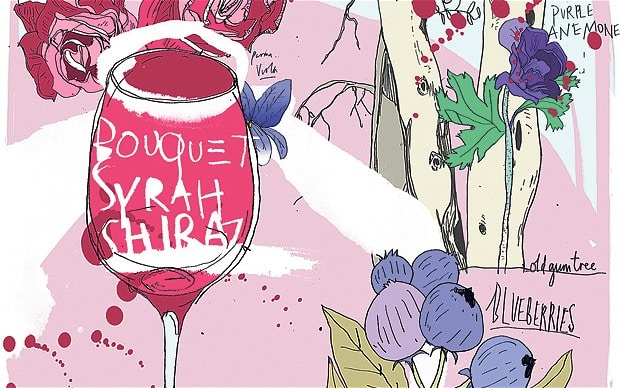
http://www.telegraph.co.uk/foodanddrink/wine/8706849/Syrah-from-Chile-and-New-Zealand.html

Photo link to the Telegraph


2. Cabernet Sauvignon

The predominant grape in some of the world’s most revered and expensive wines: those of the Left Bank of Bordeaux. In the right climate and on the right soils, Cabernet Sauvignon offers elegance, power, structure and harmony that few other grapes can match. However, in search of the perfect structure the grape can produce austere flavours in the wine, which is why this grape is best suited to blending with others. This is the origin of the ‘Bordeaux blend’, which sees Cabernet Sauvignon melded with Merlot, Cabernet Franc, Malbec and Petit Verdot. Cabernet Sauvignon brings classic notes of blackcurrant, cedar, and bell peppers alongside vanilla and nuts from maturation in new French oak, which is typical in Bordeaux. On the palate, the grape brings crisp acidity and firm, structured tannins, and both of these can ensure a long ageing potential. The Bordeaux style has found favour in many other parts of the world, from the ‘Super-Tuscans’ of Italy to equivalents in Spain, California, Australia and South America. The best examples of these are among these nations’ finest wines also.


1. Pinot Noir

As Chardonnay is the Burgundian king of white wines for me, so Pinot Noir is the queen of reds. Fickle, hypersensitive,  ill-tempered, yet oh-so-magical when it all pays off, tasting a great Pinot Noir is an unforgettable experience. At its best the grape offers up swirling, subtle aromas of raspberry, strawberry, cherry and blackberry, a refreshing minerality and an earthy, leafy quality that is quite indescribable, yet summed up beautifully in the French term sous-bois – or ‘forest floor’. Burgundy still holds the crown for the most desirable Pinots – indeed wines – on the planet, due in no small part to its 1,000-year history in growing the grape. The grape is notoriously difficult to work with and susceptible to very minor changes in climate. Various places around the world have taken on the challenge of making great Pinot – New Zealand, Oregon and Tasmania are considered the best pretenders to the crown and can produce some very good (and much better value-for-money) wines. But these are all new kids on the block, and have a few centuries ahead of them to really get to know the grape, and for the grape to get to know their new homes.

__________________

James Flewellen is The Rambling Epicure wine columnist. James is a biophysicist at the University of Oxford. Originally from New Zealand, the huge range of wine James discovered in Europe spurred his interest in all things vinous. He became involved in the University’s Blind Wine Tasting Society and has recently completed a two-year term as its President. During this time he represented the University in a number of domestic and international wine tasting competitions, winning several awards. He is currently completing the WSET Diploma in Wine and Spirits. James has a passion for wine communication and education and runs the Oxford Wine Blog and wine tasting courses through the Oxford Wine Academy.

Never miss a post
Name: 
Your email address:*
Please enter all required fields
Correct invalid entries

UA-21892701-1