
This is the first in a series of B&W vineyard photographs by Rosa Mayland, author of our column Rosa’s Musings.
Related articles
|
|

A Literary Culinary Journal
This is the first in a series of B&W vineyard photographs by Rosa Mayland, author of our column Rosa’s Musings.
|
|
When we taste a wine to assess it, we are looking for up to eight different components. Firstly, the flavours. In general terms, flavours will be similar to the aromas we can smell. Indeed, what we think of ‘taste’ is more influenced by smell sensors in the back of our nasal cavities than by our tastebuds! Things to consider about the flavours in wine include: Do they match with what we were expecting based on the aromas we can smell? Is the balance between aroma and flavour harmonious, contrasting or conflicting? What sort of food would this wine go best with?

We now look out for the structure of the wine. This is a term used to describe components of the wine that carry the flavours and ‘support’ the wine. Alcohol is perhaps the most obvious aspect of structure in wine. Ethanol has the ability to hold more aroma and flavour compounds in solution than water, one reason alcoholic beverages are generally more complex than non-alcoholic ones. It is important that the alcohol is in balance with the rest of the wine and does not produce an unpleasant burn at the back of the throat (too much alcohol) nor results in a ‘thin’ or ‘weak’ wine (too little). Alcohol is a major component of what we call the body of the wine, which is how dense or viscous the liquid feels in the mouth. A robust, deep-coloured red wine is likely to be ‘full-bodied’, whereas a lower-alcohol cool-climate white wine will be ‘light-bodied’. There’s no right or wrong level of body, simply that the body of the wine is in harmony with other structural elements.
All wines have what we call residual sugar. This sugar remaining from the fermentation process, which converts the natural sugars in grape juice to ethanol. In most cases the level of residual sugar is so low that we cannot taste it. These wines are what we would call ‘dry’. In some cases the fermentation is deliberately stopped to leave a higher level of sugar in the final wine. These wines will be ‘off-dry’ or perhaps ‘medium-sweet’. Dessert wines can be incredibly sweet, and they are made from grapes with very high concentrations of sugar. Yeasts can only convert so much sugar into alcohol in fermentation (typically 13.5-14.5% abv); any sugar above this level remains unfermented resulting in a sweet wine. Sweet white wines are far more common than reds.
Acidity is a very important structural component in all wine. The natural fruit acids in the grapes are preserved through the fermentation process and provide the ‘backbone’ to wine. Acidity helps to carry to flavour of wine down the tongue and spread the sensation of the wine around the mouth. It has an important role in wine and food pairing as acid cuts through the fats and oils found in food, cleansing and refreshing the palate. This is why highly acidic wines go very well with creamy sauces and certain cheeses. Acidity is registered on the sides of the tongue; you can also assess it by noting your saliva response after swallowing.
An aspect of the winemaking process (a story for another time!) means that the quality of acidity in red wines is softer than that for whites. But red wines have another structural aspect: tannins. Tannins are chemicals found in the skin, stalks and pips of grapes. They interact with the inside skin surfaces of your mouth — gums, cheeks, tongue — to create a furry, puckering sensation. The same chemicals are found in tea. Unlike white wines, red wines are made in a way to preserve tannins. When you drink red wine with food, the tannin interacts with protein, neutralising it, and cleansing the palate in much the same way acidity does for white wines. This explains why red wine and red meat are such a popular pairing, and also why many red wines are not particularly pleasant on their own, yet amazing with food.

One aspect of tasting wine that crosses over flavours and structures is the use of oak to mature the wine. Oak barrels lend a wine some of the oak flavours — nuts, butter, biscuit, spice, vanilla, coconut — which suit very well certain styles of wine. Ageing in oak barrels also allows a very slow air exchange to occur with the wine. This interaction changes the flavour and structure of the wine in other, more subtle, ways. The acidity becomes more mellow and the fruit character recedes slightly, allowing more complex flavours to develop.
Our final aspect of structure in a wine is the finish. This describes the effect of the wine after we swallow. The finish can be long, short, abrupt, disappointing, smooth, bitter, fruity, savoury, enjoyable, harmonious, complex, you name it. It is our final judgement on whether we like this wine and whether we’d buy another bottle.
Ultimately, the final arbiter of taste is you. No-one can tell you what you can taste and whether you like a wine or not. While there are accepted methods for assess the various structural elements I’ve described above, perception is a very personal thing. The trick to appreciating wine is to know why you like (or don’t like) a wine, not just that you do!
__________________
James Flewellen is The Rambling Epicure wine columnist. James is a biophysicist at the University of Oxford. Originally from New Zealand, the huge range of wine James discovered in Europe spurred his interest in all things vinous. He became involved in the University’s Blind Wine Tasting Society and has recently completed a two-year term as its President. During this time he represented the University in a number of domestic and international wine tasting competitions, winning several awards. He is currently completing the WSET Diploma in Wine and Spirits. James has a passion for wine communication and education and runs the Oxford Wine Blog and the Oxford Wine Academy.
|
|
Click here to keep up with the latest in world food and wine news.

|
|
Zev Robinson is a Canadian-British artist and filmmaker currently living in Valencia in Spain. After finishing his B.F.A. in Montreal in 1983, he completed his M.F.A. in New York and subsequently moved to Italy and traveled around Europe, before settling in Spain in 1991. In Spain, he married Albertina Torres. The couple moved to London in 1995, where this series of chile peppers was created.
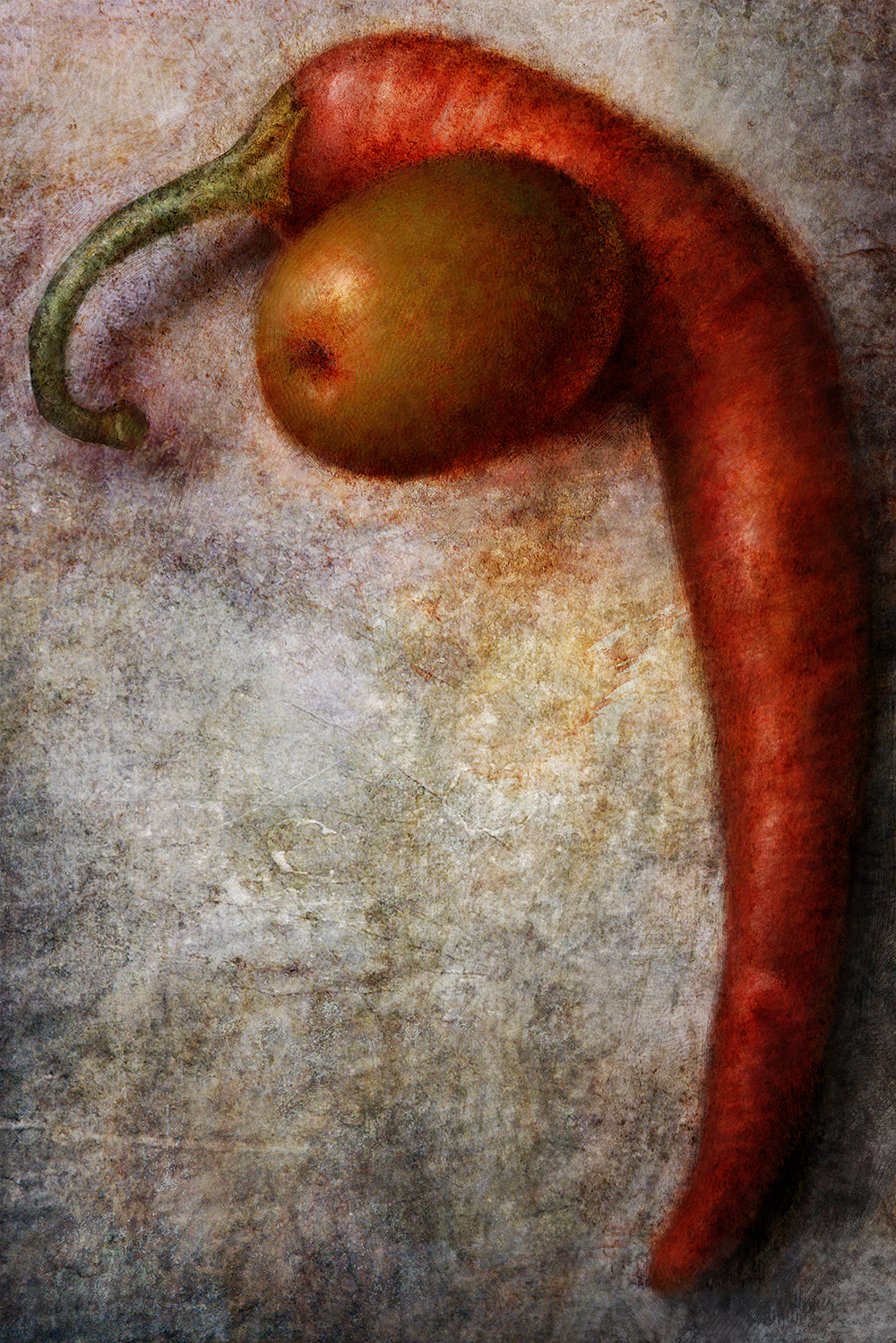


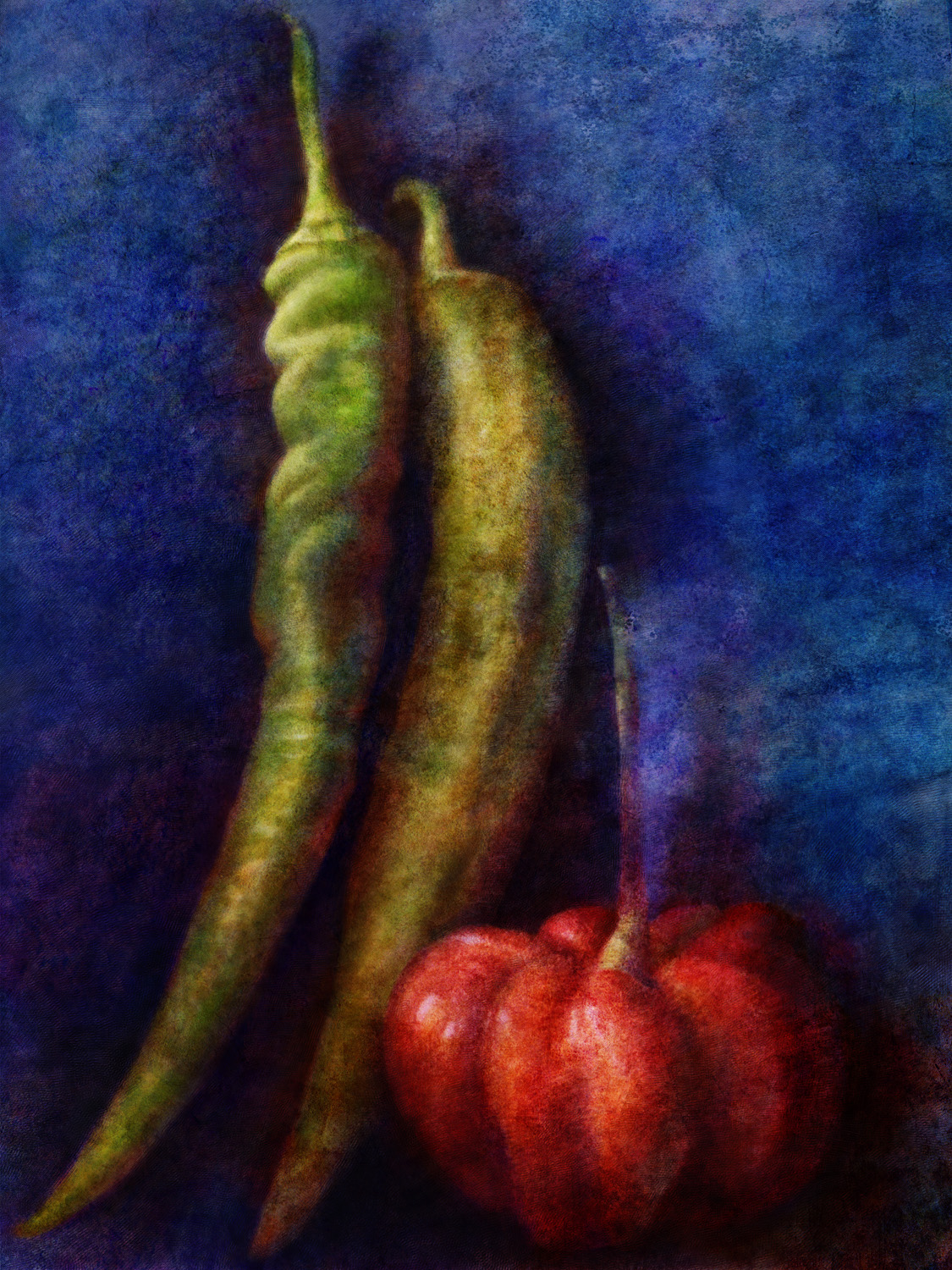


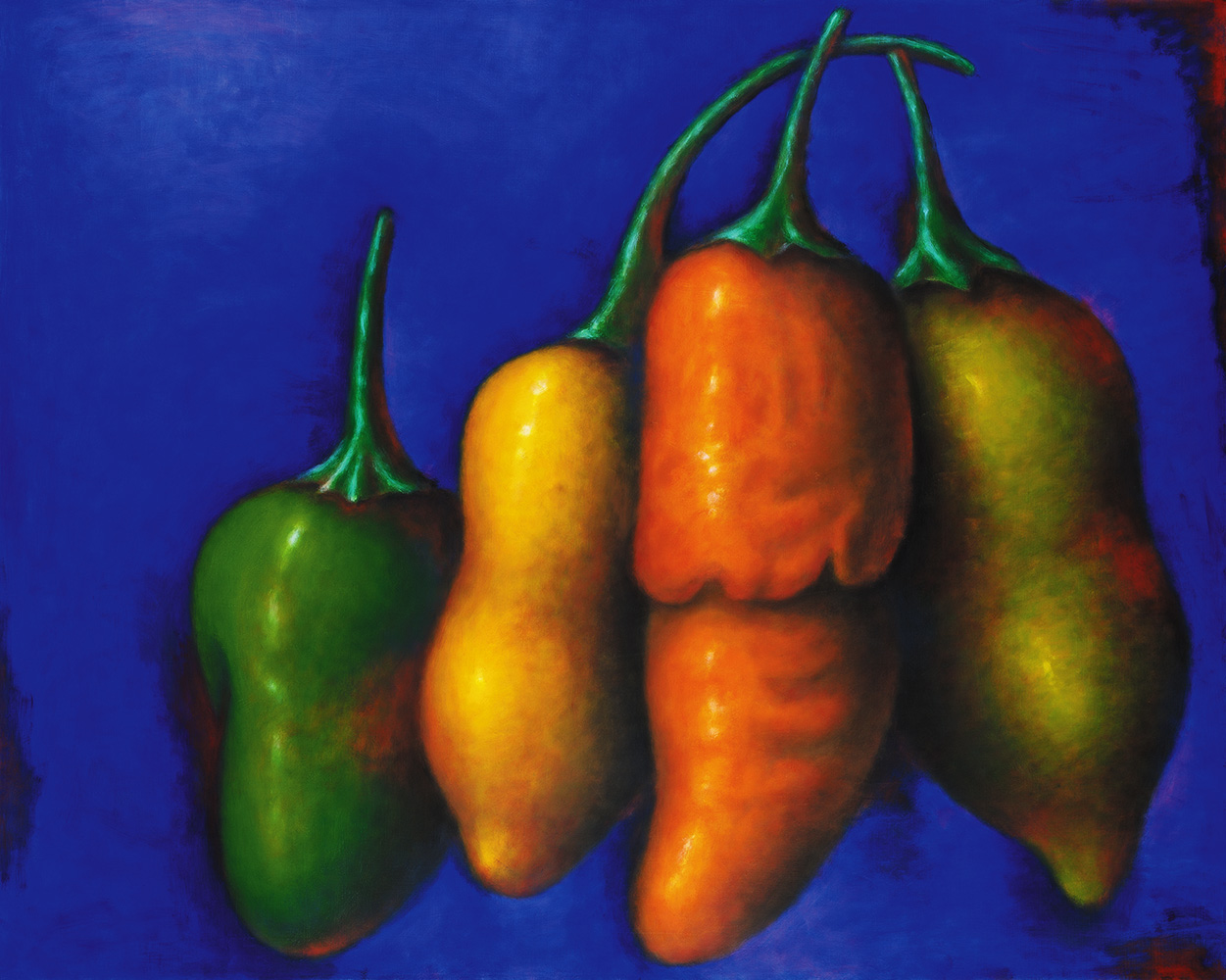


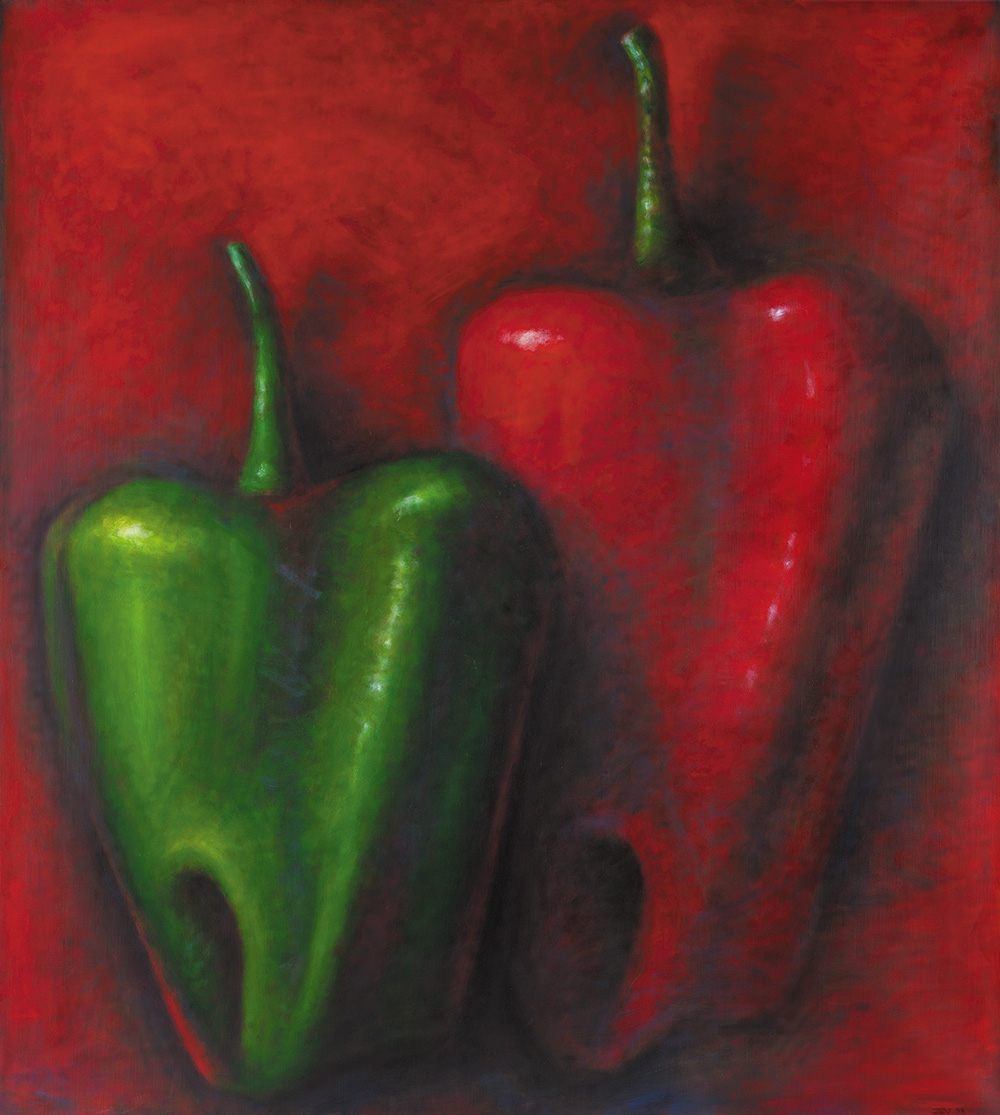
While in London, he also started working on videos and digital art projects as part of Art After Science, formed with Adrian Marshall, creating a variety of works that have been exhibited widely, including at ARCO in Madrid, the Venice Video Art Fair, and the LOOP Video Fair in Barcelona.
Robinson returned with his family to Spain in 2005, where his video work led to a series of documentaries on wine, food and rural life in Spain. That left him with little time to paint, but in 2012 he showed a series of newly created works of Amphorae at the Dinastia Vivanco Museum. Since then, he has restarted a series of images based on film noir and pulp fiction covers.
|
|
by Silvestro Silvestori
I love wine.
No, I mean I really, really love it. I love everything about it.
I love the sound of cracking the scotch tape when unloading cases, of pulling spongy and squeaky corks, of splashing it into freshly-polished glasses, of that first sip of something unexpected; the way it fills my mouth as though the liquid were fermented from the late-summer fireworks of my youth.
I love spending Saturdays arranging my personal collection, of browsing stores, cantine and supermarkets the way women think of trying on clothing, with no intention of buying any, but just to be around the stuff: pleasure through osmosis. I love pulling out the horizontal bottles to read the labels, how my mind tries to predict, or if I’ve been lucky, to remember what the contents are like, whether it was sunny that year, cloudy, whether is came from places far away, where farmers train their vines in radically different ways and call their mothers words other than ‘mamma‘.
As a teacher, I love being asked about a favourite wine, of how I’ll adjust my weight in my seat, half surprised myself by the long and beautifully nuanced explanation that seems to channel through me, as welcome as an old friend.
I love books about wine, and have hundreds of them, crammed and jammed into a 17th-century bookcase, four doors wide, the books themselves, marked with my horrific hand-writing and years and years of faded purple rings.
I love the history of a very different Europe, when wine traveled by barge, by clipper ship, where it poured from countless clay pots, crystal decanters and leather pouches.
Of course an attentive reader will notice that I never mentioned the alcoholic effect of wine, which of course that is what this essay is really about.
I love that too, and maybe a little too much.

|
|
 by Jonell Galloway
Click here to keep up with the latest in world food and wine news.

Photo by Prerna Singh
|
|
Click here to keep up with the latest in world food and wine news.

|
|
 Meet Jonell Galloway, a freelance writer and editor specialized in French cuisine.


 by
by 


