What to Eat in France: Pâte de Coings

Published by Tuesday, August 11, 2015 Permalink 0

What to Eat in France: Cotignac ou Pâte de Coings, or Quince Cheese or Paste

by Jonell Galloway

Before having the best Cotignac sent from Orléans, because you were yearning for the tastes of  your childhood…Avant de faire venir d’Orléans le meilleur cotignac, puisque vous vouliez redevenir enfant et goûter au cotignac…—Balzac, Lettres à l’Étrangère

Quince is my husband’s favorite word. Annoying situations or people are quinces in his lexicon. But quinces can be most agreeable, as in the case of quince paste, a cherished confection in France. Although the fruit must be cooked to be digestible, rather like annoying situations have to be cogitated over to be digested, it is worth the effort. They are, after all, a member of the Rosaceae family, like apples and pears.

Quince paste, often called quince cheese or in Spanish membrillo, is not specific to France. In fact, it dates as far back as the Ancient Greeks, who made a similar preparation using honey instead of sugar.

Cotignac d’Orléans, quince cheese from the region of Orléans, has a special place in the history of France. In the Middle Ages, a pastry chef from the village of Cotignac in the region of Var in the southeast set up shop in Orléans. He made quince cheese, which came to be known as Cotignac, and which became a favorite of King François I. French kings continued the tradition, and Louis XIV and XV offered Cotignac to ambassadors and other important guests.

There are also historical references to a Cotignac from Mâcon.

How is Cotignac different from other quince cheese? It’s not, really. The name just stuck because of its place in history.

Continue Reading…

Never miss a post
Name: 
Your email address:*
Please enter all required fields
Correct invalid entries

Quintessential France: Rules for Dunking

Published by Saturday, August 8, 2015 Permalink 0

by Jonell Galloway

Croissants were made to be dunked into coffee, right? Doesn’t the very shape lends itself to dunking?

One of the first things I fell in love with in France was the general acceptance, albeit a bit common, of dunking my morning baguette-and-butter tartine or croissant in my café au lait. Dunking was forbidden in my mother’s house. She said it was common and thought Dunkin’ Donuts a travesty, so the French acceptance, though not formal, made me feel the reins of my upbringing had been loosened, if not removed.

Some French people, like Mme Verdurin in Proust’s Le Temps Retrouvé / Time Regained, actually suffer when they’re not allowed to dunk:

Mrs. Verdurin, suffering with migraines from no longer having a croissant to dunk in her café au lait, had gotten a prescription from Dr. Cottard allowing her to do it in certain restaurants, which we talked about. This was almost as difficult as getting the government to nominate a general. She ate her first croissant on the morning the newspapers reported the sinking of the Lusitania.

Continue Reading…

Never miss a post
Name: 
Your email address:*
Please enter all required fields
Correct invalid entries

What to Eat in France: Buckwheat Crêpes

Published by Sunday, August 2, 2015 Permalink 0

What to Eat in France: Galettes de Blé Noir, or Breton-style Buckwheat Pancakes

The buckwheat crêpes of Brittany are unique in the context of French cuisine. They go by many names: galettes de sarrasin, crêpe bretonne, galette de blé noir.

Crusaders brought back buckwheat from Asia in the twelfth century, but it proved to be hard to grow until they took it to Brittany, where there is always plenty of rain, yet the climate is not harsh and the soil is acidic: all the right conditions for growing blé noir, meaning literally “black wheat,” even though it’s not technically of the wheat family.

It was Anne of Brittany who had it planted it all over Brittany and made it part of the Breton diet at the beginning of the fifteenth century. It grows fast and is ready to eat in 100 days, so it helped feed Bretons for centuries, and is often referred to as “poor people’s wheat,” since wheat was only affordable for the rich in those days. It was probably used for gruel or very thick griddle cakes at the beginning.

It still took centuries before the buckwheat pancake as we know it to became popular. The original recipe, which dates from some one thousand years ago, contained only buckwheat, salt and water and was much thicker than the crêpes we know today, which also contain milk, eggs and regular wheat flour, giving a thinner crêpe.

On February 2, Catholics celebrate Candlemas by eating buckwheat crêpes together. For farmers, this date concurs with the end of winter and the beginning of the new farming year, so superstitious farmers keep the candles from this celebration lit to protect their future harvests.

Traditionally, buckwheat galettes are reserved for savory dishes, and are not used for dessert. The Bretons drink apple cider with them.

Continue Reading…

Never miss a post
Name: 
Your email address:*
Please enter all required fields
Correct invalid entries

Quintessential France: Lunch by the River Seine

Published by Thursday, July 30, 2015 Permalink 0

The painter Gaston Balande, 1880-1971, was born in Saujon, France, and took part in numerous Beaux-Arts salons during his lifetime. This painting is in the tradition of Edouard Manet’s Le Déjeuner sur l’Herbe painted in 1862 and 1863, without the brazenness of the nude woman.

Never miss a post
Name: 
Your email address:*
Please enter all required fields
Correct invalid entries

What to Eat in France: Saffron Mussel Soup

Published by Wednesday, July 29, 2015 Permalink 0

What to Eat in France: Soupe de moules safranée, or Saffron Mussel Soup

by Jonell Galloway

Saffron mussel soup is from the Loire region. The particularity of the Loire version of this soup is that it has leeks, which are not commonly used with mussels. The Loire Valley produces more than 24% of all leeks in France, more than any other region.

The proportions of the ingredients can vary, although the fumet needs a bit more precision than the mussels and soup. The general rule is to make as much fumet as you need for the amount of mussels you’ve cooked.

Continue Reading…

Never miss a post
Name: 
Your email address:*
Please enter all required fields
Correct invalid entries

Quintessential France: Monet in his Garden in Giverny

Published by Tuesday, July 28, 2015 Permalink 0

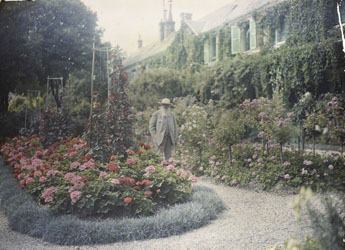
The painter Claude Monet in his garden in Giverny, circa 1890.

Never miss a post
Name: 
Your email address:*
Please enter all required fields
Correct invalid entries

What to Eat In France: Agneau au Sel, Rack of Lamb in Salt Crust

Published by Tuesday, July 28, 2015 Permalink 0

What to Eat In France: Agneau au Sel, Rack of Lamb in Salt Crust

by Jonell Galloway

Agneau au sel, or rack of lamb cooked in a coarse salt crust, is a specialty of the Loire region.

Ingredients

1 1/2 lbs rack of lamb
3 lbs. coarse salt
2 sprigs thyme

Instructions

  1. Preheat oven to 464° F.
  2. Pour 1 1/2 lbs. of coarse salt into a baking dish large enough to hold the rack of lamb.
  3. Place the rack of lamb on this salt.
  4. Cover with another 1 1/2 lbs. and with thyme.
  5. Bake for 25-30 minutes.
  6. Break the salt crust and carefully lift out before cutting.

Continue Reading…

Never miss a post
Name: 
Your email address:*
Please enter all required fields
Correct invalid entries

Quintessential France: A Village in Normandy

Published by Saturday, July 4, 2015 Permalink 0

Quintessential France: Springtime in Normandy

by Jonell Galloway

These fruit trees in blossom with the cow in the verdant fields of Lower Normandy and the church steeple in the background could almost be a Pissarro painting. The Impressionists made this sort of village scene familiar to us all. It’s almost like going home.

Photo by JF Lefèvre.

‪#‎QuintessentialFrance‬

Never miss a post
Name: 
Your email address:*
Please enter all required fields
Correct invalid entries

3-DAY TASTE AWAKENING COURSE IN CHARTRES

Published by Tuesday, June 30, 2015 Permalink 0

SEPTEMBER 17-20, 2015, DURING AUTUMN EQUINOX AND LIGHT FESTIVAL IN CHARTRES, FRANCE

Award-winning wine writer James Flewellen and Cordon Bleu-educated cook and food journalist Jonell Galloway present food and wine tasting masterclasses in the historic French city of Chartres. Comprising dedicated wine tastings, sumptuous meals made from local ingredients paired with regional Loire Valley wines and a unique, “sense-awakening” taste experience, our food and wine holiday courses will help unlock your taste buds and introduce the richness of aromas, flavours and textures present in food and wine. A music festival, with live music in the streets, restaurants, theatres, churches and bars, is held to celebrate the Autumn Equinox and to mark the end of the Festival of Lights. To sign up, please click here or fill in the contact form below.

Continue Reading…

Never miss a post
Name: 
Your email address:*
Please enter all required fields
Correct invalid entries

Switzerland: Speculoos, Quark and Summer Fruit Pie

Published by Wednesday, June 24, 2015 Permalink 1

Swiss Recipe: Quick, No-bake Summer Fruit Cheesecake

by Jonell Galloway

Ingredients

11 x 7 x 2 in. (28 x 18 x 5 cm) baking dish or deep pie tin
1 box Speculoos ginger cookies
Mixed summer fruit, washed and chopped into fat chunks such as apricots and blueberries + banana
Cinnamon to taste
1 1/2T – 2 T. dark brown cane sugar
1 1/2 – 2 T. maple syrup, depending on sweetness of fruit
Dried chili pepper flakes
500 g Quark* or Séré cheese

Line baking dish with Speculoos to form a crust, covering sides as well as bottom of pan.


coop organic quark séré


Chop apricots, blueberries and banana into large bite-size pieces. Place in a bowl. Sprinkle generously with cinnamon. Add 1 1/2 – 2 T. of dark brown sugar, 1 1/2 – 2 T. of maple syrup and a sprinkle of dried chili peppers. Mix well. Marinate for 30 minutes, stirring from time to time.

Mix fruit with one large yogurt-size tub Quark (500 g). Leave to marinate for 30 minutes, stirring from time to time.

coop organic quark séré


Pour quark and fruit mixture into pie pan. Refrigerate for at least 2 hours before serving.


*Quark is a fresh cheese made in the Germanic countries. It is not the same as cottage cheese or cream cheese, since it is made by warming soured milk fermented with mesophile bacteria until it coagulates. It can be replaced by labneh, ricotta, mascarpone, thick fromage blanc or strained yogurt, although the flavor and texture will not be exactly the same.

Never miss a post
Name: 
Your email address:*
Please enter all required fields
Correct invalid entries

UA-21892701-1