Coco’s Restaurant, a Hopping Corner of Bahrain

Published by Tuesday, July 12, 2011 Permalink 0

by Kanwal Anes Ahmed

Those who have not been to Bahrain often make the mistake of comparing it to the more “happening” city in the region – Dubai. But to put the serene culture of this Arab island in the same hustling shoes as the other apparently enthralling cities is a sin of the highest degree. For, even the shortest of trips to Bahrain opens one’s eyes to a world that serves as the classic example of the word: diversity. And within the diverse, entwining the many “categories” of individuals who constitute the population of Bahrain, lies its contemporary civilization – one that is categorized by deep urbanity and profound sophistication.

Like any other, such a culture sprouts to life in places where it is allowed to thrive the most and in this petite kingdom the eateries are where it dominates most. Being an aspiring connoisseur, much of the short time I’ve already spent in Bahrain has been spent in the exploration of the various restaurants that embellish the town, and I have been pleasantly surprised by the diversity of cuisines – most of which live up to the original, ethnic taste and are tastefully dished out. However, the place that really stood out, not only for its sensational menu, but for artfully depicting the avant-garde life of Bahrain, was Coco’s Restaurant.

Situated in Adliya, Coco’s is built within the bounds of an old renovated house and sports an ethnic Parisian interior complimented by a breezy outdoor seating arrangement beneath parasols and sun chairs decked out on pebbled flooring. Dimly lit, most of the glow seems to emerge from the glitzy crowd that throngs to this restaurant and one can almost breathe in the posh ambiance. The wait for a table can last up to a couple of hours and that being despite the fact that the entrance does not even boast a sign-board. Nor does it take pre-scheduled reservations. To be eating at Coco’s one has to be prepared — with a good GPS, patience and a taste for extraordinary food.

Once I was seated at my table, I started with the mushroom and chicken soup and chicken avocado salad. While the soup was creamy and blended perfectly, to warm the otherwise light chill in the night air, the chicken avocado salad proved to be one of the best things on Coco’s menu, served with a tangy dressing that happens to be Coco’s signature item and makes every other salad I have tried seem quite ordinary. The sugar-free iced tea I was served was the perfect treatment for my taste-buds at this point as it provided the calm after the delicious storm.

The next item on my list was the Samoa, which was filets of hammour seasoned with lemon and mild spice, served on top of creamy rice, topped with tingling herbs and wrapped in a bamboo leaf. This delicacy was light on the stomach yet did justice to the appetite and proved to be a hit with my taste-buds. I chose to sweeten up the meal towards the end, by ordering a slice of date and caramel cake, which was served warm with scoop of vanilla ice cream. This combination in a cake is popular across the island, but the layers of pureed dates, caramel and nuts I experienced at Coco’s definitely topped all others.

And the dessert was not the only remarkable thing about the end of this experience at Coco’s. Unlike other places, where one often feels too full to move at the end of the meal, here I was already looking forward to the next time I would be in the vicinity and able to indulge again. Moreover, the constant influx of guests was enough to make those of us craving some sort of vivacity, in this otherwise serene city, feel satisfied. In a nutshell, my brief rendezvous with this restaurant was definitely one that has immense potential of becoming a regular feat. In fact, my mind is already wandering off to plan another trip to Coco’s as I struggle to sum up my experience!

Never miss a post
Name: 
Your email address:*
Please enter all required fields
Correct invalid entries

Simon Says: Daily Food Quote, July 10, 2011

Published by Monday, July 11, 2011 Permalink 0

by Simón de Swaan

When devising a mixed salad be careful not to overdo the number of ingredients, or chop everything into small pieces, or mash them all up together into one indistinguishable morass;…–Elizabeth David, Summer Cooking


Never miss a post
Name: 
Your email address:*
Please enter all required fields
Correct invalid entries

Simon Says: Daily Food Quote, July 8, 2011

Published by Friday, July 8, 2011 Permalink 0

by Simón de Swaan

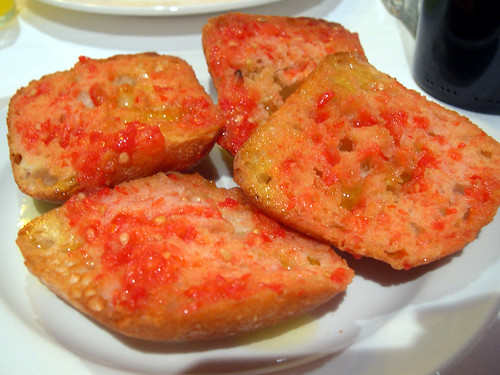
Poverty rather than wealth gives the good things of life their true significance. Home-made bread rubbed with garlic and sprinkled with olive oil, shared – with a flask of wine – between working people, can be more convivial than any feast.–Patience Gray, Honey from a Weed: Fasting and Feasting in Tuscany, Catalonia, the Cyclades and Apulia

Patience Gray was an English food writer who introduced Mediterranean tastes to Britain. She died in March of 2005. More can be read about her in The Guardian’s obituary.

Simon de Swaan, daily food quote, Simon Says. The Rambling Epicure. Editor, Jonell Galloway.


Never miss a post
Name: 
Your email address:*
Please enter all required fields
Correct invalid entries

Food Play: A Photography Exhibition by Sandeea

Published by Thursday, July 7, 2011 Permalink 0
Never miss a post
Name: 
Your email address:*
Please enter all required fields
Correct invalid entries

Simon Says: Daily Food Quote, July 7, 2011

Published by Thursday, July 7, 2011 Permalink 0

In the summer there is also holiday cooking. That may well mean food cooked in an unfamiliar kitchen equipped, more than likely, in an impersonal and inadequate fashion by the owners of a house, holiday villa, or caravan hired out for the summer.–Elizabeth David (Summer Cooking, London, 1965)

Elizabeth David, British food writer (1913-1992), who helped change the way Britain saw food.


Never miss a post
Name: 
Your email address:*
Please enter all required fields
Correct invalid entries

Simon Says: Daily Food Quote, July 6, 2011

Published by Wednesday, July 6, 2011 Permalink 0

Summer cooking implies a sense of immediacy, a capacity to capture the essence of the fleeting moment.–Elizabeth David

Elizabeth David, food writer (1913-1992) who helped to change the way Britain saw food. Many of her books are available in the Penguin classics series.


Never miss a post
Name: 
Your email address:*
Please enter all required fields
Correct invalid entries

Wild Woman on Feral Acres: Backyard Poultry Skills

Published by Tuesday, July 5, 2011 Permalink 0

by Esmaa Self

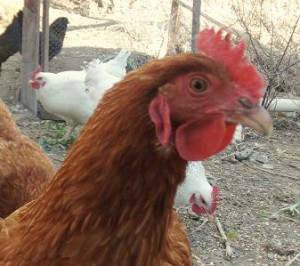
We’ve had a backyard flock seven years and have sold extra eggs for about four. I have been around and kept my own layer flocks before moving here and working to massage a thriving farm from our rocky span of hogback. And we’ve been sold out of eggs for three full years, but I wouldn’t call myself an expert on chicken behavior.

One of our 'girls'.

Continue Reading…

Never miss a post
Name: 
Your email address:*
Please enter all required fields
Correct invalid entries

Epicurean Adventure: the first of this year’s Great Barrier Feasts

Published by Tuesday, July 5, 2011 Permalink 0

by Rebecca Varidel, our Australian correspondent

Destination dining has never been more inviting. Luxury resort, qualia on Hamilton Island (in the Whitsunday Islands – off the coast of northern Queensland Australia) recently hosted the first of this year’s three Great Barrier Feasts. Gourmands travelled, from around Australia and internationally, to attend the intimate three-day soiree.

And the weekend delighted, with masterclasses by leading Chef Peter Gilmore of Quay restaurant Sydney (Quay is the only one of the Australian restaurants placed this year in the S. Pellegrino World’s 50 Best Restaurants), and culminated in a magnificent showpiece dinner. Gilmore flew a team with him from his Sydney restaurant kitchen to replicate a number of his beautiful signature dishes. Gilmore has been instrumental in Australia for changing the way we eat, and like Chef Serge Dansereau before him, raised the bar on the Aussie expectations of fresh produce. A keen home gardener and seed saver, Chef Peter Gilmore, introduces many varieties of heirloom vegetables into Australia from around the world. After testing the veggies in his home garden, he commissions small local farmers to grow the required quantities for his top restaurant.

Qualia Executive Chef Jane-Therese Mulry also delighted on the previous night, with a modern, imaginative and brave welcome dinner to start the weekend. Prior to her appointment at qualia, Mulry is perhaps best known as the first female head chef to be appointed by Chef Marco Pierre White. Chef Jane-Therese Mulry seeks out the best quality artisan and interesting local ingredients to create her own unique dishes across the resorts dining venues.

Transport between the guest pavilions, dining destinations, qualia spa and library, as well as the many other island recreational facilities is in itself entertaining, with guests driving themselves around on golf buggies.

While the feasting was just fabulous, the warm waters of private horizon plunge pools also enticed. Even in the midst of an Australian winter, swimming, sailing and other water sports were warm and tempting in the northern pristine waters of the Great Barrier Reef.


Never miss a post
Name: 
Your email address:*
Please enter all required fields
Correct invalid entries

Food Poetry: Brot, Linda Pastan

Published by Monday, July 4, 2011 Permalink 0

Click here to read in English.

Mir scheint, du
schreibst gern über
die fünf Gärphasen
der Hefe, nicht des Trauerns,”
meint mein Sohn,
womit er sagen will, dass
das Brot immer auf-
geht und in sich zusammensinkt,
gebrochen und gegessen wird
in meinen Gedichten.

Und obwohl er das nur so halb-
ernst meint, möcht ich
ihm sagen , “Brot geht in der Schüssel
auf wie Atem, der den Körper dehnt” oder
“wenn du den Teig knetest
mit vollkommener Sanftmut,
ist es wie leises Drücken der Haut
wenn du jemanden liebst.”
Baguette . . . Pitabrot . . . Pane Brot . . .
Challa . . . Naan: Brot ist
eine Universalsprache, zu übersetzen
auf der ausgehungerten Zunge.

Nun ist es Zeit, das
Päckchen Hefe aufzumachen
und mit Wasser anzurühren,
das Blasenwerfen zu betrachten,
sein wie man sagt blindes Testen
der Stärke, das Beseelen
des Lebens. Alles
ist bereit: Salz, Mehl, Öl.
Brotkrumen sind es, die
Kinder heimführen nach Haus.

(Übersetzt: Peter Beicken)

_____________________

after Levchev

First published in Ploughshares, now in Traveling Light, W.W. Norton, 2011.

This poem was contributed by our Poetry Editor, Christina Daub.

Short URL for this post: http://is.gd/q9Byhe


Never miss a post
Name: 
Your email address:*
Please enter all required fields
Correct invalid entries

Le grand art d’accommoder les restes (ce qu’on peut encore manger)

Published by Friday, July 1, 2011 Permalink 0

de Jean-Philippe de Tonnac

English adaptation in progress : The art of using up leftovers (or what can still be eaten)

La mise au point est faite par Nicolas Zamaria, directeur de laboratoire de biologie médicale, docteur ès nutrition, interrogé par Flo Makanai : « Au cours d’une vie, 30 tonnes d’aliments traversent le tube digestif d’un individu. » Imaginez vous qu’avant l’ère des pesticides de synthèse qui débute dans les années 1930 [le mot pesticide incluant insecticides, fongicides, herbicides et parasiticides], s’il fallait trouver une date Maginot désignant un « après » et donc un « avant », tout ce que cet individu ingérait, autrement dit ces 30 tonnes d’aliments, était bio. BIO ! Vous imaginez ! Tout simplement parce que l’homme cultivateur ne disposait pas encore des moyens de « rectifier » les grands équilibres homéostasiques de la nature ou, de les abîmer. Nous sommes légitimement en droit et devoir de nous interroger aujourd’hui sur la manière dont ce même tube digestif va traiter les 30 tonnes d’aliments tout à fait problématiques sur le plan nutritionnel qui lui seront proposés. Car, bien entendu, en dehors des produits étiquetés « bio » (2,5% de la surface agricole utile en France était consacrée en 2009 à l’agriculture biologique), plus rien n’est bio.

Continue Reading…

Never miss a post
Name: 
Your email address:*
Please enter all required fields
Correct invalid entries

UA-21892701-1