Apples and cream are a quintessentially Norman flavor combination. This is a festive dish made on Sundays and holidays.
In Normandy, they would traditionally drink it with dry cider or Pommeau, but a fruity white wine such as a Riesling goes well, or even dry white Burgundies. If you prefer red, try a light one, such as Saint-Nicolas-de-Bourgueil or another Loire red.
Comté cheese is a jewel born of Franco-Swiss history. By today’s boundaries, it is in the Jura Mountains in France, so it is technically considered a French cheese, although it’s made in a manner similar to that of the hard “cooked” Swiss cheeses we know as “holey Swiss cheese.”
Cara De Silva waxed poetic about Comté several years ago in Saveur magazine. I can’t describe it any better:
…that semifirm Comté is born of the distinctive milk of the region’s Montbeliarde cows, whose diet includes wild orchids, daisies, dandelions, and more than 400 other plant varieties; that it’s produced in the fruitières, or cooperative dairies, that have dotted the landscape of the Franche-Comté region for centuries; that the Montbeliardes’ milk is partly skimmed and heated gently in copper-lined vats before being combined with rennet; that the resulting curds are broken into fine grains, put into molds for pressing, and set on spruce boards for a few weeks of aging before being entrusted to an affineur, who oversees the further maturing of the cheese.
The Ancient Romans were already enjoying cheeses from this Franche-Comté region, and the cheese production in the villages of Deservillers and Levier were mentioned as early as 1264-1280. In 1380, there was mention of a cheese of such a large size that it could only be produced by a cooperative. After 1678, when Franche-Comté became part of France, there was an exodus of native Helvetics. It was then that other Swiss from the Gruyère region moved to the region, bringing the method of making Gruyère cheese — the cheese we often call “Swiss cheese” — with them. It is for this reason that the original name was Gruyère de Comté, now the AOC “Comté.”
Quand se garnis uno ensalado, Fau qu’aquéu que met la sau fugue un sage; Aquéu que met lou vinaigre, un avare; Aquéu que met l’òli, un proudigue.–Popular minstrel rhyme
“When dressing a salad, the person who adds the salt has to be careful; the person who adds the vinegar wise, and the person who adds the oil generous,” said the wandering minstrels in Langue d’Oc.
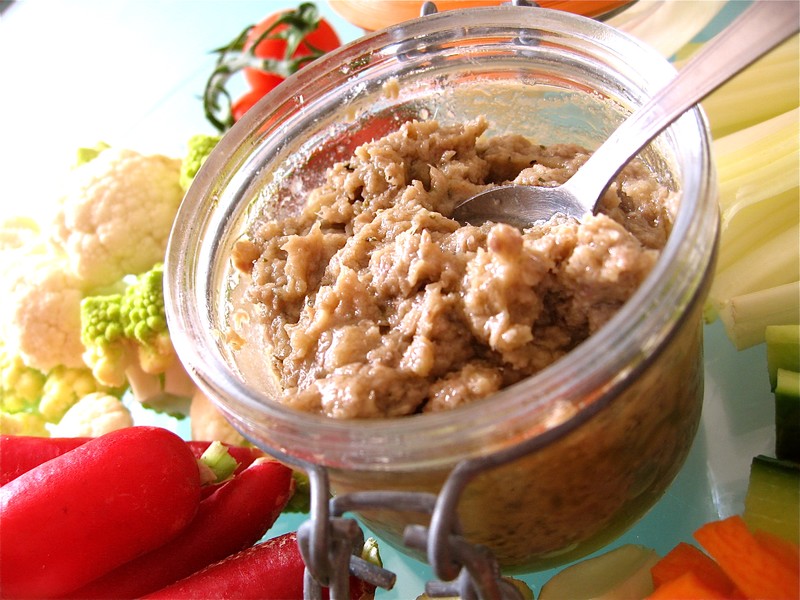
Anchoyade is the langue d’oc spelling. In French (and in the Provençal dialect), it is written anchoïade. In English, anchoiade.
The former province of Languedoc bordered Provence, where anchoïde is king, but in Languedoc, anchovies are mashed into a paste. Anchoïade is to Provence what fondue is to the Savoy. When the anchovy mixture is pounded in a mortar, as it is in Provence, it is actually anchovy paste. Anchoyade Languedocienne differs in that the anchovies are fried and served whole.
Technically, anchoïade is considered a sauce in France, although it is eaten as we would eat dip, called bagna cauda, or banha cauda in Provençal, with fresh raw vegetables into which it is dipped, or as a spread on toast. It is also used to make Fougasse aux Anchois and on salads.
In the region, anchoïade is most often accompanied by a dry white Cassis wine.
This is a traditional recipe and is perfect for topping a salad. Today, it is almost always ground into a paste like in Provence before serving as a dip. If you wish to do this, see the instructions following the traditional recipe.
Gargantua, épuisé après une longue marche et tenaillé par la faim, décide de s’arrêter avant d’entrer dans le village de La Canourgue. L’immense cuvette de grès située au pied du Sabot retient son attention; il s’assied sur ce curieux rocher, en attendant que les fadarelles (les fées) l’informent de la cuisson d’une étrange préparation composée de bœuf, de pieds de cochons, de pommes de terre et de vin.--Rabelais
After a long walk, dying of hunger, Gargantua decided to go into the village of La Canourgue. His attention was immediately drawn to a large earthenware dish sitting on a stand. Curious, he sat down on a rock, waiting for the fairies to tell him about how this strange preparation of beef, pig’s trotters, potatoes and wine, was prepared. It was pouteille.
Pouteille is not commonly found outside La Canourgue, a small commune located in the Languedoc-Roussillon region in the south of France.
In the old days, every family put their pouteille stew together and took it to the village communal oven in an earthenware dish referred to as a toupi. It was eaten on special occasions and on Sundays.
Pig’s trotters are commonly used in the cuisine of this region, and are an integral ingredient of this slow-cooked dish.
Matafans are a specialty of the rugged region of Franche-Comté in eastern France; the word is Franco-Provençal. They are sometimes called mata fame, meaning in Spanish “to kill hunger.” It’s not surprising that the word originally comes from Spanish, since they controlled this region in the sixteenth and seventeenth centuries.
Matafans are also found in the Savoy and Lyon under the francisized name matefaim.
They are fairly ancient, and Rabelais mentioned them in his third book in 1546.
Matafans were originally eaten by peasants for breakfast. Today, they are often eaten as a starter, accompanied by a green salad.
They are essentially very thick pancakes, and in the old days were made with leftover mashed potatoes, but can also be made with apples and eaten as a dessert. Lucy Vanel gives a recipe for the historical potato recipe on her website. Today, most people make them from wheat flour.
They are eaten at Candlemas, washed down with Génépi, an absinthe liqueur. The dessert version is accompanied by a sparkling rosé or a fortified wine.
Before having the best Cotignac sent from Orléans, because you were yearning for the tastes of your childhood…Avant de faire venir d’Orléans le meilleur cotignac, puisque vous vouliez redevenir enfant et goûter au cotignac…—Balzac, Lettres à l’Étrangère
Quince is my husband’s favorite word. Annoying situations or people are quinces in his lexicon. But quinces can be most agreeable, as in the case of quince paste, a cherished confection in France. Although the fruit must be cooked to be digestible, rather like annoying situations have to be cogitated over to be digested, it is worth the effort. They are, after all, a member of the Rosaceae family, like apples and pears.
Quince paste, often called quince cheese or in Spanish membrillo, is not specific to France. In fact, it dates as far back as the Ancient Greeks, who made a similar preparation using honey instead of sugar.
Cotignac d’Orléans, quince cheese from the region of Orléans, has a special place in the history of France. In the Middle Ages, a pastry chef from the village of Cotignac in the region of Var in the southeast set up shop in Orléans. He made quince cheese, which came to be known as Cotignac, and which became a favorite of King François I. French kings continued the tradition, and Louis XIV and XV offered Cotignac to ambassadors and other important guests.
There are also historical references to a Cotignac from Mâcon.
How is Cotignac different from other quince cheese? It’s not, really. The name just stuck because of its place in history.
What to Eat in France: Galettes de Blé Noir, or Breton-style Buckwheat Pancakes
The buckwheat crêpes of Brittany are unique in the context of French cuisine. They go by many names: galettes de sarrasin, crêpe bretonne, galette de blé noir.
Crusaders brought back buckwheat from Asia in the twelfth century, but it proved to be hard to grow until they took it to Brittany, where there is always plenty of rain, yet the climate is not harsh and the soil is acidic: all the right conditions for growing blé noir, meaning literally “black wheat,” even though it’s not technically of the wheat family.
It was Anne of Brittany who had it planted it all over Brittany and made it part of the Breton diet at the beginning of the fifteenth century. It grows fast and is ready to eat in 100 days, so it helped feed Bretons for centuries, and is often referred to as “poor people’s wheat,” since wheat was only affordable for the rich in those days. It was probably used for gruel or very thick griddle cakes at the beginning.
It still took centuries before the buckwheat pancake as we know it to became popular. The original recipe, which dates from some one thousand years ago, contained only buckwheat, salt and water and was much thicker than the crêpes we know today, which also contain milk, eggs and regular wheat flour, giving a thinner crêpe.
On February 2, Catholics celebrate Candlemas by eating buckwheat crêpes together. For farmers, this date concurs with the end of winter and the beginning of the new farming year, so superstitious farmers keep the candles from this celebration lit to protect their future harvests.
Traditionally, buckwheat galettes are reserved for savory dishes, and are not used for dessert. The Bretons drink apple cider with them.
Saffron mussel soup is from the Loire region. The particularity of the Loire version of this soup is that it has leeks, which are not commonly used with mussels. The Loire Valley produces more than 24% of all leeks in France, more than any other region.
The proportions of the ingredients can vary, although the fumet needs a bit more precision than the mussels and soup. The general rule is to make as much fumet as you need for the amount of mussels you’ve cooked.
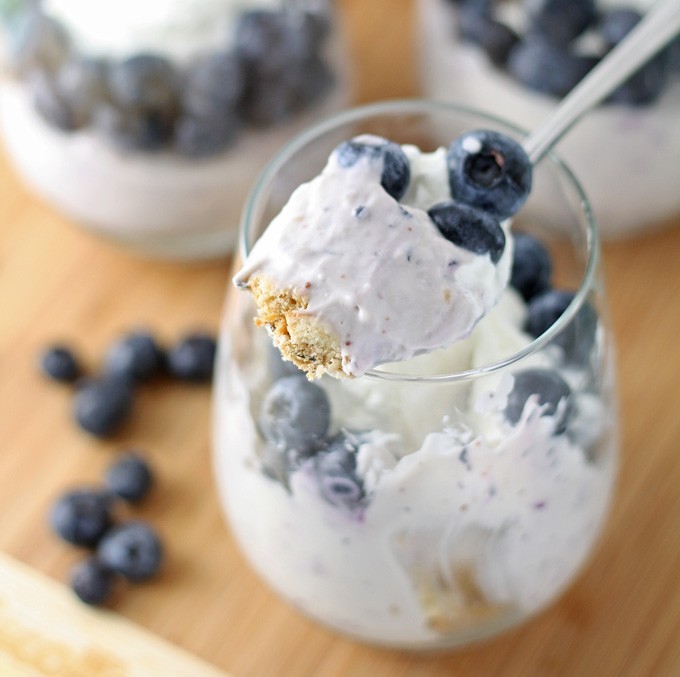
11 x 7 x 2 in. (28 x 18 x 5 cm) baking dish or deep pie tin 1 box Speculoos ginger cookies Mixed summer fruit, washed and chopped into fat chunks such as apricots and blueberries + banana Cinnamon to taste 1 1/2T – 2 T. dark brown cane sugar 1 1/2 – 2 T. maple syrup, depending on sweetness of fruit Dried chili pepper flakes 500 g Quark* or Séré cheese
Line baking dish with Speculoos to form a crust, covering sides as well as bottom of pan.
Chop apricots, blueberries and banana into large bite-size pieces. Place in a bowl. Sprinkle generously with cinnamon. Add 1 1/2 – 2 T. of dark brown sugar, 1 1/2 – 2 T. of maple syrup and a sprinkle of dried chili peppers. Mix well. Marinate for 30 minutes, stirring from time to time.
Mix fruit with one large yogurt-size tub Quark (500 g). Leave to marinate for 30 minutes, stirring from time to time.
Pour quark and fruit mixture into pie pan. Refrigerate for at least 2 hours before serving.
*Quark is a fresh cheese made in the Germanic countries. It is not the same as cottage cheese or cream cheese, since it is made by warming soured milk fermented with mesophile bacteria until it coagulates. It can be replaced by labneh, ricotta, mascarpone, thick fromage blanc or strained yogurt, although the flavor and texture will not be exactly the same.