Simon Says: Daily Food Quote, May 2, 2011

Published by Monday, May 2, 2011 Permalink 0

by Simón de Swaan

I don’t like to say that my kitchen is a religious place, but I would say that if I were a voodoo priestess, I would conduct my rituals there.–Pearl Bailey, Pearl’s Kitchen

Pearl Bailey was an American Tony-award winning actress for her role in Hello Dolly! (1968). President Richard Nixon appointed her America’s “Ambassador of Love” in 1970, three years before she published Pearl’s Kitchen.

Never miss a post
Name: 
Your email address:*
Please enter all required fields
Correct invalid entries

Food Art: Black Bean Chili & Herb-Roasted Potatoes, by Meeta Khurana Wolff

Published by Monday, May 2, 2011 Permalink 0

See more food photo compositions at Meeta K. Wolff or in our Food Art category.

Never miss a post
Name: 
Your email address:*
Please enter all required fields
Correct invalid entries

Simon Says: Daily Food Quote, April 29, 2011

Published by Friday, April 29, 2011 Permalink 0

by Simón de Swaan

A man who loves good food has a way of making it gravitate toward his kitchen.–Angelo Pellegrini, The Unprejudiced Palate (1948)

Ruth Reichl describes The Unprejudiced Palate as a “manifesto for living the good life.”  Angelo Pellegrini was a writer, English professor, gardener, and lover of food and cooking.  He believed in the seasonality of cooking and eating and practiced Slow Food philosophy before it became popular.

Never miss a post
Name: 
Your email address:*
Please enter all required fields
Correct invalid entries

David Downie: Feature Article on Emilia in The Italy Issue of this Month’s Bon Appetit magazine.

Published by Thursday, April 28, 2011 Permalink 0

by David Downie, France/Italy correspondent for The Rambling Epicure

Never a dull moment: I’m packing to leave Paris to go on book tour for Paris, Paris: Journey into the City of Light and Quiet Corners of Rome…and my lead feature for the May issue of Bon Appetit has already hit the stands… and the Internet. Here‘s an excerpt from The Italy Issue, as they are calling it. The story has many parts, with addresses and recipes listed separately.

The photo that doesn’t appear in the story: yours truly making tortellini at the big annual Sagra del Tortellino festival in Castelfranco-Emilia, near Bologna.

Buon appetito! Or perhaps it should be Bon Appetit?

Never miss a post
Name: 
Your email address:*
Please enter all required fields
Correct invalid entries

Market Analysis: Organic Food from Supermarket vs. Straight from the Producer

Published by Thursday, April 28, 2011 Permalink 0

by Eric Burkel

Don’t allow the wool to be pulled over your eyes by supermarket organic food!

While discussing the issue of sustainable agriculture and the virtuous model of direct-channel (straight from the producer) with a friend the other day, she told me proudly that she usually buys organic food at her supermarket.

It made me think that most of us do the same and therefore we are content in the knowledge that we have most duly earned some sacrosanct “organic” brownie points!

However, it is a pact with the devil for dupes, when you boil it down. In a direct-channel model, whereby middlemen are cut out, the producer/breeder/grower gets decent compensation for his or her efforts. In a supermarket chain, the same “squeeze-the-supplier-till-he-squeals (or dies!)” modus operandi applies. How else can you explain that the major chains in France are offering organic deals at 1 € a day, for instance?

Organic growing is inherently risky and mechanically more expensive than intensively grown food. Weeds? They have to be pulled out by hand, not sprayed with the latest and greatest herbicide. Bugs? You can’t just spray the nasty freeloaders with a new-fangled pesticide.

When I asked our favourite organic Bordeaux wine-grower if he had sold out of his 2007 production (there was none to be found on his price list), he responded matter-of-factly: “We had a fungus that year and lost our whole crop.” You can imagine that it would have been soooooo much easier to spray some fungicide and make it all go away.

After factoring in such vagaries of organic farm life (without forgetting that yields are invariably lower on organic farms), someone needs to explain how in an ideal world you can have the cut-price organic prices we see in commercials all the time. Unless of course, someone is still getting shrift in the loop, as is often par for the course in our zero-sum world.

Some supermarket chains have understood the nuance and are trumpeting their programs to promote “local” procurement. This is a step in the right direction, no doubt.

So great, the chains have brought organic food to forefront our collective conscious and that must be goodness. But we must keep them on their toes to ensure that they are not just surfing the latest fad and using it their sole advantage, to sucker us once again.

Or better yet, go out of our way and support the direct-channel by joining a CSA (Community-Supported Agriculture) or buying directly from local producers.

Never miss a post
Name: 
Your email address:*
Please enter all required fields
Correct invalid entries

Simon Says: Daily Food Quote, April 28, 2011

Published by Thursday, April 28, 2011 Permalink 0

by Simón de Swaan

Somehow we have fallen for a myth, the notion that food that isn’t fast prepared and fast cooked is inherently more difficult, more time consuming, more of a sweat, almost not worth the effort, or, at least, only worth the effort of the time.–Tamasin Day-Lewis, Good Tempered Food

Tamasin Day-Lewis is an English television chef, daughter of the poet laureate Cecil Day-Lewis and actress Jill Balcon, and sister of the actor Daniel Day-Lewis. For those who live in the UK , her cooking show can be watched on TV.

Never miss a post
Name: 
Your email address:*
Please enter all required fields
Correct invalid entries

Help us support the cause! The Young Farmers Movement in the U.S.

Published by Wednesday, April 27, 2011 Permalink 0

by Jonell Galloway

Countdown: 66 Hours to Go!

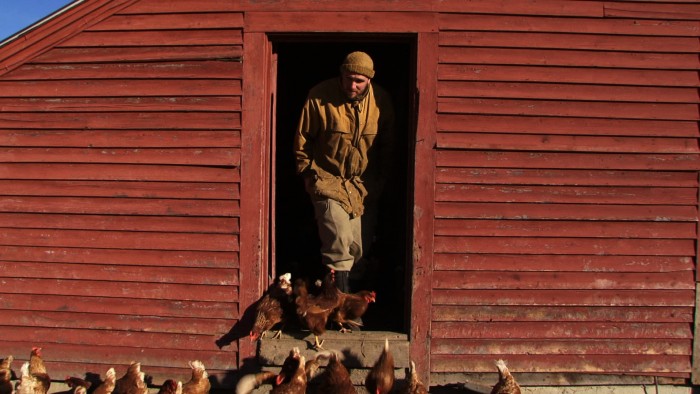
Cozette Russell’s documentary film-in-progress, Brookford Almanac, about a year in the life of first-generation farmers in the U.S. needs funding before April 30, 2011.

Take a peak at our article Back to the Land: From City Living to Farming, the Young Farmers Movement and if you support the cause, why not donate a few dollars, euros, pounds or other.

Another way to help is to tweet this post and ask your friends to retweet it.

We’ll keep you posted about the project!

Never miss a post
Name: 
Your email address:*
Please enter all required fields
Correct invalid entries

MarketDay: Everything You Need to Know About Indian Mangoes

Published by Wednesday, April 27, 2011 Permalink 0

by Jonell Galloway

Indian Mangoes: Alphonso, Alphonso!

Indian mangoes are in season from March to May. They are the ugliest mangoes around, but for me, there is no question they are the best. Not surprising, since mangoes come from India in the first place. They have an almost spicy taste that nicely compliments the sweetness.

Indian mangoes may be the ugliest ones, but they are the tastiest!

How to choose a mango

Indian mangoes often look bruised and half-rotten compared to other varieties when in fact they are at their very best. All you have to do is feel them to check how ripe they are. They should be slightly soft and smell full and fruity.

I buy them by the carton in Geneva’s Boulevard Helvétique market, or from Indian supermarkets. It’s all right to buy some that are not quite ripe so that you can eat them over a period of several days, or use some of them in green mango recipes. Indian mangoes ripen better off the tree than other varieties.

Mango shelf life

Mangoes keep well in the refrigerator for a week and often even two. Don’t put them in plastic. Leave them loose in the fruit bin or in the carton if you’ve bought a whole carton.

If they’re not ripe enough, put them in a paper bag and leave them at room temperature until they’re ready, just like for avocados.

India is the largest producer of mangoes in the world, with 2,143,000 hectares harvested, according to the Wikipedia. Indians eat them both ripe and green, rather like papayas, and like papayas, they contain an enzyme that aids digestion.

A single mango can contain up to 40% of the fiber you need daily, and is full of antioxidants and potassium.

How to eat a mango

Mango as a fruit on its own

The “How to Eat a Mango” section on the freshmangoes site explains step by step with illustrations for cutting and eating.

Mango as an accompaniment to a meal or a condiment

Mango chutney is good with fish, and makes a simple, healthy meal when served with Basmati rice. Green mango sauce is an easy way to liven up a piece of grilled meat or chicken. The freshmangoes site gives recipes of every imaginable type.

And of course, what is more delightful than a fresh, ripe mango to clean your palate and help you digest after a big meal.

If mangoes are your favorite fruit, and you think you can’t live without them (which is my case), Jonathan Allen’s article in the New York Times is a must.

The Buddha supposedly lived under a mango tree, and above all, this “king of fruits,” as it is often referred to, is associated with “abundance, joyousness and the carefree innocence of childhood,” says T.S. Satyan. I remember the first time I ever tasted mango juice, as they call it in India (it’s actually just puréed mango). I certainly felt enlightened!

A version of this article was originally published on GenevaLunch.

Never miss a post
Name: 
Your email address:*
Please enter all required fields
Correct invalid entries

Food Art: The A to Z of Dining: a Slide Show Photo Exhibition by Brian Samuels

Published by Wednesday, April 27, 2011 Permalink 0

Brian is a Boston-based food photographer and writer. He is the creator of the food blog A Thought For Food, a collection of recipes, personal anecdotes and historical information pertaining to cooking.

His photographs are available for viewing on his photography site, Brian Samuels Photography. Brian’s work has also been featured on Saveur , The Kitchn , Tastespotting, and FoodGawker.


Never miss a post
Name: 
Your email address:*
Please enter all required fields
Correct invalid entries

Simon Says: Daily Food Quote, April 27, 2011

Published by Wednesday, April 27, 2011 Permalink 0

by Simón de Swaan

The world’s very first restaurant was probably some pre-historic boîte, settled in an intimate cave, we assume, which featured specialtiés de la maison that no cave lady could master.–Matty Simmons, Vice President Diners’ Club, Inc. The Diners’ Club Cookbook, Great Recipes from Great Restaurants, 1959

Matty Simmons was a newspaper reporter  at The New York World-Telegram and the New York Sun, and then Executive Vice President for Diner’s Club, the first credit card.

Click here to read about his perspective on the early days of credit cards.

Never miss a post
Name: 
Your email address:*
Please enter all required fields
Correct invalid entries

UA-21892701-1