
//
 See more food photo compositions at Meeta K. Wolff.
Blog Directory Top Blog Sites 

Blog ToolsPromote Blog
Blog Tools Promote Blog
|
|

A Literary Culinary Journal
//
See more food photo compositions at Meeta K. Wolff.
Blog Directory Top Blog Sites
Blog ToolsPromote Blog
Blog Tools Promote Blog
|
|
 by Simón de Swaan
Life is too short for cuisine minceur and for diets. Dietetic meals are like an opera without the orchestra.—Paul Bocuse
Paul Bocuse is a French chef based in Lyon, renowned for the high quality of his restaurants and his innovative approaches to cuisine. He is one of the most prominent chefs associated with the Nouvelle Cuisine, which is less opulent and calorific than the traditional cuisine classique associated with the Escoffier school of cooking, and stresses the importance of fresh ingredients of the highest quality. Paul Bocuse claims that Henri Gault first used the term Nouvelle Cuisine to describe food prepared by Bocuse and other top chefs for the maiden flight of the Concorde airliner in 1969.

Click here to see Bocuse’s restaurant website.

|
|
The Europain bread trade show, which starts on March 3rd every second year, starts tomorrow, March 3, 2012. It runs until March 7.

This year’s show includes large sections for artisanal bread making, a smaller one for industrial bread baking, a pastry making section, as well as a new SuccessFood section, dedicated to creative catering and restaurant remakes. Click here for an overview of the various sections.
Click here for a list of the various events going on throughout the show.
It is located at Paris Nord Villepinte outside Paris, France. To get there from Paris, take the RER B commuter train from the Gare du Nord in the direction of “Aéroport Charles de Gaulle,” and get off at the station “Parc des Expositions.” From Roissy Charles-de-Gaulle airport, take the RER B, and get off at “Parc des Expositions.”
|
|
A film by Marija Jacimovic and Benoit Detalle
[youtube http://youtu.be/WvyV_idFAZA nolink]
|
|
by Simón de Swaan
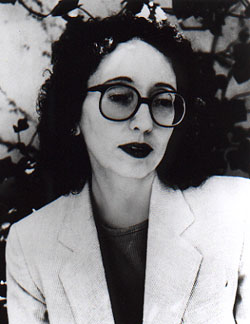
… there is nothing more delicious than an orange. The very sound of the word, the dazzling exotic color that shimmers inside the word, is a poem of surpassing beauty, complete in this line:
Orange
–Joyce Carol Oates
Joyce Carol Oates is an American author. Oates published her first book in 1963 and has since published over fifty novels, as well as many volumes of short stories, poetry, and nonfiction. Her novel Them (1969) won the National Book Award, and her novels Black Water (1992), What I Lived For (1994), and Blonde (2000) were nominated for the Pulitzer Prize.
|
|
 As a global real-food site, we regularly seek to widen our coverage. We already cover at least 20 countries and have articles in 6 languages (always translated into our common language, English). Our ambitious aim is to have Culinary Ambassadors from countries all over the globe.
If you’re a food writer, blogger or photographer and you’re interested in working with our team, I suggest you read closely our aim and purpose and browse through our tabs and categories to see if you think you fit in. Your job would be to cover both traditional and new food and wine trends in your country.

Click on word scramble to see details. The Rambling Epicure Voices and our Food/wine Coverage
If you’re interested, please contact us by clicking the blue Contact Us button at the top right of our site.
We hope to hear from you!
Jonell Galloway, Editor, and The Rambling Epicure Voices
|
|
David Cronen spent his formative years as well as his adult life in Kentucky. He is originally from Chicago.
In high school, he picked up a certain camera and knew what was what he wanted to do with his life.
He has free-lanced since college, with an emphasis on politics, and done various radio shows. The last was an
interview program (Off the Cuff) on the NPR affiliate in Louisville. It had a 10-year run.


|
|

by David Downie
“Even an expert has difficulty distinguishing brumale from melanosporum,” growled Pierre-Jean Pébeyre, France’s leading dealer of fresh and conserved melanosporum. I met Pébeyre on a freezing day in February in Cahors. Like many traditionalists Pébeyre expressed hostility to spore-impregnated trees, the probable source of the brumale infestation.
 Pébeyre estimated that 5 percent of the black truffles he buys at premium prices turn out to be brumales. “You buy truffles when dirty, and you can’t tell. The ugly truth comes out after brushing.”
The Pébeyre truffle plant, founded in 1897 by Pierre-Jean’s great-grandfather, is based in central Cahors, capital of the Lot département. The Lot’s pre-Revolutionary name was Quercy, a deformation of the Latin quercus—oak. The scenic, oak-covered Quercy and abutting Périgord are France’s main melanosporum source. Another common name for this truffle is truffe noire du Périgord.
With a sense of humor as noir as the truffles he trades, Pébeyre, in a blue lab coat taut over his stout frame, walked me through the sorting, grading and brushing processes. He held up two black truffles that appeared identical, with rough patterned skin like a dog’s nose. “Brush a brumale and the skin detaches,” he grunted. With a pocket knife he sliced the brumale, pointed out the dark brownish exterior and flesh, and the thick, white veins within, and offered a taste. It was crisp, smelled unpleasantly of alcohol, and was flavorless.
 Pébeyre then sliced a melanosporum, noting how the outside was asphalt-black, the flesh gray-brown, the pattern of veins fine. It was crunchy, smelled pleasantly of mushroom, and, I suggested, tasted something like strawberry jam and chocolate. Pébeyre fought back a frown.
“Mélanos smell and taste like mélanos,” he said, using the regional abbreviated form for melanosporum. “Why make taste or nose associations?”
The Pébeyre plant once processed tons of local melanosporum. With dwindling supplies, however, sourcing has widened to Italy and Spain. “The Italian and Spanish mélanos are just as good,” Pébeyre insisted. “The problem is brumales and others.”
Such is the demand for truffles in France that brumales and many undesirable truffle varieties are not discarded. They find their way into pâtés and truffled foods where they cannot be identified readily. France also imports around 50 tons per year of Chinese T. indicum; Pébeyre sells indicum worldwide. “Some people actually prefer it because it’s mild,” he shrugged, “and everyone likes the price.” In Europe, Chinese truffles fetch a fraction of the price of melanosporum. Boosters say Chinese indicum taste of moss and undergrowth, are not “bad” merely “different” from melanosporum.
 However some unscrupulous retailers and restaurateurs fraudulently pass off lesser truffles as melanosporum. “It’s bad for business,” sighed Pébeyre, whose products are clearly labeled. “And in this business reputation is everything.”
Over lunch at Pébeyre’s comfortable house we savored delicious tastous, sandwiches of long, thin, lightly buttered country bread and shaved raw brumale seasoned with salt and pepper baked in a very hot oven for about two minutes. We followed with hearty truffled cervelas sausages and truffled mashed potatoes.
As with white truffles, the food melanosporum accompanies should be simple. Unlike whites, however, blacks stand up to cooking. “Cooking melanosporum transforms the flavor,” said Pébeyre, citing a handful of classic French recipes including poulet en démi-deuil (roasted chicken with sliced truffles under the skin). “Cooked truffles, whether they’re fresh or conserved, are different, more complex, less forceful than fresh, raw truffles.”
Conserved melanosporum are sterilized in 115° C boiling water for 2 1/2 hours. The juice is sold separately and is, to my palate, as flavorful as the conserved truffles themselves.
The French melanosporum harvest has at times dipped to or below a mere 10 tons in bad years. There have been many bad years in recent decades, and very few good years. Pébeyre ascribed the decline to rural abandonment, meaning demographic shifts of farming populations to cities. He also cited unsuccessful propagation efforts, and changing weather patterns. “There are fewer summer storms and to thrive all truffles need heavy rainfall in July and August,” he explained, adding, “it’s possible one day we’ll simply run out of melanosporum.”
 About 10 kilometers by road due south of Cahors at the government-funded Station d’expérimentation sur la truffe, chief botanist and trufficulteur Pierre Sourzat, an excitable, sinewy man in his 50s or early 60s, showed me spore-impregnated seedlings he was growing and took me to visit two truffle plantations. An affable zealot whose mission is to unravel the mystery of mycorrhization and bring back the days of 1,000-ton melanosporum harvests in France, Sourzat radiated optimism about boosting truffle production worldwide through scientific methodology, soil preparation and fertilization, and summertime irrigation. He spoke in a rapid-fire tenor voice, pulling me along as he raced to keep up with Boubou, his trained golden retriever. Within minutes Boubou had unearthed a dozen small brumales, melanosporums and other truffles.
Peak truffle production in France coincided with the phylloxera outbreak that decimated vineyards in the late 1800s, Sourzat explained. “Desperate grapegrowers replaced vineyard tracts with truffle-oak plantations. They bore fruit for decades but after World War Two weren’t well maintained or replanted, and we’re suffering the consequences now.”
Host trees take 5 to 15 years to bear truffles, producing for 40 to 60 years thereafter. “If we hadn’t reforested with spore-impregnated trees decades ago we might have no truffles at all by now,” Sourzat insisted. “Mycorrhization does work. Look at Spain. Soon plantations in Oregon, Texas and New Zealand will be commercially viable.”
In the fourth and final segment of Truffles in Black and White I travel to the legendary truffle town of Lalbenque and meet truffle-hunter Marthe Delon and her truffle-hunting pig.
The photos in this series of articles on truffles were taken by Alison Harris. You can see the entire set as a slide show in Food Art: Behind the Scenes of the Noble Truffle, food photography by Alison Harris.
|
|
by Simón de Swaan
The art of using up leftovers is not to be considered as the summit of culinary achievement.–Larousse Gastronomique
The Larousse Gastronomique is an encyclopedia of gastronomy. The majority of the book is devoted to French cuisine, and contains recipes for French dishes as well as detailed, illustrated explanations of cooking techniques.
|
|
According to the Urban Dictionary, a carnevoyeur is “a vegetarian who derives satisfaction from watching other people eat meat or hearing about the eating of meat.”
It refers to the type of person who says she’s a vegetarian and talks about it ad nauseum, but can’t resist asking if she can have a taste when she sees a plate of boeuf bourguignon or crispy fried bacon.

|
|
 Meet Jonell Galloway, a freelance writer and editor specialized in French cuisine.


