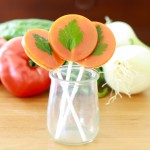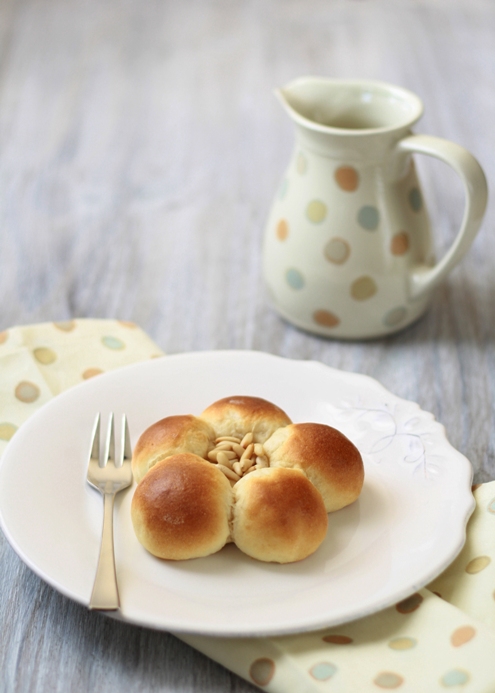
Gluten-Free Cooking: Buttered Apricots and Goat Cheese

Published by Tuesday, July 19, 2011 Permalink 0


by Jenn Oliver

Incorporating fruit into your starters and main courses: an untraditional approach

Fruit deserves to have a place outside of dessert. Dessert is often shunned for fear of ingesting too many sugar-filled calories and a myriad other reasons, and sadly fruit is often under-appreciated, being associated only with a guilty, and even naughty, indulgence.

How often do we associate certain fruits solely with pies, tarts, scones, cakes and other sweet delights? Such a view not only limits our appreciation for fruit, but forces upon us a paradigm that fruit should be “improved upon” by making it even sweeter than it already is. Maybe for some acidic fruits, such as certain berries or citrus fruit, this is true, but many are already pleasurably sweet and unfortunately get overlooked as a valid component in other parts of a meal.

What if fruit were the star of other dishes too? Maybe a first course, served with meat, etc.?  Some of my favorite dishes involve fruits, and it’s not just for the sweetness – many fruits pair really well with savory items and I think provide a balance to other strong elements. One of my most frequented pairings this summer has been to add herbs and the tang of locally-made goat cheeses to baked or roasted seasonal fruits. The markets are absolutely brimming with succulent produce, and every two weeks it becomes a “new” mad rush to enjoy as many ways as possible: first strawberries, then cherries, then apricots & peaches, and soon  plums and other berries will arrive en masse.

And you know what? Sometimes I think the taste of fresh fruit is even more enjoyable when it is not a part of le dessert.

Click here for the recipe.

Never miss a post
Name: 
Your email address:*
Please enter all required fields
Correct invalid entries

David Downie: Guanciale: An Obituary and a Homage to Rome’s Jowl Bacon, Part 1

Published by Tuesday, July 19, 2011 Permalink 0

by David Downie

Click here to read part 2

The inimitable guanciale — Italian “jowl bacon” — made for over half a century by the Carilli brothers in Rome is dead. Long live Rome’s guanciale!

Purists insist that without guanciale it’s impossible to make the true versions of the pasta sauces carbonara (olive oil, butter or lard, eggs, black pepper, pork jowl, and pecorino romano), gricia (subtract the eggs and black pepper, add hot chili and wine), or Food Wine Rome (add tomatoes to gricia).

But guanciale also finds its way onto bruschetta and into soups as well as myriad other pasta sauces, vegetable medleys, frittatas, poultry, beef, and pork. To my knowledge, the only course of a Roman meal in which guanciale does not appear is dessert.

C’ho passione! C’ho passione!” — “I’m passionate, I’m passionate!” sang white-haired pork butcher Salvatore Carilli when I interviewed him a few years back.  When I asked him about the trade his  family has been in for more generations than he can tell me, with paternal pride, the wiry and excitable Carilli, the eldest at 72 of three butcher brothers, thrust a wizened, pepper-dusted, triangular two-kilo hog jowl into my hands. He had cured it in dry salt and air-dried it for months.

Continue Reading…

Never miss a post
Name: 
Your email address:*
Please enter all required fields
Correct invalid entries

Destination Dessert: Sweet Focaccia with Strawberries and Dark Chocolate Ganache

Published by Monday, July 18, 2011 Permalink 0

by Jamie Schler

STARTING OVER – Step 1

Like the beat beat beat of the tom-tom
When the jungle shadows fall
Like the tick tick tock of the stately clock
As it stands against the wall
Like the drip drip drip of the raindrops
When the summer shower is through
So a voice within me keeps repeating you, you, you

Night and day, you are the one
Only you beneath the moon or under the sun
Whether near to me, or far
Its no matter darling where you are
I think of you
–Cole Porter


“Life is an adventure,” she said, no trace of cliché on her lips. He scooted down a little lower, snuggling deeper into his corner of the sofa. His eyes searched out her own, slightly pleading, slightly mocking, filled with the desire to believe her once again. She had just returned from Germany and stepped off of the airplane into a new life, one of risk and a daring adventure, one of complete togetherness. They were tossing caution to the wind in their great desire to grab at happiness and contentment, something so rare these days. And from here on out they would be together each and every day, all day and into the night.

Continue Reading…

Never miss a post
Name: 
Your email address:*
Please enter all required fields
Correct invalid entries

Jonell Galloway: The many colors of summer tomatoes

Published by Monday, July 18, 2011 Permalink 0

by Jonell Galloway

Red, yellow, green, and orange tomatoes now available in Lake Geneva region

Tomato season is well under way, and here are a few suggestions for using them.

How to choose a tomato

Remember you can’t judge a tomato by its cover. By that I mean, the best tomatoes may well be the ugliest. They have not been sorted to meet some regulation as to size, shape and color. They can even be marked “Geneva,” “Lausanne” or “Vevey”, and never have had a root in the earth. Tomatoes can be grown hydroponically just about anywhere, so the fact that it’s marked with a local name is not absolute assurance that it will be full of flavor like a summer tomato should be and that it has been grown using traditional methods.

There are a lot of resellers in farmers markets, and then there are direct producers. Don’t hesitate to ask the vendors in your farmers market if they grew their tomatoes in a field or if they were grown hydroponically or in a greenhouse (often referred to as sous tunnel or en serre). “Field” tomatoes are obviously likely to have more taste.

The best way to be sure is of course to grow them yourself, but we do not all have the possibility, of course.

The appearance is just one factor. Smell is just as important. A natural, ripe tomato smells fragrant when you put it to your nose. A small tomato can have as much taste as a big one. Tomatoes should be soft, but not blemished or split open. If they are hard and are not aromatic, they are probably not field tomatoes.

A tomato can have hard black “calluses” on it, but that has no effect on its flavor. Simply trim them off.

In general the darker the color, the stronger the taste and the more acidic. Yellow and orange tomatoes are sweet, rather like fruit. Red tomatoes have more pizzazz. The darker, purplish ones are strong-flavored and not to everyone’s taste.

Green tomatoes tend to be more acidic. Most people prefer them cooked rather than raw, but this is a matter of taste.

How to eat a summer tomato

There are million ways to eat tomatoes, but ripe summer tomatoes need very little.

My favorite way of eating them is simply with salt and pepper, and perhaps a drizzle of olive oil. A beautiful addition to any summer lunch is a large plate of sliced tomatoes of different colors, served in this way. It is always a hit, both aesthetically and as a dish.

Tomatoes are also good grilled over the coals. For this, choose medium-size tomatoes, so they won’t fall through the grille. Simply cut them in half and grill for about 3 minutes on each side. This intensifies the flavor, giving it what the French call a confit flavor. What it really does is evaporate most of the water, leaving behind the most flavorful part, the flesh. The natural sugar in the tomato also caramelizes, making it taste sweet rather than acidic.

Tomatoes, courgette (zucchini), and aubergines (eggplant) — the classic Mediterranean vegetables — are all in season at about the same time. There are endless recipes one can think up, but one of my favorite is to mix finely diced tomatoes, zucchini and chopped onions marinated in a generous helping of vinaigrette made with Balsamic vinegar, Chardonnay vinegar and olive oil.

And then there’s the all-time favorite: mozzarella served with tomatoes and fresh basil. This too can be livened up by using tomatoes of different colors.

This article was originally published by Geneva Lunch.

Never miss a post
Name: 
Your email address:*
Please enter all required fields
Correct invalid entries

Coco’s Restaurant, a Hopping Corner of Bahrain

Published by Tuesday, July 12, 2011 Permalink 0

by Kanwal Anes Ahmed

Those who have not been to Bahrain often make the mistake of comparing it to the more “happening” city in the region – Dubai. But to put the serene culture of this Arab island in the same hustling shoes as the other apparently enthralling cities is a sin of the highest degree. For, even the shortest of trips to Bahrain opens one’s eyes to a world that serves as the classic example of the word: diversity. And within the diverse, entwining the many “categories” of individuals who constitute the population of Bahrain, lies its contemporary civilization – one that is categorized by deep urbanity and profound sophistication.

Like any other, such a culture sprouts to life in places where it is allowed to thrive the most and in this petite kingdom the eateries are where it dominates most. Being an aspiring connoisseur, much of the short time I’ve already spent in Bahrain has been spent in the exploration of the various restaurants that embellish the town, and I have been pleasantly surprised by the diversity of cuisines – most of which live up to the original, ethnic taste and are tastefully dished out. However, the place that really stood out, not only for its sensational menu, but for artfully depicting the avant-garde life of Bahrain, was Coco’s Restaurant.

Situated in Adliya, Coco’s is built within the bounds of an old renovated house and sports an ethnic Parisian interior complimented by a breezy outdoor seating arrangement beneath parasols and sun chairs decked out on pebbled flooring. Dimly lit, most of the glow seems to emerge from the glitzy crowd that throngs to this restaurant and one can almost breathe in the posh ambiance. The wait for a table can last up to a couple of hours and that being despite the fact that the entrance does not even boast a sign-board. Nor does it take pre-scheduled reservations. To be eating at Coco’s one has to be prepared — with a good GPS, patience and a taste for extraordinary food.

Once I was seated at my table, I started with the mushroom and chicken soup and chicken avocado salad. While the soup was creamy and blended perfectly, to warm the otherwise light chill in the night air, the chicken avocado salad proved to be one of the best things on Coco’s menu, served with a tangy dressing that happens to be Coco’s signature item and makes every other salad I have tried seem quite ordinary. The sugar-free iced tea I was served was the perfect treatment for my taste-buds at this point as it provided the calm after the delicious storm.

The next item on my list was the Samoa, which was filets of hammour seasoned with lemon and mild spice, served on top of creamy rice, topped with tingling herbs and wrapped in a bamboo leaf. This delicacy was light on the stomach yet did justice to the appetite and proved to be a hit with my taste-buds. I chose to sweeten up the meal towards the end, by ordering a slice of date and caramel cake, which was served warm with scoop of vanilla ice cream. This combination in a cake is popular across the island, but the layers of pureed dates, caramel and nuts I experienced at Coco’s definitely topped all others.

And the dessert was not the only remarkable thing about the end of this experience at Coco’s. Unlike other places, where one often feels too full to move at the end of the meal, here I was already looking forward to the next time I would be in the vicinity and able to indulge again. Moreover, the constant influx of guests was enough to make those of us craving some sort of vivacity, in this otherwise serene city, feel satisfied. In a nutshell, my brief rendezvous with this restaurant was definitely one that has immense potential of becoming a regular feat. In fact, my mind is already wandering off to plan another trip to Coco’s as I struggle to sum up my experience!

Never miss a post
Name: 
Your email address:*
Please enter all required fields
Correct invalid entries

Food Play: A Photography Exhibition by Sandeea

Published by Thursday, July 7, 2011 Permalink 0
Never miss a post
Name: 
Your email address:*
Please enter all required fields
Correct invalid entries

Food Poetry: Brot, Linda Pastan

Published by Monday, July 4, 2011 Permalink 0

Click here to read in English.

Mir scheint, du
schreibst gern über
die fünf Gärphasen
der Hefe, nicht des Trauerns,”
meint mein Sohn,
womit er sagen will, dass
das Brot immer auf-
geht und in sich zusammensinkt,
gebrochen und gegessen wird
in meinen Gedichten.

Und obwohl er das nur so halb-
ernst meint, möcht ich
ihm sagen , “Brot geht in der Schüssel
auf wie Atem, der den Körper dehnt” oder
“wenn du den Teig knetest
mit vollkommener Sanftmut,
ist es wie leises Drücken der Haut
wenn du jemanden liebst.”
Baguette . . . Pitabrot . . . Pane Brot . . .
Challa . . . Naan: Brot ist
eine Universalsprache, zu übersetzen
auf der ausgehungerten Zunge.

Nun ist es Zeit, das
Päckchen Hefe aufzumachen
und mit Wasser anzurühren,
das Blasenwerfen zu betrachten,
sein wie man sagt blindes Testen
der Stärke, das Beseelen
des Lebens. Alles
ist bereit: Salz, Mehl, Öl.
Brotkrumen sind es, die
Kinder heimführen nach Haus.

(Übersetzt: Peter Beicken)

_____________________

after Levchev

First published in Ploughshares, now in Traveling Light, W.W. Norton, 2011.

This poem was contributed by our Poetry Editor, Christina Daub.

Short URL for this post: http://is.gd/q9Byhe


Never miss a post
Name: 
Your email address:*
Please enter all required fields
Correct invalid entries

Rosa’s Musings: My Swiss Grandmother’s Cooking: the Deep Roots, Bonds and Nostalgia of Food

Published by Tuesday, June 28, 2011 Permalink 0

by Rosa Mayland

My Swiss Grandmother and Her Glorious Cuisine

“As a grandmother of six, I believe that it is crucial that we make time to pass on our recipes, cooking and growing skills and other crafts to our grandchildren.”— Darina Allen, president of Slow Food Ireland

Grandmothers link us to our culinary heritage

In our modern world, most women choose or have to work, and countless couples don’t have the time or energy to become kitchen bees. Many people prefer buying prepackaged food and don’t see any point in spending their free time preparing homemade snacks. The majority of 21st-century grandmothers hail from a generation of females who cut themselves off from old traditions, therefore nowadays, very few kids are lucky enough to have grandmothers* who cook or enjoy cooking, and who are able to share their family’s culinary legacy with their grandchildren.

Continue Reading…

Never miss a post
Name: 
Your email address:*
Please enter all required fields
Correct invalid entries

Food Play: Saint John’s Coca, a Catalan specialty

Published by Monday, June 27, 2011 Permalink 0

by SandeeA

Para leer la versión en español, pinche aquí

Food Play: Saint John's Coca, a Catalan specialty. Food Play, by SandeeA. The Rambling Epicure. Editor, Jonell Galloway.

Saint John’s coca is a typical Catalonian sweetened bread eaten during the celebration of Saint John’s Eve in June. It is usually oval, but I wanted to give it a a playful twist… would you like to try some?

Continue Reading…

Never miss a post
Name: 
Your email address:*
Please enter all required fields
Correct invalid entries

Food Play: Coca de San Juan, especialidad de Catalunya

Published by Tuesday, June 21, 2011 Permalink 0

por SandeeA

Click here to read English version

Coca de San Juan. La receta de la felicidad

La coca de San Juan es un dulce típico de Cataluña para celebrar la Noche de San Juan, que se celebra del 23 al 24 de Junio. La forma típica es de una coca ovalada, pero yo he querido darle un toque diferente… te animas a probarla?

Continue Reading…

Never miss a post
Name: 
Your email address:*
Please enter all required fields
Correct invalid entries

UA-21892701-1