The Rambling Epicure Made Loads of New Friends at the Wendell Berry Conference 2013

Published by Tuesday, April 23, 2013 Permalink 0

by Jonell Galloway

“A Rambling Epicure”: a short article about my work

One great thing about spending 3 days with a group of like-minded people, who have come from all over the country (and Switzerland) to pay homage to their “spiritual guide”, Wendell Berry, is that the audience is already filtered, and you can be sure to meet people you can relate to and that you will stay in contact with.

Wendell Berry speaking in Frankfort, Indiana

Wendell Berry speaking in Frankfort, Indiana


Such is the case with Elias Crim, a native Texan who spent “several good years studying classics and medieval Italian at U.C. Berkeley before wasting several more years in financial journalism around Chicago.” Crim has also written for The American Scholar, The American Conservative, the Washington Times and The Chicago Observer.

This is the only photo ID I could muster up and I think it rather amusing.


He also runs a website, Solidarity Hall, which he describes as “as a hospitable old hostelry, a mental oasis in the deserted landscapes that surround us. We no longer have the coffeehouses of eighteenth-century London, where Samuel Johnson and his friends said more of substance in an hour than our blogs today could manage in a week. Nor do we have a local culture of pubs such as Chesterton’s Old Cheshire Cheese, where friendship could flourish easily, even amidst clashing opinions.” I thoroughly recommend that you take a look and start a conversation of your own.

Elias was so kind to publish this article, “A Rambling Epicure,” about my work after the Wendell Berry conference. I invite you to take a look.

Start here and then continue on Solidarity Hall:

Jonell Galloway is surely the only person from Hardinsburg, Kentucky, to ever study Sanskrit. But that’s secondary. More important is the way this spiritual daughter of Wendell Berry has developed the Rambling Epicure, an encyclopedic and literate website which describes itself thusly: “A gastronome’s guide to mindful eating. A serious approach to real-food shopping, cooking, and dining.”

Click here to continue.


Never miss a post
Name: 
Your email address:*
Please enter all required fields
Correct invalid entries

Food Poetry: Ancient Mexican Wisdom on Land, Plants and Self Development

Published by Monday, April 1, 2013 Permalink 0

Poem in English and Spanish

by Adriana Pérez de Legaspi

Care for things of the earth; cut some firewood, cultivate the earth, plant prickly pears, plant yucas.
You will have to drink, eat, get dressed.
Thereafter you will be standing, you will be your true self, you will walk on your own two feet.
Thereafter you will be well spoken of, you will be praised.
Thereafter you will be known.

Ten cuidado de las cosas de la tierra; haz algo corta leña, labra la tierra, planta nopales, planta magueyes.
Tendrás que beber, que comer, que vestir.
Con eso estarás en pie, serás verdadero, con eso andarás.
Con eso se hablará de ti, se te alabará.
Con eso te darás a conocer.


Never miss a post
Name: 
Your email address:*
Please enter all required fields
Correct invalid entries

Jonell Galloway: Mindful Eating: Farmers, the Land, and Local Economy

Published by Monday, April 1, 2013 Permalink 0

Mindful Eating: Farmers, the Land, and Local Economy

by Jonell Galloway

Many times, after I have finished a lecture on the decline of American farming and rural life, someone in the audience has asked, “What can city people do?” “Eat responsibly,” I have usually answered. Of course, I have tried to explain what I mean by that, but afterwards I have invariably felt there was more to be said than I had been able to say. Now I would like to attempt a better explanation.

 I begin with the proposition that eating is an agricultural act. Eating ends the annual drama of the food economy that begins with planting and birth. Most eaters, however, are no longer aware that this is true. They think of food as an agricultural product, perhaps, but they do not think of themselves as participants in agriculture. They think of themselves as “consumers.”

—Wendell Berry, The Pleasures of Eating, Center for Ecoliteracy

The Times They are a-Changin’: Move Towards a Local Economy

After a few very difficult years, we are now only starting  to talk about the importance, and even necessity, of maintaining and supporting a local economy. This is important not only to our health and taste buds, but also to our vital economic self-sufficiency. It is perfectly in line with the concept of Mindful Eating, and, by definition, involves local farmers as well as others who contribute to eating and drinking.

Continue Reading…

Never miss a post
Name: 
Your email address:*
Please enter all required fields
Correct invalid entries

Food Vocabulary: Are You Foodwired?

Published by Thursday, March 28, 2013 Permalink 0

The Urban Dictionary now lists the word “foodwired” as part of the American vocabulary.

People who are foodwired are extremely conscious about the food they eat and the food they buy, as well as where it came from and whether it is healthy and sustainable.

According to the Urban Dictionary, if you are foodwired, you:

  1. know the importance of eating local, healthy, sustainable food
  2. want to know more about what you eat
  3. try to make better decisions about what you eat


Examples:

She asked the waiter whether the chicken was organic. She is totally foodwired.

The neighbors are growing food in every inch of their small urban yard. They are really foodwired.

Today, I’m really foodwired. I cooked with totally organic, local ingredients.


Never miss a post
Name: 
Your email address:*
Please enter all required fields
Correct invalid entries

Daily Food Quotes: Farm Philosophy from Wendell Berry

Published by Sunday, March 24, 2013 Permalink 0

by Jonell Galloway

For 50 or 60 years, we have let ourselves believe that as long as we have money we will have food. This is a mistake. If we continue our offenses against the land and the labor by which we are fed, the food supply will decline, and we will have a problem far more complex than the failure of our paper economy. The government will bring forth no food by providing hundreds of billions of dollars to the agribusiness corporations.

Wendell Berry, “in the op-ed piece he published with his old friend and collaborator Wes Jackson, shortly after the economy crashed in the fall of 2008.” (Michael Pollan, in introduction to Wendell Berry’s Bringing it to the Table: On Farming and Food).


Wendell Berry speaking in Frankfort, Indiana

Wendell Berry speaking in Frankfort, Indiana

Never miss a post
Name:

Your email address:*

Please enter all required fields
Correct invalid entries

Related articles

Never miss a post
Name: 
Your email address:*
Please enter all required fields
Correct invalid entries

Wendell Berry Interview, by Mark Bittman

Published by Friday, March 15, 2013 Permalink 0

by Jonell Galloway

There’s probably no better short overview of Wendell Berry‘s views on agriculture and sustainability than Mark Bittman‘s interview of Berry in The New York Times in 2012.

Wendell Berry speaking in Frankfort, Indiana

Wendell Berry speaking in Frankfort, Indiana


Here are a few excerpts about agriculture and sustainability:

“That’s one of Wendell’s recurring themes: Listen to the land.”

“If you imitate nature, you’ll use the land wisely.”

“The two great aims of industrialism — replacement of people by technology and concentration of wealth into the hands of a small plutocracy — seem close to fulfillment.”

Mark Bittman

Mark Bittman (Photo credit: rebuildingdemocracy)


“You can describe the predicament that we’re in as an emergency, and your trial is to learn to be patient in an emergency.”

“[N]o great feat is going to happen to change all this; you’re going to have to humble yourself to be willing to do it one little bit at a time. You can’t make people do this. What you have to do is notice that they’re already doing it.”

“I’ve been thinking about that question about what city people can do. The main thing is to realize that country people can’t invent a better agriculture by ourselves. Industrial agriculture wasn’t invented by us, and we can’t uninvent it. We’ll need some help with that.”

Read The New York Times entire article here.


Never miss a post
Name: 
Your email address:*
Please enter all required fields
Correct invalid entries

Local vs. Non-local Food: The Arguments

Published by Saturday, January 12, 2013 Permalink 0

by Jonell Galloway

I think we got spoiled by eating cheap food from all over the world. That put us out of sync with nature and skewed the price of local produce and products vs. produce and products from distant places, leading us to waste what we once had held precious because it was seasonal and local and therefore rare. Slow Food USA and Josh Viertel were right in fighting for fair wages for our own farmers and trying to lead us back to a way of eating that is in line with nature, which of course means paying a little more, but improving our health and local economy.


There are many more arguments to be put forth. Let’s talk about it: the pros and cons, your experiences, your convictions, etc. We’d love to get a big discussion going here.

Click here to watch Building a Slow Food Nation, outlining the history of Slow Food in the U.S., and including Josh Viertel’s view.


Never miss a post
Name: 
Your email address:*
Please enter all required fields
Correct invalid entries

What we’re reading: bread pots, bad cooking myths, how the French Revolution changed food history, gourmet vegetarian

Published by Thursday, December 20, 2012 Permalink 0

by Jonell Galloway

Click here to find the best in current food news and trends in the world of real food, Slow Food and mindful eating.


Never miss a post
Name: 
Your email address:*
Please enter all required fields
Correct invalid entries

Salone del Gusto versus Good, Clean, and Fair: Part 1

Published by Wednesday, December 12, 2012 Permalink 0


Salone del Gusto versus Good, Clean, and Fair: Part 1

by Diana Zahuranec

Salone del Gusto, an event held biannually in Turin, Italy by the organization Slow Food, gathers artisanal producers from around the world in five days of selling organic or biodynamic, high quality, artisanal, innovative and traditional products; tasting workshops; and conferences about the state of the world’s food system and what can be done to promote sustainable growth. It’s an amalgamation of the green movement and everything it could possibly stand for before such a thing as “green washing” existed.

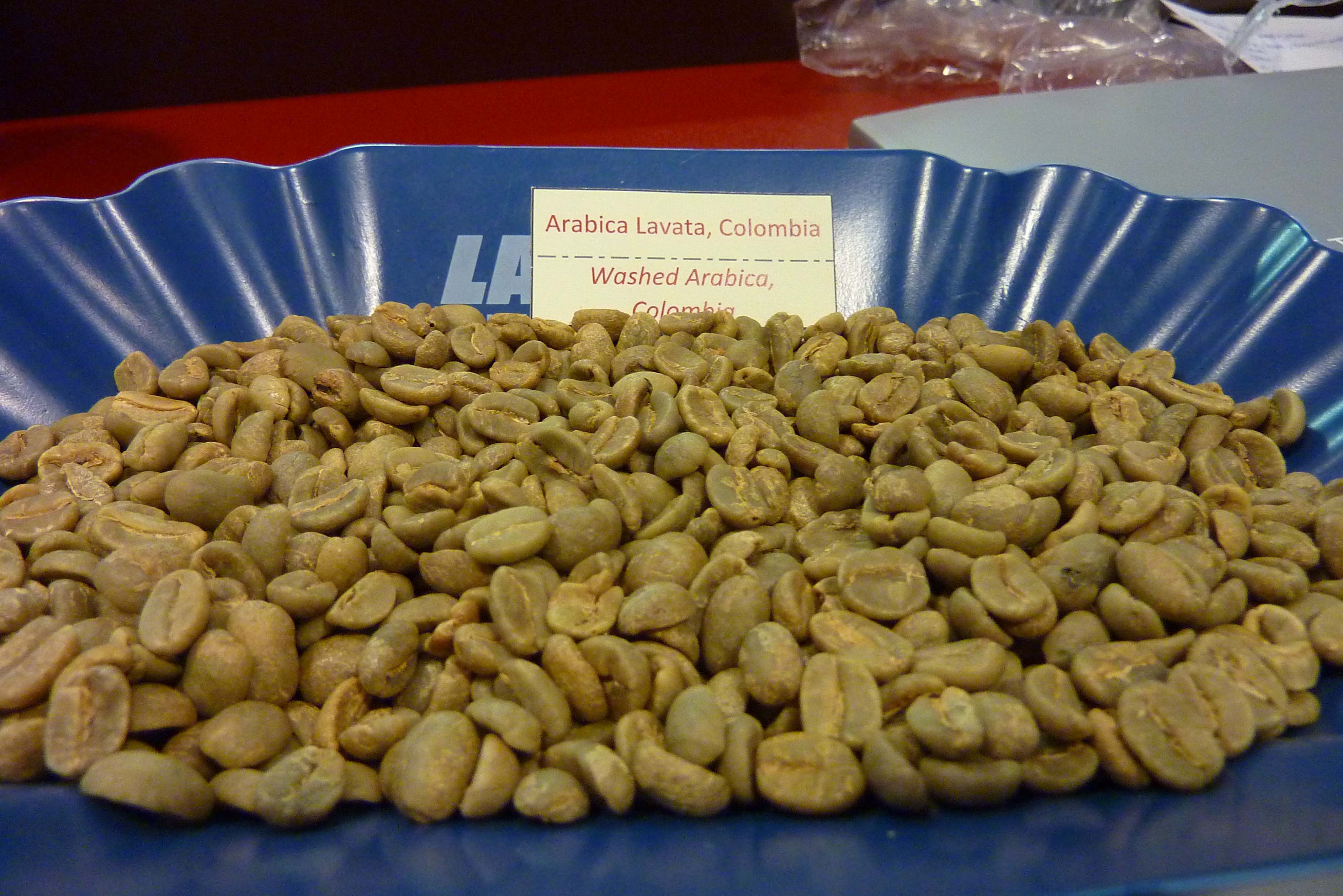
So what were the Italian supermarket COOP, the internationally famous Italian espresso company Lavazza, and the ubiquitous road-side Italian convenience store Autogrill doing at the Salone?

A supermarket is the antithesis of Slow Food’s “good, clean, and fair” motto. Products are available at any quality, starting at “low” and often not reaching above “decent;” produce and packaged goods come from all over the world, with little thought as to what other countries deem as “safe” pesticides, and with less thought about the energy used to transport everything; and finally, it’s anyone’s guess as to how many products lining the shelves were made under unpleasant or dangerous working conditions with low wages as poor compensation.

Coffee beans are notorious for their high demand pitted against their low cost, possible only through unfair working conditions and wages. Coffee plants are harvested using mono-cropping methods, which is environmentally friendly only in the interests of that particular crop.


Continue Reading…

Never miss a post
Name: 
Your email address:*
Please enter all required fields
Correct invalid entries

Wild Woman on Feral Acres: Eating in Season? Pick a Pack of Parsnips!

Published by Thursday, December 6, 2012 Permalink 0

by Esmaa Self

From the archives

Consider the parsnip. Sweet. Nutty. recipe. From fritters (recipe) to soup (recipe), homemade gnocchi (recipe) to curry (recipe), the mighty parsnip delivers folate, vitamin C, fiber and flavor. Even if you’ve never before tasted parsnips, my bet is that if you try one of these recipes, you’ll not only want more parsnips, you’ll want to grow your own (tips on that below).

Photo courtesy of Sharon Mollerus

Speaking of yum, here’s a recipe from Simple Organic Kitchen & Garden that I’ve adapted to fit the items in my pantry, notably dried tomatoes and porcini mushrooms. The original recipe is known as Parsnips and Chickpeas in Garlic, Onion, Chili and Ginger Paste. I added ingredients, skipped a couple others and decided to shorten the title to the equally descriptive Parsnips Piquant.

Incredible flavor, marvelous nutrition

RECIPE

PARSNIPS PIQUANT

Ingredients


Click here for Imperial-metric recipe conversion

2 pounds parsnips, cut into ½ inch chunks
½ pound dried chickpeas, soaked overnight and drained (or 2 cans)
1 ½ cups dehydrated tomatoes, reconstituted and chopped
1 ½ cups dehydrated porcini mushrooms, reconstituted and chopped
2 ¼ cups vegetable broth (made from reconstituting mushrooms and tomatoes, see below)
½ cup chopped mixed salted nuts (set aside)
8 garlic cloves, minced
1 small onion, chopped
2 inch piece of fresh ginger, peeled and chopped
4 medium Serrano chilies, chopped
4 Tbsp porcini and sun-dried tomato infused olive oil (or plain olive, sesame, or peanut oil)
1 Tbsp sesame seeds
2 tsp coriander seeds
1 tsp turmeric
1 tsp chili powder
1 tsp ground cumin
Fresh ground pepper
Plain yogurt


Instructions


  1. Presoak chickpeas.
  2. Cover chickpeas with fresh water and boil for 10 minutes. Reduce heat, letting it boil gently. Let cook for 60 to 90 minutes, or until done. Drain and set aside. (If using canned chickpeas, simply drain and set aside.)
  3. Set tomatoes and mushrooms in a bowl; cover with boiling water. Let cool. Reserve broth.
  4. Set about a quarter of the minced garlic aside. Put remaining garlic in a blender with the ginger, onion and half of the chilies. Add enough vegetable broth to make a paste (about ¼ cup).
  5. Heat the oil in a frying pan; add coriander seeds, turmeric and chili powder. Add garlic-ginger-onion-chili paste. Stirring constantly, cook until broth begins to evaporate. Add tomatoes; stir. Cook another minute or two.

    Simmer until liquid is reduced

  6. Add the parsnips, chickpeas and remaining water; boil, stir then simmer, uncovered 15 minutes or until the parsnips are tender but not mushy and sauce has been reduced.
  7. Stir in Serranos, sesame seeds and reserved garlic.
  8. Plate Parsnips Piquant, add fresh ground pepper. Sprinkle with chopped nuts and a dollop of yogurt. Garnish with parsley. Serves 4.
  9. Chapatis, naan and kulcha make a lovely accompaniment, as does homemade sourdough or wheat berry bread.

Growing Parsnips


Photo courtesy of Matthew Folley


The parsnip’s full flavor emerges after the plant has been exposed to near freezing temperatures, thus this root crop is considered a winter vegetable. Here in Colorado where we redefine cool, if not winter, a person may scoff at the very idea of growing a slow maturing vegetable. But parsnips are the only root crop that can survive in the ground all winter. Indeed, it is one of the few crops with which high elevation gardeners might achieve success. (source)

According to Shane Smith, in his book, Greenhouse Gardener’s Companion, parsnips require bright light, cool temperatures and may go to seed if overwintered. So you might wonder if I’ve slipped a cog when I mention that I grew two small patches of parsnips last winter in our attached passive solar greenhouse and that both test plots were partly shaded and further  that one of the beds regularly reached air temperatures above 87 F.

However, if I mentioned that I fully intend to seed parsnips again for Colorado’s less industrious, though longer, growing season (AKA winter), you might want details regarding these attempts. You are in luck.

Two tries, two successes

I planted one batch in early August for inclusion in December’s root crop rich menus. This first sowing was in the raised bed nearest the southern greenhouse vent, which is the bed furthest from the main house’s southern wall and which is largely shaded in winter, thus the coldest spot in the greenhouse. The soil does not freeze, though air temps do occasionally reach the mid 30s. The parsnips we harvested from this test plot were every bit as large and straight and lovely (not to mention sweet) as those we’ve purchased in the store.

In addition, I grew a dozen parsnips in the west wing. This second test plot is within three feet of the main house’s west wall. The bed receives afternoon sun, which in the winter months, means that air temperatures reach the nineties, but soil temperature remains between 50-65 F. In addition, overnight air temps are generally a few degrees warmer than those in the first plot. We planted the second crop of parsnips in mid-October and harvested them in late January. They were two-thirds the size of the others, but possessed incredible flavor. Parsnips from this plot are featured in the images of Parsnips Piquant, above.

Companion plants include peas, potatoes, peppers, beans, radishes and garlic. Get more parsnip growing tips here.

Read more about Esmaa’s organic farming techniques on her site Middleground Farm.

Never miss a post
Name: 
Your email address:*
Please enter all required fields
Correct invalid entries

UA-21892701-1