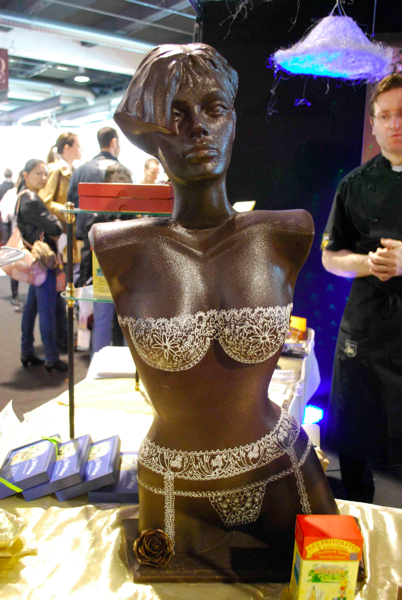
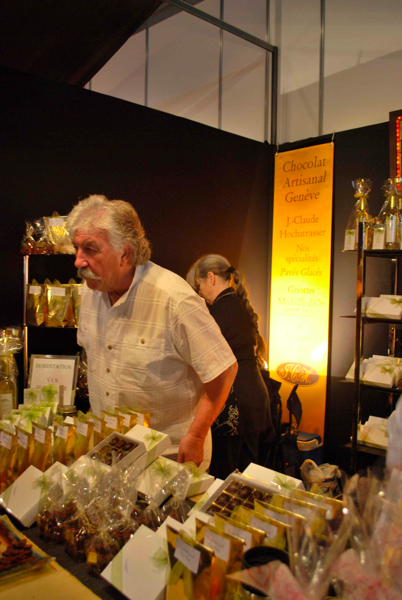
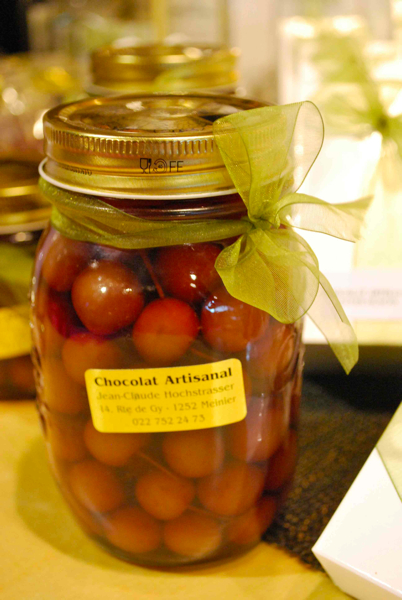
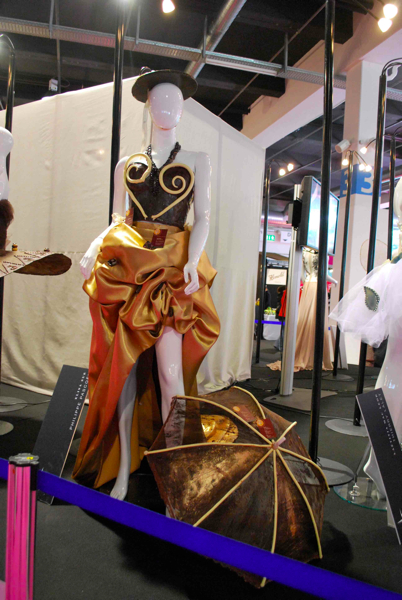
Switzerland: A Documentary Slide Show of the 1st Salon du Chocolat in Zurich

Published by Sunday, April 1, 2012 Permalink 0

Switzerland: A Documentary Slide Show of the 1st Salon du Chocolat in Zurich

by Jonell Galloway

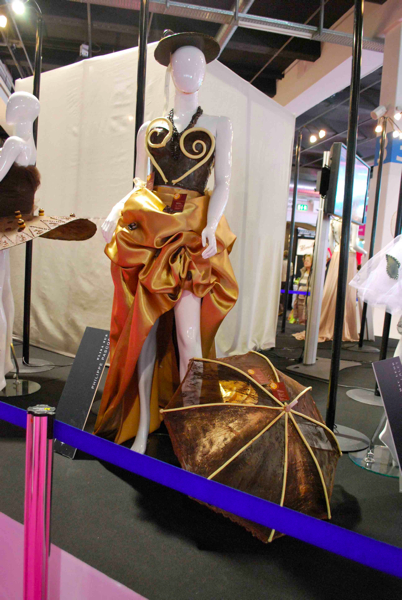
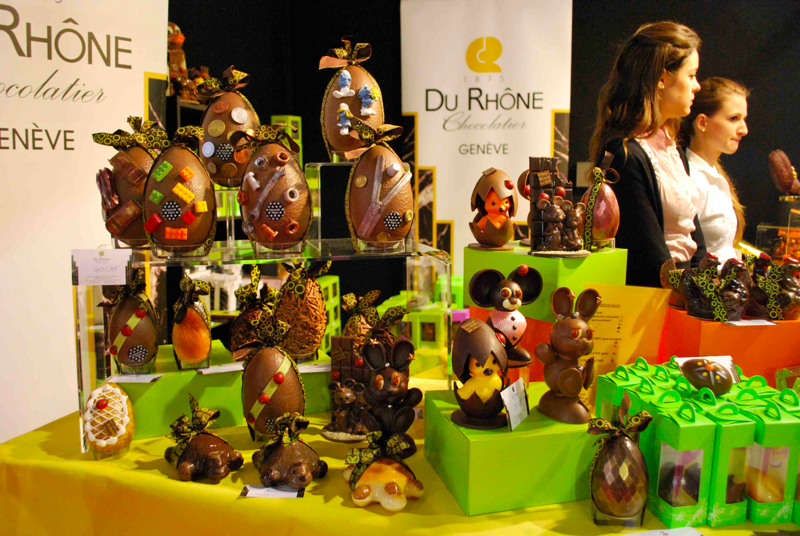
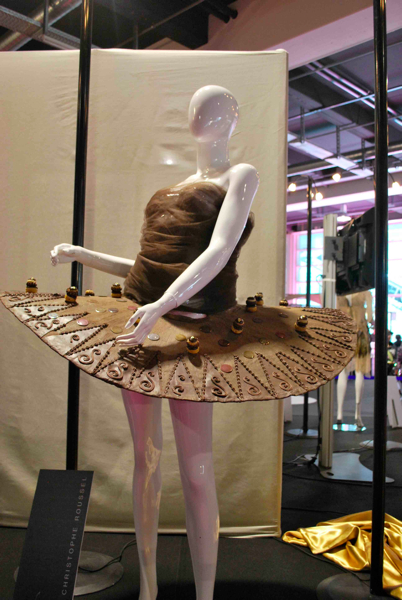
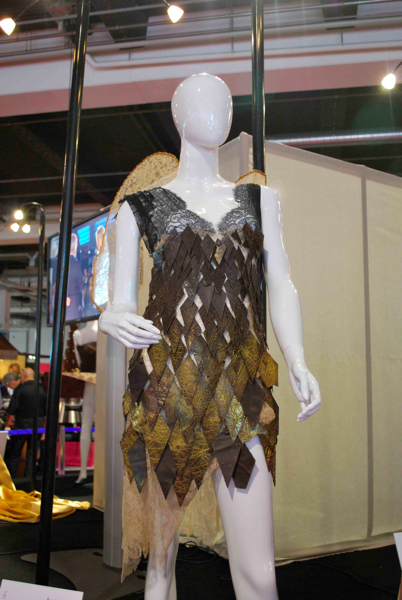
Here’s a quick, unfiltered overview of the photos I took at the first Salon du Chocolat Zurich.

These are here to help you get an idea of what was on offer at the show. They are not professional photos, yet they are mine. If you want to use them commercially or copy them, please be so kind as to contact me beforehand by clicking on the blue Contact Us button at the top right of our home page.

I’ll be adding more tonight or tomorrow morning, so stay in touch!


Continue Reading…

Never miss a post
Name: 
Your email address:*
Please enter all required fields
Correct invalid entries

Culinary Chemistry: 10 Gluten-Free Tips for the Holiday Meals

Published by Thursday, December 15, 2011 Permalink 0


Culinary Chemistry: 10 Gluten-Free Tips for the Holiday Meals

by Jenn Oliver

The upcoming festivities are all about sharing, seeing friends and family, creating new memories and reliving old ones. It’s a time of joy, inspiration, goodwill, and laughter that I look forward to each year, while looking ahead to the New Year and the fun and exciting experiences the coming seasons will bring. We stroll around the Christmas markets tasting chocolate, nougat, mulled wine, and roasted chestnuts, flavors and delights not just for the taste buds but all five senses — and has become something I look forward to at this time every year.

But for some — such as those who are gluten intolerant or celiac — holiday festivities can bring about a certain anxiety, a stress caused by imposing dietary restrictions on those doing the cooking, or fear of gluten contamination from the grand holiday meal. Just having had a successful family Thanksgiving dinner that everyone, including the gluten free enjoyed, I thought it might be useful to share some of our tips for surviving, and keeping the holidays fun without stressing out about food. So here are 10 gluten-free tips for surviving the holidays.

  1. Be involved – The more you are involved in the process of deciding what gets made and from where everything comes from, the better chance you will have to help direct the meal towards foods and dishes that are safe for you. Being proactive from early on rather than waiting til the last minute may save a lot of stress and worry.
  2. Educate friends and family – It is beneficial for others to know about your dietary needs and what is involved in creating a safe environment. Not everyone fully understands the risks of cross contamination, or that croutons can’t just be picked off of a salad and that a knife can’t be double dipped into the apple butter when spreading on rolls.
  3. Suggest naturally gluten-free dishes – Recipes abound for a myriad lovely and flavorful courses that never contained any flour to begin with, such as salads, roast meats, vegetables. Feel free to explore/suggest dishes that require no alterations to prepare gluten free.
  4. Cook from scratch – Processed foods have a tendency to have a long list of ingredients, including some off limits and questionable ingredients, such as barley malt syrup, modified food starch, etc. Cooking from scratch gives one more control over what goes into a dish and is also easier to modify in order to make a food gluten free.
  5. Offer to host  – While hosting is often a lot of work, you know the safety status of your own kitchen with regard to holidays foods, and it may be easier to host than making sure that someone’s kitchen counter that was dusted with flour earlier that day from baking holiday cookies doesn’t end up contaminating your dinner. If you can’t host, offer to cook some of the dishes to help make it easier for the host to accommodate you, or at least to help with the cooking when you arrive so that you can help keep food prep safe for you.
  6. Make GF versions of your favorites – Many dishes require very simple substitutions to be made gluten free – stuffing can be made by just substituting GF bread; gravy and creamed sauces by substituting GF all-purpose flour, or GF cookies can be used to make your favorite cookie crumb crust for a pie.
  7. Keep GF foods completely separated from gluten foods – If you are eating at a mixed GF/gluten dinner, make sure that the foods you want to be able to eat are completely separated, so no one mistakes which serving spoons go into which dish and bread crumbs don’t find their way into the GF courses. Another idea is to serve the gluten-free folks first, before anything has a chance to get contaminated.
  8. Try new traditions and recipes – Holidays are all about traditions, but they can be as much about making traditions as keeping them. Rather than trying to replicate a longstanding favorite dish, why not try something completely different? A new set of flavors perhaps, so you don’t feel as if you are replacing your great grandmother’s heirloom recipe, but more just creating a new tradition for friends and family to enjoy in the years to come.
  9. Don’t gamble with your dinner – If you are not sure whether or not a dish is GF, it may be best to pass on it. No one enjoys being sick from having a gluten reaction over the holidays or while traveling. Depending on how long you will be there and who you are staying with, it may be a good idea to also bring some snacks just in case.
  10. Remember, it’s just a meal – There is so much more to the holidays than simply one dinner together – the holidays are also about spending time with friends and family, and sharing those special moments. If dinner doesn’t end up being the idyllic meal you had dancing around with those sugarplums in your head, remember the fun moments and spirit of the season, and the real reason for getting together in the first place.
Wishing everyone a happy and safe holiday season, and a joyous New Year!
_________________
Jenn Oliver writes our column Culinary Chemistry. She has a Ph.D. in science, and explains the scientific aspects of what really goes on when you cook (the next Harold McGee?). She’s been running a gluten-free blog, Jenn Cuisine, since 2008 and her kitchen is more like a laboratory than a kitchen. She’s focuses her chemical calculations and experiments on figuring out how to make traditionally glutinous food gluten-free.
Never miss a post
Name: 
Your email address:*
Please enter all required fields
Correct invalid entries

Switzerland: Coop’s Pro Montagna Label: 5 Years of Protecting Traditional Swiss Food Products

Published by Friday, September 30, 2011 Permalink 0

Switzerland: Coop’s Pro Montagna Label: 5 Years of Protecting Traditional Swiss Food Products

Please join us on Sunday, October 2nd, at the Expat Expo Geneva, from 11 a.m. to 5 p.m. in Palexpo, Hall 7. We’d love to meet our readers and make our contact more personal.

We’ll have booth No. B8 against the well, and one of our most popular authors, Rosa Mayland of the column Rosa’s Musings,will be present.

Click here for all the details.

Hope to see you there!

Jonell Galloway, Editor of The Rambling Epicure


Never miss a post
Name: 
Your email address:*
Please enter all required fields
Correct invalid entries

A Taste of Switzerland: Absinthe Anyone?

Published by Friday, September 9, 2011 Permalink 0

A Taste of Switzerland: Absinthe Anyone?

by Sonja Holverson

Our thoughts immediately go back to Bohemian culture, to writers and artists of 19th-century France: absinthe, also known as La Fée Verte (literally, “the green fairy”), was created in the canton of Neuchâtel, Switzerland, notably in the Jura Mountains bordering France. Most of the production has traditionally been in small quantities. But absinthe is back after being outlawed for nearly a century.

Absinthe glass and customary spoon

The liquor, high in alcohol content and with a full anise flavor, is made from plants such as anise, fennel, flowers, and leaves of the medicinal plant called Artemisia Absinthium, which we know as wormwood, and which is found in abundance in Switzerland. Other herbs such as lemon balm angelica, dittany, coriander, juniper and nutmeg are sometimes added. The nickname “green fairy” comes from its color, a pale green.

Chemist and absinthe expert T.A. Breaux describes it as “a push-me, pull-you effect of the various herbs; some have a heightening effect while others have a lowering effect.” It as a double impact: a sensation of inebriation along with a heightened state of clarity.

Romanticized by many famous people in the 19th and early 20th centuries, including Henri de Toulouse-Lautrec, Edgar Degas, Vincent van Gogh, Édouard Manet,  Pablo Picasso, Oscar Wilde, Charles Baudelaire, Paul Verlaine, Ernest Hemingway and the list goes on, absinthe is ever-present in both the stories and works of these creative people.

“L’Absinthe” by Edgar Degas 1876

Practical uses were also found during this period of history and absinthe was given to French troops to prevent fever. Naturally, they acquired a taste for the “green fairy” and when they returned home, they popularized the drink in bars, bistros and cabarets. Absinthe was initially expensive, but when prices declined, the French began drinking it to excess and experienced addictive psychoactive reactions. As a result, opposition movements started scare campaigns that resulted in the ban of absinthe in 1914 in France.

Ironically, Switzerland had already banned it in 1907, although the production went underground and home distillers produced the much sought-after liquor clandestinely in small quantities. In the U.S., it was banned in 1912. By 1915, most European countries followed suit, except Britain, where it was not popular, and both the production and consumption of absinthe were made illegal.

In the mid-1990s, legal practices regarding absinthe were highly ambiguous. Drinking it was legal, but producing it was illegal. Former French President Jacques Chirac drew criticism from his own citizens because he drank absinthe during a state visit to Switzerland in the late 1990s. President Chirac and I had something in common but no one really cared if I drank it… Anyway, it was difficult to come by and you had to have friends who lived in the canton of Neuchâtel to get your hands on it.

With renewal of interest on the part of both producers and consumers, the Swiss Parliament lifted the 97-year ban on the production, sales and consumption of absinthe in 2004. A French absinthe producer, Lucid, was the first absinthe producer to receive certification in France in 2007.

Other European countries followed, and by 2008, there were nearly 200 brands of absinthe available in a dozen countries such as Switzerland, France, Spain and the Czech Republic.

In the U.S., the first legal brand of absinthe was approved in 2007: St. George Absinthe Verte, made in Northern California.

Kubler Swiss Absinthe

While visiting Switzerland, some of you may want to taste this once forbidden elixir. Kubler Absinthe was the first Swiss absinthe to become commercially available and has an excellent reputation for being the highest quality of all international absinthe brands. They use only natural plants in accordance with local traditions, rather than extracts or oils that are used by some other European producers.

Another excellent Swiss brand is Absinthe Studer, made of distilled wormwood, a blend of 8 different secretly selected herbs, pure alcohol and fresh water from their own spring. The original recipe has been preserved and passed down from generation to generation despite the 97 years of legal issues.

But the Studer family is open to innovation and have collaborated with the famous haute couturier chocolatiers, the Beschle family in Basel, producing Studer’s absinthe-filled milk chocolate pralines in the shape of the most famous Swiss Alp, the Matterhorn.

Beschle’s Studer Absinthe, Swiss Collection

The country fair stand “Absintissimo” serving absinthe from the local producers of the region is always a highlight at the Fall Automanales Fair held in Geneva every November.

Absintissimo: Swiss-made “green fairy

So fascinating is the story of absinthe that this elixir is being used as the backdrop for a film currently being produced called “Les Absintheurs” (The Absinthe Drinkers), due out in 2012. The plot is not so much about the drink as about the people in the era when the green fairy was a part of daily life in Paris. The film recounts the life of a talented young woman painter in an art scene dominated by men in 1889 (one year before van Gogh died). It takes places during the Impressionist period in the then-decadent Montmartre neighborhood of Paris.

Enjoy your taste of the once forbidden green fairy while in Switzerland, but if you are obliged go pass through the United States Customs, keep in mind that despite the allowance of local production of absinthe in the U.S., it is prohibited to bring it into the country.

Related articles


A version of this article was originally published in Nile Guide.

Never miss a post
Name: 
Your email address:*
Please enter all required fields
Correct invalid entries

Switzerland: Filet of Perch with Parsley/chive Sauce Recipe

Published by Thursday, August 25, 2011 Permalink 1


Spontaneous Cuisine, by Jonell Galloway

Traditional dish in Lake Geneva region: filet of perch with parsley, chives and butter: a recipe with a twist

Recipe

Ingredients

1 kg / 2.2 lbs of filet of perch
1.2 dl / 1/2 cup of white wine
125 g / 1 stick butter
1 large clove of garlic, finely chopped
1 1/2 teaspoons of strong mustard
2 egg yolks
Parsley, 1 large bunch
Chives, 1 large bunch
Salt and pepper to taste

Directions

  1. Preheat oven to 220°C / 425°F.
  2. Butter a baking dish that can also be used on stovetop. Add wine and garlic.
  3. Arrange filets in a baking dish. Salt and pepper.
  4. Bake for about 8 minutes or until fish is cooked but still firm. Carefully remove fish and set it aside.
  5. Use cooking juices in baking dish to make sauce. Add butter, mustard and egg yolk.
  6. Cook over very low heat, stirring constantly with a wire whip. Add parsley. Warning: If you turn the heat too high and quite stirring, you will end up with scrambled eggs instead of sauce!
  7. Arrange perch on serving plates, preferably warm. Pour sauce over fish and serve immediately.


Continue Reading…

Never miss a post
Name: 
Your email address:*
Please enter all required fields
Correct invalid entries

Switzerland: Pan-fried Sérac Cheese & Potato Salad Recipe

Published by Friday, August 5, 2011 Permalink 0

Spontaneous Cuisine, by Jonell Galloway

Swiss Sérac cheese, a fresh cow’s milk cheese made with whey

Whey cheese is produced when the curds are separated from the whey to make cheese. Ricotta is also a whey cheese, but unlike Sérac, it is often made with sheep’s milk. As a result, you can use your local cheesemonger’s Sérac in most recipes that call for ricotta.

Photo courtesy of FribourgRegion tourist office.

Photo courtesy of Fribourg Region tourist office.


Sérac is made in most regions of Switzerland, and each region has its own version. Some regions smoke it; others flavor it with herbs, spices or pepper.

Sérac cheese is soft and creamy in texture, so it is easy to spread it on bread to make a healthy sandwich or snack, but Sérac is not only a snack cheese. It can also be used to make healthy, quick meals, such as the recipe below. In the summertime, I often use it like mozzarella, with tomatoes and basil or other Italian-inspired recipes.

It is a great way of teaching your children to eat healthy snacks. Top it with fresh fruit to make a healthy, low-fat dessert, or use it for between-meal snacks on chunky whole-grain bread.

Since it is a fresh milk cheese, it does not keep, and should be eaten shortly after purchasing. Because it is made from fresh milk whey, it is also naturally low in fat. In Switzerland, it would have about a 3.8% fat content, the same as milk.

Continue Reading…

Never miss a post
Name: 
Your email address:*
Please enter all required fields
Correct invalid entries

Fine Wines give Geneva a Great Evening

Published by Sunday, December 5, 2010 Permalink 0


Kickoff of Switzerland’s spring wine tastings: Berthaudin at the Beau Rivage

Massaya comes from a long line of winemakers, and has expanded the family business into a distributorship of wines of a quality that only someone “born in the vines” could put together.

His spring wine tasting Tuesday 5 May at the Geneva Beau Rivage hotel offered a well-balanced collection of hand-picked wines from all over the world, including the sought-after Lebanese wine Massaya.

Berthaudin: Geneva and Vaud wines, and it’s a family affair

Claude Berthaudin.

Continue Reading…

Never miss a post
Name: 
Your email address:*
Please enter all required fields
Correct invalid entries

Sex, no I mean, Cupcakes in the City

Published by Wednesday, November 10, 2010 Permalink 0


//

Cupcakes in the City opened in Geneva today

For those of you who just reminisce about cupcakes, or for those of you who continually have your eye out for the perfect cupcake after watching still another episode of Sex in the City, a new store, Cupcakes in the City, dedicated exclusively to the beloved American cupcake, opened today in the Eaux-Vives neighborhood in Geneva.

Continue Reading…

Never miss a post
Name: 
Your email address:*
Please enter all required fields
Correct invalid entries

UA-21892701-1