Wild Woman on Feral Acres: Falling Far From the Tree

Published by Saturday, May 14, 2011 Permalink 0

by Esmaa Self

We have a 35-year-old Jonathan apple tree that produces marvelous, sweet apples. This tree is supposed to be dead by now, for Jonathans have a life expectancy of about 25 years. While tending the special needs of this fire blight affected tree, I got to thinking about the saw that apples don’t fall far from the tree. It has long been my intention to do just that.

My appetite for a simple, healthy, self sufficient life was teased by failure: the sins of my father, the sometimes health food nut. He introduced me to organic gardening, raw milk and farm eggs; insisted that I eat a hot breakfast; refused to buy white bread, candy or soda pop and preached that from-a-box cooking was no way to live a healthy life.

photo: Wellerco

Continue Reading…

Never miss a post
Name: 
Your email address:*
Please enter all required fields
Correct invalid entries

The 7 Lives of Bread: Pascal Auriac, master bread baker in Laguiole, a hidden corner of France

Published by Friday, May 6, 2011 Permalink 0

Dictionnaire Universel du Painpar Jean-Philippe de Tonnac

Translated from the French and adapted by Jonell Galloway

In the food world, the name Laguiole — a tiny village tucked away in the highlands of the Aveyron Aubrac region of France — is generally associated with the brilliant, one-of-a-kind, self-taught chef Michel Bras, whose restaurant here earned its third Michelin star in 1999, and is held in the highest esteem by gourmets around the world. In the world of haute cuisine, he is considered to be an exceptionally gifted chef who works like a sorcerer in his kitchen laboratory hidden in the Puech du Suquet region, turning out dishes that resemble none other, but which are quickly dished out by a long line of copycats.

So you can just imagine how the young chefs who spend time in his kitchen walk away with a lasting impression of a single man, who didn’t quite live in sync with the times. Perhaps he was a Cistercian monk in another life, using a golden ratio to secretly slip secret formulas into his culinary compositions. If you ask Michel Bras what inspired him most in his creative progress, he says: “Photography and foot racing!” One might say asceticism and contemplation.

Pascal Auriat — master bread baker in Laguiole, who once worked in Bras’ kitchens — is still under the influence of this “ascetic aesthete”. When he speaks about the years he spent at Bras, his tone rather resembles that of a religious convert who has not slipped in his ways after all these years. What he has most retained is the veritable alchemy of fermentation.

The bonds that started to germinate between restaurants and bread baking — hardly perceptible even now — are still moving in a positive direction. It’s now difficult to imagine that there really was a time in France, not so long ago, when a 3-star menu served mediocre bread, not worthy of being placed on such high tables of gastronomy. To remedy this situation, chefs such as Michel Bras, Alain Passard (L’Arpège in Paris) and Olivier Roellinger (former Maison de Bricourt in Cancale in Brittany), as well as many others, started installing small bread ovens in their kitchens and making bread in a somewhat primitive fashion.

Restaurant pastry, which has followed its own path, quite separate from grande pâtisserie, has a similar story. Although they both followed their own separate paths, they never stopped mutually nurturing and influencing each other. Will there come a day when the ovens in the laboratory-kitchens of the great gastronomic establishments will  be directly connected to bread ovens, each housing one of France’s handcrafted bread bakeries?

Another way for a chef to improve the quality of his or her bread is of course to order it from a bread baker worthy of her name. Some artisanal bread bakers, such as Jean-Luc Poujauran, have already dug a deep niche for themselves.

It was like a calling when Pascal Auriat, with a vocational training certificate in cuisine already under his belt, came to Laguiole to try to work for Bras. In 1992, Bras gave him his chance. His first job was the vegetable station, which might well be the heart of Bras’ creative “offensive”, so it was a true sign of trust on the part of Bras. After two seasons, a place opened in the team he had his heart set on: pastry and micro-bread baking. At the time, the three daily batches were “germinated” using sourdough starter made from yogurt, a recipe that Bras had perfected and that Auriat was to scrupulously replicate, while, at the same time getting acquainted with the world of pastry making, working alongside Philipe Andrieu. Andrieu later went on to Fauchon and Ladurée, where he is now Executive Pastry Chef, so Auriat didn’t learn pastry making in just any old school.

Pascal Auriat entre Michel et Sébastien Bras au Mazuc (première implantation à Laguiole)

Restaurant pastry making inevitably calls on its counterpart. Pascal Auriat felt the need to perfect his training, so he left his mentor, a daring act indeed. So off he went to work with Pierre Hermé (now dubbed by Vogue as being “the Picasso of pastry making”) at Ladurée, which had just opened on the Champs-Elysées in Paris. Then a famous family of bread bakers, the Holders, bought out the noted Ladurée, started by Louis Ernest Ladurée, a former miller, in 1862.

Musical chairs: the miller Ladurée opened a pastry shop/tearoom, which was bought out over a hundred years later by a bread baker. A cook who learned to make pastry from another cook abandons the highland stoves of remote Aubrac to try his hand at small and big jobs on the Champs-Elysées. Gastronomic explorers have no bounds.

But Auriat did make his way back to Laguiole in 1999, when Bras asked him to become No. 2 pastry chef. The restaurant had just gotten its third Michelin star, and had to face up to the inundation of guests. There was no lack of work, and the horizons were unlimited. Michel and his son Sébastien were invited to open a branch in the Hokkaido Windsor hotel in Japan. Auriat packed his suitcases.

It just so happened that Eric Kayser, bread baker/fellow of the craft and today head of an empire including more than 60 bakeries spread out on all continents, also landed in the Windsor, where he opened a bread bakery. The three men met and talked about fermentation. Bras’ old yogurt only slightly interested Kayser, who advised him to use a liquid starter that he had patiently perfected. In the world of fermentation, Kayser had it all; Bras was convinced to change his ways.

When Auriat returned to his fold in the Aveyron, he started applying the “new school” methods of making sourdough bread using liquid starter. And just as every pastry chef puts his hands in the dough, his shoulder to the wheel, he left them there. He would have had to leave a starter in the refrigerator for six months, out of spite, to obtain what he was looking for, in vain, on his own: a good starter to incorporate into his tried and true kneading techniques.

Pascal set up shop on his own with Anne, whom he had met at Bras, and started perfecting his magic formulas using a starter made from wheat and rye from the Auvergne region, delivered straight from the moulins Antoine mill.

When he talks about himself, he says that the time he spent at Bras as cook, pastry chef and bread baker made him put taste above all else. One might call it bread baker’s aesthetics, expressed through taste. It could be his slogan.

It’s not often that a bread baker gets his training in the world of haute cuisine. And when it comes to Michel Bras’ kitchens, one might question whether a bread baker merits the attention of bread lovers.

Master bread baker in Laguiole, a hidden corner of France, cradle of creativity: it does sound good on a sign, doesn’t it?

Anne & Pascal Auriat
1 place Auguste Prat
12210 Laguiole
Tel : 00 33 (0) 5 65 44 31 09
Site : http://www.maison-auriat.fr/

Never miss a post
Name: 
Your email address:*
Please enter all required fields
Correct invalid entries

Les sept vies du pain : Pascal Auriat, boulanger à Laguiole

Published by Wednesday, May 4, 2011 Permalink 0

Dictionnaire Universel du Painpar Jean-Philippe de Tonnac

Click here for English version

On associe traditionnellement le nom de Laguiole, petit village des hauts plateaux de l’Aubrac aveyronnais, à celui d’un restaurateur émérite, autodidacte génial qui a décroché en 1999 sa troisième étoile ainsi que la considération des gourmets du monde entier : Michel Bras. Dans le monde de la haute cuisine, il est regardé comme un touche-à-tout surdoué qui, dans son laboratoire arrimé au Puech du Suquet, invente sans patron, sans modèle et fait de nombreux imitateurs. On peut imaginer combien ceux qui ont fait une halte dans ses cuisines ont été profondément marqués par la fréquentation d’un homme qui donne l’impression d’habiter un temps différent du vôtre. Peut-être a-t-il été moine cistercien dans une autre vie, cherchant à introduire dans ses compositions culinaires des formulations secrètes inspirées par le nombre d’or. Lorsqu’on demande à Michel Bras ce qui l’inspire le plus dans son cheminement créatif, il répond : « C’est la photographie et la course à pied ! ». Autrement dit, l’ascèse et la contemplation. Pascal Auriat, boulanger à Laguiole, en tous les cas, transpire encore de cette fréquentation avec le cuisinier ascète-esthète. Lorsqu’il parle de ses années passées chez Bras, il évoque une sorte de « conversion » à ce qui aujourd’hui le retient durablement : l’alchimie des fermentations.

Continue Reading…

Never miss a post
Name: 
Your email address:*
Please enter all required fields
Correct invalid entries

Passover: the “festival of the unleavened bread”

Published by Friday, April 22, 2011 Permalink 0

This article is currently being translated into English.

par Julien Darmon

Extrait du Dictionnaire Universel du Pain, publié par Bouquins, Robert Laffont

Continue Reading…

Never miss a post
Name: 
Your email address:*
Please enter all required fields
Correct invalid entries

Book Review: Jean-Philippe de Tonnac’s “Dictionnaire Universel du Pain” or Universal Dictionary of Bread

Published by Wednesday, April 13, 2011 Permalink 0

by Jonell Galloway

Jean-Philippe de Tonnac, contributor to The Rambling Epicure, has written more than 20 books on subjects as varied as Umberto Eco, anorexia and, in October 2010, his masterpiece, the Dictionnaire Universel du Pain, or “Universal Dictionary of  Bread,” a veritable encyclopedia about every facet of  bread from all corners of the earth. The dictionary — not yet translated into English — covers the history of bread, as well as anthropological, symbolic, emotional, sexual, agricultural, botanical aspects . . . well, absolutely everything you might want to know about bread, literally from crop to crust (to borrow Dan Lepard‘s term), with every technical step in the process of bread baking covered in minute detail.

Continue Reading…

Never miss a post
Name: 
Your email address:*
Please enter all required fields
Correct invalid entries

Simon Says: Daily Food Quote, March 31, 2011

Published by Thursday, March 31, 2011 Permalink 0

by Simón de Swaan

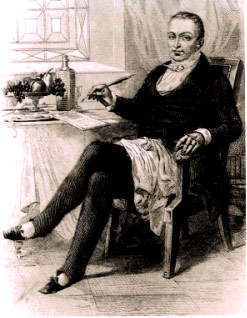
Gastronomy is the intelligent knowledge of whatever concerns man’s nourishment.–Jean-Antheleme Brillat-Savarin (1755-1826), in The Physiology of Taste (1825)

Jean-Antheleme Brillat-Savarin was a French lawyer, magistrate and author who helped to develop the art of food writing. His most famous and influential book, The Physiology of Taste, consists of 8 volumes and was published in December of 1825, two months before his death at the age of 71. His influence is so significant that a cow’s milk cheese, a rum yeast cake, and a ring mold are all named after him.

The Rambling Epicure

Never miss a post
Name: 
Your email address:*
Please enter all required fields
Correct invalid entries

A culinary Trafalgar: French cuisine, a masterpiece in ruins?

Published by Wednesday, March 9, 2011 Permalink 0

by Jean-Philippe de Tonnac

The original French version is currently being translated into English.

Never miss a post
Name: 
Your email address:*
Please enter all required fields
Correct invalid entries

Un Trafalgar culinaire : La cuisine française, un chef d’œuvre en péril

Published by Friday, March 4, 2011 Permalink 0

//
par Jean-Philippe de Tonnac

Click here for English

Michael Steinberger, La cuisine française, un chef d’œuvre en péril, traduit de l’américain par Simon Duran [Au Revoir To All That, Bloomsbury, New York, 2009], Fayard, 2011.

Qui aime bien châtie bien. Prenez la France. La Fraaaaaance !, comme disait le Général. Voilà le sujet urticant par excellence. Parmi ses thuriféraires et inconditionnels, obsédés par l’idée de ce qu’est la France en essence et assez peu en actes, les étrangers qui fréquentent ce pays, qui l’adorent tout en conservant leur distance, une sorte de regard critique, ces étrangers sont souvent les plus enragés. Pour eux les Français ne sont tout simplement pas à la hauteur de leur histoire qu’ils desservent et trahissent à l’envie. La cuisine française, un chef d’œuvre en péril, le livre de Michael Steinberger, œnologue de réputation faite, chroniqueur au The New Yorker ou au The New York Times Magazine, est des plus symptomatiques de cette façon de considérer que le haut héritage qui échoit à cette France en décomposition économique et spirituelle, c’est un peu la confiture aux cochons. Vous pouvez, si vous voulez, remplacer la confiture par ce « gâteau de foies blonds » qui a fait la gloire d’Alain Chapel (« une purée de foies de poulet et de moelle de bœuf servie avec une sauce au homard et à la crème », décrit par le critique gastronomique Craig Claiborne du New York Times comme « l’une des plus grandes gloires culinaires de la génération actuelle »), c’est la même chose. La charge est peut-être salutaire puisqu’il s’agit d’essayer de mettre la gastronomie française au défi de s’égaler une fois encore. Mais elle est cruelle aussi car elle ne pardonne aucun écart, veut crever les arrogances et les baudruches qui desservent, selon l’auteur, un héritage inestimable. Steinberger est une bête qui aime, et donc une bête féroce. Comme l’empereur Commodore défiant le général Maximus dans Gladiator, il convoque les traîtres dans l’arène après leur avoir planté une dague dans le dos.

Continue Reading…

Never miss a post
Name: 
Your email address:*
Please enter all required fields
Correct invalid entries

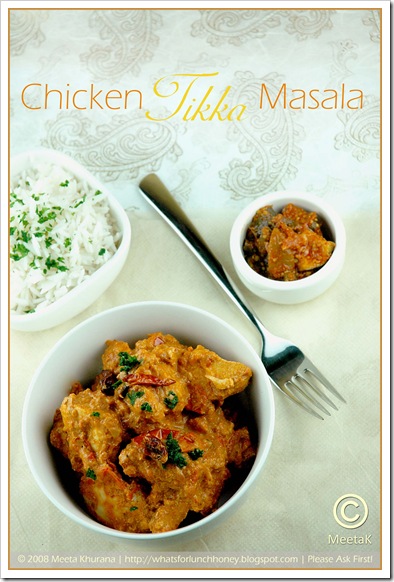
Bollywood Cooking: Chicken tikka masala: New Indian or fusion?

Published by Tuesday, February 22, 2011 Permalink 0

by here

Chicken tikka masala, New Indian or fusion?

Chicken tikka masala is quite likely one of the most popular Indian dishes the world. The irony of chicken tikka masala, better known as “CTM,” is that what is often enjoyed in restaurants as a traditional Indian dish has very little to do with authentic Indian cuisine. It is closer to “Britain’s true national dish.”

It was former British Foreign Secretary, Robin Cook, who proclaimed chicken tikka masala as the new national dish of Great Britain, in an attempt to set an example of British multiculturalism. The chicken tikka masala Mr. Cook was referring to was in actual fact the gravy-based dish invented in Britain.

Continue Reading…

Never miss a post
Name: 
Your email address:*
Please enter all required fields
Correct invalid entries

The Rambling Epicure Voices

Published by Monday, February 7, 2011 Permalink 0

Food writer, Culinary Chemistry, The Rambling EpicureJenn Oliver writes our column Culinary Chemistry. She has a Ph.D. in science, where she explains the scientific aspects of what really goes on when you cook (the next Harold McGee?). She’s been running a gluten-free blog, Jenn Cuisine, since 2008 and her kitchen is more like a laboratory than a kitchen. She’s focuses her chemical calculations and experiments on figuring out how to make traditionally glutinous food gluten-free.

Esmaa Self writes the Wild Woman on Feral Acres column. She lives on a small farm in Colorado where she employs organic and sustainable methods to grow fruits, vegetables and herbs, raise chickens, bees and fish and where she routinely turns out imaginative, healthy, guilt-free meals from scratch. One of her numerous blogs recounts her farming adventures: Backyard Eggs. She also writes novels and contributes to numerous organic farming and green publications, and runs a sustainable living site, Homeostasis.

Simon de Swaan is Food and Beverage Director at the Four Seasons hotel in New York City. He studied at the Culinary Institute of America and has an incredible collection of antique cookbooks and books about food and eating, from which he often posts interesting and unusual quotes. In his column Simon Says, he gives us daily food quotes from his tomes.

Jean-Philippe de Tonnac is an essayist, editor and journalist. He directed the special editions of the Nouvel Observateur for almost ten years and and has published twenty books. As preparation for publication of his Universal Dictionary of Bread (Dictionnaire universel du pain, Bouquins Laffont, 2010), he obtained a baker’s certificate (CAP) at the Ecole de Boulangerie et Pâtisserie de Paris in 2007, and traveled worldwide to countries where bread held a particular cultural significance.

Continue Reading…

Never miss a post
Name: 
Your email address:*
Please enter all required fields
Correct invalid entries

UA-21892701-1