Food Art: Composition with Slotted Spoon, by Prerna Singh

Published by Thursday, October 20, 2011 Permalink 0

Prerna Singh is a food photographer and blogger. She spent most of her childhood in a few small towns in central India – a time she fondly remembers, with rotis straight out the clay oven and mom’s cooking, with produce straight from the farms.

She got her MBA in India, and worked in the advertising industry. She is now married and living in the U.S. with her husband and son.


Never miss a post
Name: 
Your email address:*
Please enter all required fields
Correct invalid entries

Papos de anjo: A Portuguese Convent Sweet

Published by Wednesday, October 19, 2011 Permalink 0

by Mónica Pinto

It all started centuries ago in the Portuguese convents. The nuns used to starch the habits with egg whites and, consequently, they ended up with huge quantities of egg yolks, so they started making a variety of rich and delicious sweets, mostly using egg yolks and sugar, in fact lots of both. Sometimes they would add almonds and a small list of other ingredients, but the egg yolks and sugar were always the main ingredients of the Portuguese convent sweets.

Papos de anjo, in English, would be something like, “angels’ stomachs” or “angels’ bellies”, and they  are one of the most traditional of Portuguese sweets. They start as sugar-free, fluffy little egg cakes, round and smooth, just like the nuns imagined an angel’s belly, but then they are covered with a very sweet and aromatic syrup that makes them a melt-in-the-mouth treat, a delicacy for people with a very sweet tooth.

Enjoy!

Recipe

Ingredients

Click here for Metric-Imperial converter.

Pastry:

6 egg yolks
1 egg white


Syrup:
300 g caster sugar
3 dl water
1 orange peel
1 cinnamon stick

Preparation

  1. Butter 8 to 10 mini muffin tins (depends on the size). Preheat the oven to 180º, gas mark 4.
  2. Beat the egg yolks until fluffy and thick (3 to 5 minutes).
  3. Beat the egg white until it forms firm peaks and fold it gently into the yolk mixture.
  4. Fill the tins almost to the top with this smooth, velvety batter, then bake for 10 minutes.
  5. When they’re browned, remove small egg cakes from the tins while they’re still warm.
  6. In a saucepan add sugar, water, orange peel and cinnamon stick.
  7. Bring to the boil and let bubble away for exactly 5 minutes.
  8. Remove from the heat and pour the hot and aromatic syrup over the papos de anjo.

Serve at room temperature.

I’m a food photographer and stylist with an Art & Design degree. I live in Vila Nova de Gaia, Portugal, near the sea with my husband, my two boys and my dog. I love home cooking from around the world and have a very special interest in traditional Portuguese cuisine. I love to cook with fresh herbs, edible flowers and fresh vegetables. Some I grow organically in my kitchen garden. Others I buy from local farmers markets. I’m the author of Pratos e Travessas a blog about cooking, food photography and food chronicles.


Related articles

Food Art: Saffron Pistachio Doughnuts, food photography by Meeta Khurana Wolff

Published by Sunday, October 16, 2011 Permalink 0

See more food photo compositions at Meeta K. Wolff or in our Food Art category.

Never miss a post
Name: 
Your email address:*
Please enter all required fields
Correct invalid entries

Food Art: Potato Pears, food photography by SandeeA

Published by Thursday, October 13, 2011 Permalink 0

SandeeA is a food photographer and stylist. She also writes her column Food Play, which includes many playful food items such as this.

She runs the popular website La Receta de la Felicidad. Click here to learn how to make the potato pears.

Never miss a post
Name: 
Your email address:*
Please enter all required fields
Correct invalid entries

Food Poetry: Olives, The Luscious Briny Fruits We Can’t Resist

Published by Wednesday, October 12, 2011 Permalink 0

by Christina Daub


OLIVES: The Luscious Briny Fruits We Can’t Resist

Older than written language, source of light, heat, food, medicine and perfume, the olive is said to be over six thousand years old. And that is just its cultivation history. The tree’s ancestor, found in Italy in fossilized form shows it to have been around for 20 million years.

Athena’s gift to Zeus, the branch brought back by dove to Noah’s ark, long used in ceremonies of purification and blessing, the olive has long been a symbol of peace and glory.

We know the olive today as a savory health-giving fruit, the oil as ideal for dressings, marinades and cooking and the leaves for their medicinal qualities found in various tea blends.

In addition to all its ancient and present uses, the olive is now being championed by the Green movement as a renewable energy source and superb source of fuel, able to give off 250% more heat than wood.

Here is a poem that takes us beyond the pure visceral pleasure of eating olives, by American poet A.E. Stallings.


Olives

Sometimes a craving comes for salt, not sweet,
For fruits that you can eat
Only if pickled in a vat of tears —
A rich and dark and indehiscent meat
Clinging tightly to the pit — on spears

Of toothpicks, maybe, drowned beneath a tide
Of vodka and vermouth,
Rocking at the bottom of a wide,
Shallow, long-stemmed glass, and gentrified;
Or rustic, on a plate cracked like a tooth —

A miscellany of the humble hues
Eponymously drab —
Brown greens and purple browns, the blacks and blues
That chart the slow chromatics of a bruise —
Washed down with swigs of barrel wine that stab

The palate with pine-sharpness. They recall
The harvest and its toil,
The nets spread under silver trees that foil
The blue glass of the heavens in the fall —
Daylight packed in treasuries of oil,

Paradigmatic summers that decline
Like singular archaic nouns, the troops
Of hours in retreat. These fruits are mine —
Small bitter drupes
Full of the golden past and cured in brine.

_____________________________

A.E. Stallings, this year’s recipient of a ” target=”_blank”>MacArthur Foundation Fellowship, is the author of two collections of poems, Archaic Smile which received the 1999 Richard Wilbur Award and Hapax, awarded the 2008 Poets’ Prize. She has also earned a Pushcart Prize, the Eunice Tietjens Prize, a Howard Nemerov Sonnet Award, the James Dickey Prize, the Willis Barnstone Translation Prize, and a Guggenheim Fellowship. She lives in Athens, Greece.

This poem was first published in The New Criterion in June 2006.

This poem was contributed by our Poetry Editor, Christina Daub.

Never miss a post
Name: 
Your email address:*
Please enter all required fields
Correct invalid entries

Food Art: Arctic Roll and Berry Buddies, food photography by Sandeea

Published by Monday, October 10, 2011 Permalink 0

You can find the bilingual Spanish-English recipes for these photos at La Receta de la Felicidad. To see more of her photography, look under the tab Food Art, SandeeA.

Never miss a post
Name: 
Your email address:*
Please enter all required fields
Correct invalid entries

A Brief History of the Oreo Emboss

Published by Friday, October 7, 2011 Permalink 0
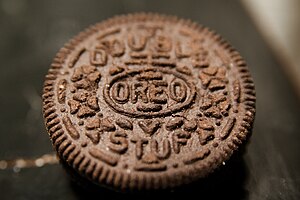
Oreo Double Stuff Cookie


Interestingly, when the Oreo was first introduced by Nabisco in 1912, it used a much more organic wreath for its emboss, later augmented with two pairs of turtledoves in a 1924 redesign.

To follow the evolution of the Oreo cookie’s embossing, click here.

Related articles
  • Food Art: Giant Oreo cake, food photography by SandeeA


Never miss a post
Name: 
Your email address:*
Please enter all required fields
Correct invalid entries

Food Art: On the Subject of Stew, food photography by Meeta Khurana Wolff

Published by Thursday, October 6, 2011 Permalink 0

See more of Meeta’s portfolio at Meeta K. Wolff. She runs the popular blog What’s for Lunch Honey?

Never miss a post
Name: 
Your email address:*
Please enter all required fields
Correct invalid entries

What is Mindful Eating?

Published by Wednesday, October 5, 2011 Permalink 0

by Jonell Galloway

Mindful Eating : Get serious about what you put in your mouth!

Mindful Eating means getting serious about what you put in your mouth.

Mindful Eating is sensual — in this case visual — as well as cerebral.

You don’t have to think with your taste buds every minute of your life, like I do, but eating takes on a new importance in your life, and is no longer just an essential action required to fuel your body.

Mindful Eating starts by being mindful of every aspect of our food chain, from the very soil to the end product we put in our mouths. It is about taste and smell and nutrition, but also about respect for the land and soil that provide our nourishment.

It is about the seeds we plant, the fertilizer we spread.

It is about the human contact between a producer and a buyer and the bond that is formed when he puts the vegetables he has grown with tender loving care and the sweat of his brow into your hand. It is about leaving the land in a condition that will allow our children to live on in a healthy manner.

Mindful Eating is not only about how the steak tastes, but also about what the cow has eaten, where it comes from, how it has been treated.

It is about cooking real homemade food for our family in a spirit of love and awareness, and making sure they are getting the nutrients they need and about avoiding the toxic ingredients so many foods contain.

Photo courtesy of Odette de Crecy.

It is about reading labels in supermarkets, about trying to eat natural, if we can, or at least making the best effort we can to put quality products on the table.

Mindful Eating requires us to look at the food we eat, smell it, chew it slowly and appreciate its texture and flavor, and then pause and enjoy the aftertaste.

Mindful Eating is somewhat a way of life, although we mustn’t become obsessive about it. Almost by definition, it moves toward consumption of local products, and thus re-creation of local economies.

It is a way of communing with our environment – our family, our community, local business, producers, nature – and the satisfaction that is derived from this.

Mindful Eating gives concrete, practical results. It can improve our health and help us lose weight; it can help us lower cholesterol and consume more nutritious food.

It can give us a sense of well-being, because we have the feeling we’re doing what is right not only for ourselves and our family, but also for our community and the world.

Photo courtesy of Nikoman.

It can cut down our food budget, since seasonal products bought directly from local farmers will invariably be cheaper. They will also fresher and have more vitamins.

This is Part One of a series of articles exploring the endless possibilities incorporating this approach into our daily lives. Stay tuned for the following segments:

Part Two: Mindful Eating and Farmers
Part Three: Mindful Eating and Health
Part Four: Mindful Eating and the Local Economy
Part Five: Mindful Eating and the Land
 
___________________

Alessandro Guerani is a food and still life photographer in Bologna, Italy. He also has a food photography blog with beautiful food photos, Food-o-Grafia. The pomegranate photo is from his Baroque Food photo album.

Never miss a post
Name: 
Your email address:*
Please enter all required fields
Correct invalid entries

Rosa’s Musings: A Good Old British Dessert With A Modern Flair: Spicy Damson Plum Roly Poly

Published by Tuesday, October 4, 2011 Permalink 0

by Rosa Mayland


Summer fades; the first cold, Northern air
Sweeps, like hatred, through still days –
The August heat now gone elsewhere,
To Southern, bird-filled coasts and bays;
Amid constricting vales of cloud,
A pale and liquid Autumn sun
That once beat down on an empty plain
And may again. And may again.
— Trever Howard, Autum

Lately, I’ve been in an unusually nostalgic, and in a rather morose state of mind. No matter how much I love autumn and look forward to cooler weather, seasonal mood swings always hit me hard when the summer ends. I guess it is something natural/biologic which each of us experiences to a certain degree. This time though, the “blahs” hit me a little harder than usual and I guess this is partly because last week, on the 13th of September, my English grandmother would have celebrated her 85th birthday, that is if she had not passed away last March…

Continue Reading…

Never miss a post
Name: 
Your email address:*
Please enter all required fields
Correct invalid entries

UA-21892701-1