Wine and Food Pairing: Lacquered Pork Tenderloin, Roast Potatoes & Ramson Recipe

Published by Thursday, July 25, 2013 Permalink 0

Wine and Food Pairing: Lacquered Pork Tenderloin, Roast Potatoes & Ramson Recipe

by James Flewellen

Pork is a great meat to play with for wine pairing. Depending on the cut of the animal, how it is cooked and the sauce accompanying the dish you have a whole wealth of wines from which to choose.  Red wine, white wine, dry and savoury, off-dry and fruity; there are many options.


Lacquered Pork Tenderloin, Roast Potatoes & Ramson Recipe, Spontaneous Cuisine. Recipe by Jonell Galloway, editor of The Rambling Epicure.


One of my favourite choices and one I think works very well with this recipe is an Alsatian or New Zealand Pinot Gris. These are full-bodied, rich white wines with a pear and honey bouquet that is the perfect foil for pork in such a sauce. The honey and fruit notes in the wine echo the honey and vanilla flavours in the sauce; the richness of the palate counteracts the piquant mustard and coriander seeds; the body carries enough weight to handle the meatiness of the dish; and the wine brings forth enough acidity to cut through the fat in the fillet and the sauce. Try for a wine with at least 5 years age and you’ll notice truffle and mushroom notes developing to add an additional level of complexity.
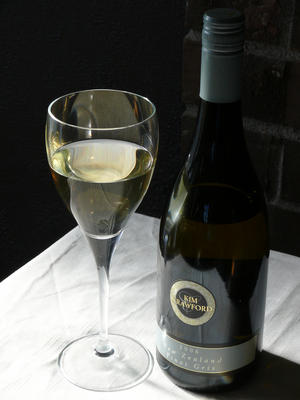
Kim Crawford 2006 Pinot Gris


About James Flewellen

Dr James Flewellen is a biophysicist at the University of Oxford. James learned his trade in taste through the Oxford Blind Wine Tasting Society, of which he was the President from 2010-2012. During his term, he represented Oxford at many international blind tasting competitions – twice winning the prestigious ‘Top Taster’ Award in the annual Varsity blind tasting match against Cambridge University and captaining winning teams in competitions throughout Europe.

One of James’s goals is to clarify the complex and hard-to-navigate world of wine for both novice and experienced tasters. He applies his scientific training to wine education, illuminating concepts of taste, tannin and terroir in an approachable, entertaining manner. James runs wine education courses in Oxford through the Oxford Wine Academy and is completing the WSET Professional Diploma in Wine and Spirits. He is the regular wine writer for The Rambling Epicure and is the founder of The Oxford Wine Blog. He is also currently co-authoring The Concise Guide to Wine and Blind Tasting – a book surveying the wine regions of the world and how to blind taste.


Never miss a post
Name: 
Your email address:*
Please enter all required fields
Correct invalid entries

Bookings for Celebrate the Chartres Festival of Lights & Autumnal Equinox with a Food & Wine Tasting Masterclass

Published by Tuesday, July 23, 2013 Permalink 0

We are having technical difficulties with the booking system for the Chartres Festival of Lights & Autumnal Equinox with a Food & Wine Tasting Masterclass. If you want to reserve, simply click on the Paypal button at the top right of  the sidebar to pay by Paypal, or the  blue Contact Us button at the top right of the home page to pay by bank transfer. We’ll send you all the necessary details. Sorry for the inconvenience!


Chartres Cathedral Lighted, creative common license, photographer unknown


Never miss a post
Name: 
Your email address:*
Please enter all required fields
Correct invalid entries

Culinary Chemistry: The Truth about Soy Sauce and Gluten Content

Published by Tuesday, July 23, 2013 Permalink 0

Food writer, Culinary Chemistry, The Rambling Epicure

Culinary Chemistry: The Truth about Soy Sauce and Gluten Content

by Jenn Oliver

From the archives

Soy Sauce and Umami: Now a Staple in Western Cuisine

Soy sauce has been around as a staple condiment in Asian cuisine for thousands of years, used for flavoring all manner of dishes and foods. It’s prized for the “umami” character it gives to the overall taste of a dish, and can have a wide range of subtle notes beyond the obvious saltiness.


For example, Japanese tamari is often wheat free (I stress, not always). Still, most of the soy sauces available on store shelves contain wheat. While there is some debate as to exactly how much gluten from wheat survives the fermentation and processing, the Celiac Disease Foundation Foundation does list soy sauce as a food that may contain gluten and needs to be verified. The Mayo Clinic also states that soy sauce should be avoided unless otherwise labeled. There is also considerable anecdotal evidence of experiences of people being “glutened” by soy sauce (my husband included). Therefore, for those who must eat gluten free, soy sauce immediately becomes a food that requires attention and is a complicated topic.

Continue Reading…

Never miss a post
Name: 
Your email address:*
Please enter all required fields
Correct invalid entries

10 Things You Need to Know before You Start Gourmet Cooking

Published by Wednesday, July 17, 2013 Permalink 0


The Rambling Epicure, Editor, Jonell Galloway, food writer.

10 Things You Need to Know before You Start Gourmet Cooking

by Jonell Galloway

From the archives

Cooking is just applied physics and chemistry, with a little creativity thrown in.

1. Heat and temperature

Heat and temperature are important at every stage in cooking.

When browning or grilling meat or fish, oil should be very hot before adding it. This seizes it, thus preserving all its natural juices, which are where the flavor resides.

Slow cooking at low temperatures is best for tough, sinewy or fatty pieces of meat, while high temperatures are best for lean meats such as filet, where it is necessary to seize it, since it has no fat to keep it from drying out.

2. Juices

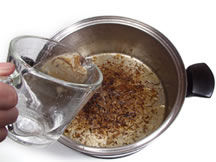
http://www.yumsugar.com/Deglaze-592880


No matter what the ingredient, the flavor resides in its natural juices. That’s why fresh is always better than frozen. When you thaw food, part of its natural juices are lost.

There is an appropriate way to cook every ingredient, depending on its nature.

Continue Reading…

Never miss a post
Name: 
Your email address:*
Please enter all required fields
Correct invalid entries

Wine and Food Pairing: Trofie alle Castagne Pasta with Pesto, Potatoes and Green Beans

Published by Monday, July 15, 2013 Permalink 0


//

Wine and Food Pairing with James Flewellen: Trofie alle Castagne Pasta with Pesto, Potatoes and Green Beans

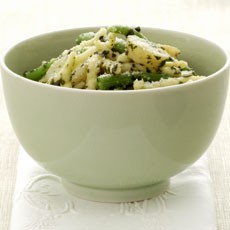
Trofie alle Castagne with Pesto, Potatoes and Green Bean recipe

Trofie alle Castagne with Pesto, Potatoes and Green Bean

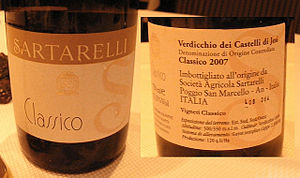
Try a Verdicchio wine from central Italy with this dish. This white wine has a complex, subtle, more vegetal flavour profile, as opposed to bright fruit and floral notes. This herbaceous quality will go very well with the similar flavours found in the green beans, while the acid in the wine will cut through the fats in the cheese and the oil in the pesto leaving your palate refreshed.

English: Bottle of Verdicchio dei Castelli di ...


If you like your fruity wines, try a decent Pinot Grigio, whose acid will play a similar role to the Verdicchio. But be warned – many of the mass market Pinot Grigios out there have an overly fruity flavour profile and a touch of sweetness, which won’t complement the pesto as well.

On the red side and staying true to the Italian theme, a lighter red will do the job. You want something savoury on the whole and not overly tannic or alcoholic – which can be hard to find in Italy! A lighter-bodied Chianti Classico could work well, but you may want to have extra Parmesan on hand to round out the tannins!


Join James Flewellen and Jonell Galloway at “Celebrate the Chartres Festival of Lights & Autumnal Equinox with a Food & Wine Tasting Masterclass” in France from September 19 to 22, 2013.


___________________________

Dr James Flewellen is a biophysicist at the University of Oxford. James learned his trade in taste through the Oxford Blind Wine Tasting Society, of which he was the President from 2010-2012. During his term, he represented Oxford at many international blind tasting competitions – twice winning the prestigious ‘Top Taster’ Award in the annual Varsity blind tasting match against Cambridge University and captaining winning teams in competitions throughout Europe.

One of James’s goals is to clarify the complex and hard-to-navigate world of wine for both novice and experienced tasters. He applies his scientific training to wine education, illuminating concepts of taste, tannin and terroir in an approachable, entertaining manner. James runs wine education courses in Oxford through the Oxford Wine Academy and is completing the WSET Professional Diploma in Wine and Spirits. He is the regular wine writer for The Rambling Epicure and is the founder of The Oxford Wine Blog. He is also currently co-authoring The Concise Guide to Wine and Blind Tasting – a book surveying the wine regions of the world and how to blind taste.


Never miss a post
Name: 
Your email address:*
Please enter all required fields
Correct invalid entries

Balsamico, Balsamico: How to Choose a Good (and Authentic) Balsamic Vinegar

Published by Thursday, July 11, 2013 Permalink 0


//

Gareth Jones, food and travel writerBalsamico, Balsamico: How to Choose a Good (and authentic) Balsamic Vinegar

by Gareth Jones

“When we think that 100 kgs of grapes converts into just 2 litres of Balsamico after 25 years ageing, we appreciate what’s quite so special.”


Balsamio brusco 1985, aged Balsamic vinegar, photo by Gareth Jones

1985 aged Balsamic vinegar

Imagine a magical elixir which has a history charted back to 1785 – and probably earlier — that takes skills passed down through the generations of families, and is years in the making. Made traditionally, this elixir has the power to transport one to Heaven on a spoon, and just one word on the bottle tells us the real from the manufactured.

IMG_0894 (188x250)

That word is Tradizionale’ and to a cynic it could read like a word from the marketeer’s limited lexicon. This one word, however, divides the Heavenly stunning from the just special and Earthly – and sometimes not special at all for its added caramel and sugar. Time to become acquainted with the genuine Aceto Balsamico Tradizionale di Modena DOP.

Continue Reading…

Never miss a post
Name: 
Your email address:*
Please enter all required fields
Correct invalid entries

Wine & Food Pairing with James Flewellen: Boeuf Bourguignon

Published by Monday, July 8, 2013 Permalink 1

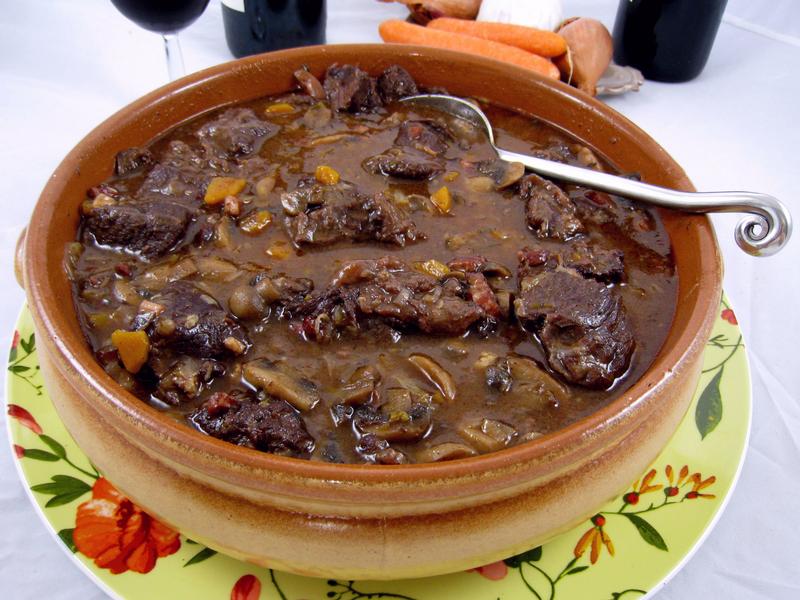
Wine and Food Pairing: Boeuf Bourguignon

by James Flewellen

Here’s our recipe for Boeuf Bourguignon

boeuf-bourguignon-798901288110937


Pinot Noir

The classic wine for this hearty dish is a relatively youthful Burgundian Pinot Noir – ideally the same wine you’ve used in the cooking. The bright fruit flavours in the wine complement the savoury spice in the dish and the tannins – fine as they typically are in red Burgundy – interact with the proteins in the meat to bring overall harmony to the meal. An older Pinot Noir will have developed more subtle, complex savoury notes, which may be overwhelmed by the bold array of flavours in the stew, thus I’d stick to a more youthful example and save the mature wine until when you can enjoy it in all its glory.

French Countryside


Other Pinot Noirs from around the world will also work – particularly the rich, clean fruit profile of a New Zealand Pinot. You could also try a ‘serious’ Beaujolais Cru – made from the Gamay grape. These Cru wines are slightly more expensive than the infamous Beaujolais Nouveau, yet they provide a more complex flavour profile and robust, yet integrated tannins. The best, from for instance Moulin à Vent, Morgon and Fleurie, start to resemble their cousins from Burgundy to the north and as such, offer excellent value for money.


365.202: Summer wine thing


Cabernet Franc

To the west of Burgundy, the Loire valley produces a number of wines that would go very well with the dish. Sancerre Rouge is the Loire’s expression of Pinot Noir and, I feel, too light in body to stand up to a stew. A Chinon or Bourgueil, however, made from Cabernet Franc, is well up to the task. The thicker skins of Cabernet Franc make for more robust tannin, which go perfectly with beef. Meanwhile, these wines typically have a rich fruity core in their flavour profile not dissimilar to young Burgundy, although more towards blackcurrant rather than raspberry on the fruit spectrum. Cabernet Franc can also introduce leafy, minerally and peppery notes, which can serve as a lovely foil to the sweetness in the vegetables in the stew.

Couly-Dutheil Chinon Clos de l'Olive 1999 (Loire Valley)

Jonell Galloway and James Flewellen will be giving a food and wine tasting Masterclass in Chartres from September 19 to 22. Here is a thorough description: Celebrate the Chartres Festival of Lights & Autumnal Equinox with a Food & Wine Tasting Masterclass. Click here to reserve your place!

About James Flewellen

Dr James Flewellen is a biophysicist at the University of Oxford. James learned his trade in taste through the Oxford Blind Wine Tasting Society, of which he was the President from 2010-2012. During his term, he represented Oxford at many international blind tasting competitions – twice winning the prestigious ‘Top Taster’ Award in the annual Varsity blind tasting match against Cambridge University and captaining winning teams in competitions throughout Europe.

One of James’s goals is to clarify the complex and hard-to-navigate world of wine for both novice and experienced tasters. He applies his scientific training to wine education, illuminating concepts of taste, tannin and terroir in an approachable, entertaining manner. James runs wine education courses in Oxford through the Oxford Wine Academy and is completing the WSET Professional Diploma in Wine and Spirits. He is the regular wine writer for The Rambling Epicure and is the founder of The Oxford Wine Blog. He is also currently co-authoring The Concise Guide to Wine and Blind Tasting – a book surveying the wine regions of the world and how to blind taste.


Never miss a post
Name: 
Your email address:*
Please enter all required fields
Correct invalid entries

Serendipity: meus caminhos na cozinha e nas viagens…

Published by Saturday, July 6, 2013 Permalink 0
Exif_JPEG_422

Entre uma Serendipity e outra, um bom café!

SERENDIPITY: MEUS CAMINHOS NA COZINHA E NAS VIAGENS…

Translation coming soon in English – Introduction to Betina Mariante Cardoso’s new Brazilian food column

Olá!

Sou Betina Mariante Cardoso, brasileira, trinta e poucos anos. Nasci e moro em Porto Alegre, no Sul do Brasil, cidade que amo de coração e onde vivencio o apego, o calor da família e a constância, virtudes necessárias na minha vida. Paradoxo, tenho encantos por viajar, romper a linearidade rotineira, esquecer o mapa no hotel e perder-me pelas ruas dos lugares que visito. Por quê? Para ter a chance de conhecer aquela confeitaria antiga na rua lateral, coisa que só o acaso permite.  Tenho uma ligação forte com o conforto do cotidiano mas, quando me torno viajante, parto em busca das descobertas, do desconhecido. É quando  me entrego à Serendipity que as viagens propiciam.

E é com este mesmo estado anímico que venho para a cozinha: trazendo comigo a aventura, a curiosidade, o ímpeto pelo novo. Gosto de criar minhas receitas, mas sou também fã dos cadernos culinários, escritos à mão e com manchas de vida em suas páginas. Outro paradoxo.

Continue Reading…

Never miss a post
Name: 
Your email address:*
Please enter all required fields
Correct invalid entries

The Many Colors of Corn: A Photo Essay

Published by Friday, July 5, 2013 Permalink 0


//

English: Black corn Español: Maíz morado

English: Black corn Español: Maíz morado (Photo credit: Wikipedia)

English: Cobs of corn

English: Cobs of corn (Photo credit: Wikipedia)

English: Green Oaxaca corn Français : Maïs ver...

English: Green Oaxaca corn Français : Maïs vert d’Oaxaca (Photo credit: Wikipedia)

red corn on the cob

red corn on the cob (Photo credit: MelanieAnneMarie)

Red corn, blue corn and cucumber seeds for sal...

Red corn, blue corn and cucumber seeds for sale in Fresno, California… (Photo credit: Nate Gray: A Culinary (Photo) Journal)

Blue Corn

Blue Corn (Photo credit: Big Grey Mare)

English: From left to right, haba beans, haba ...

English: From left to right, haba beans, haba beans, blue corn and white corn for sale at a tianguis market in Metepec, Mexico State. (Photo credit: Wikipedia)

Boy in corn field, Woodbine, New Jersey

Boy in corn field, Woodbine, New Jersey (Photo credit: Center for Jewish History, NYC)

Public relations of high-fructose corn syrup

Public relations of high-fructose corn syrup (Photo credit: Wikipedia)

English: A display of six ears of field corn w...

English: A display of six ears of field corn with dented yellow kernels (Zea mays var. indentata) which won ribbons for “best of show” at the Steele County Fair in Owatonna, Minnesota (Photo credit: Wikipedia)


Never miss a post
Name: 
Your email address:*
Please enter all required fields
Correct invalid entries

Immortal Cheese with Eric LeMay: Cheese Making 101

Published by Friday, July 5, 2013 Permalink 0

Immortal Cheese with Eric LeMay: A pithy and picky video tour through everything worth knowing about cheese.

Never miss a post
Name: 
Your email address:*
Please enter all required fields
Correct invalid entries

UA-21892701-1