
A Woodcock, Girolles, A Baguette, and a French Inn

Published by Wednesday, October 23, 2019 Permalink 0

Bécasse*, a story in two parts: A Hundred Years of Bécasse: Part I

by Dorette Snover

I wanted to fix what was wrong, here, in this – this place, this time I remembered so well. When I loved. Where I loved. And yet how ironic as here was where everything started unraveling on the first night of the Bécasse.

The drive into the setting sun from Agen made me wish we hadn’t missed our earlier train. But we had. It was my fault, but how could I leave Paris without visiting Rue Daguerre and picking up a perfect brie, rosy pears, a few chestnuts? 
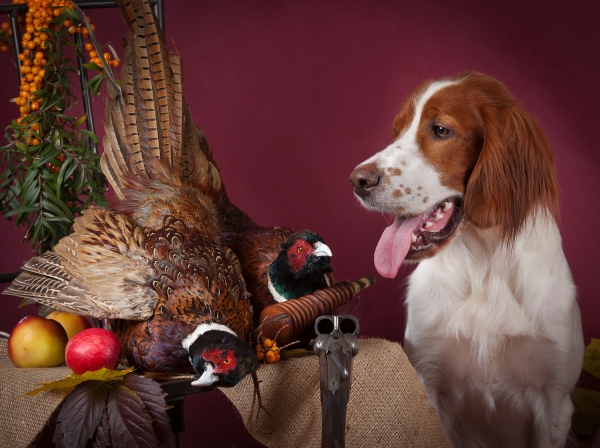
The Hunt: woodcock and hunting dog.

After the hunt: woodcock and hunting dog.

We pulled into the Auberge and barely missed hitting the stone wall. The millhouse still sat undisturbed by time, hell, it was time itself. Flanked by the millpond and the rushing river, the river Gélise coursed through it, cleansing and cooling the fires inside.

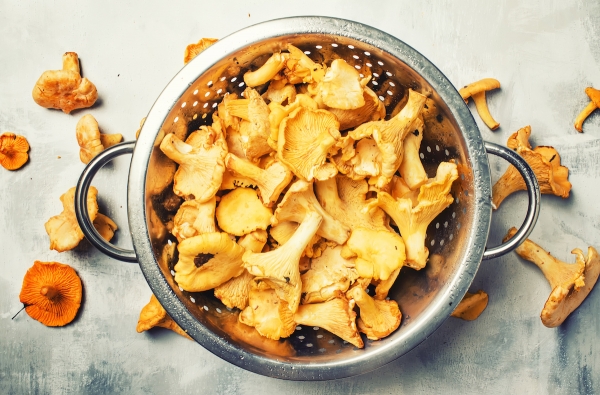
Once inside it seemed important not to disturb the shadows and gentle aura by flicking a switch and turning on a light. That would be too easy. I wanted to remember, I had to be careful. With the last little bit of sun on the kitchen, I found a white plate for the bruised tomatoes from the Paris market. The girolle mushrooms looked small and insufficient, but they had survived better than the poor tomatoes; all they needed was heat and a little butter. There was plenty of time for that in the morning. I was already relishing coming down in the morning and hearing the whoosh of the burners.

French baguette/bread.


In the shadows of the kitchen, the baguette might be a knotted tree, the baker’s slashes on the crust that birthed the ears and eyes of the bread. My husband drew the knife from the block and pressed its teeth against the curved length. I gently took it away and slid the saw-toothed beast back in its slot.

“Wait. “ I touched his arm. “Open the wine, while I light a fire?”

“I’m starving!” he said.

I was nervous to get it going, adjusting the air and the draft. The wood was damp, and my mind leaped ahead to the next day and perhaps finding cèpes or porcini in the forest. The bottle slowly emptied. Maybe she wouldn’t let the fire begin again. She being grand-mère. Had she forgiven me? I had kept her secret. I hadn’t told the tale of what happened here. Yet, that time was over now. It was safe to begin again. We sat back and raised our glasses. The flames twirled like the bird in the tapestry, the Bécasse, flying past the whispers of clouds over the moon, and the millhouse.

Cooking woodcocks or bécasse over a wood fire.

Cooking woodcocks or bécasse over a wood fire.

 The Auberge was unchanged, I breathed, wasn’t it? Twenty years was nothing in a place already hundreds of years old.

Much to his satisfaction we broke the crust, and playfully teased the heels of the baguette over the fire, turning and toasting. Smearing the hot pain with soft cheese.

I peered around the dark room, the fire reflecting our forms in the picture window.

To be continued.

***

*A bécasse in French is a woodcock.


Influenced by French heritage and traditions of the Pennsylvania Dutch country where she was born and raised, Dorette Snover graduated from the Culinary Institute of America, was a private chef to the rich and eccentric, a food stylist, NPR commentator, and now teaches les bases de la cuisine at her cooking school, C’est si Bon!

In writing, Dorette’s plat du jour is strong female characters woven from her thirty years in the world of cuisine. and her personal journey through landscapes of culinary history. Dorette also leads tours to France for adults looking for truffles in all the right places and for teens interested in exploring the world through a culinary map.


Never miss a post
Name: 
Your email address:*
Please enter all required fields
Correct invalid entries

What to Eat in France: Pain du Moulin

Published by Thursday, June 2, 2016 Permalink 0

What to Eat in France: Pain du Moulin, or “bread from the mill”

by Jonell Galloway

My adopted hometown of Chartres is in the Beauce region, the breadbasket of France. Large, flat wheat fields surround the single hill of Chartres, topped with the most beautiful Gothic Cathedral in the world. You can see the cathedral for miles when driving across the fields, and a quite magical view it is, its spires dominating the flat farmlands. No wonder people have been making pilgrimages here for at least 5,000 years.

Chartrains, as we call the people from here, come from the land. Everyone in the region has a farm or has family who owns one, and because of the abundance of grains of every kind — wheat, barley, corn, rye and many more — grains are an integral part of the local diet.

This traditional recipe is referred to as “bread from the mill,” but no one knows the exact origin of that name. In the past, the Beaucerons (the inhabitants of the Beauce region), of Celtic and Druidic origins, ate this on the Jour des Morts, the day of the dead, which fell on November 2 after All Saint’s Day, when the living were said to communicate with the dead, when tombs and graves were said to open so that the world of the visible and invisible could intermingle for a short period.

Pain du moulin / bread from the mill, French recipe from Chartres/Beauce, France

Early in the morning of November 2, local bakers made pain aux morts, or “bread to the dead” (this could even be translated in a more ghoulish manner, “bread (made from) the dead”), out of flour and milk, for a traditional 10 a.m. breakfast before going to the cemetery.

In the nineteenth century, the church decided that All Saints Day sufficed and such pagan customs were more or less done away with. Beaucerons continue to eat this bread during the All Saints celebrations, however, calling it “bread from the mill” instead of “bread to the dead.”

I often serve this recipe with apéritif, but it can also make a vegetarian dinner, and can, of course, be eaten year round.

Recipe

Ingredients

Pain au lait, French milk bread, Chartres/Beauce, France

pains au lait or 3-4″-long milk breads
6 cups milk
3 eggs
1 1/2 cups Swiss cheese or similar, grated
Cooking oil
Kitchen string

Instructions

  1. Cut the bread in half lengthwise.
  2. Use a spoon to scrape the crumbs out of the crust, taking care to leave the crust intact, and put the crumbs in a bowl.
  3. Pour milk over crumbs and mix.
  4. Add the eggs and the grated cheese and mix well.
  5. Fill the crusts with the bread crumb mixture.
  6. Use kitchen string to tie the bread halves together.
  7. Heat cooking oil in a deep pan or fryer. When the oil starts to bubble, drop in the bread and cheese preparations.
  8. Cook until golden brown.
  9. Drain on paper towels and serve immediately while hot.


Never miss a post
Name: 
Your email address:*
Please enter all required fields
Correct invalid entries

Venetian Hours: French Venice

Published by Thursday, February 25, 2016 Permalink 1

Venetian Hours: Franco-Venice and French Cuisine

French Food in Venice

The Venetians might have ruled much of the refined sugar trade in Europe, but by the eighteenth century, they were importing French pastry techniques. “Count Cavour, the first prime minister of a united Italy,” sent his personal chef to be trained in France, while the Italian royal family was eating macaroni à la Parisienne.

Today, the French influence is best seen at the Tonolo pasticceria in the San Polo neighborhood, which won a gold medal in Paris for its sweet focaccia in 1909 and has some of the best coffee in Venice. To say this is a Venetian establishment would be grossly understating it. And it wasn’t the Paris-Brest that hooked me on Tonolo so many years ago: it was the quality of absolutely everything they make, from their coffee to their Venetian pastries to their cream-filled pastries. It was the extreme care taken with the presentation and visual aspects — something many Venetian pastry chefs lack, despite the good taste. After living in France for so long, I immediately felt right at home in Tonolo, so familiar, reminding of my youth when I discovered mille-feuilles and éclairs and tried new pastries every day.

Continue Reading…

Never miss a post
Name: 
Your email address:*
Please enter all required fields
Correct invalid entries

Food Quote: Erik Satie on French Cuisine

Published by Tuesday, February 16, 2016 Permalink 0

En Art, j’aime la simplicité ; de même, en cuisine. / In art, I like simplicity; the same goes for cuisine.–Erik Satie (Honfleur 1866-Paris 1925), in Cahiers d’un Mamifère.

Never miss a post
Name: 
Your email address:*
Please enter all required fields
Correct invalid entries

Still Life with Flowers and Fruit, by Pierre Auguste Renoir

Published by Monday, January 4, 2016 Permalink 0

Quintessential France: Still Life with Flowers and Fruit, by Pierre Auguste Renoir.

Never miss a post
Name: 
Your email address:*
Please enter all required fields
Correct invalid entries

What to Eat in France: Turkey Stuffed with Chestnuts

Published by Friday, December 18, 2015 Permalink 0

What to Eat in France: Dinde Farcie aux Marrons, Turkey Stuffed with Chestnuts

by Jonell Galloway

Etre le dindon de la farce. / To fall victim to dupery.

Une dinde. / A stupid, pretentious woman.

Anthelme Brillat-Savarin, perhaps France’s best-known gastronomic writer, said that the turkey was certainly one of the most beautiful gifts the New World had given to the Old. “…the fattest, and if not the most delicate, at least, the tastiest of all domesticated birds.” It’s not often that the New World gets such compliments from discerning French epicures.

Turkeys were originally called poules d’Inde, “Indian hens,” in France, because they were thought to have come from India, which they later learned was Mexico. The French were not the only ones to get the name wrong. In Hebrew a turkey is a tarnagol hodu, meaning literally  “Indian chicken;”  in Russian indiuk, Polish indyk and Yiddish indik.

There is some controversy over who brought turkeys to Europe. Columbus probably brought  brought them back in the early sixteenth century, since records show that King Ferdinand had ordered that every ship to bring back ten turkeys before the Spanish explorer Cortés set out in 1519. In any case, by 1548, they were the rage in France. In 1549, Catherine de Medicis served 70 “Indian hens” and 7 “Indian roosters” at a banquet held in honor of the Bishop of Paris.

French aristocrats were accustomed to eating all sorts of feathered creatures, including chewy storks, herons, peacocks, swans, cranes and cormorants, so it wasn’t surprising that they fell in love with the less-chewy turkeys, and that in 1570, Charles IX and Elizabeth of Austria thought turkey noble enough to serve at their wedding feast.

By the seventeenth century, the French were raising turkeys as if they were their own and most cookbooks included turkey recipes. French chefs weren’t lacking in ideas: they made stews and ragouts; they larded, roasted and glazed it; they stuffed it and made it into soups and pâtés.

Marie-Antonin Carême preferred the wings, which he deboned, then stuffed with chicken and truffles. Alexander Dumas, in his Dictionary of Cuisine, included 27 recipes. Turkeys were well established in the Hexagon.

Christmas dinners usually meant lots of mouths to feed, so turkey, being the largest of the winged creatures available, eventually became the dish of choice for Christmas feasts. By the nineteenth century, it became customary to stuff the Christmas turkey with chestnuts, and the tradition continues today.

Continue Reading…

Never miss a post
Name: 
Your email address:*
Please enter all required fields
Correct invalid entries

What to Eat in France: Gratin Dauphinois

Published by Thursday, November 19, 2015 Permalink 0

What to Eat in France: Authentic Gratin Dauphinois, or Real Gratin Potatoes with Cream and Garlic

by Jonell Galloway

Gratin dauphinois, which consists of thinly sliced potatoes cooked slowly with cream and garlic, seems a simple enough dish. Purists and traditionalists say there’s no cheese and no egg, despite the fact that Escoffier himself used them, and that’s what makes it difficult to achieve.

Michelin star chef Michel Rostang, who was born and raised in the region, doesn’t use them and claims that’s the only authentic way to make it. In fact, if you add cheese and nutmeg, it becomes a gratin savoyard. The real secret is in the choice of ingredients and the patience it takes to make it. A good gratin should melt in the mouth, yet the top should be crunchy.

The Dauphiné was an ancient province of France, located in the southeast, corresponding roughly to the départements of Isère, Drôme, and Hautes-Alpes plus a bit of the Rhône and the Italian Alps.

Continue Reading…

Never miss a post
Name: 
Your email address:*
Please enter all required fields
Correct invalid entries

Is haute cuisine still relevant?

Published by Wednesday, November 18, 2015 Permalink 0

Is French cuisine dead? Not even close.

by Jonell Galloway

Is haute cuisine still relevant? Yes. What’s happening with it and does it still matter?

In 2009, Michael Steinberger, in his book Au Revoir to All That, declared that the ostensible decline of Michelin-starred restaurants mirrors the decline of France. While it is true that French cuisine, in particular the haute cuisine of the gastronomic palaces, may be threatened by high overheads and a weak economy, it would be wrong and premature to announce its demise. Profit margins are slim in high-end, labor-intensive restaurants, and labor laws are strict. The over-indulgence of the grandes tables of the past with their thousands of bottles of ancient claret in the cellar has been compromised by taxes on stock and thirty-nine hour work weeks that simply don’t work in the restaurant business, even if it’s four hours more than in other sectors.

Despite all that, French cuisine is still alive and kicking, and the number of Michelin star restaurants increases every year: today France has 26 three-star restaurants, four more than in 2000, and 80 two-star restaurants, ten more than in 2000, according to the Financial Times. In 2015, there are 25 per cent more one-star restaurants. These palaces remain quintessentially French in their food, service and organization. Simplified versions of these chefs’ dishes are published in cooking magazines and imitated in millions of homes around France, making it relevant even in middle class households. French families may not eat in such establishments often, but they will save and go to them once a year for a special occasion. This French devotion to their food traditions will ensure its survival.

Continue Reading…

Never miss a post
Name: 
Your email address:*
Please enter all required fields
Correct invalid entries

What to Eat in France: Crêpes Vonnassiennes

Published by Wednesday, November 18, 2015 Permalink 0

What to Eat in France: Crêpes Vonnassiennes, Vonnas-style Potato Pancakes

by Jonell Galloway

Vonnas in the east of France is the home of the legendary Michelin-star chef Georges Blanc. He is best known for his Bresse chicken with cream and mushrooms. Traditionally, this chicken is eaten with potato pancakes. This recipe is inspired by Blanc’s mother, La Mère Blanc, who ran his restaurant before him. He learned to cook at her apron strings.

Vonnas is in the Rhône-Alpes region of France, known for poulet de Bresse chickens and poultry, frogs, Reblochon and Beaufort cheese, as well as gratin dauphinois, made with raw potatoes, thick cream and garlic, and pork products, plentiful in the bouchons, small restaurants found in Lyon.

Continue Reading…

Never miss a post
Name: 
Your email address:*
Please enter all required fields
Correct invalid entries

What’s the Difference in Haute Cuisine and French Cuisine?

Published by Sunday, November 15, 2015 Permalink 0

There are many kinds of French cuisine. It is not limited to the haute cuisine accessible only to the rich.

by Jonell Galloway

What many of us think of as “French cuisine” is actually haute cuisine, the cuisine that evolved from the aristocratic cuisine of the royalty. This cuisine was centered mainly in Paris and Versailles. Regional cuisine as we know it today did not even exist at the time, since regions didn’t exist until after the Revolution. Until the Revolution, there were provinces and feudal “kingdoms,” abolished afterward. Cuisine bourgeoise, the cooking of the upper middle classes and later middle classes, developed after the Revolution, and gradually filtered down to the broader population.

Regions didn’t formally exist by name until 1890, so there was little meaning attached to the word “region”. One cooked and ate what was available, what one grew and raised and that varied widely. Even the gruel was made with different grains in different regions. Regions only formed an identity after this. Knowledge of regional cuisines increased as travel became easier and accessible to all, especially after the generalization of cars.

French cuisine has always consisted of two tiers: haute cuisine and regional cuisine. Elements of haute cuisine — the cuisine that we inherited from the courts and later the affluent bourgeoisie, the cuisine that elevated sauce-making to an art form — have over the centuries infiltrated the cuisine of the regions, and regional cuisine is the lifeline and wherein lies the future.

Continue Reading…

Never miss a post
Name: 
Your email address:*
Please enter all required fields
Correct invalid entries

UA-21892701-1