by Bobbie Noto






|
|

A Literary Culinary Journal
 by Jonell Galloway
Since I live in the old town in Geneva, I walk everywhere. A few years ago, I had shoulder and wrist injuries from carrying too many heavy shopping bags, and ever since, I’ve had to do my heavy grocery and household shopping with a trolley. A couple of years ago, after regularly hearing the leshop.ch ads on WRS, I decided to try and avoid pulling my heavy trolley, filled with milk, detergents, and other heavy products, up the hill from the Coop 2000 and the Boulevard Helvétique market to the Russian Church, so I tried leshop.ch. With the ice and snow on the streets, home delivery can definitely be a godsend.
|
|
by Tamar Chamlian

At the first signs of the common cold, in the modern world, we turn to vitamin C supplements, in any form or shape — whether chewable tablets, effervescent tablets, fortified juices…you name it. Vitamin C is most often associated with the “flu” or common cold because of its reputation to keep the body strong and healthy.
People rely on these supplements, or on hot drinkable remedies fortified with Vitamin C, because they are accessible, quick, and the common notion about this vitamin is that it helps you get relief from the common cold. The best source of vitamin C almost always comes from fresh fruits and vegetables. The wisest, most common sense thing to do is to add them to your daily diet to ensure you get it from natural sources, without turning to packaged, processed, chemically-made tablets.
|
|
by Renu Chhabra
“For each new morning with its light,
For rest and shelter of the night,
For health and food, for love and friends,
For everything Thy goodness sends.”
– Ralph Waldo Emerson

Last Sunday, I went for a walk with my daughter in our neighborhood. It was a lovely autumn afternoon, and sunshine was gracing the landscape with its golden rays. Everywhere we looked, the view was stunning with trees dressed in red, green and golden tones. “Look at that red tree – it looks so majestic. Let’s take a picture of it,” I said. “And what about that wall covered with golden leaves? That’s very charming too,” she pointed out with excitement. Enjoying these simple moments was worth treasuring. We clicked several pictures of this beautiful scenery.
|
|
 by Jonell Galloway
Bonbons, which we call in English sweets or candy, are a recent enough arrival on the European food scene. The Crusaders brought back sugar cane from the Orient, arriving first in Sicily, where Jewish scientists in Sicily carried out experiments on it in around 1230. Until then, Europeans made their sweets using fruit juice and honey, often flavored with cinnamon.
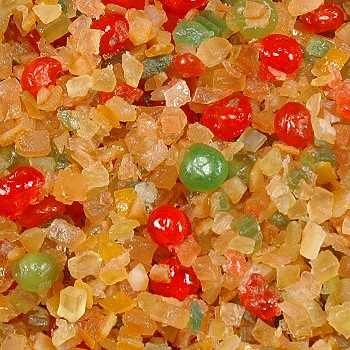
Candy instantly became the rage and techniques were refined. During the Renaissance, men of means carried bonbonnières, or candy holders, in their pockets, often decorated with precious stones, and offered ladies candy from them.

Wikipedia notes that the “Middle English word “candy” began to be used in the late 13th century, coming into English from the Old French çucre candi, derived in turn from Persian Qand (=قند) and Qandi (=قندی), ‘cane sugar’.”
|
|

Prerna Singh runs the award-winning food blog Indian Simmer, which was a finalist in the prestigious Saveur Best Food Blogs this year. Her photos are at the same time sophisticated and rustic, giving a natural yet polished look to the simplest of foods. She grew up in India, but now lives in the U.S. with her husband and daughter.
Prerna uses a Canon 50mm f1.4 lens and photographs in natural light, occasionally using reflectors.
|
|
by Tamar Chamlian
The alarm goes off again. Another day…you need to get yourself out of bed, get your creative juices flowing, and prepare your kids a healthy lunchbox for school.
The challenge for parents today is creating a healthy balanced lunchbox meal ensuring their children receive all the required nutrients, and at the same time giving them things that they want to eat (and WILL actually eat).
Here are five easy tips to render your child’s lunchbox “yummier” and more child-friendly, creative, and appealing:
Tamar Chamlian studied in Lebanon and the U.K. She is a food scientist and holds a Master’s degree in food marketing. She currently lives in Switzerland.
|
|
 by Jonell Galloway
“Many fruits and vegetables produce ethylene gas, a colorless, odorless gas, as they begin to ripen. Some foods aren’t affected much by ethylene gas, while others are extremely sensitive to it.”
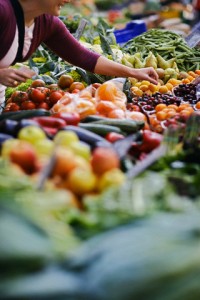
I never knew that it was a natural gas that fruit and vegetables produce that causes this to happen.
One thing I have noted is that when you buy fruit and vegetables that come from large agribusiness farms, they have a particularly high water content and they rot much faster than fresh garden and organic produce.
In any case, it is good to separate the ethylene-producing produce from the non-ethylene-producing. There is actually a method.
Click here for more details.
|
|
A fruit is a vegetable with looks and money. Plus, if you let fruit, it turns into wine, something Brussels sprouts never do.–P.J. O’Rourke, 1997
Patrick Jake “P. J.” O’Rourke (born November 14, 1947) is an American political satirist, journalist, writer, and author.
His latest book, Don’t Vote—It Just Encourages the Bastard, was published in September 2010. Both Time and The Wall Street Journal have called him “the funniest writer in America.”
|
|

A great little article about how to make porridge interesting, by Elly McCausland who runs the blog Beyond Baked Beans. Well worth the read. Another plus on her blog: lots of info about eating on a shoestring.
Click here to read article.
|
|
 Meet Jonell Galloway, a freelance writer and editor specialized in French cuisine.


